Quick Answer: Cardinal tetras (Paracheirodon axelrodi) need soft, acidic water (pH 5.5–6.8), warm temperatures of 76–82°F (24–28°C), zero ammonia or nitrite, and a school of at least 6 fish to thrive. They’re moderately demanding — not beginner fish — but a well-cycled, blackwater-style tank makes them remarkably hardy and stunning to keep.
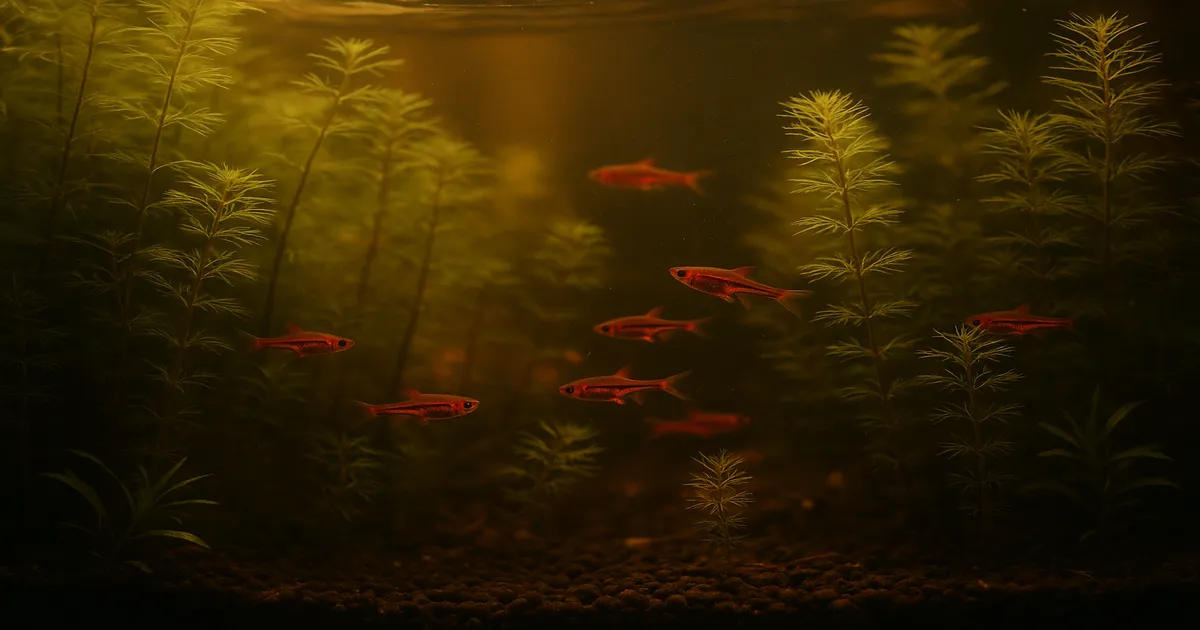
If you’ve ever watched a large school of cardinal tetras drift through a tannin-stained tank, you already understand why learning how to care for cardinal tetras properly is worth the effort. These fish are genuinely spectacular — but they reward preparation, not improvisation.
How to Care for Cardinal Tetras: Key Stats at a Glance
Cardinal tetras grow to 1.25–2 inches (3–5 cm) at maturity, with females running slightly larger and rounder. Expect a lifespan of 4–5 years in a well-maintained tank, though some hobbyists report fish living close to 7 years under exceptional conditions.
In the wild, they inhabit the blackwater streams of the upper Orinoco and Negro River basins across Venezuela, Colombia, and northwestern Brazil. These are ancient, nutrient-poor waters stained deep amber by decomposing leaf litter — about as far from a typical municipal tap as you can get.
The vast majority of cardinals sold in the hobby are wild-caught, primarily from the Rio Negro. This is one of the world’s most well-managed sustainable wild-harvest fisheries, but it does mean your fish may have come from water with a pH near 4.5. Careful acclimation is essential.
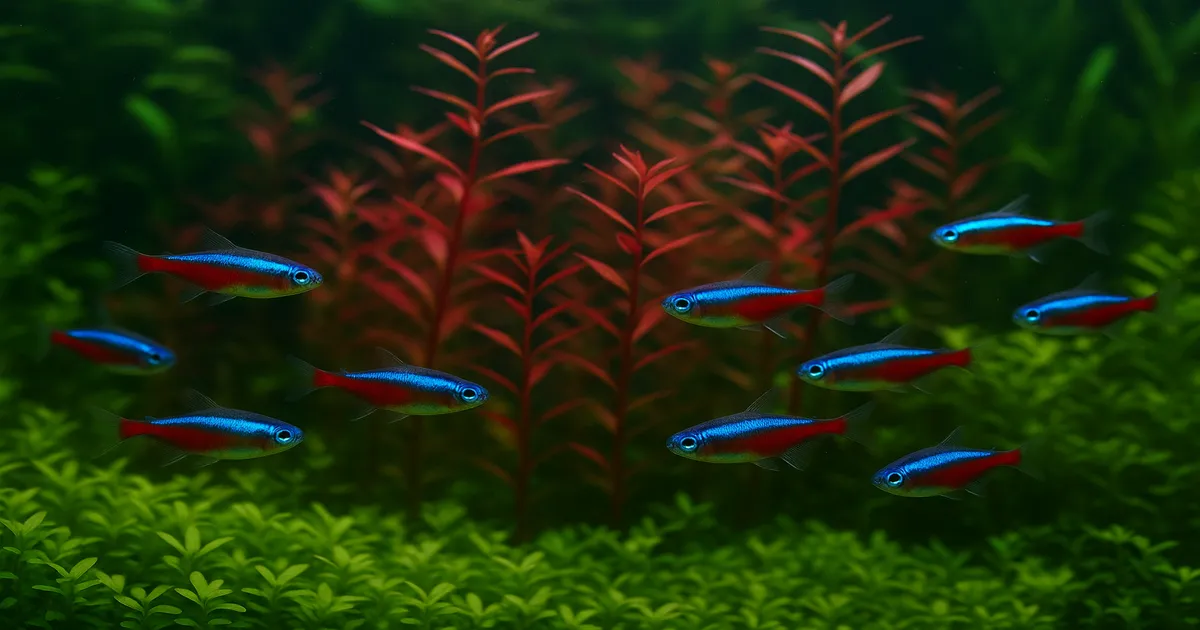
Cardinal tetra vs. neon tetra: The easiest way to tell them apart is the red stripe. On a cardinal tetra, the vivid red runs the entire length of the belly from snout to tail. On a neon tetra, the red covers only the rear half of the body. Cardinals are also noticeably larger at maturity — typically 1.5–2 inches versus the neon’s 1–1.25 inches.
Water Parameters for Cardinal Tetras
pH, Hardness, and Temperature
Cardinals need slightly to moderately acidic water — the ideal range is pH 5.5–6.8. Wild-caught specimens in particular struggle above pH 7.0; prolonged exposure suppresses their immune system and shortens their lifespan noticeably. Captive-bred individuals (usually from Southeast Asia) are somewhat more forgiving, tolerating pH up to 7.2, but they still do best in acidic conditions.
For hardness, aim for very soft water: 1–6 dGH general hardness and 0–4 dKH carbonate hardness. Temperature should sit at 76–82°F (24–28°C) — this is where their colour, immune function, and energy levels are all at their peak.
Ammonia, Nitrite, and Nitrate
There is zero tolerance for ammonia or nitrite. Even 0.25 ppm ammonia is harmful to cardinals, which are among the more sensitive tetras when it comes to nitrogen cycle disruption. Never add them to an uncycled tank. A reliable liquid test kit — the API Freshwater Master Test Kit is the hobby standard — is non-negotiable during setup and worth keeping on hand permanently.
Nitrates should stay below 10 ppm ideally, and never above 20 ppm for sustained periods. Elevated nitrates cause chronic stress, faded colour, and disease susceptibility — and it’s a problem that sneaks up on you if you skip water changes.
Achieving Blackwater Conditions at Home
If your tap water is hard or alkaline, you have a few practical options:
- RO water blending: Mix reverse osmosis water with tap water to hit your target hardness, then remineralize with a blackwater conditioner. This is the gold standard for wild-caught fish.
- Peat filtration: Place a bag of peat moss in your filter. It releases humic acids and tannins that naturally lower and buffer pH.
- Indian almond leaves: Drop a few Terminalia catappa leaves into the tank. They soften water, release antibacterial tannins, and look completely natural. Replace every 4–6 weeks as they break down.
- Driftwood: Mopani, Malaysian, and spider wood all leach tannins over time. The water will tint brown — that’s a good sign, not a problem.
Avoid limestone rocks, coral sand, or any calcium-rich décor. They’ll push your hardness and pH in exactly the wrong direction.
Water Change Schedule
Do 25–30% water changes weekly. The critical detail: always match the temperature and pH of your replacement water before it goes in. A sudden parameter swing — even toward “better” numbers — is more stressful to cardinals than a stable environment that’s slightly off-target. Use a dechlorinator that also neutralizes chloramines, such as Seachem Prime .
Setting Up the Perfect Cardinal Tetra Tank
Tank Size and Dimensions
The minimum is a 20-gallon long for a school of 10–15 fish. For anything larger — or if you want to add tank mates — a 29–40 gallon is a much better foundation. Go long over tall; cardinals are mid-water swimmers that use horizontal space.
Substrate, Décor, and Aquascaping
Black sand is the ideal substrate. It mimics their natural dark riverbeds, makes their colours pop dramatically, and helps fish feel less exposed and stressed. Fine aquarium soil is another excellent option — ADA Aqua Soil gently acidifies the water as a bonus. Avoid bright white or coarse gravel, which causes washed-out colouration and chronic low-level stress.
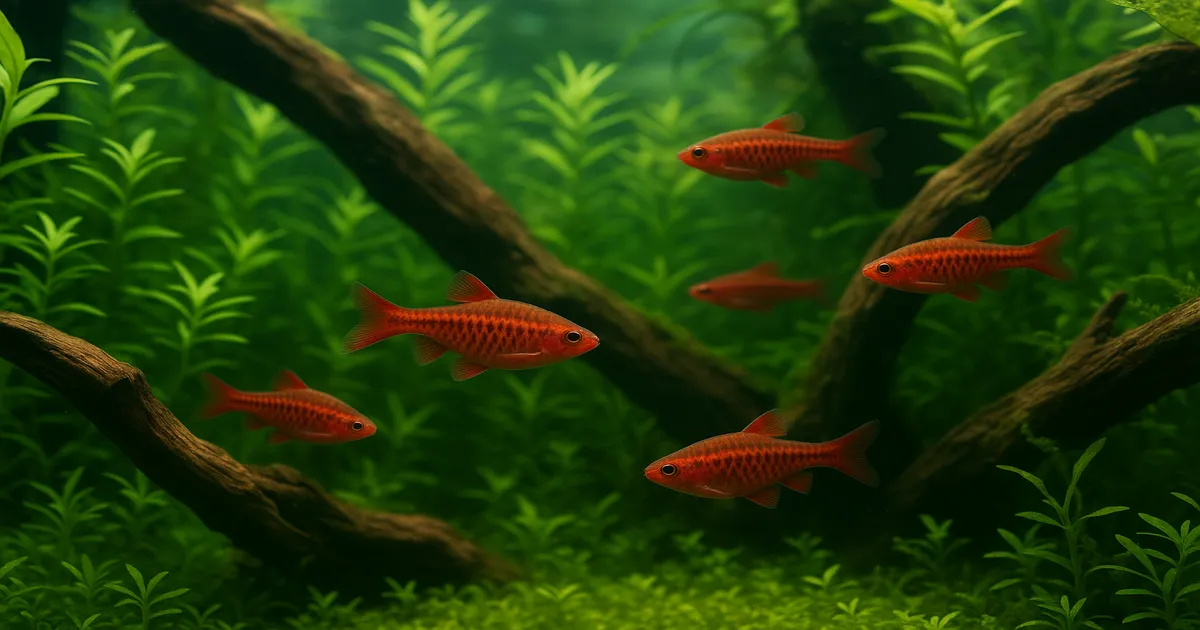
A blackwater-style tank doesn’t need to be bare or plain — it can be genuinely beautiful. Layer in driftwood for structure and tannins, scatter a few Indian almond leaves across the substrate, and plant the background and sides with low-light species like Java fern (Microsorum pteropus), Anubias, and Amazon swords. Leave the central midwater area open for schooling. Floating plants like Salvinia or water lettuce serve double duty: they diffuse harsh overhead lighting and create the dappled, shaded conditions cardinals love in the wild.
Filtration and Flow
Cardinals come from slow-moving streams. Strong flow stresses them out. Aim for a gentle 4–6× turnover of your tank volume per hour, and always diffuse the outflow with a spray bar, lily pipe, or pre-filter sponge to break up the current.
Sponge filters work well for smaller setups and are particularly safe if you ever have fry. For larger tanks, a hang-on-back with a pre-filter sponge or a canister filter — the Fluval 307 is a solid choice for tanks up to 45 gallons — handles the job cleanly. Skip activated carbon if you’re running a tannin-rich blackwater setup; it strips out everything you’re trying to add.
Lighting and Heating
Low to moderate lighting — around 10–20 PAR at substrate level — is all you need. Run lights for 8–10 hours daily on a timer. Harsh bright lighting causes colour fading and stress in cardinals. Floating plants are the most natural way to soften overhead light.
One important equipment note: use two smaller heaters rather than one large one. If a single heater fails — stuck on or stuck off — the consequences can be catastrophic. A separate digital thermometer gives you an accurate independent reading.
Cardinal Tetra Tank Mates
Best Community Fish
The ideal tank mates are small, peaceful fish that share a preference for soft, acidic, warm water:
- Rummy nose tetras — similar schooling behaviour, same water needs
- Ember tetras — tiny and peaceful, great visual contrast
- Corydoras sterbai — one of the best Cory choices; tolerates the warmer temperatures cardinals prefer
- Otocinclus catfish — gentle, effective algae eaters with identical water preferences
- Pencilfish (Nannostomus spp.) — slow-moving and non-competitive
- Hatchetfish — occupy the surface, leaving mid-water to your cardinals
- Small rasboras (Boraras spp., Trigonostigma spp.)
Adult Neocaridina and Caridina shrimp are generally fine with cardinals. Very small shrimplets may get eaten, so if you’re breeding shrimp, add plenty of moss and cover. Nerite snails and mystery snails are completely safe.
Fish to Avoid
- Large or predatory fish: Anything big enough to swallow a 2-inch tetra — oscars, arowanas, large cichlids, large catfish
- Aggressive fin-nippers: Tiger barbs and serpae tetras will harass cardinals relentlessly
- Goldfish: Wrong temperature, wrong pH — completely incompatible
- Large gouramis: Often aggressive toward small tetras
- Bettas: Most will chase or nip at cardinals; the unpredictability makes it a poor risk
Apistogramma species are a popular and natural pairing — they share blackwater origins and look stunning together. Use a tank of at least 40 gallons, provide plenty of driftwood and visual breaks, and monitor closely during breeding periods when Apistogrammas become highly territorial. Done right, it’s one of the best biotope combinations in the hobby.
Feeding Cardinal Tetras
What to Feed Them
In the wild, cardinals feed on microzooplankton — copepods, ostracods, tiny crustaceans — along with insect larvae, algae, and biofilm. The key word for captive feeding is micro. Cardinals have small mouths, so food size matters. Look for 0.5–1 mm micro pellets with 40%+ protein content and named protein sources. Good staple options include Hikari Micro Pellets and New Life Spectrum Small Fish Formula. Quality flake food works as a supplement — crush it small before feeding.
Frozen foods are where you’ll see a real difference in colour and vitality. Rotate through daphnia, baby brine shrimp, cyclops, mysis shrimp, and bloodworms (the last as an occasional treat, not a staple). For conditioning fish for breeding, live baby brine shrimp, microworms, and live daphnia are hard to beat.
Feeding Schedule
Feed 2–3 small meals per day — only what the fish consume in 2–3 minutes. Remove uneaten food promptly. One fasting day per week aids digestion and reduces the waste load on your filtration. Cardinals are mid-water feeders and won’t always rush to the surface, so pre-soaked flakes or sinking micro pellets that drift down through the water column work better than surface-only foods.
Common Health Issues in Cardinal Tetras
Why They’re Sensitive
Most health problems in cardinals trace back to three things: poor water quality, incorrect parameters, or a school that’s too small. A fish under chronic stress has a suppressed immune system, and that makes every other problem worse. Get the environment right first, and disease becomes rare.
Ich (White Spot Disease)
Ich shows up as tiny white spots resembling grains of salt across the body and fins. The trigger is almost always a temperature drop below 73°F (23°C) or acute stress from shipping or parameter swings. Treatment involves gradually raising the temperature to 82–84°F (28–29°C) to accelerate the parasite’s life cycle, combined with a quality ich treatment such as Ich-X by Hikari . Catch it early and it’s very treatable.
Neon Tetra Disease
Despite the name, neon tetra disease (Pleistophora hyphessobryconis) affects cardinals too. Symptoms include irregular white or pale patches that don’t respond to treatment, progressive colour loss, curved spine, and wasting. There is no cure. Infected fish should be humanely euthanized and removed immediately to prevent spread. Prevention is everything: quarantine all new fish for a minimum of 4–6 weeks, source fish from reputable suppliers, and maintain stable water parameters.
Schooling Behaviour and Social Health
Six fish is the hard floor for school size — fewer than that and you’ll see hiding, faded colour, and erratic behaviour that looks like disease but is actually social stress. For genuinely natural behaviour and the shimmering, coordinated movement that makes cardinals so captivating, aim for 15–20 fish or more.
A healthy, settled school will spread out across the tank to forage when the lights are on, moving loosely and confidently. Warning signs include persistent hiding, faded colour, clamped fins, loss of appetite, or fish staying tightly schooled even when there’s no obvious threat. Any of these warrants checking water parameters first — that’s where the answer is nine times out of ten.
Frequently Asked Questions About Cardinal Tetra Care
Are cardinal tetras hard to keep?
Cardinal tetras are moderately challenging — not suitable for complete beginners, but very manageable for anyone willing to learn basic water chemistry. The main requirements are a fully cycled tank, soft acidic water (pH 5.5–6.8), stable temperatures of 76–82°F (24–28°C), and low nitrates. Meet those conditions consistently and they’re remarkably resilient fish.
What pH do cardinal tetras need?
The ideal range is pH 5.5–6.8. Wild-caught specimens are particularly sensitive to pH above 7.0, which causes stress and immune suppression over time. Captive-bred individuals can tolerate neutral water (pH 7.0–7.2) but still do best in acidic conditions.
How many cardinal tetras should be kept together?
Keep a minimum of 6, but aim for 15–20 or more. Cardinals are obligate schooling fish — small groups show chronic stress through hiding, colour loss, and suppressed immunity. A larger school produces dramatically better behaviour, bolder swimming, and more vibrant colouration.
What is the difference between a cardinal tetra and a neon tetra?
The key difference is the red stripe. On a cardinal tetra, it runs the full length of the belly from snout to tail. On a neon tetra, the red covers only the rear half of the body. Cardinals are also noticeably larger at maturity — typically 1.5–2 inches versus the neon’s 1–1.25 inches.
Can cardinal tetras live with bettas?
Generally not recommended. While some bettas are calm enough to coexist with small tetras, many will chase, nip, or harass them — and cardinals are too small and peaceful to defend themselves. If you’re committed to trying it, use a tank of at least 20 gallons with plenty of cover, and have a backup plan ready.