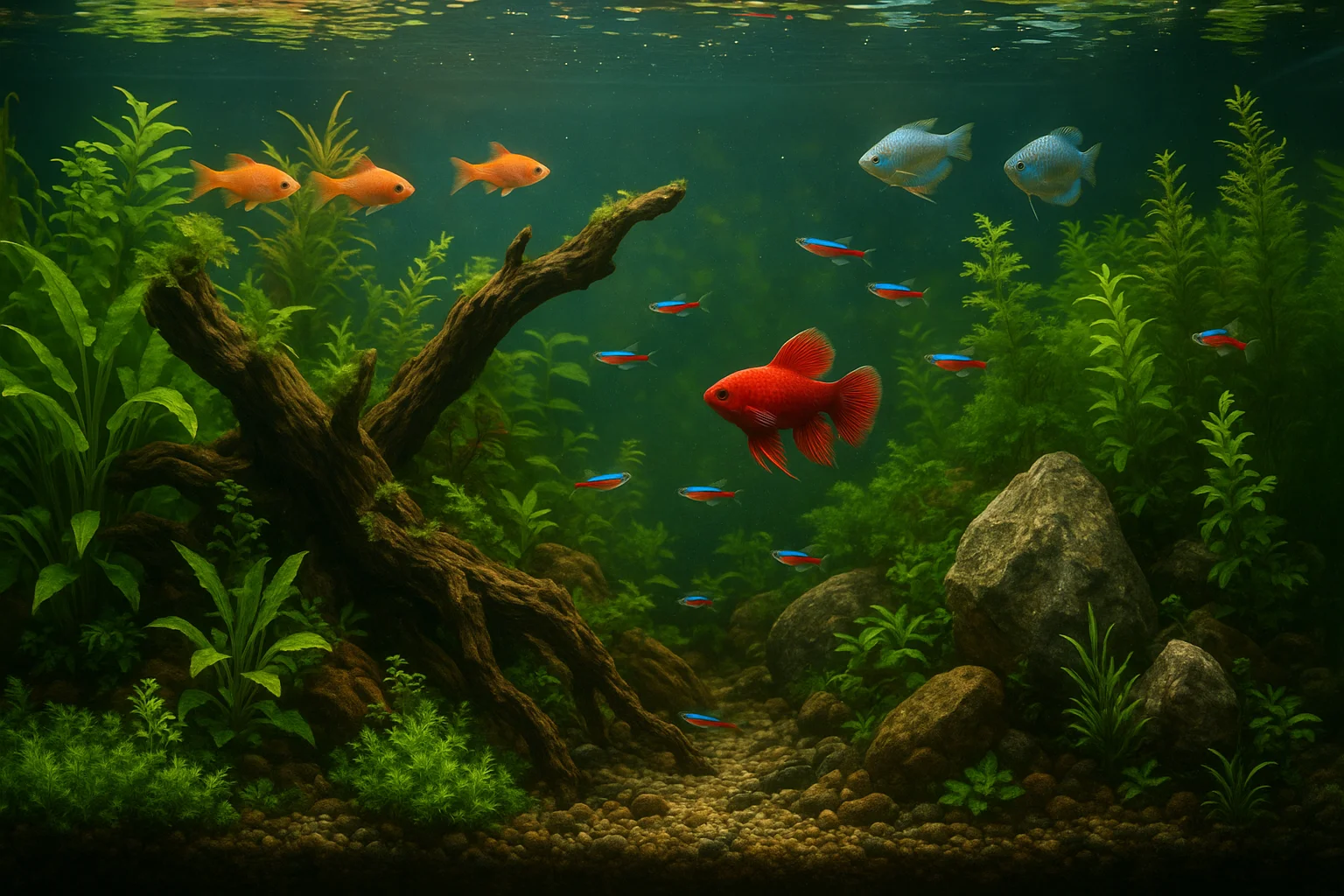
Quick Answer: Cycling an aquarium means building up colonies of beneficial bacteria that convert toxic ammonia into nitrite, then into the far safer nitrate. It’s the single most important step before adding fish, and skipping it is the leading cause of early fish death. Depending on the method you choose, it takes anywhere from a few days to eight weeks.
Knowing how to cycle an aquarium properly is what separates fishkeepers who lose fish in the first month from those who don’t. The process sounds intimidating at first, but once you understand what’s actually happening inside your filter, it makes complete sense — and it becomes something you can manage with confidence.
What Does It Mean to Cycle an Aquarium?
When you set up a new tank, there are no bacteria to process fish waste. Fish excrete ammonia constantly — through their gills, urine, and feces. Without bacteria to break it down, ammonia builds to lethal levels fast. Cycling establishes two groups of bacteria: one that converts ammonia (NH₃) into nitrite (NO₂⁻), and a second that converts nitrite into nitrate (NO₃⁻). Nitrate is relatively harmless at low levels and is removed with regular water changes. Your tank is “cycled” when both ammonia and nitrite consistently read zero.
Why Skipping the Cycle Kills Fish
Ammonia damages gill tissue at concentrations as low as 0.25 ppm. Nitrite causes methemoglobinemia — sometimes called “brown blood disease” — which prevents fish blood from carrying oxygen. Fish in an uncycled tank are essentially suffocating and being chemically burned at the same time. This is new tank syndrome, and it’s entirely preventable.
How Long Does Cycling Take?
| Method | Typical Duration | Risk to Fish |
|---|---|---|
| Fishless cycling (pure ammonia) | 4–8 weeks | None |
| Fish-in cycling | 4–8 weeks | Moderate to high |
| Seeded cycling (established media) | 1–2 weeks | Low |
| Bottled bacteria products | 1–7 days | Low (if used correctly) |
The Science Behind the Nitrogen Cycle
The cycle follows a simple chain: Ammonia → Nitrite → Nitrate. Ammonia enters the tank from fish waste, uneaten food, and decaying matter. It’s oxidized to nitrite, which is then oxidized to nitrate. Each step is handled by a different bacterial group, and each group takes time to establish.
Nitrate is the endpoint. It doesn’t cause acute toxicity at moderate levels, which is why water changes — not bacteria — are your long-term control mechanism for it.
Which Bacteria Actually Do the Work?
- Ammonia → Nitrite: Nitrosomonas and Nitrosospira species. These colonize relatively quickly, usually within one to two weeks.
- Nitrite → Nitrate: Nitrospira dominates in established aquaria, with Nitrobacter playing a smaller role. These are slower to establish — often two to six weeks — which explains why nitrite spikes tend to linger longer than ammonia spikes.
These bacteria live almost entirely in your filter media, not in the water column. This is why your filter is the heart of the cycle, and why protecting it matters so much.
What Triggers Bacterial Colonization?
Bacteria need three things: a continuous ammonia food source, dissolved oxygen, and a stable surface to colonize. Porous filter media provides that surface. As an advanced note: in tanks with deep substrate (4+ inches), anaerobic zones can host denitrifying bacteria that convert nitrate back to harmless nitrogen gas. It’s not something beginners need to manage, but it explains why mature planted tanks and reef systems can maintain surprisingly low nitrate levels without frequent water changes.
How to Cycle an Aquarium: Four Methods
Fishless Cycling with Pure Ammonia (Recommended)
This is the gold standard. You add ammonia to the tank without any fish, let bacteria establish over four to eight weeks, and add livestock only when the cycle is complete. No animals are harmed, and you can dose ammonia precisely.
Step-by-step:
- Set up your tank fully — filter running, heater set to 80–82°F (27–28°C).
- Dechlorinate your water.
- Dose pure ammonia to reach 2–4 ppm. Use unscented, surfactant-free ammonia — shake the bottle before buying; persistent bubbles mean surfactants are present and the product is not safe.
- Test every two to three days. You’ll see ammonia spike, then drop as nitrite rises.
- Re-dose ammonia to 1–2 ppm whenever it drops to zero — bacteria need a continuous food source.
- The cycle is complete when both ammonia and nitrite read 0 ppm within 24 hours of a 2–4 ppm ammonia dose, and nitrate is detectable.
An accurate liquid test kit is essential here. Dip strips are not reliable enough to confirm a completed cycle.
Fish-In Cycling: Risks and Best Practices
Fish-in cycling works, but it puts fish through real stress. Only choose this method if you already have fish that need a home and have no other option.
Use only the hardiest species: zebra danios (Danio rerio) and white cloud mountain minnows are the most commonly recommended. Avoid invertebrates, sensitive species like discus or cardinal tetras, and any large, waste-heavy fish.
To minimize harm:
- Test ammonia and nitrite daily.
- Perform 25–50% water changes whenever ammonia or nitrite exceeds 0.5 ppm.
- Use Seachem Prime as your dechlorinator — it temporarily detoxifies ammonia and nitrite for 24–48 hours, buying time between water changes.
- Feed minimally to reduce ammonia load.
Seeded Cycling: The Fastest Method
If you have access to an established tank, this is the fastest way to cycle a new aquarium. Beneficial bacteria live in filter media, substrate, and even on porous decorations — transferring any of these jumpstarts colonization immediately.
- Move an established filter sponge or bio-media directly into the new filter.
- Add a handful of gravel or substrate from an established tank.
- Run a used filter in the new tank alongside a new one for two to four weeks.
A well-seeded tank can be ready for fish in one to two weeks. Test to confirm — don’t assume.
Bottled Bacteria: Do They Actually Work?
The best products genuinely work. The key is choosing ones that contain live Nitrospira species rather than just heterotrophic bacteria.
Top-performing options:
- Dr. Tim’s One & Only — widely regarded as the most reliable
- Fritz Turbo 700 — excellent for larger tanks
- Tetra SafeStart Plus — widely available and effective when used correctly
Follow instructions carefully: add the full bottle, avoid UV sterilizers and antibacterial medications simultaneously, and skip large water changes immediately after dosing. Even with bottled bacteria, test before adding fish — results range from one day to one week depending on conditions.
Water Parameters to Monitor During Cycling
Ammonia
For fishless cycling, dose to 2–4 ppm. For fish-in cycling, keep it as close to zero as possible through water changes. One important nuance: free ammonia (NH₃) is far more toxic than ammonium (NH₄⁺), and the ratio shifts with pH and temperature. Higher pH and warmer water mean more of the toxic free form — another reason to keep both stable during cycling.
Nitrite
Expect nitrite to spike anywhere from 2 to 10+ ppm before it falls. Nitrospira bacteria are slower to establish than ammonia-oxidizers, so this stage often feels like a stall. It isn’t — be patient. During fish-in cycles, adding 1 tablespoon of non-iodized aquarium salt per 10 gallons reduces nitrite toxicity by competitive inhibition at the gill level.
Nitrate
Seeing nitrate climb is good news — it confirms the second stage of nitrification is working. Safe levels: below 20–40 ppm for most freshwater fish, below 10–20 ppm for sensitive species like discus and shrimp, and below 5 ppm for reef tanks.
pH and KH
Nitrifying bacteria thrive between pH 7.0 and 8.0. Below pH 6.0, bacterial activity slows dramatically. The problem is that nitrification itself produces nitric acid, which gradually drops pH — especially in soft water.
KH (carbonate hardness) is your buffer against this. Keep KH at a minimum of 4 dKH during cycling. If it drops, dissolve about 1 teaspoon of baking soda per 50 gallons in a cup of tank water and add it slowly, or use crushed coral substrate to raise it passively over time.
Temperature and Dissolved Oxygen
Set your heater to 80–82°F (27–28°C) during fishless cycling — this is the sweet spot for bacterial growth. Nitrifying bacteria are obligate aerobes, so they need oxygen to function. Keep surface agitation strong throughout. If your filter’s surface movement looks weak, add an airstone.
Parameter Quick Reference
| Parameter | Target During Cycling | Fish-Safe Level |
|---|---|---|
| Ammonia | 2–4 ppm (fishless) / <0.5 ppm (fish-in) | 0 ppm |
| Nitrite | Will spike; reduce quickly | 0 ppm |
| Nitrate | Rising = good sign | <40 ppm freshwater, <5 ppm reef |
| pH | 7.0–8.0 | Species-dependent |
| KH | 4–8 dKH | 3+ dKH |
| Temperature | 80–82°F (27–28°C) | Species-dependent |
Tank Setup for a Successful Cycle
Filter and Biological Media
Your filter is where the cycle lives. More porous surface area in your media means more bacteria, which means a faster, more stable cycle.
Best bio-media choices: ceramic rings, sintered glass (Siporax), lava rock (cheap and extremely porous), and sponge media. Surface area is everything.
Never turn off your filter during cycling — bacteria begin dying within hours without oxygenated flow. Never rinse bio-media under tap water; chlorine kills your colony. Use old tank water only.
Should You Add Plants During Cycling?
Yes — and they help. Fast-growing stem plants like hornwort, water sprite, and anacharis absorb ammonia directly as a nitrogen source, which can soften or even eliminate visible spikes. A heavily planted tank may show barely detectable ammonia or nitrite levels throughout cycling. That’s not a problem — it means the plants are doing their job alongside the bacteria. Just confirm with a test that both ammonia and nitrite are reliably at zero before adding fish.
Troubleshooting a Stalled Cycle
Ammonia Won’t Drop
- pH too low — bacteria slow dramatically below pH 7.0; check KH and buffer if needed
- Temperature too cold — below 65°F (18°C), nitrification crawls; raise your heater
- Chlorine in the water — if you forgot to dechlorinate, do a water change and re-dose conditioner
- Insufficient oxygen — check surface agitation; add an airstone
Nitrite Is Stuck High
This is the most common complaint, and it’s almost always just impatience. Nitrospira bacteria are genuinely slower to establish than ammonia-oxidizers. Check KH and pH — if either has crashed, correct it and give bacteria time to recover. During fish-in cycles, add non-iodized aquarium salt at 1 tablespoon per 10 gallons to reduce nitrite toxicity while you wait.
pH Crash
Nitrification consumes KH as it produces nitric acid. If your KH is low to begin with, pH can drop suddenly from 7.5 to below 6.0 within days, killing your bacterial colony and stalling the cycle completely. Fix it by slowly adding dissolved baking soda (1 teaspoon per 50 gallons), then address the root cause with crushed coral in your filter or substrate.
Restarting a Crashed Cycle
If your cycle crashed due to medication, a power outage, or filter failure, don’t panic. Add a full dose of a quality bottled bacteria product, re-seed with any established media you can source, and resume dosing ammonia. If fish are in the tank, use Prime daily and perform large water changes until parameters stabilize. Restarts typically go faster than the original cycle because some bacteria usually survive.
Maintaining Your Cycle After Stocking
Add fish in small groups and wait two to three weeks between additions — your bacterial colony is sized to the ammonia load it was cycled with, and a sudden influx can trigger a mini-cycle spike.
Overfeeding is the single most common cause of ammonia spikes in established tanks. Feed only what fish consume in two to three minutes, once or twice daily, and remove uneaten food promptly.
For routine maintenance:
- Never clean all bio-media at once. If you have two sponges, alternate — clean one per month.
- Rinse bio-media only in old tank water, never tap water.
- Perform 20–30% water changes weekly to keep nitrate under control.
- Test parameters monthly even in a well-established tank — problems are easier to catch early.
- When medicating fish, use a hospital tank where possible to avoid exposing your biological filter to antibacterial treatments.
Frequently Asked Questions
Can I cycle an aquarium in 24 hours? Not reliably with a brand-new setup. Bottled bacteria products like Dr. Tim’s One & Only can establish a functional cycle in as little as one to two days under ideal conditions, but you should still test before adding fish. Seeding with established filter media is the only method that consistently delivers a cycled tank within 24–48 hours.
Do I need to cycle a tank if I use bottled bacteria? You still need to verify the cycle is complete with a test kit. Bottled bacteria accelerate the process significantly, but results vary. Don’t skip testing just because you used a product — confirm that both ammonia and nitrite read zero before stocking.
How do I know when my aquarium cycle is complete? Dose ammonia to 2–4 ppm and test again 24 hours later. If both ammonia and nitrite read 0 ppm and nitrate is detectable, your cycle is complete. One passing test is enough to confirm — you don’t need to repeat it multiple times.
Will my cycle crash if I do a water change? No. Water changes do not harm your bacterial colony because the bacteria live in your filter media, not in the water. You can and should do water changes during fish-in cycling. Just always dechlorinate before adding tap water.
Can I cycle a saltwater tank the same way? The nitrogen cycle works identically in saltwater. The same bacterial species are involved, and the same methods apply. The main differences are that marine tanks typically require longer cycling times, and live rock is an excellent seeding material that can significantly speed up the process.
` inline comment from the original body text and replaced with a properly placed HTML comment after the relevant sentence, keeping it invisible to readers. —>