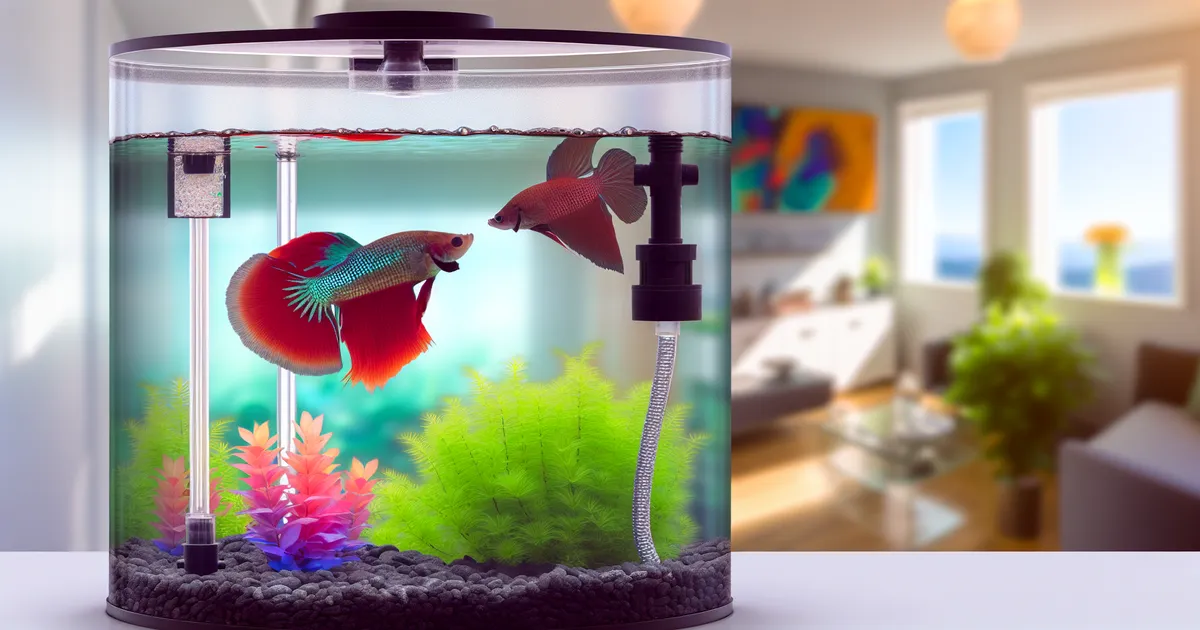
Quick Answer: Cycling an aquarium means growing colonies of beneficial bacteria that convert toxic ammonia into nitrite, then into the far less harmful nitrate — before your betta ever enters the water. A fishless cycle takes 4–8 weeks and is complete when ammonia and nitrite both read 0 ppm with detectable nitrate present. Skipping this step is the single most common reason bettas die within weeks of being brought home.
Learning how to cycle an aquarium for a betta is the most important thing you can do before buying your fish. New tank syndrome — the ammonia and nitrite poisoning that kills bettas in uncycled tanks — is entirely preventable. This guide walks you through every stage, from setting up your tank to the moment your betta safely swims in.
What Is the Nitrogen Cycle and Why Does Your Betta Need It?
Fish produce ammonia constantly through waste and respiration. In an established tank, two groups of bacteria handle that problem: Nitrosomonas convert ammonia into nitrite, and Nitrospira convert nitrite into nitrate. Nitrate is far less toxic and is removed with regular water changes. These bacteria live primarily in your filter media — not the water itself — which is why the filter is the heart of a healthy tank.
Without those bacterial colonies in place, ammonia and nitrite accumulate rapidly. Even low levels cause gill damage, immune suppression, and death in bettas. Cycling builds those colonies before your fish is exposed to any of it.
How Long Does Cycling a Betta Tank Take?
A standard fishless cycle takes 4–8 weeks. The tank is ready when you can add 2 ppm of ammonia and have it processed to 0 ppm ammonia and 0 ppm nitrite within 24 hours, with nitrate present as a byproduct. Shortcuts exist — seeding with established filter media can cut this to days, and bottled bacteria products can shave weeks off the timeline.
Tank Setup: Getting the Foundation Right Before You Cycle
Minimum Tank Size for a Betta
A 5-gallon tank is the absolute minimum for a betta; 10 gallons is genuinely better and well worth the small extra cost. Larger water volumes dilute ammonia spikes more effectively and stay more stable throughout the cycle. Bowls and tanks under 5 gallons are nearly impossible to cycle reliably and create a constant water quality crisis.
Choosing the Right Filter
Your filter media is where the bacterial colony lives, so filter choice matters enormously. Sponge filters are the top pick for betta tanks — gentle flow, large biological surface area, and easy to seed from an established tank. They’re driven by an air pump and produce almost no current, which bettas appreciate.
Hang-on-back (HOB) filters work well too, but baffle the output with a piece of pre-filter foam to reduce surface turbulence. Canister filters offer excellent biological filtration for larger tanks but almost always need baffling for bettas. Avoid undergravel filters — they’re difficult to maintain and disrupt the bacterial colonies you’re trying to build.
Substrate, Decorations, and Driftwood
Use 2–3 inches of fine, smooth substrate — pool filter sand, rinsed play sand, or fine aquarium gravel with no sharp edges. Sharp gravel can shred betta fins and trap decaying food, both of which you want to avoid. Substrate also provides extra surface area for bacterial colonisation.
Driftwood is a great addition: it releases tannins that gently acidify and soften water, replicating the natural blackwater conditions bettas come from. Indian almond leaves do the same and have mild antibacterial properties.
Live Plants
Live plants consume ammonia and nitrate directly, which accelerates cycling and improves long-term water quality. Hardy, low-maintenance options include:
- Java fern and Anubias — attach to driftwood or rocks, no planting needed
- Hornwort — fast-growing, excellent ammonia uptake
- Floating plants (frogbit, water lettuce) — bettas love these for surface cover and bubble nest building
Always leave a 2–3 inch gap between the water surface and your tank lid. Bettas breathe atmospheric air through their labyrinth organ and must reach the surface freely — and they will jump if startled, so a lid is non-negotiable.
Water Parameters for Cycling a Betta Aquarium
Ideal Betta Water Parameters at a Glance
| Parameter | Target Range |
|---|---|
| pH | 6.5–7.5 |
| GH | 5–12 dGH |
| KH | 3–8 dKH |
| Temperature | 76–82°F / 24–28°C |
| Ammonia | 0 ppm |
| Nitrite | 0 ppm |
| Nitrate | below 20 ppm |
Why Temperature and KH Affect Your Cycle Speed
Nitrifying bacteria are most active between 77–86°F (25–30°C). Cycling at the lower end of the betta’s comfort zone — say, 72–74°F — can add weeks to your timeline. Keep a reliable heater in the tank throughout the cycle, targeting 78–80°F (25–27°C).
KH (carbonate hardness) acts as a pH buffer. If KH drops below 2 dKH, your pH can crash during cycling, which stalls or kills the bacterial colony outright. If your tap water is very soft, a small amount of crushed coral in the filter will stabilise KH without pushing pH too high.
Dechlorinating Your Water
Chlorine kills nitrifying bacteria on contact, so every drop of water you add — during setup, top-offs, and water changes — must be treated first. Many municipal water supplies now use chloramine, which requires a product specifically rated to neutralise it. Seachem Prime is the go-to choice: it neutralises both chlorine and chloramine, detoxifies ammonia and nitrite temporarily, and is highly concentrated so a small bottle goes a long way.
How to Cycle an Aquarium for a Betta: Fishless Method Step by Step
Fishless cycling is the safest and most recommended approach. You build the bacterial colony before your betta enters the water, so there’s no fish at risk during the process.
What You’ll Need
- Fully set up tank with heater, filter, and dechlorinated water
- Liquid test kit — the API Freshwater Master Kit is the standard recommendation; test strips are not accurate enough for cycling
- Pure ammonia source (see Step 2)
- Notebook or spreadsheet to log daily readings
Step 1 — Set Up and Dechlorinate
Fill your tank, treat with a dechlorinator, and get your heater and filter running. Set the temperature to 78–80°F. Add plants, driftwood, and decorations now — they all contribute surface area for bacteria.
Step 2 — Add an Ammonia Source
You have two reliable options:
- Pure ammonia solution — Dr. Tim’s Ammonium Chloride is purpose-made for cycling. If using household ammonia, do the shake test: shake the bottle and confirm it produces no foam. Foam means surfactants are present, which will harm bacteria.
- Raw shrimp or fish food — place a small piece in the tank and let it decompose. This works but is slower and harder to control.
Dose to reach 2–4 ppm ammonia and confirm with your test kit before moving on.
Step 3 — Test Daily and Log Your Results
Test every day and record ammonia, nitrite, and nitrate. You’re watching for a predictable sequence: ammonia rises first, then nitrite appears as Nitrosomonas establish, then nitrate appears as Nitrospira colonise and begin processing nitrite. Ammonia and nitrite will gradually fall toward zero.
The nitrite spike is often the longest stage — it can sit elevated for weeks. Keep dosing ammonia to 2 ppm every few days to keep feeding the bacteria. Be patient.
Step 4 — Confirm the Cycle Is Complete
Dose your tank to 2 ppm ammonia. Test after 24 hours. If both ammonia and nitrite read 0 ppm and nitrate is detectable, your tank is cycled. Do a 50% water change to bring nitrate below 20 ppm, then introduce your betta.
How to Speed Up the Cycle
The fastest method is transferring a used sponge or filter media from a cycled tank directly into your new filter. You’re transplanting a live bacterial colony, and the tank can be ready in days rather than weeks.
Bottled bacteria products are the next best option. Tetra SafeStart Plus, Seachem Stability, and Dr. Tim’s One & Only all contain live nitrifying bacteria — add them directly to your filter media, not just the water column. Results vary by brand and storage conditions, but they genuinely work when used correctly alongside an ammonia source. A cup of substrate from an established tank also helps.
Fish-In Cycling: How to Do It Safely If Your Betta Is Already in the Tank
When Fish-In Cycling Is Necessary
Many people find this guide after their betta is already in an uncycled tank. Fish-in cycling is riskier than fishless, but it’s manageable with the right protocol.
The Daily Routine
Seachem Prime is essential here. It temporarily detoxifies ammonia and nitrite for 24–48 hours by binding them in a less harmful form, while still allowing nitrifying bacteria to process them. Dose it every 24 hours throughout the cycle.
Test your water every single day. Perform a 25–50% water change whenever ammonia or nitrite exceeds 0.25 ppm, always treating new water with Prime before adding it. Skipping a day when parameters are spiking can kill your fish within hours — this is the non-negotiable part of fish-in cycling.
Feed your betta once daily, offering only what it eats in two minutes, and remove any uneaten food immediately. Every bit of decomposing food adds to your ammonia load. Fish-in cycling typically takes 6–8 weeks of consistent daily attention.
Introducing Your Betta When the Cycle Is Complete
Run the final confirmation test: dose to 2 ppm ammonia, wait 24 hours, and confirm 0 ppm ammonia and 0 ppm nitrite with detectable nitrate. If it passes, do a 50% water change to bring nitrate below 20 ppm.
Float your betta’s bag or container in the tank for 15–20 minutes to equalise temperature. Then gradually add small amounts of tank water to the container every 5–10 minutes over 30–60 minutes. This lets your betta adjust to the new water chemistry without shock.
In the first 48 hours, normal behaviour includes exploring, flaring at its reflection, and building a bubble nest. Watch for warning signs: clamped fins pressed tight against the body, gasping at the surface beyond normal air breathing, or prolonged hiding combined with refusing food. Any of these warrants an immediate water test.
Ongoing Maintenance
- Weekly 25–30% water changes — the backbone of long-term water quality
- Rinse filter media only in old tank water — never tap water; chlorine will wipe out your bacterial colony
- Test parameters weekly for the first month after cycling
- Add new substrate or large decorations gradually to avoid disrupting bacterial populations
Betta Tank Mates in a Cycled Tank
Adding tank mates increases the bioload, which may cause a temporary ammonia bump while the bacterial colony adjusts. Add new inhabitants gradually, and never add anyone until the cycle is fully complete.
In a well-planted 10-gallon or larger cycled tank, compatible species include nerite snails and mystery snails (low bioload, great algae cleaners), Amano shrimp (larger and less likely to be eaten than cherry shrimp), pygmy corydoras (keep in groups of 6+), ember tetras (groups of 8–10), harlequin rasboras, and celestial pearl danios (groups of 8+).
Avoid tiger barbs, serpae tetras, and black skirt tetras (fin-nippers), male guppies (their flowing fins trigger aggression), goldfish (incompatible temperature and water requirements), and any cichlid or paradise fish. Never house two male bettas together.
Feeding Your Betta During and After Cycling
During fishless cycling, you don’t feed at all — ammonia is added artificially. During fish-in cycling, overfeeding is one of the fastest ways to spike ammonia beyond what your developing colony can handle.
Once your tank is established, bettas are carnivores that need a protein-rich diet. Build their meals around high-quality betta pellets as the staple — look for whole fish or insect meal as the first ingredient. Fluval Bug Bites Betta Formula, Northfin Betta Bits, and New Life Spectrum Betta are all solid choices.
Supplement with frozen bloodworms, mysis shrimp, and brine shrimp two or three times per week. Frozen daphnia is particularly valuable — it acts as a natural digestive aid and helps prevent constipation. Avoid flake food and anything with wheat, corn, or soy as a primary ingredient.
Feed once or twice daily, offering only what your betta consumes in 2–3 minutes — typically 3–5 small pellets per meal. Remove uneaten food immediately, and include one fasting day per week to support digestive health.
Frequently Asked Questions
How long does it take to cycle an aquarium for a betta fish?
A fishless cycle typically takes 4–8 weeks. The timeline depends on temperature (warmer water speeds it up), whether you seed with established media (can cut it to days), and whether you use bottled bacteria products. The cycle is complete when 2 ppm of ammonia is processed to 0 ppm ammonia and 0 ppm nitrite within 24 hours, with nitrate detectable.
Can a betta fish survive in an uncycled tank?
Bettas can survive short-term in uncycled water, but ammonia and nitrite will accumulate quickly and cause serious harm — gill damage, immune suppression, and death — often within days to weeks. If your betta is already in an uncycled tank, start fish-in cycling immediately with daily water changes and Seachem Prime to detoxify ammonia while the bacterial colony establishes.
Do bottled bacteria products like Seachem Stability actually work?
Yes, they genuinely work — but results vary. Products like Seachem Stability, Tetra SafeStart Plus, and Dr. Tim’s One & Only contain live nitrifying bacteria and can significantly shorten the cycling timeline. Add them directly to your filter media, not just the water column, and always pair them with an active ammonia source. Shelf life and storage conditions affect potency, so buy from a reputable retailer with good stock turnover.
What is the fastest way to cycle a betta tank?
The fastest method is seeding your new filter with used media — a sponge, ceramic rings, or bio-balls — from an established, healthy tank. Combined with a bottled bacteria product and a stable ammonia source at 78–80°F, some tanks pass the 24-hour ammonia processing test in under a week. Without seeding, expect a minimum of 2–4 weeks even with bottled bacteria.
Why is my nitrite stuck high during cycling?
A prolonged nitrite spike is normal and one of the most common points where fishless cycling stalls. Nitrospira (the nitrite-consuming bacteria) establish more slowly than Nitrosomonas. Keep dosing ammonia to 2 ppm every few days, maintain temperature at 78–80°F, and ensure KH is above 3 dKH so pH doesn’t crash. If the spike has lasted more than four weeks with no movement, check your pH — a crash below 6.0 can stall the cycle entirely.
— placed after sponge filter recommendation in filter section. Natural fit; sponge filters are the #1 recommended product in betta communities. 2. — placed after HOB filter mention. Secondary filter recommendation. 3. — placed after heater temperature guidance. Heaters are a high-conversion affiliate product for new tank setups. 4. — placed after Prime recommendation in dechlorination section. High purchase intent; Prime is a consumable with repeat buys. 5. — placed in the “What You’ll Need” list. Test kits are a near-universal purchase for anyone cycling a tank. 6. — placed after ammonia source recommendation. Purpose-made cycling product with strong affiliate conversion. 7. — placed in the feeding section after brand mentions. Food is a recurring purchase; good for long-term affiliate revenue.
Note: The original article also had inline comments for Tetra SafeStart Plus, Seachem Stability, Dr. Tim’s One & Only, Fluval Bug Bites, Northfin Betta Bits, and New Life Spectrum. These brand mentions are retained in the prose but the HTML affiliate comment was consolidated to a single placement to avoid over-tagging a single paragraph. Editor should split these out into individual affiliate links at the CMS level.
No Raw Placeholders
- No … placeholders were present in the original; none introduced in the revision ✓ —>