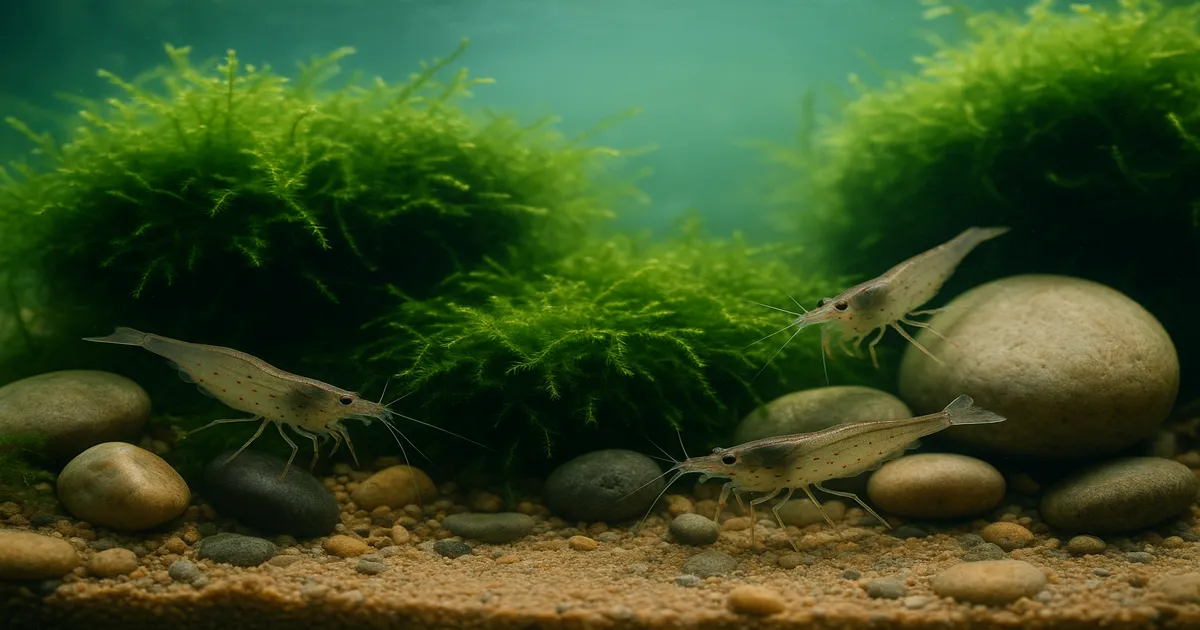
Quick Answer: In a well-established planted tank with biofilm and algae, feed Amano shrimp supplemental food every 2–3 days — the tank itself provides a continuous background diet. In new or sparse tanks, feed once daily in small amounts. Overfeeding is a far greater risk than underfeeding, so when in doubt, offer less.
How Often to Feed Amano Shrimp: The Short Answer
Figuring out how often to feed Amano shrimp trips up a lot of hobbyists, mostly because these shrimp look like they’re always hungry. They’re constantly moving, constantly picking at things — and that can make you feel like you’re starving them when you’re not.
The short answer: every 2–3 days in a mature planted tank, once daily in a new or bare setup. The biofilm and algae coating your plants, driftwood, and hardscape do most of the nutritional heavy lifting between scheduled feedings. Your job is to supplement that natural food source, not replace it.
Understanding the Amano Shrimp’s Natural Diet
What Do Amano Shrimp Eat in the Wild?
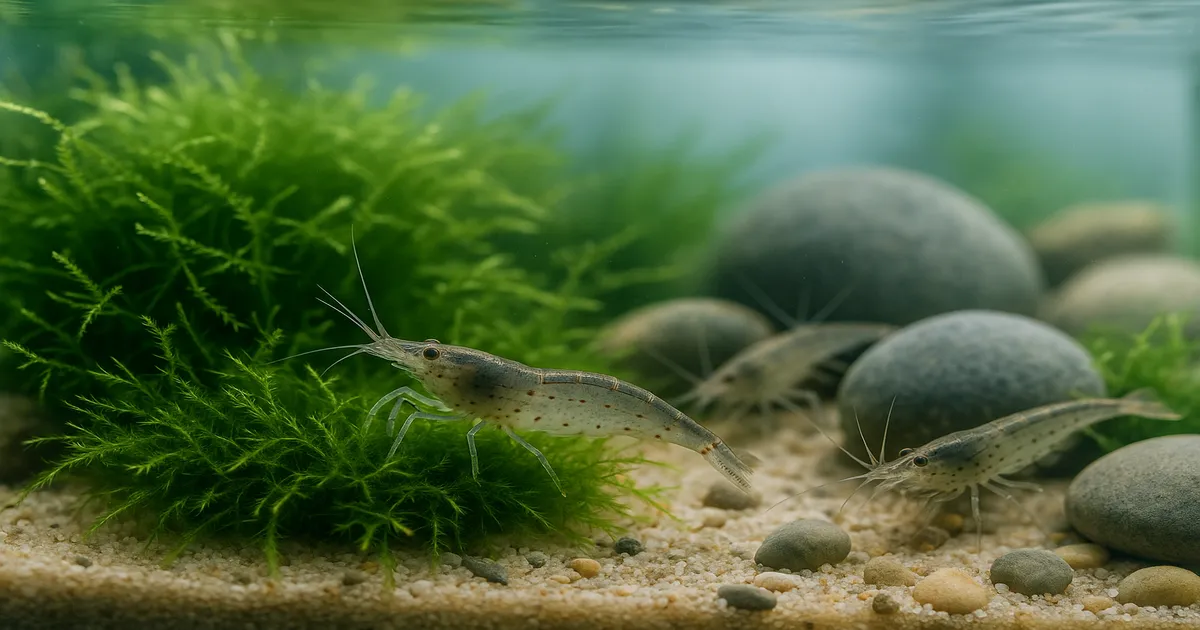
Amano shrimp (Caridina multidentata) are native to fast-moving, clean streams and rivers in Japan, Taiwan, and Korea. Their wild habitat is rich in biofilm — the thin layer of bacteria, algae, fungi, and microorganisms that coats every hard surface in a healthy aquatic environment. Biofilm, soft algae, decaying plant matter, and the occasional bit of carrion make up the bulk of their natural diet.
Legendary aquascaper Takashi Amano introduced these shrimp to the hobby in the 1980s and 90s specifically for their algae-controlling abilities. The name stuck.
Why Amano Shrimp Are Always Grazing
These shrimp didn’t evolve to eat two square meals a day. They evolved to graze constantly, picking up microscopic food particles from every surface they touch. Watch yours for a few minutes and you’ll see it — they never really stop. That perpetual foraging motion is completely normal and healthy, not a sign they need more food.
Because Amano shrimp are continuous grazers, a tank rich in biofilm and algae can genuinely sustain them with minimal supplemental feeding. The more established and planted your tank, the less often you need to drop food in. A bare, new tank is a different story.
How Often to Feed Amano Shrimp by Tank Type
Well-Established Planted Tanks With Algae and Biofilm
Feed every 2–3 days. A mature tank with mosses, driftwood, rocks, and live plants generates a near-constant supply of biofilm. Your shrimp are grazing between feedings whether you see it or not. Supplemental food here is a bonus, not a lifeline.
Moderately Planted Tanks With Some Biofilm
Feed every 1–2 days. There’s enough natural food to supplement, but not enough to rely on exclusively. Watch your shrimp’s behaviour — if they swarm food eagerly and then return to casual grazing, you’ve got the balance right.
New or Sparse Tanks With Little Biofilm
Feed once daily in small amounts. A recently cycled tank hasn’t had time to develop significant biofilm. Until it does, daily feeding keeps your shrimp nourished without causing a water quality crisis — provided you keep portions small and remove uneaten food promptly.
Community Tanks With Competing Fish
Feed once daily. Fish are faster than shrimp. In a community tank, you need to make sure your Amano shrimp are actually getting to the food before the fish hoover it up. Sinking wafers and gel foods help because they drop straight to the bottom where shrimp spend most of their time.
| Tank Condition | Recommended Feeding Frequency |
|---|---|
| Well-established planted tank with algae/biofilm | Every 2–3 days |
| Moderately planted, some biofilm | Every 1–2 days |
| New tank, sparse planting, low biofilm | Once daily |
| High shrimp population or competing fish | Once daily |
Some experienced keepers practice a one-day-per-week fast, skipping supplemental feeding entirely to prevent gradual organic buildup. It’s optional, but it’s a solid habit in established tanks.
How Much Food to Give Per Feeding
The 2–3 Hour Rule
Only offer what your shrimp can finish within 2–3 hours. That’s the window before uneaten food starts breaking down and releasing ammonia. If there’s food left after three hours, you gave too much — remove it immediately.
Practical portion guide:
- 4–6 shrimp: A piece of algae wafer about the size of a small pea
- 6–10 shrimp: A pea-sized to slightly larger piece
- 10+ shrimp: Scale up gradually, but still err on the small side
Blanched vegetables can stay in a little longer — up to 24 hours — since they break down more slowly. Still remove them before they turn mushy.
Why Removing Uneaten Food Matters
Rotting food is one of the fastest ways to crash water quality in a shrimp tank. Ammonia spikes from decaying matter are acutely toxic to shrimp — even a brief spike can kill them or trigger failed molts. Keep a pair of long aquarium tweezers near the tank so removing leftovers takes seconds, not minutes.
Best Foods for Amano Shrimp
Staple Foods (Algae and Vegetables)
These should make up the majority of what you offer:
- Algae wafers — Hikari Algae Wafers are a reliable staple
- Spirulina wafers or tablets — excellent plant-based protein and pigment-boosting nutrients
- Blanched vegetables — zucchini, cucumber, spinach, and shelled peas; blanch briefly to soften cell walls
- Nori sheets — unseasoned, clipped to a veggie clip or weighted down; shrimp go wild for it
- Repashy gel foods — Community Plus or Soilent Green sink cleanly, don’t cloud the water, and shrimp love them
Protein Foods (1–2 Times Per Week)
Amano shrimp are omnivores, so a little animal protein rounds out their diet. Limit these to once or twice a week — too much protein in the water column accelerates bacterial growth and fouling.
- Frozen or freeze-dried bloodworms
- Frozen brine shrimp or daphnia
- High-quality sinking pellets with animal protein content
Specialty Shrimp Foods and Biofilm Boosters
Dennerle Shrimp King Complete and GlasGarten Shrimp Dinner are formulated specifically for shrimp and are worth keeping in rotation. GlasGarten Bacter AE promotes biofilm growth in the tank itself, improving the shrimp’s continuous background diet rather than just feeding them directly. Rotate food types regularly — nutritional variety matters just as much for shrimp as it does for fish.
Foods and Substances to Avoid
Copper is the big one. It is lethal to all shrimp in even tiny concentrations. Check your fertilisers (some contain copper as a trace element), medications (many fish treatments are copper-based), and tap water if you have newer copper plumbing. Also avoid heavily seasoned or processed foods, anything with artificial preservatives, and large amounts of protein-heavy foods left to rot in the tank.
Reading Your Shrimp: Feeding Behaviour and Warning Signs
Signs They’re Getting Enough Food
Healthy, well-fed Amano shrimp are active but not frantic. They’ll swarm supplemental food when it hits the water, grab pieces, and carry them off to eat — that’s normal, not aggression. Between feedings, they’ll graze calmly on surfaces around the tank.
Signs of Underfeeding
- Constant, frantic searching across every surface without settling
- Visibly thin or hollow-looking body
- Shrimp clustered at the water surface or near the filter outlet
If your shrimp look restless and thin, increase feeding frequency and add more biofilm-generating surfaces — driftwood, rocks, and leaf litter all help.
Signs of Overfeeding
- Cloudy or milky water
- Uneaten food rotting on the substrate
- Ammonia or nitrite readings above zero
- Shrimp appearing lethargic or hiding more than usual
If you see any of these, do a partial water change, remove all uneaten food, and dial back your feeding immediately.
Why Stressed Shrimp Stop Eating
Appetite suppression is almost always a water quality signal, not a feeding problem. If your shrimp are ignoring food they’d normally rush for, test your parameters before changing anything else. Ammonia, nitrite, sudden pH shifts, and temperature spikes all cause shrimp to stop eating and hunker down.
Tank Setup: The Foundation of Good Feeding
Ideal Water Parameters for Amano Shrimp
Getting your water right is the single most important thing you can do for your shrimp’s health — including their ability to eat and absorb nutrients properly.
- Temperature: 70–78°F (21–26°C)
- pH: 7.0–7.5
- GH: 6–8 dGH
- KH: 2–6 dKH
- Ammonia: 0 ppm
- Nitrite: 0 ppm
- Nitrate: below 20 ppm
Use a reliable liquid test kit rather than strips — accuracy matters when you’re keeping invertebrates. The API Freshwater Master Test Kit covers all the parameters above and is a solid choice for shrimp keepers.
Plants, Driftwood, and Biofilm Production
A minimum of 10 gallons gives you the water volume needed for stable parameters. Java moss, Anubias, Java fern, and Cryptocoryne species all develop rich biofilm on their leaves and stems. Driftwood is especially valuable — it leaches tannins, softens the water slightly, and grows biofilm that shrimp graze on constantly. Indian almond leaves add another layer of natural food and shelter.
The more of these elements you include, the less often you’ll need to supplement feed — and the healthier your shrimp will be overall.
Filtration and Flow
A sponge filter is the safest and most shrimp-friendly option — no intake risk, excellent biological filtration, and gentle surface agitation. The Hikari Bacto-Surge is a popular choice. If you use a hang-on-back or canister filter, fit an intake guard or pre-filter sponge to prevent shrimp from being pulled in. Amano shrimp come from fast-moving streams, so they appreciate good flow and well-oxygenated water.
Never add shrimp to an uncycled tank. Ammonia and nitrite — both produced before beneficial bacteria are established — are lethal to shrimp at concentrations that fish might shrug off. Run the full cycle first, confirm ammonia and nitrite are at 0 ppm, then add your shrimp using the drip acclimation method.
Common Health Issues Linked to Feeding
Molting Problems
Amano shrimp molt regularly as they grow, and a failed molt can be fatal. The most common cause is insufficient GH — shrimp need adequate calcium and magnesium to build a new exoskeleton. If you’re seeing the “white ring of death” (a pale band around the midsection during molting), check your GH immediately and consider a mineral supplement like SaltyShrimp GH+ . Feeding nori and seaweed-based foods regularly also provides a natural iodine source, which plays a role in molting hormone production.
Bacterial Infections From Overfeeding
Bacterial infections in shrimp almost always trace back to water quality problems — and overfeeding is one of the most common triggers. Rotting food drives ammonia up, which stresses shrimp and compromises their immune function. A shrimp with a milky or opaque body, or one sitting motionless at the bottom, may be fighting a bacterial infection. Your first response should always be a partial water change and thorough removal of any organic waste.
Copper Toxicity
Copper can enter your tank through fertilisers, fish medications, and tap water from newer copper plumbing. Always use a quality dechlorinator that also neutralises heavy metals — Seachem Prime is the standard recommendation — and check the ingredient list of any fertiliser or medication before adding it to a shrimp tank.
Frequently Asked Questions
Can Amano shrimp survive without supplemental feeding if there’s algae in the tank?
Yes. In a well-established tank with abundant algae and biofilm, Amano shrimp can thrive without supplemental food for extended periods. That said, a varied supplemental diet improves long-term health and molting success, so occasional feeding is still recommended even in mature tanks.
How long can Amano shrimp go without food?
In a mature planted tank, Amano shrimp can go 1–2 weeks without supplemental feeding as long as biofilm and algae are present. In bare or new tanks with little natural food, a few days without feeding can cause stress and weight loss. A well-planted tank will sustain them fine during a short vacation without an automatic feeder.
Why are my Amano shrimp not eating the food I put in?
The most common reason is water quality stress — check ammonia, nitrite, pH, and temperature before assuming it’s a food preference issue. Shrimp also go off food briefly after molting, which is normal. If parameters are fine and they’ve recently molted, give them 24–48 hours. If they’re still ignoring food and parameters look good, try a different food type.
How often should I feed Amano shrimp in a community tank with fish?
Feed once daily, using sinking wafers or gel foods that drop directly to the substrate. Fast-moving fish will often beat shrimp to floating or mid-column food. Feeding at lights-out can also help — shrimp are active in low light and many fish are less competitive then.
Is it possible to overfeed Amano shrimp?
Absolutely — and it’s far more dangerous than underfeeding. Uneaten food rots quickly, causing ammonia spikes that can kill shrimp within hours. Stick to the 2–3 hour consumption rule, remove any leftovers promptly, and when in doubt, offer less than you think you need. Healthy shrimp in a good tank will always find something to graze on between feedings.