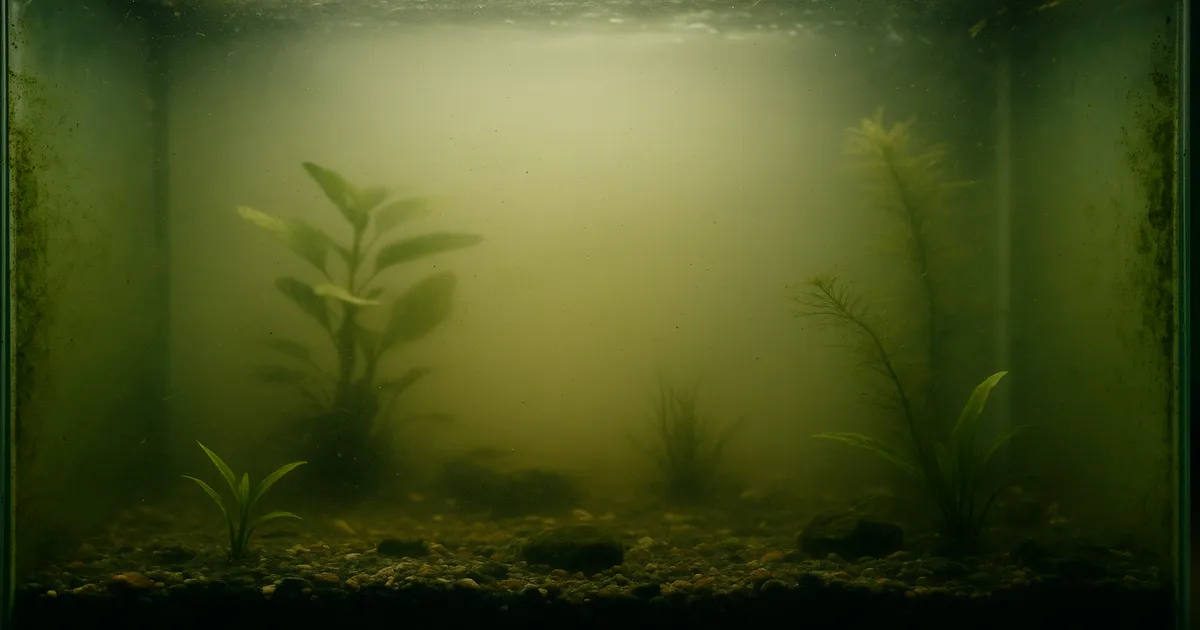
Quick Answer: A cycle crash means your tank’s beneficial bacteria have been severely depleted, causing ammonia and/or nitrite to spike in a tank that was previously stable. Watch for fish gasping at the surface, sudden lethargy, unexplained deaths, or any ammonia/nitrite reading above 0.25 ppm. Confirm with a liquid test kit immediately — test strips aren’t accurate enough to catch a crash early.
Knowing how to tell if an aquarium cycle has crashed can be the difference between saving your fish and losing the entire tank. A crash is sneaky — it can look like disease, stress, or aggression until you test the water and see the real culprit. This guide covers every warning sign, the most common causes, and exactly how to fix one fast.
How to Tell If an Aquarium Cycle Has Crashed: Key Signs
Cycle Crash vs. Uncycled Tank — What’s the Difference?
These two situations look identical on a test kit but have very different histories. An uncycled tank has never established a bacterial colony — it’s a new setup still working through the nitrogen cycle, which typically takes 4–8 weeks. A cycle crash is different: your tank was stable, ammonia and nitrite were holding at zero, and then something wiped out the bacteria responsible for that stability.
The nitrogen cycle works in three stages. Fish waste produces ammonia. Nitrosomonas bacteria convert ammonia to nitrite. Then Nitrospira bacteria convert nitrite to relatively harmless nitrate. A crash disrupts one or both of those conversion steps, producing the same toxic water chemistry as an uncycled tank — but it can happen overnight in a setup that’s been running for years.
The Five Fastest Warning Signs
- Fish gasping at the surface or crowding near the filter outlet
- Lethargy, loss of appetite, or fish sitting motionless on the bottom
- Ammonia at or above 0.25 ppm in a previously stable tank
- Nitrite at or above 0.25 ppm
- Sudden, unexplained deaths — especially multiple fish in a short window
A liquid test kit is your fastest confirmation tool. The API Freshwater Master Test Kit is the standard recommendation — far more accurate than test strips, which can miss dangerous readings entirely. If ammonia or nitrite registers above zero in a tank that’s been running for months, treat it as a crash until proven otherwise.
Water Parameters: How to Test for a Cycle Crash
The Four Parameters to Test Immediately
Test these four in order — don’t skip straight to ammonia alone:
- Ammonia — dangerous at ≥ 0.25 ppm; acutely toxic at ≥ 1.0 ppm
- Nitrite — dangerous at ≥ 0.25 ppm; toxic at ≥ 0.5 ppm
- Nitrate — should still be elevated if the crash is partial; near-zero nitrate alongside an ammonia spike suggests a total crash
- pH and KH — a pH drop greater than 0.3 units in 24 hours is a red flag; KH below 3 dKH is a crash risk
Ammonia: Why pH Changes Everything
Your test kit measures total ammonia nitrogen (TAN), which includes both toxic free ammonia (NH₃) and relatively harmless ammonium (NH₄⁺). The ratio between them shifts sharply with pH. At pH 7.0, roughly 0.5% of TAN is the toxic NH₃ form. At pH 8.0, that figure jumps to around 8%.
In practical terms: a 1.0 ppm reading at pH 8.0 — typical for African cichlid or marine tanks — is roughly 16 times more dangerous than the same reading at pH 7.0. If you keep fish in alkaline water, treat any ammonia reading as an emergency.
Nitrite Spikes in a Cycled Tank
Nitrite above 0.25 ppm in a previously stable tank is a clear crash signal. Nitrite binds to hemoglobin and prevents fish from carrying oxygen — a condition sometimes called “brown blood disease.” A partial crash often shows elevated nitrite while ammonia still looks low, so don’t assume you’re safe just because one number looks acceptable.
pH and KH Crashes: The Hidden Cycle Killers
Nitrification is an acid-producing process. Every 1 ppm of ammonia oxidized consumes roughly 7.1 mg/L of alkalinity. In a low-KH tank, this quietly erodes your buffer until pH suddenly drops — and at pH below 6.0, nitrification slows by up to 90%. The bacteria may still be alive but effectively shut down.
Tanks with heavy driftwood, soft-water discus setups, and any tank with KH below 4 dKH are especially vulnerable to this cascade.
Normal vs. Crashed Parameters at a Glance
| Parameter | Healthy Cycled Tank | Crash Indicator |
|---|---|---|
| Ammonia | 0 ppm | ≥ 0.25 ppm |
| Nitrite | 0 ppm | ≥ 0.25 ppm |
| Nitrate | 10–30 ppm (freshwater) | Near 0 alongside ammonia spike = total crash |
| pH | Stable, species-appropriate | Drop > 0.3 units in 24 hrs |
| KH | 4–8 dKH | < 3 dKH |
| Temperature | Stable, species-appropriate | Sudden shift > 4°F (2°C) |
Fish and Invertebrate Behavior That Signals a Crash
Gasping, Lethargy, and Erratic Swimming
Surface gasping has two possible causes: ammonia or nitrite toxicity damaging gill tissue, or dissolved oxygen dropping below 4 mg/L. Both can happen at the same time during a crash, since decomposing organic matter depletes oxygen while bacteria die off. Either way, it’s an emergency.
A fish that was active and feeding yesterday but today sits motionless on the substrate is showing classic ammonia stress. These symptoms are frequently misdiagnosed as disease or bullying — always test the water before reaching for medication. Erratic swimming, flashing against surfaces, and fins clamped tight against the body all point to chemical irritation of the skin and gills.
Shrimp and Snails: Your Early-Warning System
Neocaridina and Caridina shrimp react to ammonia above 0.1 ppm — well before most fish show symptoms. Frantic surface swimming (sometimes called “death swim”), sudden mass die-offs, or shrimp clustering near the filter outflow are strong early indicators of a crash. Snails are more tolerant but will retract into their shells and stay there when water quality deteriorates.
If you keep a shrimp colony in your display tank, watch them closely. They’re often more sensitive than a test kit at picking up the early stages of trouble.
Species Most Vulnerable to a Cycle Crash
- Discus (Symphysodon spp.) — require ammonia and nitrite as close to 0 ppm as possible at all times; their preferred acidic, soft water also suppresses nitrification
- Goldfish — high-bioload producers that can overwhelm a marginal cycle quickly
- Oscars — large, heavy feeders; any filter disruption hits hard
- Marine fish — generally less tolerant of water quality swings than freshwater species
One important caveat: heavily planted tanks can mask a partial crash by absorbing ammonia before it registers on a test. If your plants are thriving but your fish are acting stressed, test anyway.
Common Causes of an Aquarium Cycle Crash
Cleaning Filter Media with Tap Water
This is the single most common crash trigger. Chlorine and chloramine in tap water kill nitrifying bacteria on contact. Always rinse biological media in a bucket of old tank water removed during a water change — never under the faucet.
Medications That Kill Beneficial Bacteria
Antibiotics, some antifungals, and certain antiparasitic treatments don’t distinguish between harmful pathogens and your beneficial bacteria. Move sick fish to a hospital tank whenever possible. If you must treat the display tank, test parameters daily throughout treatment and for at least two weeks after it ends.
Temperature Swings and Heater Failures
Nitrifying bacteria thrive at 77–86°F (25–30°C). A heater malfunction pushing water above 95°F (35°C) can kill the colony outright. Activity also drops sharply below 59°F (15°C), which is why coldwater setups need more conservative stocking. Check your heater’s accuracy with a separate thermometer — built-in dials are notoriously imprecise. A reliable submersible heater with an external controller, such as the Inkbird IBS-M1 paired with a titanium heater, removes this guesswork entirely.
Overfeeding and Organic Overload
Decomposing food hits the cycle twice: it releases ammonia directly and depletes dissolved oxygen as aerobic bacteria break it down. A single heavy overfeeding event can push a small tank from 0 ppm to over 2 ppm ammonia within 24–48 hours.
Adding Too Many Fish at Once
Adding 50% or more of your planned stocking in one go triggers a mini-cycle because the bacterial population can’t grow fast enough to process the sudden increase in waste. The bacteria grow in proportion to available food — double the bioload overnight and you’ve outpaced the colony.
Power Outages and Filter Downtime
Even a few hours without water flow can create anaerobic conditions inside your filter media, killing bacteria that require dissolved oxygen to survive. After any outage longer than 2–3 hours, test parameters daily for at least a week and consider adding a bottled bacterial supplement as a precaution.
How to Tell If an Aquarium Cycle Has Crashed — and Fix It Fast
Step 1 — Emergency Water Changes
Perform a 25–50% water change with dechlorinated water immediately. The goal is to bring ammonia below 1.0 ppm without causing additional pH shock — don’t change more than 50% at once. Use a water conditioner like Seachem Prime which temporarily detoxifies ammonia and nitrite for 24–48 hours, buying critical time while the colony recovers.
Step 2 — Stop Feeding Immediately
Every meal adds more ammonia to an already overwhelmed system. Halt all feeding until ammonia and nitrite return to 0 ppm. Healthy adult fish can fast safely for 5–7 days — hunger is far less dangerous than ammonia toxicity.
Step 3 — Re-Seed Beneficial Bacteria
Add a bottled bacterial supplement such as Seachem Stability or Fritz Zyme 7 to jump-start recolonization. Even better: if you have access to an established tank, squeeze a sponge or rinse some ceramic media from that filter into your crashed tank. Live bacteria from established media will outperform bottled products every time, but bottled supplements are a solid backup when no donor tank is available.
Step 4 — Stabilise pH and KH
If KH has dropped below 3 dKH, raise it carefully using sodium bicarbonate (baking soda) or a commercial KH buffer. Target at least 4 dKH before bacterial activity will resume at normal efficiency. Aim for no more than a 1 dKH increase per day — sudden swings cause additional fish stress.
Step 5 — Increase Oxygenation and Test Daily
Add an airstone or increase surface agitation to boost dissolved oxygen. Nitrifying bacteria are obligate aerobes — they need oxygen to function. This also helps fish cope with gill damage from ammonia exposure. Test ammonia, nitrite, pH, and KH every day, and continue 25–30% water changes as needed to keep ammonia below 1.0 ppm. The crash is resolved when both ammonia and nitrite read 0 ppm for 48 consecutive hours.
If ammonia climbs above 2 ppm and you can’t bring it down quickly, move sensitive species — discus, shrimp, juveniles — to a cycled quarantine tank immediately.
Prevention: Filtration and Stocking Habits That Protect Your Cycle
Filter Sizing and Biological Media
Aim for filtration that turns over 2–4× your tank volume per hour. A 55-gallon tank needs a filter rated for at least 110–220 GPH of actual throughput — not the inflated ratings printed on the box. Porous ceramic rings, Seachem Matrix, and sponge media provide the surface area where bacteria form their biofilm. Running two filters is the simplest insurance policy in fishkeeping: if one needs cleaning or fails, the second maintains enough bacterial mass to keep the cycle intact.
A quality canister filter such as the Fluval 307 gives you both the capacity and the media volume to support a stable colony in most community setups.
Stocking and Feeding Habits
Add no more than 20–25% of your planned final stocking at one time, and wait 2–4 weeks between additions. Feed only what your fish consume in 2–3 minutes, once or twice daily, and remove uneaten food within 5–10 minutes. A one-day-per-week fast reduces waste load and is genuinely beneficial for most fish’s digestive health.
High-bioload species — goldfish, oscars, plecos, discus — demand filtration at the top end of the turnover range and weekly parameter testing even when everything looks fine.
Frequently Asked Questions
How long does it take to recover from a cycle crash?
A partial crash — where only one bacterial group is depleted — can recover in 1–2 weeks with the right intervention. A total crash can take 2–6 weeks, similar to cycling a new tank from scratch. Using established filter media or a quality bottled bacterial supplement speeds recovery significantly. Daily water changes and halting feeding are essential throughout.
Can fish survive a cycle crash?
Yes, if you act quickly. Perform a 25–50% water change immediately, dose with a water conditioner that detoxifies ammonia (such as Seachem Prime), stop feeding, and increase aeration. Move any fish showing severe symptoms — gasping, erratic swimming, lying on the bottom — to a cycled hospital tank if one is available.
Does a large water change cause a cycle crash?
No. The bacteria live in your filter media and substrate, not the water column, so changing the water itself won’t crash the cycle. However, using cold tap water that causes a sudden temperature drop, or forgetting to dechlorinate and exposing the filter to chlorinated water, can cause real damage. Always match temperature and dechlorinate before adding new water.
How do I know if my tank is cycled or if the cycle has crashed?
In a properly cycled, stable tank, ammonia and nitrite both read 0 ppm and nitrate is present (typically 10–30 ppm in a freshwater tank). If ammonia or nitrite is above zero in a tank that has been running for months, and your fish are showing stress symptoms, a crash is the most likely explanation. Test immediately and act on the results — don’t wait to see if it resolves on its own.
Can a cycle crash happen in a planted tank?
Yes, though heavily planted tanks are more resilient. Plants absorb ammonia directly, which can mask a partial crash by keeping test readings low even while bacterial populations decline. If your fish are acting stressed but your test kit shows normal parameters, increase your testing frequency and watch your plants for signs of sudden die-off, which would remove that ammonia buffer and accelerate the crash.