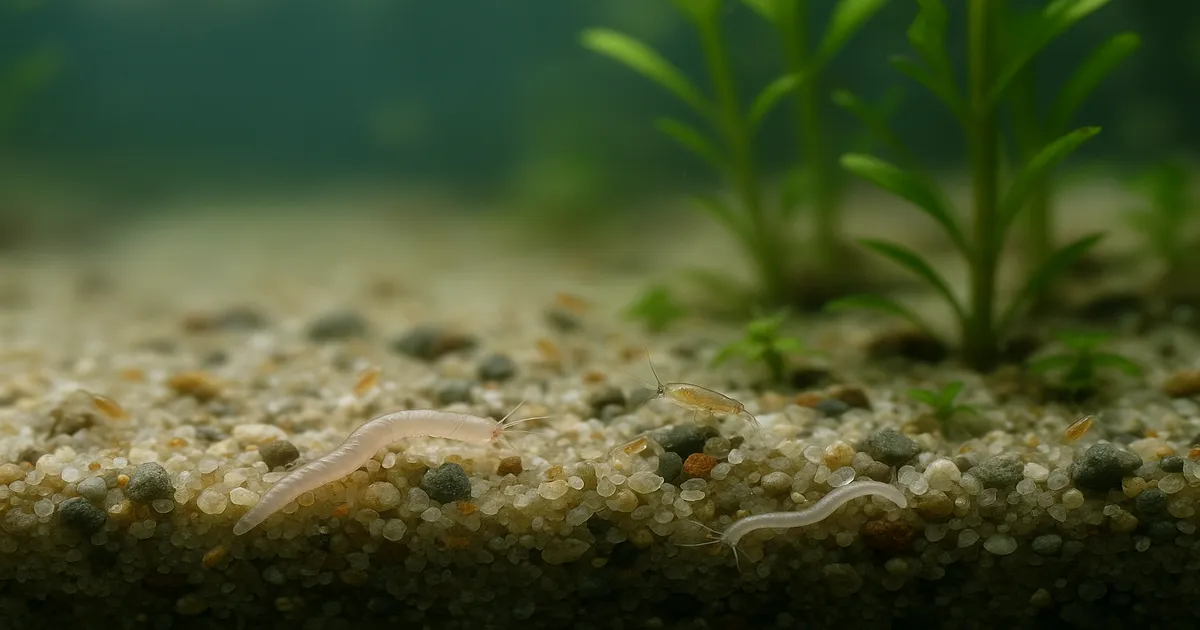
Quick Answer: Most things swimming in your aquarium substrate are harmless — or even helpful. The most common culprits are detritus worms, copepods, planaria, ostracods, or amphipods. A few species (white planaria, fireworms, bobbit worms) are genuinely problematic, but the majority of substrate life is a sign of a healthy, mature ecosystem.
Spotting something tiny wriggling through your gravel or darting across the sand is one of those moments that sends aquarists straight to a search engine. What is this swimming in my substrate? is a completely normal question — and the answer is almost always less alarming than you’d expect. This guide covers every common substrate organism you’re likely to encounter in freshwater and marine tanks, helps you identify them by appearance and movement, and tells you exactly what to do (or not do) about each one.
What Is Swimming in My Substrate? Common Organisms at a Glance
Freshwater vs. Marine: Which Organisms Apply to You?
Some organisms appear in both freshwater and marine tanks; others are exclusive to one environment. Copepods and ostracods show up in both. Detritus worms, planaria, scuds, and nematodes are primarily freshwater concerns. Bristle worms, fireworms, bobbit worms, and mysis shrimp are marine-only.
Harmful, Harmless, or Helpful? A One-Minute Summary
| Organism | Freshwater | Marine | Threat Level |
|---|---|---|---|
| Detritus Worms | ✅ | ❌ | ⚠️ Indicator (not a direct threat) |
| Planaria (White) | ✅ | ❌ | 🔴 Harmful to shrimp/fry |
| Planaria (Brown) | ✅ | ❌ | ⚠️ Low — mostly a nuisance |
| Copepods | ✅ | ✅ | 🟢 Beneficial |
| Ostracods | ✅ | ✅ | 🟢 Beneficial |
| Scuds / Amphipods | ✅ | ✅ | 🟢 Mostly beneficial |
| Nematodes (free-living) | ✅ | ✅ | 🟢 Beneficial |
| Bristle Worms (common) | ❌ | ✅ | 🟢 Beneficial |
| Fireworms | ❌ | ✅ | 🔴 Harmful to corals |
| Bobbit Worms | ❌ | ✅ | 🔴 Harmful — ambush predators |
| Mysis Shrimp | ❌ | ✅ | 🟢 Beneficial |
Identifying What Is Swimming in Your Substrate
Detritus Worms: Thin, Wriggling Threads in the Gravel
Detritus worms are pale white to pinkish-red threads, typically 0.5–10 mm long, that wriggle with a smooth undulating motion through the substrate or just above it. They belong to Class Oligochaeta — distant cousins of earthworms — and the reddish ones get their colour from haemoglobin, an adaptation for surviving low-oxygen environments. They enter tanks through live plants, untreated substrate, or feeder organisms, and they thrive wherever organic matter accumulates.
Planaria: Flat, Arrow-Headed Gliders on Surfaces
Planaria are free-living flatworms (Phylum Platyhelminthes) that glide smoothly across glass, substrate, and plant surfaces — they don’t wriggle. Look for a distinctive triangular or spade-shaped head with two small eyespots. They range from 2–15 mm and come in two main varieties:
- White planaria (Macrostomum sp.): Rounder head, more predatory — the one you genuinely need to worry about in shrimp tanks.
- Brown/grey planaria (Dugesia sp.): Classic arrowhead shape, less aggressive, more of a nuisance than a threat.
Planaria are photophobic — they retreat from light. Seeing them in broad daylight means your population is already significant.
Copepods: Tiny Hopping Specks on Glass and Sand
Copepods are the tiny white or translucent specks that seem to jump in erratic bursts across your glass or sand. They’re crustaceans, 0.5–2 mm, with a teardrop-shaped body and a signature jerky, hopping movement. Harpacticoid copepods hug the substrate; cyclopoid copepods swim more freely in the water column. Both are entirely harmless and enormously valuable as live food for fish fry and corals.
Seed Shrimp (Ostracods): Oval, Clam-Like Rollers
Ostracods look like tiny animated lentils — an oval bivalve shell about 0.5–3 mm across, with tiny appendages poking out to propel a tumbling, rolling motion. They’re ancient crustaceans (their fossil record goes back 500 million years) and are completely harmless, feeding on detritus and organic particles. Most common in heavily planted freshwater tanks, they also appear in marine systems.
Scuds and Amphipods: Curved, Shrimp-Like Swimmers
Scuds (Gammarus spp., Hyalella azteca) look like miniature shrimp bent sideways — laterally compressed, curved bodies ranging from 3–20 mm, usually tan, grey, or translucent. They move fast, darting along the substrate or swimming in short bursts. In freshwater planted tanks and marine refugiums they make excellent cleanup crew and live food. Occasionally they’ll nip at very soft plants or a stressed fish, but in a healthy tank they’re overwhelmingly beneficial.
Nematodes: Near-Invisible S-Shaped Thrashers
Free-living nematodes are nearly transparent threads, 0.5–3 mm, that move with a distinctive C- or S-shaped thrashing motion rather than the smooth undulation of detritus worms. That movement pattern is your best identification clue. They live in virtually every substrate on Earth and are harmless detritivores. Don’t confuse them with Camallanus worms, which are parasitic, distinctly red, and protrude from a fish’s anus — a very different situation with nothing to do with substrate.
Bristle Worms (Marine): Segmented, Bristled Scavengers
Bristle worms are segmented worms with visible bristles (chaetae) along each body segment. Common species range from 1–10 cm and are pink, tan, or iridescent. They’re nocturnal scavengers that emerge at night to clean up uneaten food and detritus — genuinely useful members of a reef cleanup crew. The dangerous variants (fireworms and bobbit worms) are covered below.
Mysis Shrimp (Marine): Translucent Swimmers Above the Sand
Mysis shrimp are translucent, shrimp-like animals 5–25 mm long with clearly visible eyes and a segmented body. Unlike most substrate organisms, they’re active swimmers, hovering just above the sand. They’re highly beneficial as live food and are often deliberately cultured in refugiums.
Are These Organisms Dangerous? Threat Assessment by Species
Completely Beneficial Organisms
Copepods, ostracods, free-living nematodes, common bristle worms, and mysis shrimp all fall here. They consume detritus, cycle nutrients, and serve as live food. If you find any of these, the correct response is to do nothing — or actively encourage them.
Warning Indicators (Not Direct Threats)
Detritus worms won’t harm your fish, but a visible bloom tells you something is off. They correlate strongly with nitrate levels above 40 ppm and low oxygen in the substrate — both signs of overfeeding or insufficient maintenance. Think of them as a living water-quality test.
Organisms That Can Harm Shrimp, Fry, or Corals
White planaria are the primary freshwater concern. They prey on shrimp eggs, newly hatched fry, and weak or moulting invertebrates. Brown planaria are far less aggressive but still signal organic overload. In marine systems, fireworms (Hermodice carunculata) actively damage corals and stinging-cell invertebrates — their white bristles break off on contact and cause irritation.
Marine-Only Threats: Fireworms and Bobbit Worms
Fireworms are stockier and brighter than common bristle worms, with distinctive white bristle tufts. Remove them on sight if you keep corals. Bobbit worms (Eunice aphroditois) are a different level of problem entirely — they can exceed 30 cm, live buried in the substrate, and ambush fish with startling speed. If fish are disappearing or showing unexplained injuries, a bobbit worm is worth investigating.
Note on bobbit worm identification: Eunice aphroditois is the species most commonly found in the aquarium trade. They have iridescent, multi-coloured bodies and scissor-like jaws. A single specimen can be extremely difficult to locate and extract without dismantling rockwork.
Water Parameters That Drive Substrate Organism Blooms
💡 If you’re seeing large numbers of any substrate organism, test your water first. A population explosion is almost always a symptom of a water quality issue, not a random infestation.
Use a reliable liquid test kit to get accurate readings before reaching for any treatment.
Freshwater Parameter Ranges
| Parameter | Acceptable Range | Ideal Range |
|---|---|---|
| pH | 6.0–8.5 | 6.8–7.5 |
| GH | 3–20 dGH | 6–12 dGH |
| KH | 2–15 dKH | 4–8 dKH |
| Temperature | 60–82°F (15–28°C) | 68–76°F (20–24°C) |
| Nitrate | Tolerates up to 80 ppm | <20 ppm preferred |
Marine Parameter Ranges
| Parameter | Acceptable Range | Ideal Range |
|---|---|---|
| Salinity | 1.023–1.026 SG | 1.025–1.026 SG |
| pH | 7.8–8.4 | 8.1–8.3 |
| KH (Alkalinity) | 7–12 dKH | 8–10 dKH |
| Temperature | 72–82°F (22–28°C) | 76–79°F (24–26°C) |
| Nitrate | <20 ppm | <5 ppm (reef) |
Detritus worms and planaria are essentially bioload indicators — they eat what your filter and cleanup crew miss. Elevated nitrates and organic accumulation in the substrate create ideal conditions for both. Copepod populations, by contrast, tend to crash when parameters swing suddenly, so a disappearing pod population can signal instability rather than abundance.
Tank Setup: How Substrate and Filtration Affect These Organisms
A deep sand bed — 3–6 inches of fine sand with a grain size of 0.5–1.5 mm — creates the richest microorganism habitat you can build. Copepods, nematodes, bristle worms, and ostracods all thrive in the oxygen-gradient layers of a proper DSB. Coarse gravel, on the other hand, traps detritus in gaps that are difficult to vacuum effectively, which accelerates detritus worm and planaria populations. If you run coarse gravel, weekly substrate vacuuming isn’t optional — it’s essential.
Nutrient-rich planted substrates like ADA Aqua Soil maintain a slightly acidic pH (6.0–6.8) that suits copepods and ostracods well. Dense root structure also provides excellent shelter for beneficial microorganisms. The downside: if organics accumulate from overfeeding or decaying plant matter, planaria can establish quickly in the same environment.
For marine tanks, a refugium is the single most effective tool for managing substrate organism populations — cultivating the beneficial ones and reducing the conditions that allow nuisance species to bloom. A 5–10 gallon refugium is sufficient to support copepod and amphipod populations for a 50–100 gallon display tank. Stock it with Chaetomorpha macroalgae, run it on a reverse-cycle lighting schedule (lights on when the display is dark), and it will continuously export pods into your main tank while stabilising pH overnight.
Natural Predators and Biological Control
For detritus worms, bottom-feeding fish are your best allies. Corydoras catfish and loaches — particularly Botia species and kuhli loaches (Pangio spp.) — actively root through substrate and consume worms as part of their normal feeding behaviour. For planaria, gourami species (Trichogaster spp.) are the most effective predators. Bettas will eat planaria but with limited enthusiasm and inconsistent results.
In marine tanks, arrow crabs (Stenorhynchus seticornis) are effective and targeted bristle worm predators. Halichoeres wrasses and dottybacks will also hunt them actively. For fireworms specifically, manual removal with long aquarium tongs at night — combined with a predator — is the most reliable approach.
One important caution: copper-based treatments are lethal to every crustacean in your tank — copepods, amphipods, ostracods, and shrimp alike, even at trace concentrations. If you need to treat a disease with copper, do it in a separate hospital tank. Once a copepod community is wiped out, rebuilding it takes months.
Mandarinfish (Synchiropus splendidus) deserve a special mention here. They are obligate copepod feeders in captivity and will not reliably accept prepared foods. A healthy, self-replenishing refugium isn’t a nice-to-have for mandarins — it’s a survival requirement.
How to Remove or Reduce Unwanted Substrate Organisms
Reducing Detritus Worms
The most effective long-term strategy is starvation — remove their food source and the population collapses on its own.
- Cut feeding by 25–30% and observe whether fish consume everything within 2–3 minutes.
- Vacuum the substrate thoroughly every week, paying attention to dead spots behind decorations.
- Clean mechanical filter media every 2–4 weeks to prevent organic buildup recirculating into the tank.
Eliminating Planaria in Shrimp and Community Tanks
Planaria traps — commercial or DIY bait traps — are the safest first step. No chemicals, no risk to invertebrates. For more significant infestations, fenbendazole-based treatments like No Planaria are effective, but they will harm snails and can stress shrimp. Remove invertebrates to a separate container before treating, run activated carbon after treatment, and do a large water change before reintroducing animals. Regardless of which method you use, reduce protein-rich foods like bloodworms and shrimp pellets — planaria are strongly attracted to them.
Controlling Bristle Worms and Fireworms in Reef Tanks
Most bristle worm populations are self-limiting when the tank is well-maintained. If numbers are excessive, introduce a predator (arrow crab or wrasse) and use a commercial bristle worm trap at night. Fireworms should be removed manually with tongs the moment you identify them — don’t wait to see if they cause damage.
A Quick Comparison: Removal Methods
- Manual removal: Safe and precise, but labour-intensive and rarely catches everything.
- Traps: Safe for invertebrates, effective for planaria and bristle worms, requires patience.
- Chemical treatments (fenbendazole): Fast and thorough, but will harm snails and potentially shrimp — use only when necessary and with proper precautions.
- Blanket pesticides or bleach: Never use these in an established tank. They destroy the entire microfauna community, including every beneficial organism you want to keep.
For copepods, ostracods, scuds, and common bristle worms: no action needed. Leave them alone.
Cultivating Beneficial Substrate Organisms as Live Food
If you keep mandarins, dragonets, pipefish, or finicky coral species, actively cultivating your pod population is worth the effort. Start with a 5–10 gallon refugium connected to your display sump. Add a 1–2 inch sand bed, pack it with Chaetomorpha macroalgae, and run a small powerhead for flow. Seed it with a commercial copepod culture — Tisbe biminiensis and Tigriopus californicus are the two most commonly available species and both establish readily. Feed the refugium with a phytoplankton supplement (Brightwell Aquatics PhytoChrom) two or three times a week to sustain the population between harvests.
Frequently Asked Questions
Q: Are the tiny white worms in my substrate dangerous to my fish? Almost certainly not. Thin, wriggling white threads are almost always detritus worms (Oligochaeta). They won’t harm healthy fish, but a large bloom suggests overfeeding or poor substrate maintenance. Cut back on feeding and vacuum the gravel more frequently.
Q: I see tiny jumping dots on my aquarium glass — what are they? Those are almost certainly copepods. The jerky, hopping movement is their signature. They’re harmless crustaceans and a sign of a healthy, mature tank. No action needed.
Q: How do I tell the difference between planaria and detritus worms? Movement and shape. Detritus worms are thin threads that wriggle with a smooth, wave-like motion. Planaria are flat, wider, and glide smoothly without wriggling — look for the distinctive triangular head and two visible eyespots.
Q: Will a population explosion of substrate organisms harm my water quality? It’s usually the other way around: poor water quality causes the bloom, not the reverse. Test nitrates and check for organic buildup before assuming the organisms themselves are the problem.
Q: Can I add something to my tank to get rid of all substrate organisms at once? You can, but you shouldn’t. Broad-spectrum treatments will wipe out beneficial organisms alongside nuisance ones, destabilise your biological filtration, and leave you with a worse tank than you started with. Target specific problem species with appropriate methods and leave the rest alone.