Quick Answer: What is growing on my aquarium substrate and decorations? Almost certainly something harmless — diatoms, biofilm, or fungal fuzz on driftwood are the most common culprits and typically resolve on their own. A few growths, like cyanobacteria or black beard algae, do need attention, but knowing what you’re looking at is the first step to fixing it.
What Is Growing on My Substrate and Decorations? A Quick-Reference Guide
Common Growths at a Glance
| Growth | Appearance | Action Needed? |
|---|---|---|
| Brown diatoms | Dusty brown film on all surfaces | No — self-resolves in new tanks |
| Green algae (spot, hair, dust) | Green spots, threads, or film | Sometimes — depends on severity |
| Cyanobacteria | Slimy blue-green sheets with earthy odour | Yes — improve flow and nutrients |
| Black beard algae (BBA) | Dark grey/black tufts, firmly attached | Yes — stabilise CO₂ |
| Biofilm | Thin, slippery translucent film | No — entirely normal and beneficial |
| White cottony fuzz (Saprolegnia) | Fluffy white tufts on driftwood | No — temporary and harmless |
| Detritus/mulm | Fluffy grey-brown accumulation | Minor — improve maintenance |
| Planaria/detritus worms | Small worms in substrate | Monitor — reduce feeding |
| Snail/invertebrate eggs | Gelatinous clusters on glass or decor | Depends on whether snails are wanted |
| Vorticella | Tiny white dots on shrimp or surfaces | Improve water quality |
Harmful or Harmless?
The vast majority of growths in a home aquarium are harmless — and some are genuinely beneficial. Biofilm seeds the nitrogen cycle and feeds fish fry. Diatoms are a normal part of every new tank’s life. Even that alarming white fuzz on new driftwood is almost always temporary.
The growths that warrant real action are cyanobacteria (which can produce toxins in heavy infestations), black beard algae (which spreads aggressively), and hydra (which can harm shrimp fry and small fish). Everything else is mostly cosmetic.
Identifying What Is Growing on Your Substrate and Decorations
Brown Dusty Film: Diatoms
Diatoms are single-celled organisms in the class Bacillariophyceae — not true algae, but they behave like it. They coat substrate, glass, and decorations with a golden-brown dusty film that smears easily when wiped. Common genera include Navicula and Nitzschia.
This is the number-one growth in new tanks. High silicate levels and low biological competition — both hallmarks of an immature nitrogen cycle — drive the bloom. In most tanks, diatoms fade on their own within two to eight weeks as the tank matures and silicates are consumed. Patience is usually all you need.
Green Coatings, Spots, and Threads: Green Algae
Green algae (Division Chlorophyta) appear in several distinct forms:
- Green spot algae (GSA): Hard, circular dots on glass and slow-growing plant leaves (Coleochaete spp.); tough to scrape off and usually a sign of low phosphate or insufficient CO₂.
- Green dust algae (GDA): Fine green film on glass; wipes off easily but returns quickly. Often crashes on its own after three to four weeks.
- Hair/thread algae: Long, stringy filaments (Spirogyra, Cladophora) that tangle around plants and decorations. Can become a serious problem if left unchecked.
- Fuzz algae: Short 2–3 mm fuzzy coating; mostly harmless and readily grazed by shrimp and fish.
- Staghorn algae: Grey-green, branching tufts on plant edges and near filter outputs (Compsopogon spp.). Linked to CO₂ instability and high ammonia.
Green algae generally point to excess light, excess nutrients, or both.
Slimy Blue-Green Sheets: Cyanobacteria
Despite the name “blue-green algae,” cyanobacteria are photosynthetic bacteria (phylum Cyanobacteria, genera such as Oscillatoria and Anabaena). They form slimy, sheet-like mats in blue-green, dark green, or reddish-purple that peel away in rubbery sheets. The giveaway is a distinctive musty, earthy smell.
Cyanobacteria spread fast and can produce cyanotoxins harmful to fish and invertebrates in severe cases. Poor circulation, low nitrate combined with high phosphate, and temperatures above 80°F (27°C) all encourage it. Address this one promptly.
Dark Grey or Black Tufts: Black Beard Algae
Black beard algae (BBA) is actually a red alga — Audouinella spp. — despite its dark colour. It forms dense, brush-like tufts that grip plant leaves, driftwood edges, and filter intakes with a tenacity that makes manual removal nearly impossible. Neither BBA nor staghorn algae is immediately dangerous to fish, but both spread persistently and are genuinely difficult to eliminate once established.
Both are classic indicators of CO₂ instability in planted tanks. When CO₂ swings — typically dropping overnight when injection stops, or fluctuating due to poor diffusion — opportunistic red algae seize the moment.
Thin Slippery Film: Biofilm
Biofilm is a mixed community of bacteria — including Nitrosomonas, Nitrobacter, and Pseudomonas spp. — embedded in a polysaccharide matrix. It coats every submerged surface in every aquarium, whether you can see it or not. When visible, it appears as a thin, translucent to whitish slippery film, sometimes slightly iridescent on the water surface.
This is not a problem. Biofilm is the foundation of your biological filter and a primary food source for invertebrates and fish fry. Leave it alone.
White Cottony Fluff: Saprolegnia
That alarming white fuzz on new driftwood is almost certainly Saprolegnia or Achyla — water moulds in the class Oomycetes. They look like true fungi but aren’t. On driftwood, they’re harmless decomposers feeding on organic compounds leaching from the wood, and the growth typically disappears within one to four weeks without any intervention.
On fish or invertebrates, the story changes. Saprolegnia on a living animal indicates a secondary infection — usually following injury or stress — and does need treatment.
Fluffy Grey-Brown Accumulation: Detritus and Mulm
Detritus is accumulated organic matter: fish waste, uneaten food, decaying plant material, and bacterial colonies. It settles in low-flow areas as a fluffy grey-brown layer that puffs into a cloud when disturbed. Some detritus is completely normal and even beneficial, harbouring copepods and other microfauna. Excessive buildup points to overfeeding, poor flow, or infrequent maintenance.
Small Worms and Tiny Creatures: Planaria, Detritus Worms, and Hydra
- Planaria (Dugesia spp.): Flat, gliding worms 1–15 mm long with a triangular head. Usually spotted on glass at night. Harmless to healthy adult fish but can threaten eggs, fry, and shrimp.
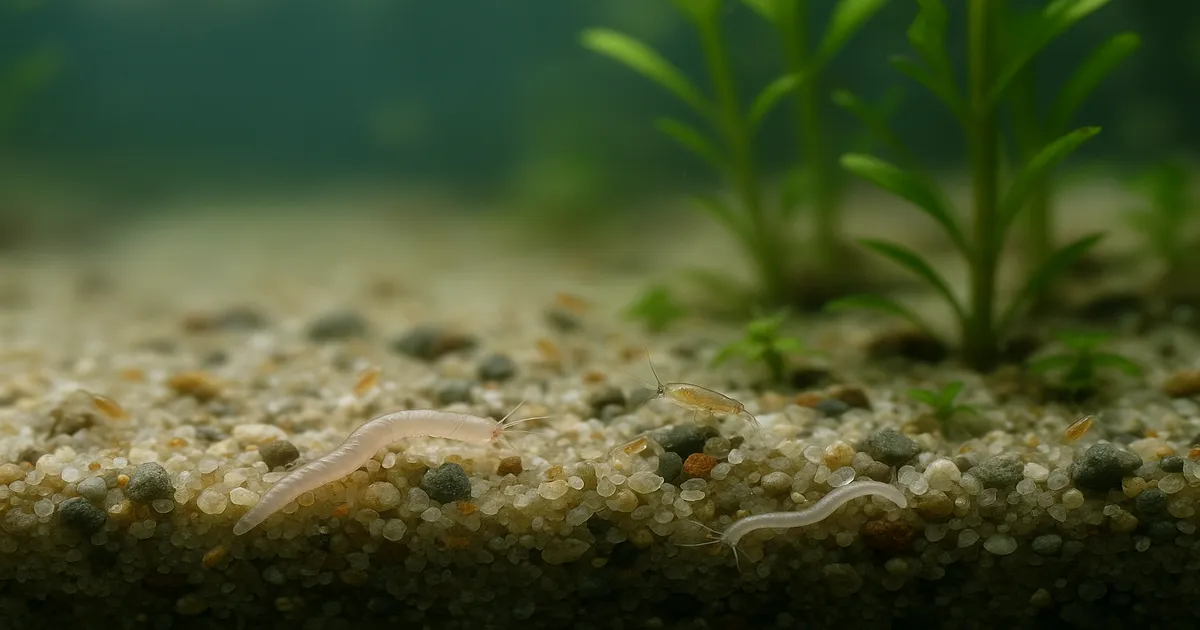
- Detritus worms (Tubifex, Limnodrilus, free-living nematodes): Thin, thread-like white or reddish worms wriggling from substrate or filter media. Almost universally harmless — fish eat them eagerly.
- Hydra: Translucent, tube-shaped with 5–12 tentacles, 2–25 mm long. Attaches to glass or plants and contracts into a blob when disturbed. Harmless to adult fish but a genuine threat to shrimp fry and fish fry via nematocyst stings.
Gelatinous Clusters: Snail and Invertebrate Eggs
Gelatinous, translucent clusters on glass or decorations are almost always snail eggs. Pest snails like Physa and Lymnaea lay jelly-like masses; nerite snails leave hard, white sesame-seed-like capsules on hard surfaces; mystery snails deposit pink egg clusters above the waterline. The egg type tells you which snail you’re dealing with.
Tiny White Dots: Vorticella Ciliates
Vorticella are microscopic to barely-visible bell-shaped ciliates (Phylum Ciliophora) on coiled stalks. On decorations and substrate they’re harmless filter feeders. On shrimp, a heavy infestation can impair gill function and is often mistaken for fungus or disease. Improved water quality and flow usually resolves the issue.
Why These Growths Appear: Root Causes
New tank syndrome is the most common trigger. A brand-new tank hasn’t yet established a mature colony of beneficial bacteria, so ammonia and nitrite spike, silicate levels are high, and there’s little biological competition. Diatoms, biofilm, and opportunistic fungal growth are almost guaranteed in new setups — it’s the cycle doing its job, not a sign something is wrong.
Too much light is the most common driver of green algae outbreaks. Running lights for 10–12 hours a day in a tank with moderate nutrients is an open invitation. Most aquariums do fine with 6–8 hours per day, and high-intensity LED fixtures should often be run at reduced power, especially in tanks without CO₂ injection.
Nutrient imbalances fuel different growths in different ways:
- High silicates → diatom blooms (common from tap water or new substrate)
- High nitrate + high phosphate → green algae
- Low nitrate + high phosphate + poor flow → cyanobacteria
- Excess organic waste → detritus worms, planaria, Saprolegnia on decor
CO₂ instability in planted tanks is tightly linked to BBA and staghorn algae. Consistent CO₂ at 20–30 ppm is the most effective long-term deterrent. A drop checker makes it easy to track levels at a glance.
Poor flow and overfeeding create the stagnant, nutrient-rich conditions cyanobacteria loves. Any corner of the tank that barely receives circulation is a candidate. A good rule: feed only what fish consume in two to three minutes.
New plants and decorations are a frequently overlooked entry point. Pest snails, hydra, algae spores, and planaria all hitchhike in on new additions. Quarantining plants — or treating them with a diluted hydrogen peroxide dip before adding them — eliminates most of this risk.
Water Parameters and Tank Setup
Key Parameters to Test
If you’re seeing unexplained growth, test nitrate, phosphate, and silicates first. Most basic test kits cover nitrate; you’ll need dedicated tests for the others. A comprehensive liquid test kit such as the API Freshwater Master Test Kit covers the core parameters and is far more reliable than strip tests.
Targets to aim for:
- Nitrate: Below 20 ppm for planted tanks; below 40 ppm for fish-only tanks
- Phosphate: 0.1–1.0 ppm in planted tanks; above 2–3 ppm fuels algae blooms
- Silicates: Below 0.5 ppm; anything higher feeds diatoms directly
If your tap water is high in silicates or phosphate, a reverse osmosis unit such as the BRS 4-Stage Value RO System can make a dramatic difference.
pH and stability: A pH that swings from 6.8 to 7.8 over 24 hours will stress fish and trigger algae far more than a steady 7.4 ever would. Aim for pH 6.5–7.5 for most freshwater community tanks, with moderate buffering (KH 4–8 dKH) to prevent crashes.
Temperature: Most community tanks do best at 72–78°F (22–26°C). Higher temperatures — above 80°F (27°C) — accelerate algae and bacterial growth rates and strongly favour cyanobacteria.
Parameter Reference Table
| Growth | Favoured pH | Favoured Temp | Key Nutrient Driver | Suppressed By |
|---|---|---|---|---|
| Diatoms | 6.5–7.5 | 65–78°F (18–26°C) | High silicates | Tank maturation, silicate reduction |
| Green algae | 7.0–8.0 | 72–82°F (22–28°C) | High nitrate + phosphate | Balanced nutrients, reduced light |
| Cyanobacteria | 7.0–8.5 | 72–86°F (22–30°C) | Low NO₃, high PO₄ | Increased flow, nitrate balance |
| BBA | 6.5–7.2 | 72–80°F (22–27°C) | Fluctuating CO₂ | Stable CO₂, glutaraldehyde spot treatment |
| Saprolegnia | 6.0–7.0 | 59–72°F (15–22°C) | Decaying organics | Good water quality |
| Planaria/worms | 6.5–7.5 | 65–78°F (18–26°C) | High organic load | Reduced feeding, predators |
Substrate, Hardscape, and Filtration
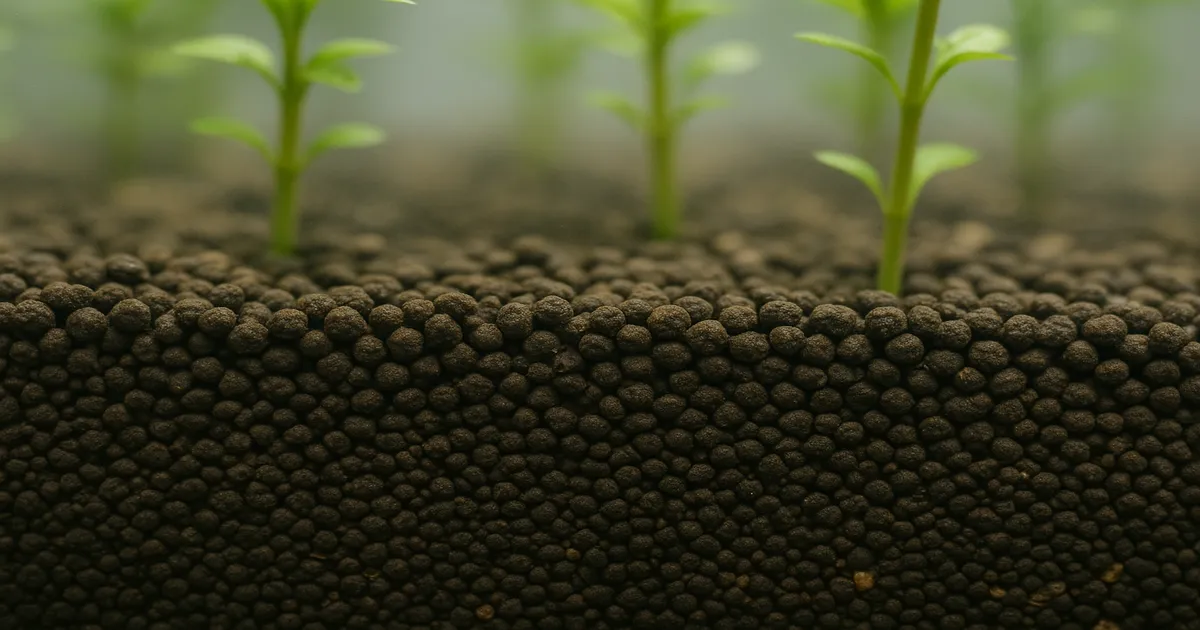
Inert substrates like gravel and sand let detritus accumulate visibly on the surface, where it’s easy to siphon out. Planted substrates such as ADA Aqua Soil Amazonia buffer toward slightly acidic pH but often release ammonia initially, which can trigger a short diatom bloom in the first few weeks.
New driftwood almost always produces white fungal fuzz. Pre-soaking it in a bucket for one to two weeks before adding it to your tank significantly reduces this. Porous rocks like lava rock and dragon stone provide excellent surface area for biofilm but are more prone to algae colonisation. Smooth artificial decorations are easier to scrub clean but offer less biological value.
For filtration, aim to turn over the tank volume five to ten times per hour. This eliminates the dead spots where cyanobacteria thrives. Always rinse filter media in tank water — never tap water — to preserve the beneficial bacteria living in it.
Lighting Schedule
A consistent 6–8 hour photoperiod is the single easiest change most hobbyists can make to reduce algae. Using a plug-in timer such as the BN-LINK Digital Outlet Timer removes the guesswork entirely. Full-spectrum LEDs in the 6,500–7,000K range support plant growth without overly favouring algae, but intensity matters as much as spectrum — dial it back if you’re seeing persistent green algae without CO₂ injection.
Live Plants as Natural Defence
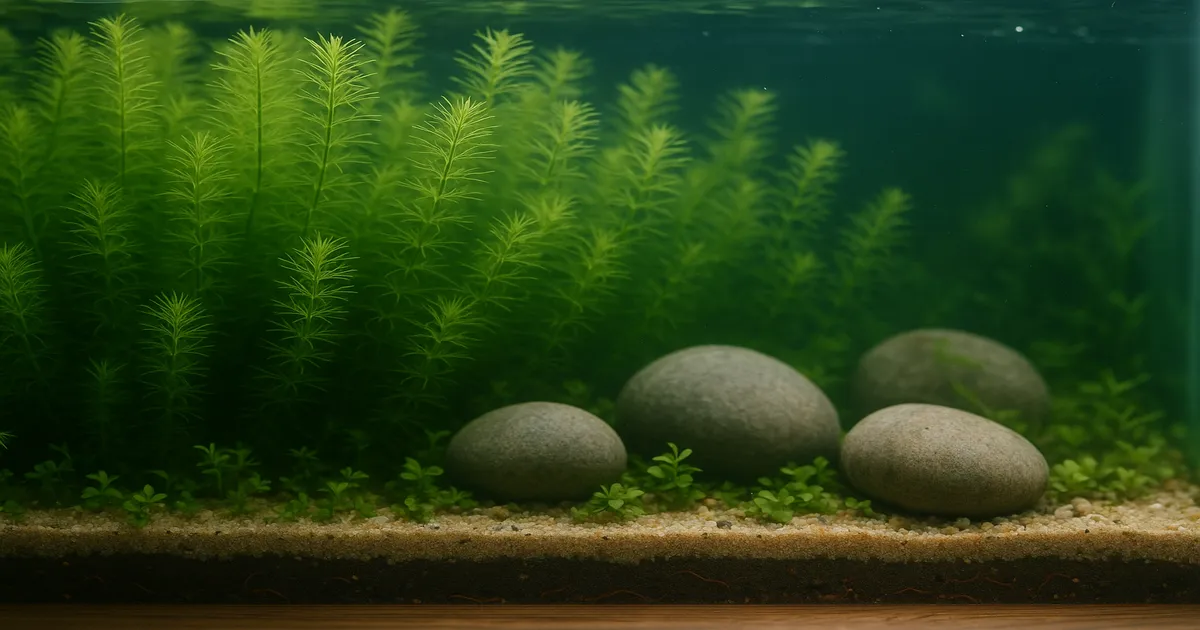
Healthy, fast-growing plants outcompete algae for nutrients and light. Hornwort, water sprite, and stem plants like rotala consume nitrate and phosphate rapidly, leaving less for algae. A densely planted tank with appropriate fertilisation is the most effective long-term prevention strategy available — more effective than any single chemical treatment.
How to Treat and Remove Each Type of Growth
Diatoms: Patience is the best treatment in a new tank. To speed things up, reduce light duration, increase water change frequency to dilute silicates, and consider a silicate-absorbing resin such as Seachem PhosGuard in your filter. Nerite snails and otocinclus catfish will graze diatoms enthusiastically if you want biological help.
Green algae: For green spot algae, a scraper or credit card works well on glass. For hair algae, remove as much as possible by hand — twist it around a toothbrush — then address the root cause: reduce light, cut feeding, and increase plant density. Green dust algae on glass is best left alone for three to four weeks; it often crashes on its own, after which a single wipe clears it completely.
Cyanobacteria: The most effective treatment is a three-day blackout — cover the tank completely with a blanket or cardboard, block all light, and don’t feed during this period. Before blacking out, manually remove as much cyano as possible by siphoning it off. After the blackout, correct the underlying cause: improve circulation, raise nitrate slightly if it’s near zero, and reduce phosphate. Erythromycin is sometimes used as a chemical treatment but kills beneficial bacteria and should be a last resort.
Black beard algae: Spot-treat affected areas with liquid glutaraldehyde (such as Seachem Excel) applied directly via a syringe with the pump off. Turning BBA pink or red within a few days confirms it’s dying. Long-term control requires stable CO₂ at 20–30 ppm. Remove heavily affected leaves rather than trying to scrub them clean.
Saprolegnia on driftwood: Do nothing. It resolves on its own. On fish or invertebrates, treat with an antifungal medication appropriate for your livestock.
Planaria and detritus worms: Reduce feeding and increase substrate vacuuming. For persistent planaria in shrimp tanks, a no-planaria treatment (Beaphar No Planaria) is effective but must be used carefully around invertebrates — follow dosing instructions precisely.
Hydra: Raise the temperature to 104°F (40°C) for a few hours if the tank is fish-only, or use fenbendazole (Panacur) at 0.1 mg/L for planted or shrimp tanks. Remove snails before fenbendazole treatment, as it can harm them.
Frequently Asked Questions
Is the brown stuff on my new tank’s substrate dangerous? No. Brown dusty film in a new tank is almost always diatoms — a completely normal part of the cycling process. It will disappear on its own within a few weeks as the tank matures. You don’t need to do anything, though nerite snails or otocinclus will speed things along.
Why does white fuzz keep growing on my driftwood? New driftwood leaches tannins and organic compounds that feed Saprolegnia water mould. The fuzz is harmless and temporary. Pre-soaking driftwood in a bucket for one to two weeks before adding it to your tank dramatically reduces how much fuzz appears. If it’s already in the tank, it will clear up on its own within a few weeks.
What is the slimy green stuff that smells bad? That’s almost certainly cyanobacteria — often called blue-green algae, though it’s actually a bacterium. The earthy, musty smell is the giveaway. It needs to be addressed: improve water circulation, correct the nitrate-to-phosphate ratio, and consider a blackout treatment.
Can the growths on my decorations harm my fish? Most cannot. Biofilm, diatoms, green algae, and Saprolegnia on driftwood are all harmless to fish. Cyanobacteria can produce toxins in very heavy infestations, and hydra can sting and kill fry and small shrimp. Everything else is a cosmetic issue rather than a health risk.
How do I stop algae from growing back after I clean it off? Cleaning removes the symptom, not the cause. Algae returns unless you address the underlying driver — usually too much light, excess nutrients, or both. Shorten your photoperiod to six to eight hours, reduce feeding, increase plant density, and test your water for nitrate and phosphate. Fix those, and the algae has nowhere to go.