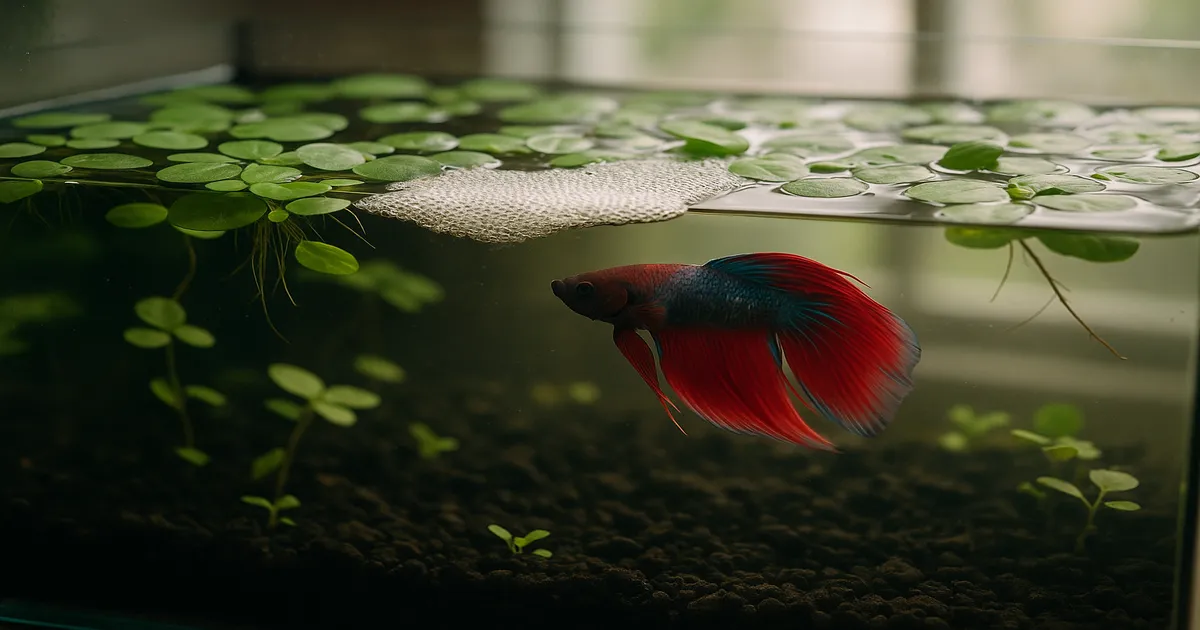
Quick Answer: Foam in a betta tank is most often a bubble nest — a completely natural behavior where your male betta blows mucus-coated air bubbles to prepare for spawning. It’s actually a good sign. That said, foam can also signal protein buildup, overfeeding, poor water quality, or chemical contamination, so it’s worth knowing the difference.
Why Is My Betta’s Tank So Foamy? Start Here
The Most Likely Cause: A Natural Bubble Nest
If you’ve noticed a cluster of small, frothy bubbles gathered in one corner of your betta’s tank — especially near the surface under a plant or along the edge — your betta is probably doing exactly what nature intended. Male Betta splendens build bubble nests as part of their spawning behavior. A healthy, comfortable male will do this regularly, with or without a female present.
The foam looks like what it is: tiny air bubbles coated in saliva and mucus, stacked into a raft-like cluster. It’s localized, odorless, and your fish is almost certainly acting normal.
When Foam Is a Warning Sign
Foam that spreads across the entire water surface, smells bad, accompanies cloudy water, or appears alongside a lethargic fish is a different story. These are signs of protein buildup, overfeeding, water quality problems, or — worst case — soap or chemical contamination. Each has a fix, but you need to identify the cause first.
Bubble Nests: The Natural Reason Your Betta’s Tank Gets Foamy
What Is a Bubble Nest?
A bubble nest is a floating cluster of bubbles that a male betta constructs at the water’s surface. He gulps air, coats each bubble in saliva and mucus to stabilize it, then deposits it into a growing raft — often anchoring it beneath a floating plant leaf, the tank lid, or a corner where surface movement is minimal.
Nests range from a handful of scattered bubbles to a dense, multi-layered structure several inches wide. Some males are prolific builders; others are more casual. Both are normal — it comes down to individual personality, age, and how comfortable the fish feels in his environment.
Why Bettas Can Build Bubble Nests at All
Bettas are anabantoids. They possess a labyrinth organ — a suprabranchial chamber above the gills made of bony plates covered in highly vascularized tissue — that lets them breathe atmospheric air directly at the surface. This adaptation evolved in the shallow, oxygen-poor rice paddies and floodplains of Southeast Asia, and it’s what makes bubble nest construction possible.
Not all betta species build foam nests. Mouthbrooders like Betta picta and Betta pugnax carry eggs in their mouths instead and produce no foam at all.
Is a Bubble Nest a Sign of a Healthy Betta?
Generally, yes. A male that’s building nests is telling you he feels good — his hormones are active, his environment is comfortable, and he’s ready to reproduce if the opportunity arose. You don’t need to worry about it or remove it.
Nest-building does decline with age and can slow down if the tank is too cold (below 76°F / 24°C), too stressful, or water quality is poor. A betta that suddenly stops building nests after previously doing so regularly is worth paying attention to.
Why Your Betta Builds a Nest Even Without a Female
This surprises many new keepers. Males don’t need a female present to trigger nest building — hormonal readiness and environmental comfort are enough. A happy male in a well-maintained tank will build bubble nests as a matter of routine.
Other Causes of Foam in a Betta Tank
Protein Foam from Organic Waste
When dissolved organic compounds (DOCs) — proteins, waste products, decomposing matter — accumulate in the water, they create a persistent, soapy-looking foam, particularly near filter outlets or anywhere surface movement is low. Unlike a bubble nest, this foam isn’t localized. It spreads across the surface in a thin, filmy layer and may carry a slight odor.
This is your tank telling you the organic load is too high. More frequent water changes and a filtration check are the first steps.
Overfeeding and Decomposing Food
Overfeeding is the most common beginner mistake in betta keeping, and it’s a direct cause of protein foam. Uneaten food sinks, decomposes, and releases organic compounds that spike ammonia and nitrite — and surface foam follows. Two to four small pellets once or twice daily is all your betta needs. If food is sitting on the substrate after a few minutes, you’re feeding too much.
New Tank Syndrome
A tank that hasn’t completed its nitrogen cycle will have bacterial blooms and elevated ammonia and nitrite as beneficial bacteria establish themselves. This can cause foamy, sometimes cloudy water. If your tank is new and you’re seeing foam alongside ammonia or nitrite readings above 0 ppm, new tank syndrome is the likely culprit.
The fix is patience, partial water changes to keep toxins manageable, and letting the cycle complete. A liquid test kit is essential — test strips aren’t accurate enough for diagnosing water quality problems. The API Freshwater Master Test Kit is the standard recommendation for a reason.
Soap, Detergent, or Chemical Contamination
This is the most dangerous cause on the list. Even trace amounts of soap or detergent — from washing your hands before reaching into the tank, cleaning equipment with dish soap, or rinsing a new decoration inadequately — can cause persistent, sudsy foam and are acutely toxic to fish.
If you suspect contamination: do a large water change immediately, rinse all equipment with plain dechlorinated water only, and never use soap on anything that contacts your tank.
Medications, Water Conditioners, and Aloe-Based Products
Some water conditioners — especially those containing aloe vera or slime coat enhancers — cause temporary foaming after a water change. This is harmless and usually clears within a few hours. Seachem Prime doesn’t typically cause this, but thicker, aloe-heavy conditioners sometimes do. If the foam appears right after a water change and clears on its own, this is almost certainly the cause.
New Driftwood or Indian Almond Leaves
Driftwood and Indian almond leaves release tannins and humic acids into the water. These can cause slight surface discoloration and a thin layer of foam, especially when first introduced. It’s harmless — actually beneficial, since tannins have mild antimicrobial properties and replicate the blackwater conditions bettas naturally inhabit. The foam typically fades over a week or two as the initial leaching slows.
How to Tell the Difference: Bubble Nest vs. Problem Foam
What a Healthy Bubble Nest Looks Like
A bubble nest is:
- Clustered in one spot — usually a corner, under a floating plant, or along the tank edge
- Made of distinct, visible bubbles — not a flat film or scum
- Accompanied by normal betta behavior — active, eating well, no clamped fins
- Odorless — clean water has no smell
Red Flags That Point to a Water Quality Problem
Investigate further if the foam is:
- Spread across the entire surface, not localized
- Flat, filmy, or soapy-looking rather than bubbly
- Accompanied by cloudy water, foul odor, or a sick-looking fish
- Present alongside a lethargic betta with clamped fins or loss of appetite
When in doubt, test your water. If ammonia or nitrite reads above 0 ppm, you have a water quality issue — act on it immediately.
Ideal Water Parameters for Betta splendens
| Parameter | Ideal Range |
|---|---|
| Temperature | 76–82°F (24–28°C) |
| pH | 6.5–7.5 |
| GH (General Hardness) | 5–15 dGH |
| KH (Carbonate Hardness) | 3–8 dKH |
| Ammonia | 0 ppm |
| Nitrite | 0 ppm |
| Nitrate | <20 ppm |
Elevated ammonia and nitrite increase the organic load in the water, which directly contributes to surface foam — and both are toxic. Ammonia above 0.25 ppm damages gill tissue. Zero is the only acceptable reading for either.
Very soft water (KH below 2 dKH) is also more prone to surface protein foam and puts you at risk of a pH crash. Keep KH in the 3–8 dKH range for stable chemistry.
Tank Setup and Feeding Tips to Prevent Foamy Water
Tank Size and Filtration
The minimum for a betta is 5 gallons — anything smaller creates temperature instability, rapid toxin buildup, and chronic stress. A 10-gallon tank is a better choice. Larger water volume dilutes organic waste more effectively, which directly reduces protein foam.
For filtration, sponge filters are the gold standard for betta tanks. They provide gentle biological filtration without a strong current, and the surface disturbance from rising air bubbles is mild enough to leave bubble nests intact. The Aquarium Co-Op Sponge Filter is a reliable, widely available option. If you use a hang-on-back filter, baffle the outflow to reduce current. Target a flow rate of 3–5x tank volume per hour, heavily baffled.
Surface agitation matters too. Too little movement creates a stagnant protein film. Too much destroys bubble nests and stresses your betta. Aim for a gentle ripple — enough to break surface tension and allow gas exchange, but not a churning current.
Floating Plants
Floating plants are one of the best additions for a bubble-nesting betta. Amazon frogbit, water lettuce, and dwarf water lettuce all provide the calm, shaded surface coverage that males prefer for nest anchoring. They also absorb excess nutrients, which reduces organic foam. As a bonus, they break up surface light and give your betta a sense of security near the top of the tank.
Feeding Practices
Feed your betta 2–4 small pellets once or twice daily — only what he can consume in 2–3 minutes. Remove any uneaten food promptly to prevent decomposition. Choose high-quality pellets with whole fish or fish meal as the first ingredient; Hikari Betta Bio-Gold and New Life Spectrum Betta Formula are both solid choices. Avoid pellets with wheat, corn, or soy listed first — these foul water faster and offer poor nutrition.
Supplement with frozen daphnia (great for digestion), frozen mysis shrimp (excellent nutrition), or frozen bloodworms as an occasional treat. Avoid freeze-dried foods as a staple — they expand in the gut, cause bloating, and break apart in the water, adding directly to organic foam.
One fasting day per week is a simple habit worth adopting. It reduces organic waste, gives your betta’s digestive system a reset, and helps prevent constipation.
How to Fix a Foamy Betta Tank
If it’s a bubble nest: Leave it alone. Don’t scoop it out or disturb it during water changes. Work carefully around it — your betta worked hard on that nest.
For protein foam or elevated organic waste:
- Prepare dechlorinated water at the same temperature as your tank (within 2°F)
- Perform a 25–30% partial water change, siphoning the substrate as you drain
- Add a quality water conditioner like Seachem Prime to neutralize chlorine and detoxify residual ammonia
- Reduce feeding for the next few days
- Test water 24 hours later to confirm ammonia and nitrite have dropped to 0 ppm
Repeat every 2–3 days if parameters remain elevated.
For soap contamination: Do a large water change (50%+), rinse all equipment and décor with plain dechlorinated water, and monitor your fish closely for stress.
Escalate your response if you see: foam persisting despite water changes, ammonia or nitrite above 0 ppm after multiple partial changes, a betta that is lethargic, not eating, clamping fins, or gasping at the surface, or visible lesions and unusual coloration. At that point, consult a veterinarian with fish experience or a knowledgeable aquatic hobbyist.
Frequently Asked Questions About Betta Tank Foam
Is a bubble nest a good or bad sign?
A bubble nest is a good sign. It means your male betta is healthy, comfortable, and hormonally active. A tank that produces regular bubble nests is generally a well-maintained one.
Should I remove the foam from my betta’s tank?
If it’s a bubble nest, leave it alone — your betta built it intentionally. If the foam is widespread, smells bad, or accompanies cloudy water or a sick fish, address the underlying water quality issue rather than just skimming the foam off the surface.
Why is my betta’s tank foamy after a water change?
Temporary foam after a water change is usually caused by water conditioners that contain aloe vera or slime coat additives. It’s harmless and typically clears within a few hours. If it persists or smells bad, test your water for ammonia and nitrite.
Can a female betta build a bubble nest?
Rarely, but it does happen. Female bettas occasionally blow a few bubbles, though nothing approaching the structured nests males build. If you have a female and see a proper, dense bubble nest, double-check that you don’t have a male in the tank.
My betta stopped building bubble nests. Should I be worried?
Not necessarily. Nest-building naturally slows with age. It can also decrease if the tank is too cold (below 76°F / 24°C), water quality has declined, or the fish is stressed. If the change is sudden and accompanied by other symptoms — lethargy, clamped fins, loss of appetite — test your water and investigate further.