Quick Answer: Cycling a betta tank means establishing colonies of beneficial bacteria (Nitrosomonas and Nitrospira) that convert toxic ammonia into nitrite, then into the far less dangerous nitrate. A fishless cycle typically takes 4–8 weeks; a seeded cycle can finish in 1–2 weeks. It’s the single most important thing you can do for your betta’s long-term health.
Getting the nitrogen cycle right before you add a betta is non-negotiable. Bettas are hardier than their reputation suggests, but they’re genuinely sensitive to ammonia and nitrite — more so than many commonly kept fish. Knowing how to cycle a fish tank for a betta properly will save you from the heartbreak of a sick or dying fish in the first weeks of ownership.
How to Cycle a Betta Fish Tank: The Basics
What Does “Cycling” Actually Mean?
“Cycling” means establishing two groups of beneficial bacteria in your filter and substrate. The first group (Nitrosomonas) converts ammonia — produced by fish waste, uneaten food, and decaying plant matter — into nitrite. The second group (Nitrospira) converts nitrite into nitrate, which you remove through regular water changes. Before these bacteria are established, your tank is essentially a toxic environment for any fish living in it.
How Long Does It Take to Cycle a Betta Tank?
A fishless cycle typically takes 4–8 weeks. A fish-in cycle often takes longer because managing water quality simultaneously slows bacterial growth. The fastest method — seeding with established filter media from a healthy tank — can get you there in as little as 1–2 weeks. There are no shortcuts that skip the biology entirely, but you can absolutely speed it up.
The Nitrogen Cycle Explained for Betta Keepers
Stage 1 — Ammonia: The Starting Toxin
Ammonia enters your tank the moment organic matter breaks down. Even at 0.25 ppm, it causes gill damage and immune suppression in bettas. Left unchecked, it’s lethal within days.
Stage 2 — Nitrite: The Hidden Danger
Once Nitrosomonas bacteria establish, ammonia converts to nitrite — but nitrite isn’t safe either. It binds to hemoglobin in your betta’s blood, causing methemoglobinemia (brown blood disease), where the blood loses its ability to carry oxygen. Bettas exposed to nitrite show labored breathing, lethargy, and clamped fins. Levels above 0.5 ppm are acutely dangerous.
Stage 3 — Nitrate: The Manageable End Product
Nitrate is far less toxic than ammonia or nitrite. It accumulates gradually and is removed through water changes. Keep it under 20 ppm for a betta tank — chronic exposure above 40 ppm causes fin deterioration and a shortened lifespan, even if the fish appears healthy.
Why pH and Temperature Affect Ammonia Toxicity
Total ammonia exists in two forms: toxic free ammonia (NH₃) and relatively harmless ammonium (NH₄⁺). Higher pH and higher temperature shift the balance toward the more toxic NH₃. A reading of 0.5 ppm total ammonia is more dangerous at pH 7.5 and 82°F than at pH 6.8 and 76°F — another reason to keep parameters stable.
Target water parameters for a cycled betta tank:
| Parameter | Target |
|---|---|
| Ammonia | 0 ppm |
| Nitrite | 0 ppm |
| Nitrate | < 20 ppm |
| pH | 6.5–7.5 |
| Temperature | 76–82°F (24–28°C) |
| GH | 5–15 dGH |
| KH | 4–8 dKH |
Setting Up Your Betta Tank Before Cycling
Tank Size: 5 Gallons Minimum, 10 Gallons Recommended
Five gallons is the minimum for a single betta. A 10-gallon tank is genuinely better — not just for swimming space, but because larger water volumes dilute ammonia spikes and hold stable chemistry far more easily. A 5-gallon can swing dramatically from a single missed water change; a 10-gallon is far more forgiving.
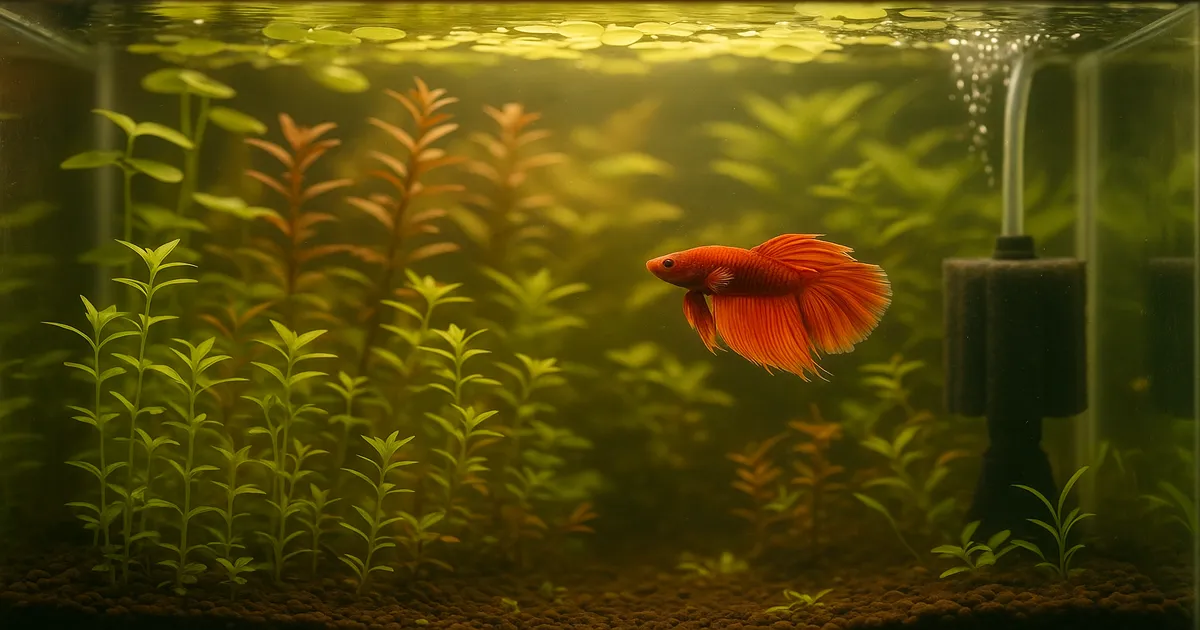
Filtration: Why a Sponge Filter Works Best
Beneficial bacteria colonize filter media, not the water column — so your filter is the heart of the nitrogen cycle. Sponge filters are the top choice for betta tanks: large biological surface area, gentle current, and easy to seed with established media. If you prefer a hang-on-back filter, baffle the output with a pre-filter sponge to reduce flow. Whatever you choose, never rinse all your filter media at once — you’ll wipe out the colony you’ve spent weeks building.
Heater: Keeping Temperature Stable
Nitrifying bacteria are most active between 77–86°F (25–30°C). Set your heater to 78–80°F (25.5–26.7°C) to keep bacteria working efficiently while staying within the betta’s ideal range. Temperature swings of more than 2°F per day stress both bacteria and fish. A reliable 50W adjustable submersible heater is appropriate for 5–10 gallon tanks.
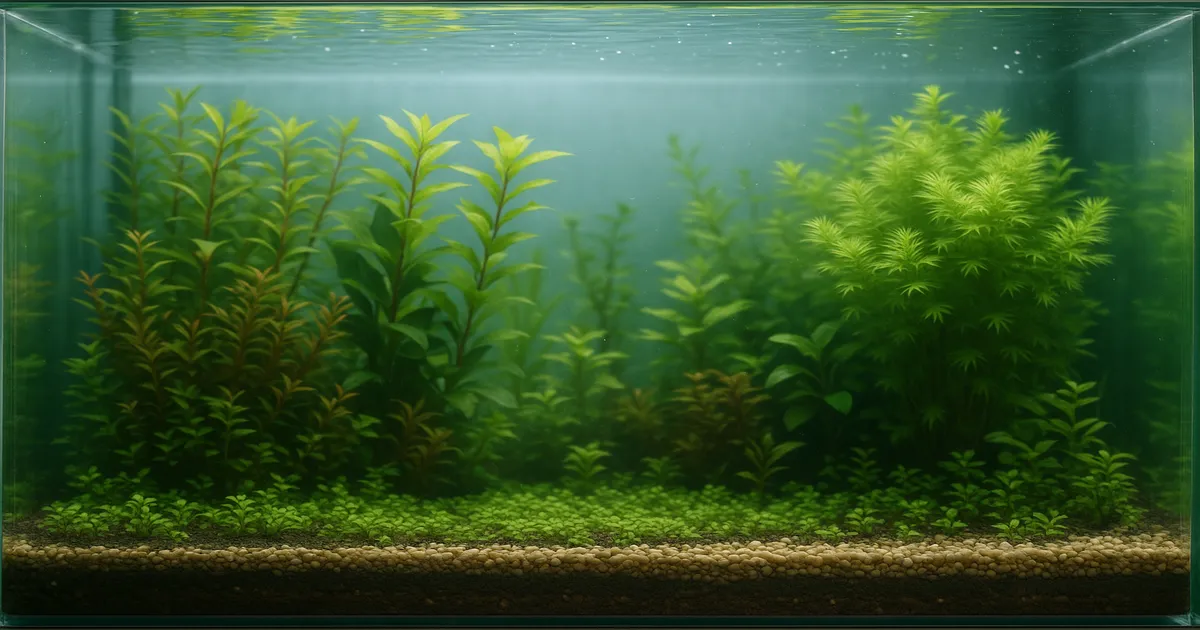
Substrate and Live Plants
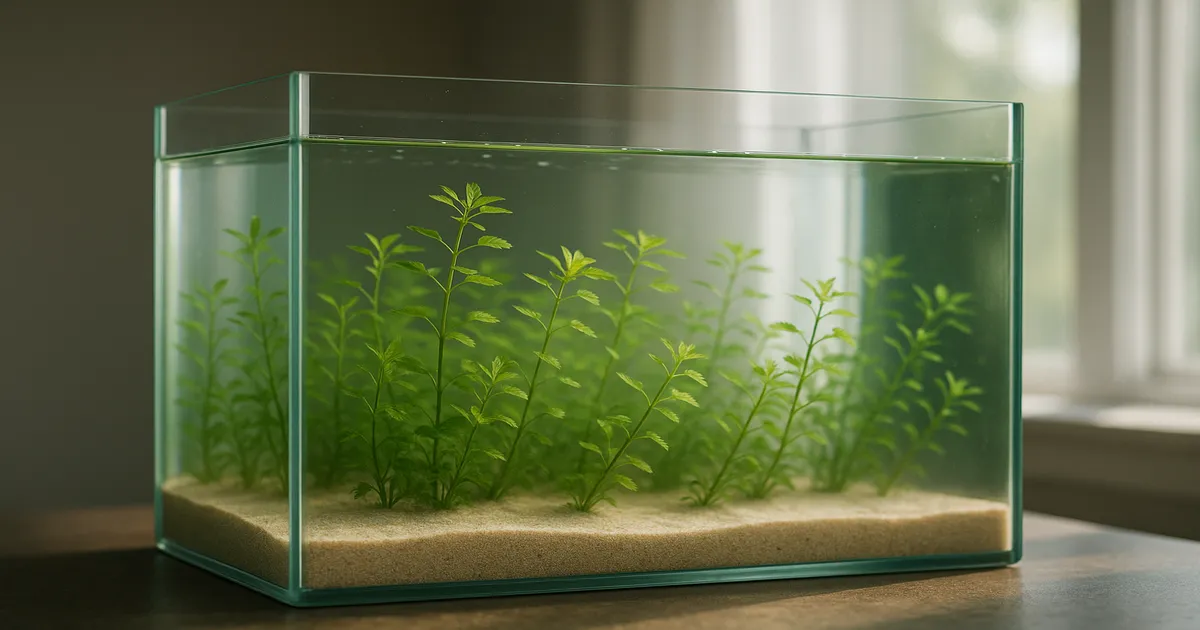
Fine sand or smooth gravel both work well. If you’re planning a planted tank, a nutrient-rich substrate provides extra surface area for bacterial colonization. (Fluval Stratum) Aim for 2–3 inches depth to support plant roots.
Live plants accelerate cycling by absorbing ammonia and nitrate directly. Java fern, Anubias, and floating plants like frogbit are low-maintenance, low-light options that thrive in betta tanks. Floating plants do double duty — they provide surface cover bettas love and soften overhead lighting.
One important note: keep your KH above 4 dKH throughout cycling. Nitrification produces nitric acid, which can crash pH in soft-water tanks and stall bacterial growth entirely. If your tap water is very soft, add a small amount of crushed coral in a media bag inside the filter to buffer it.
How to Cycle a Betta Fish Tank Without Fish (Recommended Method)
Fishless cycling is the preferred approach. No animal is exposed to ammonia or nitrite during the process — you’re building the bacterial colony before any fish moves in.
What You Need
- A fully set-up tank with filter and heater running
- A pure ammonia source (unscented pure ammonia, a piece of raw shrimp, or fish food)
- A liquid test kit — not strips
- Patience
Step-by-Step Fishless Cycling Process
- Add your ammonia source to bring the tank to 2–4 ppm. Test immediately after adding.
- Test daily — ammonia, nitrite, and nitrate.
- Watch for the first spike. Ammonia rises, then starts to fall as Nitrosomonas bacteria establish. Nitrite will begin climbing around this time.
- Watch for the second shift. Nitrite peaks, then falls as Nitrospira bacteria colonize. Nitrate begins accumulating — this is a good sign.
- Test the endpoint. Dose the tank to 2 ppm ammonia and retest after 24 hours. If both ammonia and nitrite read 0 ppm, your tank is cycled.
- Do a 50% water change to bring nitrate down before adding your betta.
Speed It Up: Bottled Bacteria and Seeding
Products like Seachem Stability or API Quick Start introduce live nitrifying bacteria directly into your tank. They won’t eliminate the cycling period entirely, but they can meaningfully shorten it — often cutting several weeks off a fishless cycle.
Even faster: get a sponge, a handful of gravel, or a used filter cartridge from a healthy, disease-free established tank. You’re transplanting a mature bacterial colony directly into your new setup. Many local fish stores will give you a pinch of media if you ask. Combined with bottled bacteria, this approach can cycle a tank in 1–2 weeks.
Fish-In Cycling: How to Do It Safely
When It’s Necessary
Sometimes you’ve already bought the betta before learning about cycling — it happens. Fish-in cycling is manageable, but it demands daily attention. Sub-lethal ammonia and nitrite exposure still causes gill damage and chronic immune suppression. The goal isn’t comfort; it’s minimizing harm while the bacteria catch up.
Keeping Your Betta Safe During the Cycle
Feed minimally — every other day, or very small amounts once daily. Remove all uneaten food within five minutes. Keep ammonia below 0.25 ppm and nitrite below 0.5 ppm at all times through 25–50% water changes every one to two days.
Use a water conditioner that detoxifies ammonia and nitrite at every water change. Seachem Prime temporarily converts ammonia into a non-toxic form that bacteria can still process — it buys you time without stalling the cycle. It’s not a replacement for water changes, but it’s an essential safety net.
Warning Signs to Watch For
Check your betta every day. Warning signs of ammonia or nitrite stress include:
- Lethargy or sitting at the bottom
- Clamped fins
- Gasping at the water surface
- Faded coloration
- Loss of appetite
Any of these means immediate action — test the water and do a partial water change right away.
Common Cycling Mistakes to Avoid
Using chlorinated tap water without dechlorinating. Chlorine and chloramine kill nitrifying bacteria on contact. Always treat tap water before adding it to your tank.
Rinsing filter media under the tap. This wipes out your bacterial colony and restarts the cycle from scratch. If your sponge needs cleaning, squeeze it gently in a bucket of old tank water during a water change.
Adding the betta too soon. Wait for the full confirmation: 0 ppm ammonia and 0 ppm nitrite within 24 hours of a 2 ppm ammonia dose. A partial cycle still exposes your betta to the tail end of a nitrite spike.
Letting pH crash. Low-KH tanks can experience a sudden pH drop as nitrification produces nitric acid. This stalls bacterial growth and shocks your betta. Keep KH above 4 dKH and buffer with crushed coral if needed.
Treating disease in the main tank. Many medications, including antibiotics, kill nitrifying bacteria. Treat sick fish in a separate hospital tank whenever possible to protect your established cycle.
After Cycling: Introducing Your Betta and Ongoing Care
Do a 50% water change before the betta goes in to bring nitrate down from the cycling process. Float the betta’s bag on the surface for 15–20 minutes to equalize temperature, then gradually add small amounts of tank water to the bag over another 15 minutes before releasing the fish.
Once your betta is in, test every two to three days for the first month. You’re confirming the cycle is holding and catching any mini-cycles — temporary ammonia spikes from overfeeding or a dead plant — before they become serious. After that, weekly testing is sufficient.
For ongoing maintenance, a 25–30% water change once a week keeps nitrate under 20 ppm in most setups. Feed 2–4 small pellets once or twice daily, fast one day per week, and remove uneaten food within five minutes. Overfeeding is the number one cause of ammonia spikes in otherwise well-maintained tanks.
Most betta diseases — fin rot, velvet, ich — are opportunistic. They don’t randomly appear in healthy fish; they exploit bettas already weakened by poor water quality. A cycled tank with stable parameters and consistent maintenance is the best disease prevention available.
Frequently Asked Questions
How long does it take to cycle a betta fish tank?
A fishless cycle typically takes 4–8 weeks. Seeding with established filter media combined with a bottled bacteria product can shorten this to 1–2 weeks. Fish-in cycles often take longer because frequent water changes slow bacterial accumulation.
Can I cycle a betta tank with the fish already in it?
Yes, but it requires daily management. Keep ammonia below 0.25 ppm and nitrite below 0.5 ppm through 25–50% water changes every one to two days, feed minimally, and use Seachem Prime as a daily safety measure to detoxify ammonia between changes.
How do I know when my betta tank is fully cycled?
Dose the tank to 2 ppm ammonia, wait 24 hours, and test again. If both ammonia and nitrite read 0 ppm, your bacterial colony is processing waste as fast as it’s produced. Do a 50% water change and your betta can go in.
Do I need a filter to cycle a betta tank?
Yes. Nitrifying bacteria colonize filter media — the sponge, ceramic rings, or bio-media inside your filter is where the cycle lives. Without a filter, there’s insufficient surface area for bacteria to establish, and you have no reliable way to maintain water quality long-term.
What happens if I put a betta in an uncycled tank?
Your betta will be exposed to rising ammonia and nitrite with no bacterial colony to process them. Even short exposure causes gill damage and immune suppression. Prolonged exposure is fatal. If you have no choice, follow the fish-in cycling protocol above and test daily without exception.