Quick Answer: Fish tank water goes cloudy after cleaning because the process disrupts your tank’s biological balance — stirring up organic matter, killing beneficial bacteria, or spiking ammonia. This is almost always temporary and harmless. The most common mistake is panicking and cleaning again, which makes things significantly worse.
You just spent an hour cleaning your tank, and now the water looks like skim milk. If you’re wondering why your fish tank water is cloudy when you just cleaned it, you’re not alone — this is one of the most common frustrations in the hobby. Your tank is a living ecosystem, and cleaning it is a disruption, not just a chore. Understanding why it went cloudy tells you exactly what to do next.
Why Is My Fish Tank Water Cloudy After Cleaning? (The Short Version)
Cloudy water after cleaning almost always falls into one of three categories:
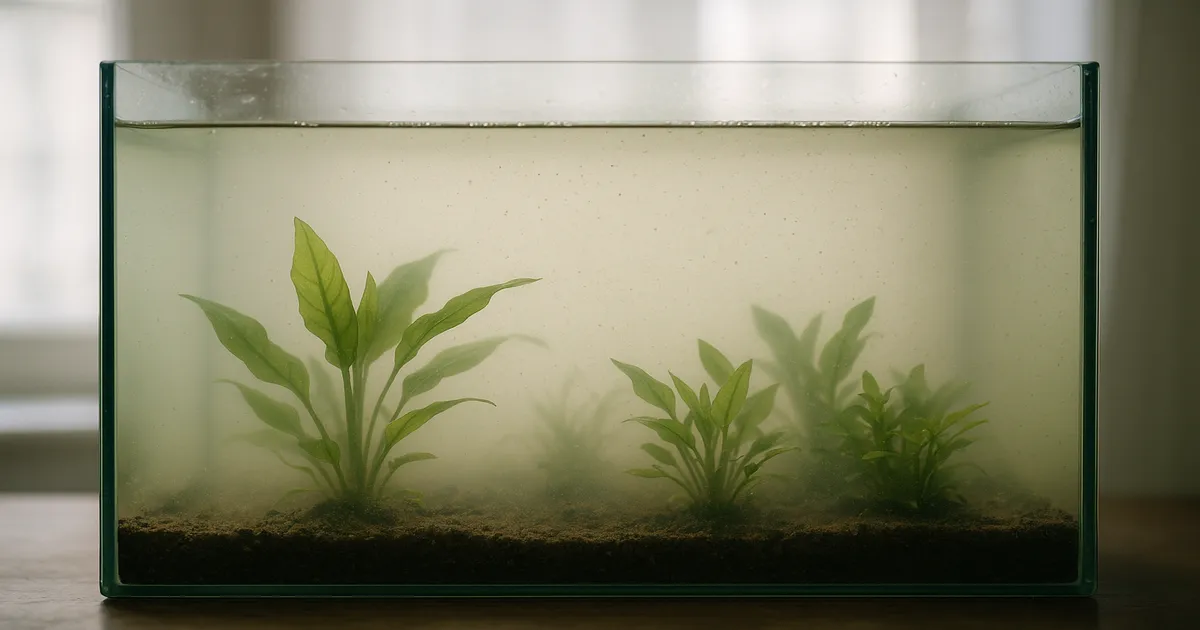
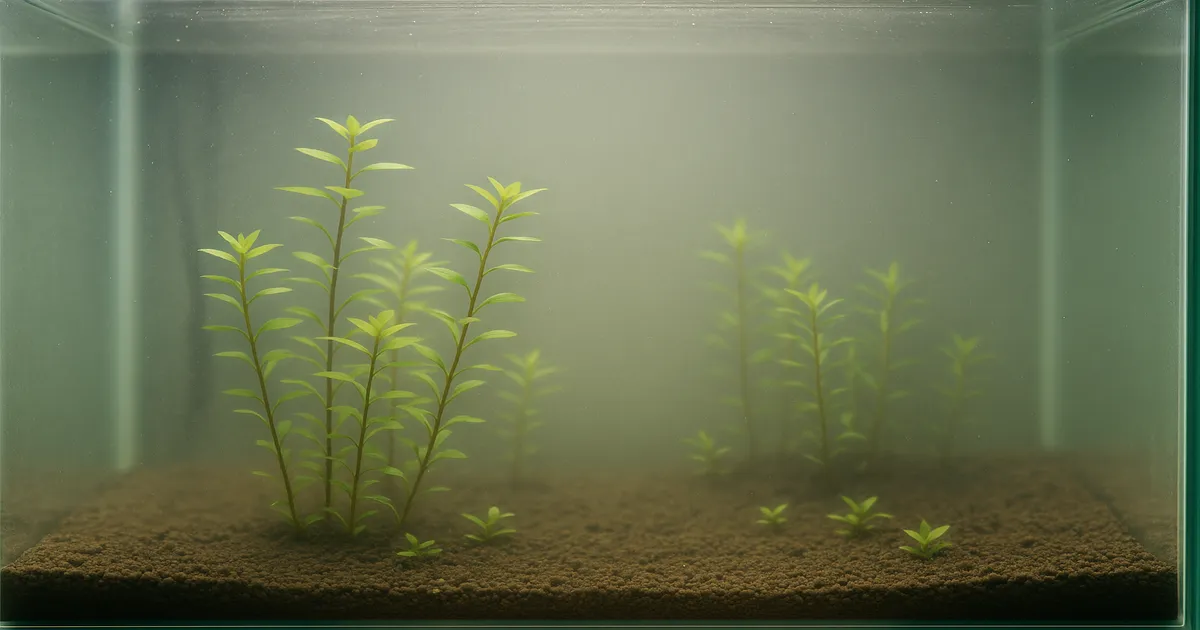
- White or grey cloudiness — a bacterial bloom caused by free-floating bacteria feeding on disturbed organic matter. Resolves in 2–7 days. Fix: do nothing (seriously).
- Yellow or brown cloudiness — tannins and humic acids from driftwood, botanicals, or disturbed substrate. Fix: add activated carbon to your filter.
- Green cloudiness — a single-celled algae explosion triggered by high nutrients and excess light. Fix: reduce lighting to 6–7 hours and cut back feeding.
Is Cloudy Water After Cleaning Dangerous?
In most cases, no. The cloudiness itself isn’t the threat — it’s a symptom. The real danger is what might be hiding behind it: elevated ammonia or nitrite from a disrupted nitrogen cycle. Test your water. Don’t just eyeball it.
The 3 Types of Cloudy Water and What Causes Each
White or Grey Cloudiness: Bacterial Bloom
This is the most common type after a cleaning, and it looks like someone added a splash of milk to your tank. It’s caused by a sudden explosion of free-floating heterotrophic bacteria — not the beneficial kind that live in your filter, but opportunistic bacteria that feed on dissolved organic compounds stirred up during cleaning.
These bacteria are always present in small numbers. Cleaning gives them a feast: disturbed waste, released ammonia, and disrupted substrate all provide the food they need to multiply fast. A bacterial bloom typically resolves on its own within 2–7 days in an established tank. It’s not harmful to fish unless it’s masking a serious ammonia spike.
Yellow or Brown Cloudiness: Tannins
That tea-coloured tint usually comes from tannins and humic acids leaching out of driftwood, seed pods, dried leaves, or disturbed organic substrate. Cleaning can dislodge or expose these materials, releasing a fresh wave of tannins into the water column.
Tannins aren’t bad for your fish. Many species — bettas, tetras, corydoras — actively thrive in tannin-rich water. But if the colour bothers you, a bag of activated carbon will clear it within 24–48 hours.
Green Cloudiness: Algae Bloom
Green water is a different beast. It’s caused by a population explosion of microscopic, single-celled algae — primarily Chlorella and Euglena — that turn the water a pea-soup green. Cleaning can trigger this by stirring up trapped nutrients (nitrates, phosphates) that then combine with excess light to fuel rapid algae growth.
Green water is generally harmless to fish, but in severe cases a dense bloom can deplete dissolved oxygen overnight as algae switch from photosynthesis to respiration. If you have a heavily stocked tank and genuine green water, increase surface agitation temporarily.
How Cleaning Disrupts Your Tank’s Nitrogen Cycle
Your tank processes fish waste through a chain of bacterial reactions:
- Fish produce ammonia through respiration and waste
- Nitrosomonas bacteria convert ammonia → nitrite
- Nitrobacter and Nitrospira bacteria convert nitrite → nitrate
- Nitrate is removed through water changes, plant uptake, or denitrification
Break any link in that chain and ammonia or nitrite accumulates — which is far more dangerous than cloudy water.
Here’s the detail most people miss: the beneficial nitrifying bacteria that run this cycle are sessile — they live attached to surfaces like filter media, substrate, and decorations. They don’t float around in the water. The bacteria causing your cloudy water are a completely different population.
Cleaning disrupts the cycle in three main ways. Rinsing filter media under the tap kills beneficial bacteria instantly — chlorine is indiscriminate. Gravel vacuuming releases trapped ammonia from the substrate. And scrubbing decorations reduces the total surface area available for bacterial colonisation, shrinking your biological filter’s capacity.
Post-Clean Cloudiness vs. New Tank Syndrome
These two situations look similar but need different responses. New tank syndrome happens in an uncycled tank where the nitrogen cycle hasn’t established yet — it can take 4–8 weeks to resolve. Post-clean cloudiness happens in an established tank where the core bacterial colony in undisturbed filter media can quickly re-establish equilibrium, usually within 2–7 days.
If your tank has been running successfully for months, you’re almost certainly dealing with post-clean cloudiness. The correct move is restraint.
Water Parameters to Check After a Cloudy Clean
Ammonia and nitrite are your priority. Ammonia should be 0 ppm — anything above 0.25 ppm stresses fish, and above 2.0 ppm is acutely toxic. Nitrite should also be 0 ppm, with levels above 0.25 ppm causing stress and above 1.0 ppm potentially lethal (it interferes with how fish transport oxygen in their blood).
Nitrate should stay below 20 ppm for most community fish. Elevated nitrate feeds algae blooms and fuels heterotrophic bacteria — both of which contribute to cloudiness.
pH should sit in a stable range appropriate for your fish. Neutral to slightly alkaline water (pH 7.0–7.6) suits most community setups. What matters most isn’t the exact number but stability — swings greater than 0.5 units within 24 hours stress fish and destabilise bacterial colonies. Carbonate hardness (KH) is your buffer against those swings; aim for 4–8 dKH. If your KH is very low, your pH is vulnerable to crashing after a large water change.
Always match replacement water temperature to within 2°F (1°C) of your tank water. Cold water shocks fish and slows beneficial bacteria. The community tank sweet spot is 76–78°F (24–26°C).
Use a liquid test kit rather than strips — strips are notoriously inaccurate for the parameters that matter most. The API Freshwater Master Test Kit covers ammonia, nitrite, nitrate, and pH in one kit. Test daily for 5–7 days after a cleaning that caused cloudiness, watching for ammonia or nitrite spikes that typically peak 3–5 days after a disruption.
Common Cleaning Mistakes That Cause Cloudy Water
Rinsing filter media under the tap is the single most damaging thing you can do. Tap water contains chlorine or chloramine specifically designed to kill bacteria — and it doesn’t distinguish between harmful bacteria and the beneficial colonies you’ve spent months cultivating. Always rinse mechanical filter media in a bucket of old tank water removed during a water change.
Replacing all filter media at once discards most of your established bacterial colony in one go. Many filter cartridge instructions tell you to do exactly this — ignore that advice. Replace only one section of media at a time, and wait at least 4–6 weeks before replacing another section.
Vacuuming too deep into the substrate disturbs anaerobic layers that trap gases and ammonia. Stick to the top 1–2 inches during routine maintenance, and vacuum in sections across multiple sessions rather than the entire bottom at once.
Doing too large a water change — anything over 30–40% — can cause significant pH and KH swings that stress fish and destabilise bacterial colonies. Routine changes of 20–25% weekly or bi-weekly are far less disruptive than a monthly 50% change.
Over-cleaning a stable tank is perhaps the most ironic mistake. If your tank was clear and healthy before you cleaned it, the cloudiness is direct feedback that you cleaned too aggressively.
Why Is My Fish Tank Water Cloudy After Cleaning? Here’s How to Fix It
Step 1: Identify the Type
Use colour as your first diagnostic. White or grey = bacterial bloom. Yellow or brown = tannins. Green = algae bloom. Each has a different fix, so getting this right matters.
Step 2: Stop Making It Worse
For bacterial blooms especially, doing nothing is often the correct response. Resist the urge to do another full clean, replace more media, or add chemicals. Every additional intervention is another disruption to a system that’s trying to re-stabilise.
Step 3: Support Your Filter
Make sure your filter is running properly — check that the intake isn’t clogged and that flow rate seems normal. If you significantly disrupted your biological filter, add a bacterial supplement like Seachem Stability or API Quick Start to help re-establish the colony faster. These products introduce live nitrifying bacteria and genuinely accelerate recovery.
Step 4: Adjust Feeding and Lighting
Cut feeding by 50% for 2–3 days. Less food means less ammonia, which means less fuel for a bacterial bloom. If you’re dealing with green water, reduce your photoperiod to 6–7 hours for 3–5 days — algae can’t sustain a bloom without light.
Step 5: Use Chemical Filtration If Needed
For tannin cloudiness, activated carbon in your filter is the fastest solution. For general organic cloudiness, Seachem Purigen is highly effective and rechargeable. Neither product will fix a bacterial bloom on its own, but they’ll help clear the water once the biological disruption settles.
When to Do a Partial Water Change
Do a 15–20% water change only if tests show elevated ammonia or nitrite. Don’t do a large water change just because the water looks cloudy — it can further destabilise pH and KH, removing the buffering capacity your bacterial colony needs to recover.
How to Prevent Cloudy Water Next Time You Clean
Never clean your filter media and vacuum your substrate on the same day. Spread the disruption out. Rinse mechanical media in old tank water. Replace only one section of biological media at a time. Vacuum the substrate in sections — front half one week, back half the next.
| Component | Frequency |
|---|---|
| Gravel vacuum (25–30% of substrate) | Weekly or bi-weekly |
| Mechanical filter media (rinse in tank water) | Monthly |
| Biological filter media | Only when flow is visibly reduced |
| Glass/walls | As needed |
Fast your fish for 24 hours before a major cleaning session. This reduces waste in the system and makes vacuuming more efficient. After cleaning, feed at half the normal amount for 2–3 days, then resume once ammonia and nitrite confirm stable at 0 ppm.
If your tank is chronically cloudy after every clean, overstocking may be the root cause. Overstocked tanks produce more ammonia than the biological filter can reliably process, so any disruption tips the system into cloudiness. The solution isn’t more aggressive cleaning — it’s either reducing stocking levels or upgrading filtration. Canister filters hold significantly more biological media than hang-on-back models and are far more resilient to cleaning disruption. A canister filter such as the Fluval 307 is a solid upgrade for tanks that struggle with recurring cloudiness.
Frequently Asked Questions
How long does cloudy water last after cleaning a fish tank?
It depends on the type. A white bacterial bloom in an established tank typically clears within 2–7 days without intervention. Tannin cloudiness (yellow/brown) clears within 24–48 hours if you add activated carbon. Green water algae blooms can persist until you get light and nutrients under control — usually a week or more.
Should I do a water change if my tank is cloudy after cleaning?
Only if your water tests show elevated ammonia or nitrite. In that case, a small 15–20% partial water change is appropriate. If your parameters are fine and the water is just visually cloudy, skip the water change — it can further destabilise your system and prolong recovery.
Why is my fish tank cloudy after I cleaned the gravel?
Vacuuming disturbs layers of trapped waste, organic compounds, and sometimes anaerobic gases that have been accumulating in the substrate. This releases a pulse of ammonia and dissolved organics into the water column, feeding a bacterial bloom almost immediately. Sticking to the top 1–2 inches of substrate during vacuuming prevents this from happening at scale.
Can cloudy water after cleaning harm my fish?
The cloudiness itself is rarely the danger. The real risk is elevated ammonia or nitrite from a disrupted nitrogen cycle — both can be lethal. Test your water parameters immediately. If ammonia and nitrite are at 0 ppm and your fish are behaving normally, the cloudy water is cosmetic and will resolve on its own.
Will a bacterial bloom go away on its own?
Yes — in an established tank it almost always does, typically within 2–7 days. The free-floating bacteria exhaust their food supply and the population crashes back to normal levels. Adding a bacterial supplement like Seachem Stability can speed things up. The worst thing you can do is clean the tank again in response to the bloom.