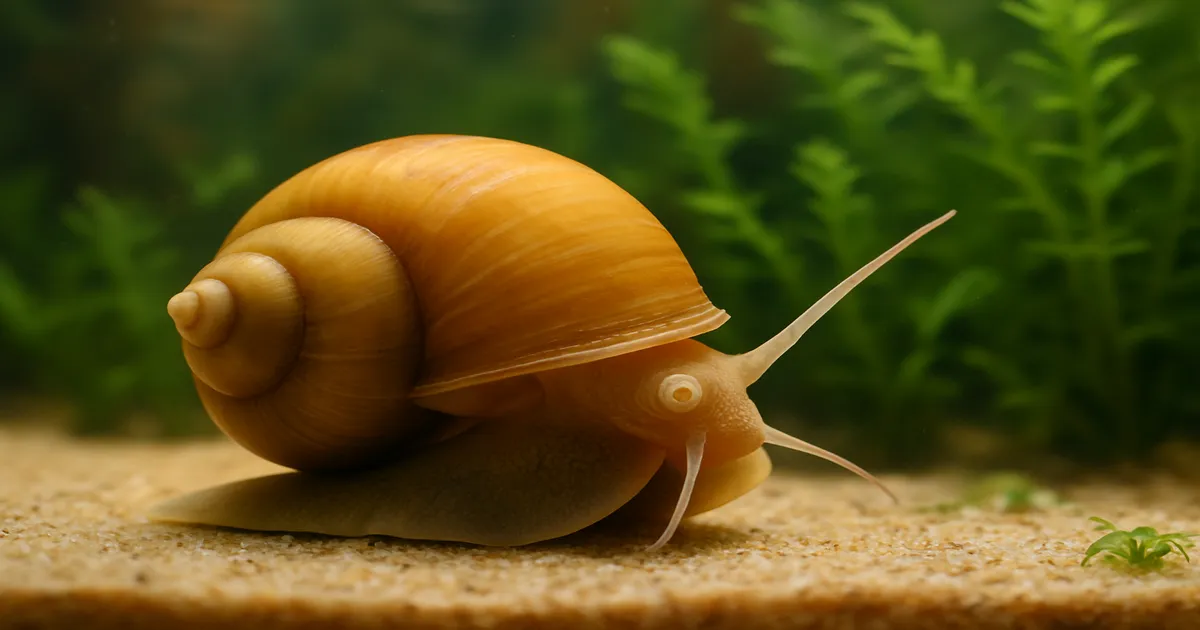
Quick Answer: A healthy mystery snail has a smooth, intact shell, moves actively around the tank, retracts quickly when touched, surfaces regularly to breathe, and eats with enthusiasm. If your snail is floating with a foul smell, has a cracked or heavily pitted shell, or hasn’t moved in several days, those are urgent warning signs that need immediate attention.
How to Tell If a Mystery Snail Is Healthy: 5 Key Indicators
Knowing how to tell if a mystery snail is healthy comes down to watching five things:
- Shell condition — smooth surface, consistent color, no deep pitting or cracks
- Activity level — regularly foraging on glass, substrate, and decorations
- Responsiveness — retracts firmly into its shell when touched, then re-emerges
- Breathing behavior — surfaces periodically to breathe air through its siphon
- Appetite — actively grazes and accepts offered food
A snail that checks all five boxes is almost certainly in good shape. One that’s missing two or more deserves a closer look.
Red Flags That Need Immediate Attention
Some signs can’t wait. If you notice any of the following, test your water right away:
- Floating with a foul odor — the smell test is definitive; a dead snail smells unmistakably rotten
- Cracked or deeply eroded shell — structural damage that exposes soft tissue
- Operculum (trapdoor) falling away or hanging loosely
- No movement for 3–5+ days with no visible operculum seal
- Soft, decomposing body tissue visible at the shell opening
Shell Condition: Your Most Reliable Health Indicator
What a Healthy Shell Looks Like
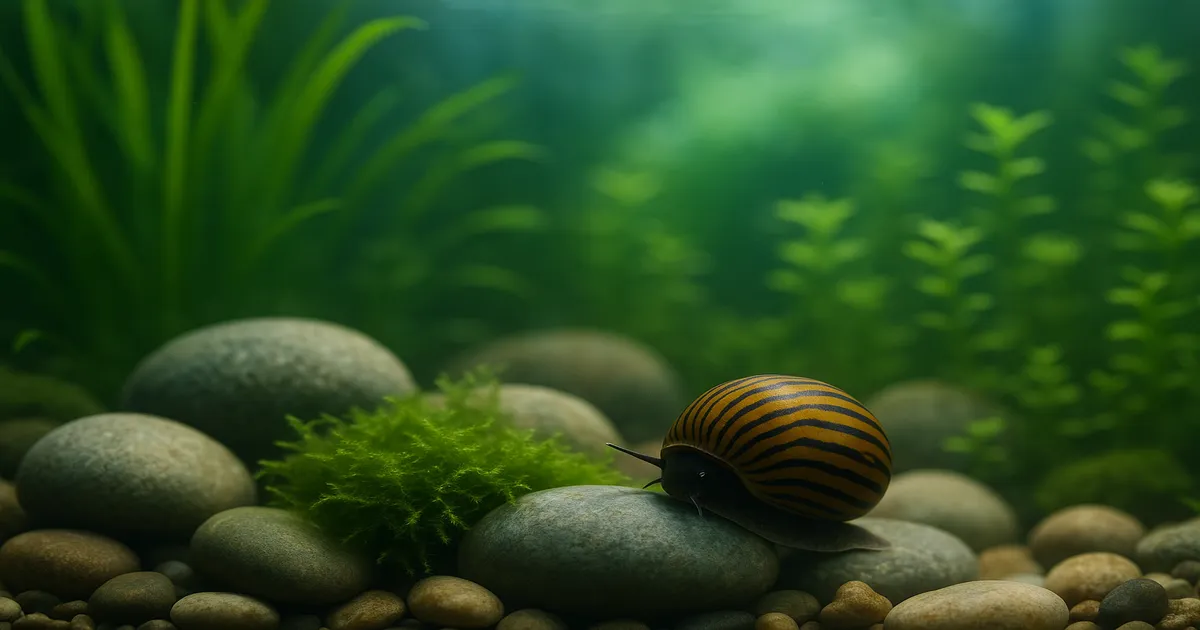
The shell is your most immediate window into a snail’s overall health. A healthy mystery snail has a shell that’s smooth to the touch, with consistent coloring and clearly defined growth rings spiraling toward the apex. The lip edge — the rim of the shell opening — should be solid and intact, not chipped or flaking.
Shell color varies widely by morph (golden, ivory, blue, purple, and more), so color alone isn’t a health indicator. What matters is surface integrity. Pitting, cracking, white chalky patches, or a thin, translucent appearance all signal a problem.
Shell Pitting, Cracking, and Erosion
The most common cause of shell damage in captive mystery snails is acidic water. When pH drops below 7.0, water begins dissolving the calcium carbonate that makes up the shell — slowly at first, then rapidly as pH falls further. Pitting typically starts at the apex and works outward, appearing as small holes or rough, cratered patches.
If you’re seeing erosion, test your water first. The fix is usually straightforward:
- Raise pH to 7.2–7.8 using crushed coral in the filter, or add baking soda in small, careful increments
- Add a piece of cuttlebone directly to the tank — it dissolves slowly, releasing calcium and buffering pH
- Raise GH to 10–15 dGH if your water is soft
Thin or Translucent Shell: Calcium Deficiency
A shell that looks papery or nearly see-through points to calcium deficiency rather than acid erosion. This happens in soft-water tanks where GH is consistently low — the snail simply can’t build a solid shell without enough dissolved calcium and magnesium. The fix is the same: raise GH, add cuttlebone, and supplement with calcium-rich blanched vegetables like kale and spinach. New shell growth takes time, but you should see improvement within a few weeks.
New Shell Growth: A Reliable Sign of Health
New growth is one of the clearest signs that your snail is thriving. Look for a lighter, slightly translucent band at the very edge of the shell opening — fresh material that hasn’t fully hardened or colored yet. If you’re seeing that band, you’re doing things right.
Behaviour and Activity: Reading Your Snail’s Body Language
What Normal Mystery Snail Behaviour Looks Like
Mystery snails are more active than most people expect. A healthy snail spends hours grazing on the glass, cruising across the substrate, climbing decorations, and occasionally surfacing to extend its siphon — a small tube it uses to breathe atmospheric air. This surfacing behavior is completely normal. These snails have both a gill and a lung-like structure, so they breathe both underwater and above it.
You’ll also notice them retracting sharply into their shell when startled, then cautiously re-emerging a few minutes later. That strong, quick retraction is a good sign — it shows healthy muscle tone.
Dormancy vs. Death: Why Your Snail Isn’t Moving
A sealed operculum combined with no movement usually means the snail is dormant, not dead. Mystery snails seal themselves in response to stress — poor water quality, a sudden temperature drop, a recent water change, or simply a rest period. This can last anywhere from a few hours to several days.
The key distinction is simple: a dormant snail smells like nothing. A dead snail smells powerfully of decay. If you’re unsure, remove the snail from the water and give it a gentle sniff. That’s really all it takes.
How to Tell If a Mystery Snail Is Dead
Beyond the smell test, look for these additional signs:
- The operculum is loose, detached, or missing entirely
- Soft body tissue is visible and not retracting when touched
- The snail feels limp and heavy when lifted, with no muscle tension
- The body has begun to decompose — discoloration or tissue breakdown may be visible
A living snail in dormancy will feel firm and sealed. When in doubt, place the snail in a shallow dish of tank water at the correct temperature and wait 30–60 minutes. A healthy dormant snail will usually emerge on its own.
Floating: Normal or a Warning Sign?
Mystery snails sometimes float intentionally, trapping air inside their shell to drift across the surface to new areas of the tank. If your snail is floating but looks otherwise normal — shell intact, body retracted cleanly, no smell — it’s probably fine.
Floating becomes a concern when combined with other symptoms: unresponsiveness, foul odor, or a body that won’t retract. Gas from internal decomposition can also cause floating in a dead or dying snail, so always use the smell test and responsiveness check together.
Frequent Surfacing: When Is It a Warning Sign?
Occasional surfacing to breathe is healthy and expected. Frantic, repetitive surfacing — where the snail keeps returning to the waterline and can’t seem to settle — is different. This pattern often signals low dissolved oxygen or deteriorating water quality. Check ammonia, nitrite, and nitrate immediately, and make sure your filter is providing adequate surface agitation.
Water Parameters: The Foundation of Mystery Snail Health
Ideal Ranges for Mystery Snails
| Parameter | Acceptable Range | Ideal Range |
|---|---|---|
| pH | 7.0–8.0 | 7.2–7.8 |
| GH | 8–18 dGH | 10–15 dGH |
| KH | 5–15 dKH | 8–12 dKH |
| Temperature | 65–80°F (18–27°C) | 72–78°F (22–26°C) |
| Ammonia | 0 ppm | 0 ppm |
| Nitrite | 0 ppm | 0 ppm |
| Nitrate | <40 ppm | <20 ppm |
KH deserves special mention. It acts as a pH buffer — low KH allows pH to swing dramatically overnight as CO₂ levels change, and those crashes are just as damaging as chronically low pH. Keep KH above 8 dKH and your pH will stay stable.
A reliable liquid test kit is essential for monitoring these parameters accurately. Strip tests are too imprecise for the parameters that matter most to invertebrate health.
Temperature and Its Effect on Lifespan
Mystery snails are comfortable between 72–78°F (22–26°C). At cooler temperatures around 65°F (18°C), their metabolism slows — which can actually extend their lifespan. Keeping them consistently warm above 80°F (27°C) speeds metabolism and shortens their life. The typical captive lifespan is 1–3 years, and temperature is one of the biggest variables. Avoid sudden swings of more than 4–5°F (2–3°C), which will trigger stress retraction even if the final temperature is within range.
Ammonia, Nitrite, and Copper: Zero Tolerance
Ammonia and nitrite must stay at 0 ppm. Mystery snails respond to elevated ammonia by sealing themselves in their shell — which looks like dormancy but is actually a stress response. Prolonged exposure is fatal. Make sure your tank is fully cycled before adding snails, and perform 25–30% water changes weekly to keep nitrate below 20 ppm.
Copper is lethal to mystery snails at concentrations above 0.1 ppm — a level that’s harmless to most fish. Never use copper-based medications in a snail tank. If your home has older copper plumbing, your tap water may contain trace copper; use a dechlorinator that neutralizes heavy metals (Seachem Prime) and consider testing your tap water directly.
Feeding and Nutrition: Signs Your Snail Is Getting What It Needs
What a Well-Fed Mystery Snail Looks Like
A well-nourished mystery snail fills its shell opening — the body extends fully when active, with no visible gap between the body and the shell rim. Shell growth is consistent, and the snail is engaged and exploratory rather than sluggish.
What to Feed Mystery Snails
The core diet should include:
- Blanched vegetables: Zucchini is the gold standard, but spinach, kale, cucumber, romaine, and peas all work. Blanch by pouring boiling water over them or microwaving briefly — this softens the food and helps remove pesticide residue.
- Algae wafers and sinking pellets: Convenient, nutritionally balanced, and they sink to where snails can find them.
- Cuttlebone: Leave a piece floating in the tank. Snails will rasp at it as needed, getting calcium directly.
- Biofilm: Let some algae grow on driftwood and décor — this is natural, nutritious grazing material.
Always use organic produce or wash vegetables very thoroughly. Pesticide residue is genuinely dangerous to snails and can be lethal even in small amounts.
Signs of Underfeeding
An underfed snail will visibly recede into its shell — the body looks smaller than the opening, with a noticeable gap. You may also notice the snail aggressively nibbling on live plants it would normally ignore, or the new shell growth band disappearing. These are clear signals to increase feeding frequency and variety.
Feed daily or every other day. Remove uneaten vegetables within 24 hours to avoid ammonia spikes.
Tank Setup Essentials
Tank Size, Substrate, and Filtration
A single mystery snail needs at least a 5-gallon tank; a pair needs 10 gallons. Larger tanks maintain more stable water chemistry, which directly impacts shell health. Mystery snails produce more waste than their size suggests, and a small, overcrowded tank will see ammonia spikes that stress or kill them.
For substrate, fine sand or smooth gravel (2–3 mm grain size) is ideal. The snail’s foot is soft tissue that glides directly across the bottom, and sharp or coarse materials can lacerate it.
Sponge filters are the gold standard for mystery snail tanks — they provide solid biological filtration, gentle flow, and a biofilm grazing surface. If you prefer a hang-on-back filter, always fit the intake with a foam pre-filter guard to prevent the snail’s foot or siphon from being trapped.
Air Gap and Lid
Leave 2–4 inches (5–10 cm) of air space between the waterline and the tank lid. Mystery snails need to surface to breathe, and females lay egg clutches above the waterline — without that gap, eggs can’t develop. Use a tight-fitting lid. These snails are surprisingly good climbers and will escape an open tank, leading to desiccation and death within hours.
Compatible Tank Mates
Mystery snails are completely peaceful. Good tank mates include small tetras, rasboras, corydoras, otocinclus, guppies, nerite snails, and Neocaridina shrimp.
Avoid loaches, pufferfish, assassin snails, most cichlids, goldfish, and crayfish — all of these will harm or kill mystery snails. Bettas are unpredictable; some ignore snails entirely, while others nip at antennae and siphons. If you try the combination, introduce the snail first and watch closely for the first few days.
Common Health Problems and How to Treat Them
Shell erosion: Almost always a water chemistry problem. Test pH and GH first. Add crushed coral, introduce a cuttlebone, and consider a GH booster if your water is very soft. Existing pitting won’t reverse, but the snail will grow new, healthy shell material over time.
Prolonged retraction: A snail sealed up for more than 3–4 days needs investigation. Test for ammonia, nitrite, nitrate, and pH. Copper exposure — even a single dose of a copper-based medication — can cause permanent retraction. Correct whatever is out of range and give the snail time to recover.
Injury recovery: Small cracks can heal if water quality is excellent and calcium is abundant. The snail will slowly deposit new material to fill the damage. Deep cracks that expose soft tissue are more serious — keep the tank clean, maintain ideal parameters, and watch for signs of infection such as unusual discharge or tissue discoloration.
Parasites and infections: Rare, but possible. Most medications safe for fish are harmful to snails. If you suspect a parasitic or bacterial issue, isolate the snail in a hospital tank and consult an aquatic veterinarian before attempting any treatment.
Frequently Asked Questions About Mystery Snail Health
How do I know if my mystery snail is dead or just sleeping?
The smell test is the most reliable method. Lift the snail out of the water and give it a sniff. A dormant snail smells like nothing; a dead snail smells powerfully of decay. You can also place the snail in a shallow dish of tank water at the correct temperature — a healthy dormant snail will usually emerge within 30–60 minutes.
Why is my mystery snail floating?
Floating is often intentional. Mystery snails trap air inside their shell to drift across the surface to new areas of the tank. If the snail looks normal — shell intact, no foul smell, body retracted cleanly — it’s almost certainly fine. Floating combined with unresponsiveness or a foul odor is a different matter and warrants immediate investigation.
How often should a mystery snail eat?
Feed daily or every other day. Offer blanched vegetables, algae wafers, or cuttlebone, and remove any uneaten food within 24 hours to prevent ammonia spikes. Between feedings, snails will graze on biofilm and algae, which is completely healthy.
Why does my mystery snail have a pitted or rough shell?
Pitting is almost always caused by acidic water (pH below 7.0) or low calcium levels (GH below 8 dGH). Test your water, raise pH to 7.2–7.8, and add a cuttlebone to boost calcium. Existing damage won’t disappear, but the snail will grow new, healthy shell material once conditions improve.
Can mystery snails live with betta fish?
Sometimes, but it’s not a guaranteed safe combination. Some bettas completely ignore snails; others nip at antennae and siphons, causing injury and chronic stress. If you want to try it, introduce the snail first and monitor closely for the first week. A snail that’s being harassed will stay sealed, refuse food, and decline in health even without obvious wounds.