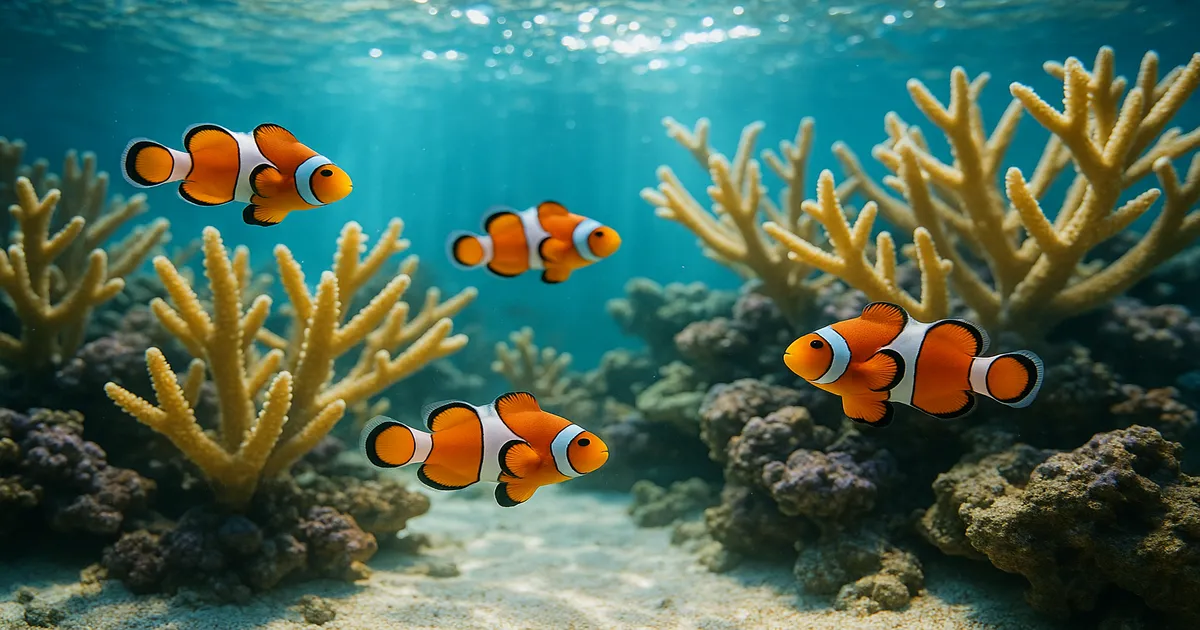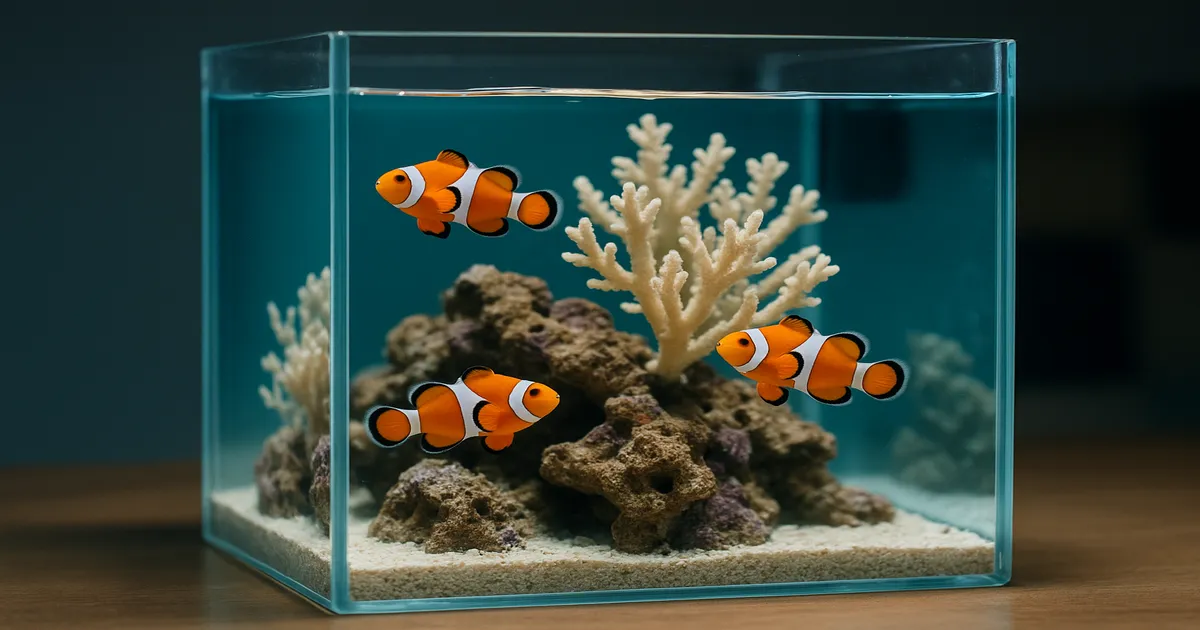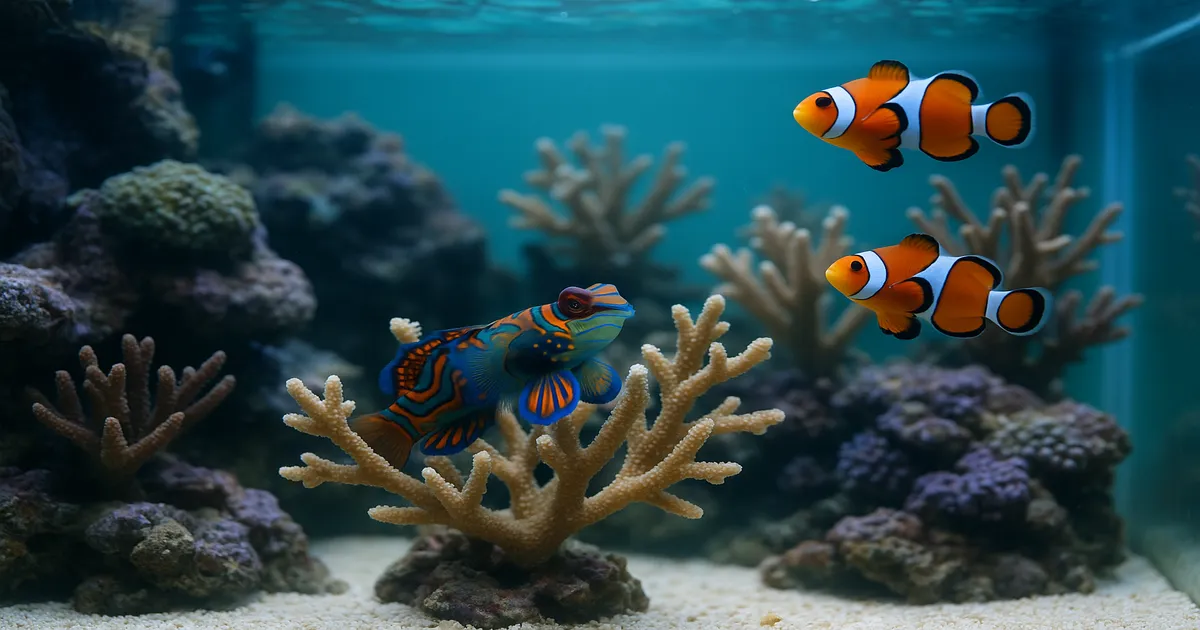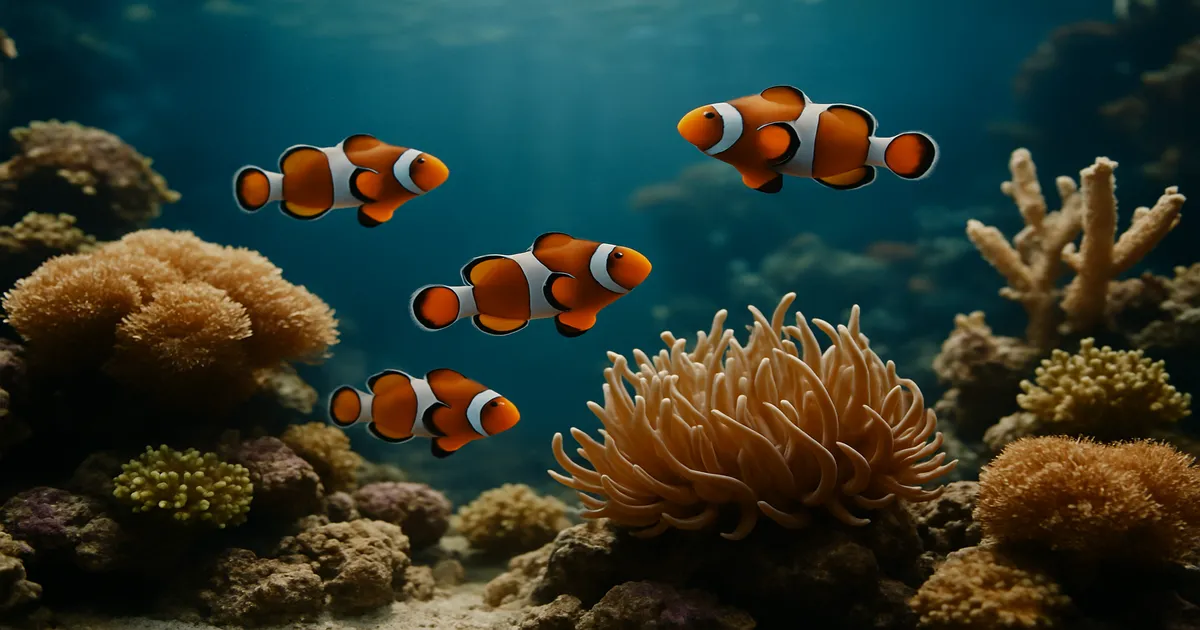
Quick Answer: Clownfish are among the easiest marine fish to keep, but “easy” is relative. Saltwater fishkeeping still demands a properly cycled tank, stable water parameters, and the right equipment. The fish themselves are hardy, unfussy eaters that adapt well to captivity. The real challenge is the saltwater environment — not the clownfish specifically.
So, is it hard to take care of clownfish? Honestly, not particularly — for a marine fish. Captive-bred ocellaris clownfish are genuinely beginner-friendly: tolerant of minor parameter fluctuations and enthusiastic eaters. But they still live in saltwater, and that means a learning curve freshwater keeping simply doesn’t have. Get the tank right, and clownfish will reward you for years.
Is Clownfish Care Hard? How They Compare to Other Marine Fish
Most marine fish are demanding. They’re sensitive to water quality, picky about food, and often stressed by shipping. Clownfish break that mold. They eat readily, tolerate a wider range of conditions than most reef fish, and adapt quickly to aquarium life — especially captive-bred specimens that have never seen the ocean.
The difficulty isn’t the fish itself. It’s the saltwater system around them: cycling the tank, mixing salt to the correct specific gravity, maintaining stable chemistry, and sourcing RO/DI water. Master those fundamentals and clownfish become genuinely easy to keep.
Why Ocellaris Clownfish Are the Best Starting Point
The clownfish subfamily (Amphiprioninae) contains around 30 species across two genera. Not all are equally beginner-friendly. The ocellaris clownfish (Amphiprion ocellaris) — yes, the Nemo fish — tops the beginner list for good reason: small size, low aggression, and exceptional hardiness. If this is your first marine tank, start here.
Choosing the Right Clownfish Species
Ocellaris and Percula: The Classic Nemo Fish
These two species look nearly identical and are often sold interchangeably. Both stay small (3–4 inches / 7–10 cm), show low-to-moderate aggression, and accept most foods without fuss. The true percula (A. percula) is slightly more delicate and typically more expensive, but care requirements are essentially the same. Either makes an excellent first marine fish.
Tomato, Cinnamon, and Clarkii: Hardy but Feistier
The clarkii clownfish (A. clarkii) is arguably the hardiest species in the hobby — extremely adaptable, willing to host almost anything, and tolerant of a wide range of conditions. Tomato (A. frenatus) and cinnamon (A. melanopus) share that toughness but come with moderate-to-high aggression. They’ll bully smaller tank mates and defend territory assertively. Great fish, but plan your stocking list carefully.
Maroon Clownfish: Beautiful but Demanding
The maroon clownfish (Premnas biaculeatus) is the largest of the family at up to 6 inches (15 cm) and the most aggressive by a wide margin. They’re notorious for attacking tank mates — and hands during maintenance. They need a larger tank (55+ gallons for a pair) and a keeper who understands their temperament. Stunning fish, but not a beginner’s choice.
Designer and Captive-Bred Variants
Designer morphs like Snowflake, Picasso, Platinum, Black Ice, and Mocha are captive-bred color variants of A. ocellaris or A. percula. They look exotic but have identical care requirements to their wild-type counterparts. More importantly, all captive-bred clownfish are healthier than wild-caught fish: already adapted to aquarium conditions, eating prepared foods immediately, and arriving without the parasites and stress of ocean collection.
One biology note worth knowing: all clownfish are born male. The dominant individual in any group becomes female — permanently. In a pair, the larger fish will become the female. This protandrous hermaphroditism is completely normal.
Tank Setup: What You Need Before Buying Clownfish
Minimum Tank Size by Species
| Species | Minimum Tank Size |
|---|---|
| Ocellaris / Percula (pair) | 20 gal (30 gal recommended) |
| Tomato / Cinnamon / Clarkii | 30 gal |
| Maroon (single) | 30 gal |
| Maroon (pair) | 55+ gal |
Bigger tanks aren’t just about swimming room — they buffer parameter swings far better than small ones. A 30-gallon is a much more forgiving environment for a beginner than a 10-gallon nano.
Cycling Your Tank: The Most Important Step
Nothing matters more than this. Your tank must complete the nitrogen cycle before any fish go in — a process that typically takes 4–8 weeks. During cycling, beneficial bacteria colonize your filter media and live rock, converting toxic ammonia into nitrite and then into the far less harmful nitrate.
You’re ready to add fish when ammonia reads 0 ppm, nitrite reads 0 ppm, and nitrate is detectable. Bottled bacteria products can significantly speed this up — Fritz Turbo Start 700 and Dr. Tim’s Aquatics One & Only are both well-regarded options.
Substrate, Live Rock, and Aquascaping
Aragonite sand at 1–2 inches (2.5–5 cm) deep is the standard choice — it buffers pH naturally and looks the part. Live rock is the biological backbone of your system, providing filtration, hiding spots, and grazing surfaces. Aim for enough rock to create interesting structure with caves and overhangs where your clownfish can retreat.
Good aquascaping also means allowing water to flow freely through the rockwork. Dead spots collect detritus and degrade water quality fast.
Filtration, Protein Skimmers, and Water Flow
A protein skimmer is one of the best investments you can make for a marine tank — it pulls dissolved organic waste out of the water column before it breaks down into ammonia. The Aqua Remora hang-on skimmer is a solid choice for tanks in the 20–40 gallon range. Pair it with live rock biological filtration and you have a solid foundation. A sump is ideal for larger tanks; a quality hang-on-back or canister filter works fine for 20–30 gallon setups.
Water flow matters too. Clownfish prefer moderate, indirect flow — aim for 10–20× total tank volume per hour, but avoid blasting them directly with a powerhead. Wavemakers that create random, indirect flow patterns are ideal.
Lighting Requirements
Here’s a relief: clownfish have no special lighting needs. Basic LED lighting on a timer (8–10 hours daily) is perfectly fine for a fish-only or FOWLR (fish-only with live rock) setup. Lighting requirements only escalate if you add corals or a live anemone — and those demands come from the invertebrates, not the fish.
Essential Equipment Checklist
- Heater with thermostat (a backup heater is smart)
- Digital thermometer
- Protein skimmer
- Refractometer (not a swing-arm hydrometer)
- Saltwater test kit
- Powerhead or wavemaker
- RO/DI water (tap water contains chlorine, chloramines, and phosphates — all harmful to marine systems)
- Quality reef salt mix
Water Parameters for Clownfish
Salinity and Specific Gravity
Salinity is the most critical parameter in a marine tank. Target a specific gravity of 1.023–1.025 (33–35 ppt). Stability matters more than hitting an exact number — a sudden swing of even 0.002 SG can stress or kill fish. Always use a refractometer; swing-arm hydrometers are notoriously inaccurate.
Temperature, pH, and Alkalinity
- Temperature: 76–78°F (24–26°C) is the sweet spot. The acceptable range is 74–82°F (23–28°C), but avoid sustained highs — above 82°F (28°C) stresses fish and accelerates disease.
- pH: Target 8.1–8.3. Below 7.8 is stressful; below 7.6 can be fatal. Test at consistent times, since pH dips overnight as CO₂ builds up.
- Alkalinity: 8–11 dKH. This buffers pH and is especially important if you plan to keep corals.
Ammonia, Nitrite, and Nitrate
Ammonia and nitrite must read 0 ppm at all times — even trace amounts are toxic. These only spike during initial cycling or after a biological filter crash. Nitrate is less immediately dangerous but should stay under 20 ppm in a fish-only system and under 5–10 ppm in a reef tank with corals or anemones. Regular water changes (10–20% weekly or biweekly) are your main tool for keeping nitrate in check.
Phosphate, Calcium, and Magnesium
Phosphate should sit between 0.02–0.05 ppm — elevated levels fuel nuisance algae blooms. Calcium (400–450 ppm) and magnesium (1250–1350 ppm) matter most if you’re keeping corals, but a good reef salt mix at the correct salinity will put you in the right ballpark for both without much extra intervention.
Do Clownfish Need an Anemone?
In the wild, clownfish live in a mutualistic relationship with sea anemones — the fish get protection from the stinging tentacles; the anemone benefits from the clownfish’s cleaning behavior and water circulation. The clownfish avoids being stung because its mucus coat mimics or incorporates the anemone’s own chemical signature.
In captivity, clownfish do not need an anemone to thrive. Captive-bred fish have often never seen one and do perfectly well without. Anemones are demanding: they move around the tank, can sting corals, and require stable, mature water chemistry and strong lighting to survive long-term. For a first marine tank, leave the anemone out.
If you eventually want to try one, the Bubble Tip Anemone (Entacmaea quadricolor) is the most forgiving option — hardier than most, widely available, and readily accepted by ocellaris and percula clownfish. Avoid carpet anemones (Stichodactyla spp.) entirely — they’re large, powerful, and will consume small fish, including clownfish.
In the absence of an anemone, clownfish commonly adopt hammer coral, torch coral, or frogspawn — LPS corals with long, flowing tentacles that apparently feel close enough to the real thing. Some will host in powerhead covers, plastic decorations, or just a favorite corner of the tank. This is normal and harmless in most cases, though persistent hosting in torch or hammer coral can occasionally stress the polyps.
Feeding Clownfish
Clownfish are omnivores. Their wild diet includes zooplankton, small crustaceans, copepods, algae, and even waste from their host anemone. In captivity, they’re enthusiastic, unfussy eaters — one of the biggest reasons they’re recommended for beginners.
Best foods:
- Marine pellets (New Life Spectrum Marine Fish Formula , Hikari Marine S) — make these the staple; they’re nutritionally complete and convenient
- Frozen mysis shrimp — excellent protein source and highly palatable
- Enriched frozen brine shrimp — good treat; plain unenriched brine shrimp has very low nutritional value and shouldn’t be a primary food
- Frozen cyclops — ideal for juveniles
- Nori (dried seaweed) — clip a small piece to the glass a few times a week to cover the algae component of their diet
Feed adults twice daily, juveniles three times daily. Offer only what they consume within 2–3 minutes, then remove any excess. Overfeeding is one of the fastest ways to crash water quality in a marine tank.
Clownfish Compatibility
Keeping a Pair
A bonded pair of the same species is the simplest approach. Introduce two juveniles simultaneously and the larger will naturally become female — no drama required. Mixing clownfish species in the same tank is generally a bad idea; different species will fight, sometimes fatally. If you want two clownfish, keep two of the same species.
Best Peaceful Tank Mates
- Royal Gramma — peaceful, colorful, stays out of clownfish territory
- Firefish Goby — shy but beautiful; appreciates calm flow conditions
- Banggai Cardinalfish — slow-moving and peaceful
- Tailspot Blenny — algae grazer, stays near the rockwork
- Watchman Gobies — bottom dwellers that largely ignore clownfish
- Green Chromis (in groups of 5+) — active mid-water swimmers that add movement
A cleanup crew is essential in any marine tank. Cleaner shrimp (Lysmata amboinensis) are a standout addition — fascinating to watch and helpful for parasite control. Hermit crabs, turbo snails, and nassarius snails handle detritus and algae efficiently.
Fish and Inverts to Avoid
- Aggressive damselfish (Three-Spot, Domino) — highly territorial and will torment clownfish
- Large predatory fish — lionfish, groupers, triggers, and large eels will eat your clownfish
- Most dottybacks — surprisingly aggressive toward smaller fish
- Carpet anemones — will capture and consume fish, including clownfish
Even mild-mannered ocellaris can become feisty once they’ve established a host. Females are more aggressive than males, and aggression peaks during breeding. If a tank mate is being persistently harassed, restructuring the aquascape to break up sight lines often helps.
Common Health Issues and How to Prevent Them
Marine Ich (Cryptocaryon irritans)
Marine ich looks like someone sprinkled white salt grains on your fish. Infected fish scratch against rocks and show rapid breathing as the disease progresses. It’s the most common disease in marine aquariums and spreads fast. Ich is almost always triggered by stress — from poor water quality, temperature swings, or incompatible tank mates.
Brooklynella (Clownfish Disease)
Brooklynella hostilis disproportionately affects clownfish, which is why it’s earned the nickname “clownfish disease.” It progresses faster than ich and is more immediately dangerous: infected fish develop excess mucus, breathe rapidly, and deteriorate quickly. If you see these symptoms, act fast — this disease can kill within days.
Velvet (Amyloodinium ocellatum)
Velvet is the most lethal of the three. It appears as a fine gold or rust-colored dust on the fish’s body and gills, accompanied by rapid gill movement and lethargy. By the time it’s visually obvious, the infection is often advanced. Like ich, it’s stress-triggered and spreads rapidly through a display tank.
Prevention: Quarantine and Stable Water Quality
The single most effective prevention strategy is a quarantine tank. Run every new fish through a separate 10–20 gallon quarantine tank for 4–6 weeks before introducing them to your display. This catches disease before it reaches your main system. Beyond quarantine, stable water quality is your best defense — healthy fish in a well-maintained tank have strong immune systems and resist disease far better than stressed ones.
Frequently Asked Questions
How hard is it to take care of clownfish compared to freshwater fish? Clownfish are harder to keep than most freshwater fish, but only because of the saltwater system — not the fish themselves. Setting up and cycling a marine tank takes more time, equipment, and knowledge than a freshwater setup. Once the tank is established, clownfish are among the most manageable marine fish available.
How long do clownfish live in captivity? With good care, ocellaris and percula clownfish routinely live 10–15 years in captivity. Some individuals have been documented living over 20 years. Maroon clownfish have similar lifespans. Longevity is closely tied to water quality and a low-stress environment.
Can clownfish live alone? Yes. A single clownfish does perfectly well on its own and is often less aggressive than a bonded pair. If you want two, introduce them simultaneously as juveniles to minimize fighting.
What is the minimum tank size for clownfish? A pair of ocellaris or percula clownfish can be kept in a 20-gallon tank, but 30 gallons is strongly recommended for beginners — larger tanks buffer parameter swings much better. Maroon clownfish need at least 30 gallons for a single fish and 55+ gallons for a pair.
Do clownfish need a heater? Yes. Clownfish need stable tropical temperatures between 74–82°F (23–28°C). In most homes, a reliable heater is essential to maintain this range consistently. A backup heater is worth the investment — heater failures are one of the most common causes of sudden fish loss.