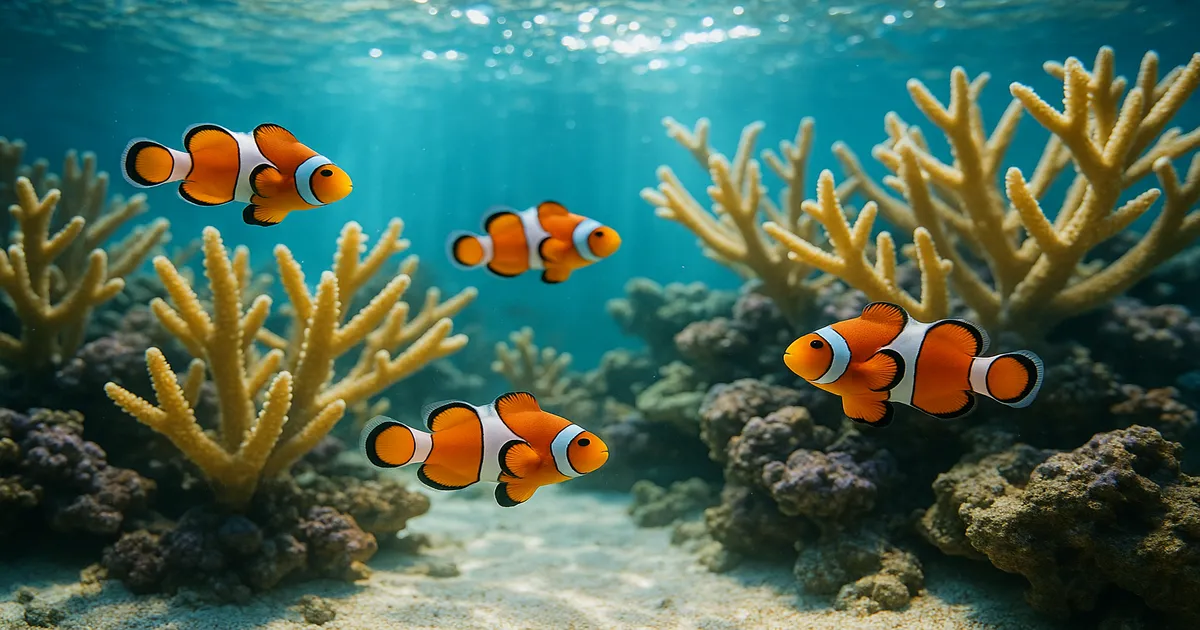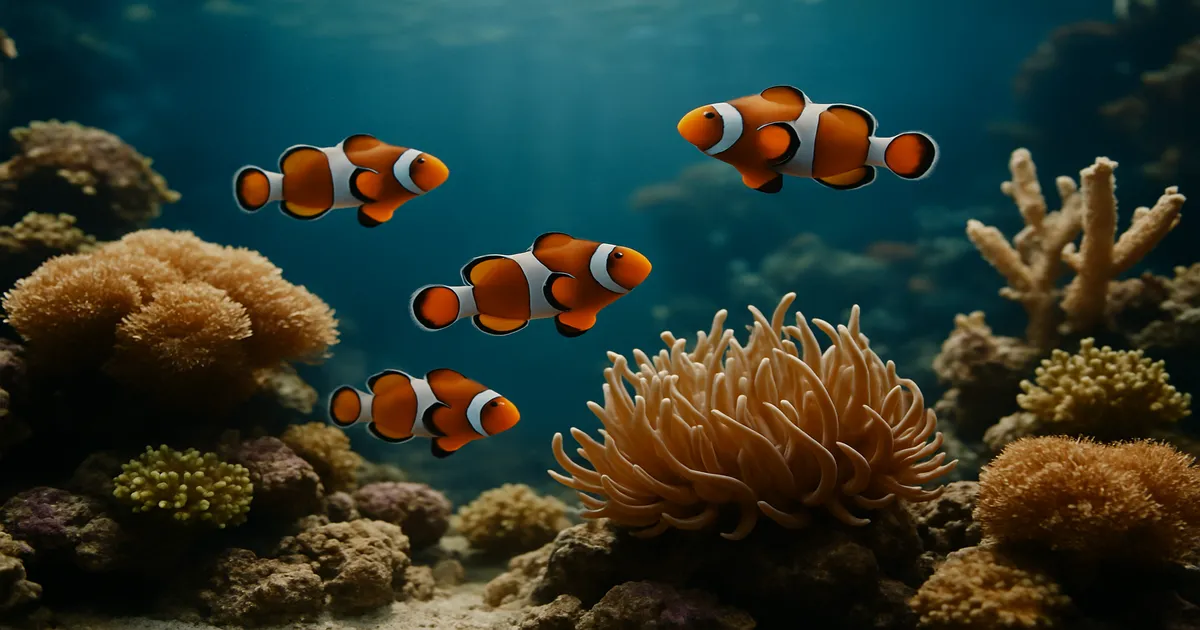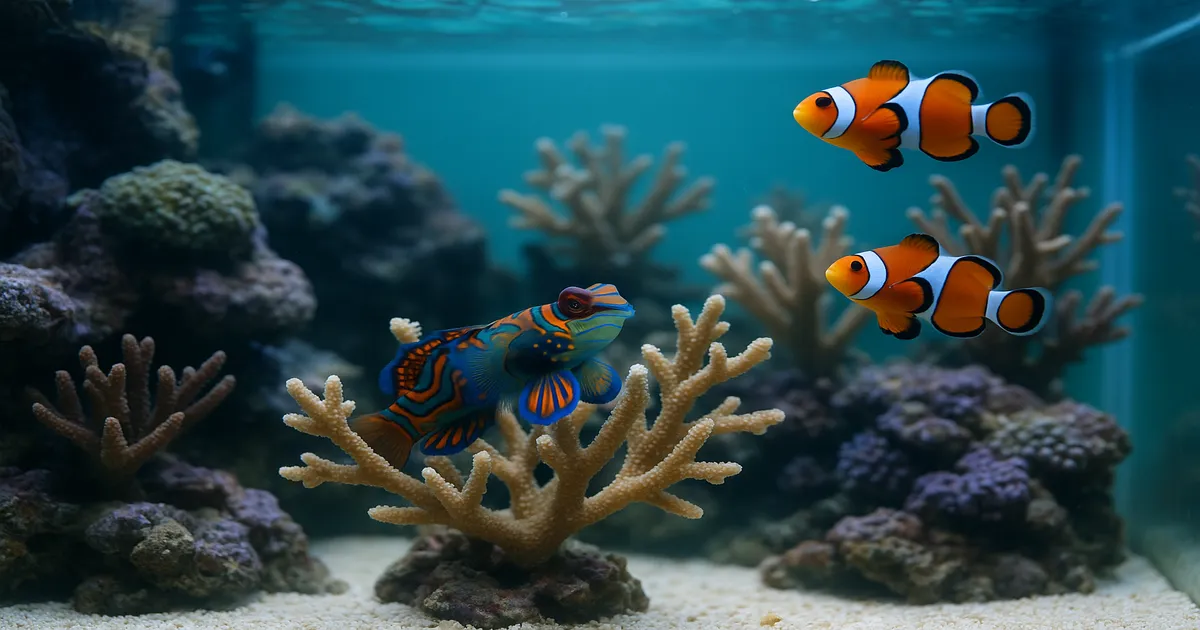
Quick Answer: A 30-gallon tank is below the recommended minimum for a mandarin dragonet, and the core problem isn’t space — it’s copepods. A 30-gallon simply can’t sustain the live prey population a mandarin needs to survive. Adding a clownfish pair makes feeding competition a serious additional hurdle. It’s technically possible with a captive-bred specimen, an active refugium, and regular copepod dosing, but it’s high-maintenance and high-risk.
If you’re asking “should I get a mandarin in a 30g with a pair of clownfish?” — you deserve a straight answer. The short version: probably not. But let’s walk through exactly why, and what would need to be true for it to have any real chance.
Should You Add a Mandarin to a 30-Gallon with Clownfish?
The standard minimum for a mandarin dragonet is 75 gallons, and that number exists for one reason: copepods. Mandarins eat hundreds to over a thousand live copepods every single day. A 30-gallon tank, no matter how well-stocked with live rock, cannot produce that many on its own. Without a constant, reliable food supply, a mandarin will slowly starve — often over weeks or months, looking “fine” until it suddenly isn’t.
A 30-gallon attempt isn’t automatically doomed, but it requires all of the following to be true at the same time:
- You source a captive-bred mandarin from a reputable breeder
- You run an active refugium (even a small hang-on-back unit works)
- You dose live copepods multiple times per week
- Your tank has mature, dense live rock with established microfauna
- Your nitrates stay below 5 ppm
- You have a plan to prevent your clownfish from eating the mandarin’s food
If even one of those conditions slips, the mandarin is at serious risk. A bonded clownfish pair in a 30-gallon turns an already demanding situation into an even harder one.
Mandarin Dragonet: Species Overview
Green, Spotted, and Red Mandarin: What’s the Difference?
The fish most people picture is Synchiropus splendidus — the green mandarin, with its electric blue-green body and swirling orange lines. The spotted (or psychedelic) mandarin, S. picturatus, has similar care requirements but features rounder spots instead of wavy lines. Red mandarins are a rarer color variant of S. splendidus occasionally sold separately. For practical purposes, all three require identical husbandry.
Adults reach 2.5–3.5 inches (6–9 cm). Males are slightly larger and identifiable by an elongated first dorsal spine. Mandarins have no traditional scales — instead, they’re coated in a toxic, foul-smelling mucus called phasmotoxin that deters most predators. It offers zero protection against starvation or poor water quality, though.
Natural Habitat and Why It Matters
In the wild, mandarins live in shallow Pacific reef rubble zones — sheltered lagoons and inshore reefs from Japan and the Philippines through Indonesia and Australia, typically at 3–60 feet depth. They’re not open-water swimmers. They pick slowly across rubble fields, “walking” on their pelvic fins and picking off tiny invertebrates from every crevice. Their natural environment teems with microfauna. That’s the baseline your tank is competing with.
Captive-Bred vs. Wild-Caught: The Most Important Variable
This is the single biggest factor in whether a small-tank attempt can succeed. Wild-caught mandarins are deeply conditioned to eat only live prey and frequently refuse everything else, leading to slow starvation even in well-maintained systems. Captive-bred individuals — available from breeders like Biota Aquariums and ORA — are weaned on frozen copepods and sometimes pellets, dramatically improving their odds in a tank that can’t produce unlimited live food.
If you’re seriously considering a mandarin in a 30-gallon, a captive-bred specimen isn’t optional. It’s the foundation everything else is built on.
The Copepod Problem: Why Tank Size Matters So Much
How Many Copepods Does a Mandarin Actually Eat?
In the wild, a mandarin consumes roughly 30–80 copepods per hour. Scale that up and a healthy adult may eat well over a thousand in a single day. These aren’t occasional snacks — mandarins are continuous, low-volume grazers that spend most of their waking hours hunting microscopic prey across every surface in the tank.
Why a 30-Gallon Struggles to Keep Up
Even a mature, well-established 30-gallon with quality live rock doesn’t have the surface area or volume to maintain a copepod population that regenerates faster than a mandarin depletes it. Copepods reproduce, but not fast enough in a small, enclosed system with a dedicated predator picking them off constantly. The 75-gallon minimum exists not because mandarins need to swim laps, but because the tank ecosystem needs room to function as a living food source.
The Refugium: Your Best Tool for Solving the Pod Problem
A refugium changes the math. Even a 5–10 gallon hang-on-back unit stocked with Chaetomorpha macroalgae and a seeded copepod culture, running on a reverse photoperiod (lights on when the display lights are off), becomes a protected breeding ground. Pods reproduce in the refugium, then migrate into the display tank as a continuous trickle of food. It won’t fully replace supplemental dosing in a 30-gallon, but it’s a non-negotiable part of any small-tank attempt.
Live Rock, Sand Beds, and Microfauna
Aim for 30–40 lbs of porous, complex live rock — Fiji, Marshall Island, or aquacultured reef rock with lots of surface area. Arrange it with caves and overhangs rather than a flat pile. A deep sand bed of 4–6 inches of fine aragonite adds another major copepod habitat zone and supports the beneficial microfauna the mandarin depends on. Bare-bottom tanks are a hard no for this species.
Water Parameters for a Mandarin-Clownfish Reef Tank
Mandarins need stable, reef-quality water. Stability matters more than hitting an exact number — a temperature that holds steady at 76°F is far better than one that swings between 74°F and 80°F daily.
| Parameter | Ideal Range |
|---|---|
| Specific Gravity | 1.025 (range: 1.023–1.026) |
| Temperature | 74–78°F / 23–26°C |
| pH | 8.1–8.4 |
| Alkalinity | 8–12 dKH |
| Calcium | 380–450 ppm |
| Magnesium | 1,250–1,350 ppm |
| Ammonia / Nitrite | 0 ppm |
| Nitrate | Under 5 ppm (20 ppm absolute ceiling) |
| Phosphate | 0.02–0.05 ppm |
Mandarins have no scales, so their mucus-based skin is directly exposed to water chemistry. Elevated nitrates are a particular problem: levels above 15–20 ppm actively suppress copepod reproduction, undermining the mandarin’s food supply at the source. Test weekly with a reliable kit.
Tank Setup for a 30-Gallon Mandarin Attempt
Filtration and Flow
Run a protein skimmer rated for 60–75 gallons on your 30-gallon — oversizing is intentional and gives you a meaningful buffer. Clean filter socks or filter floss every 1–3 days; trapped detritus breaks down fast in a small tank and will spike nitrates. Swap activated carbon monthly and consider GFO media if phosphate creeps above 0.05 ppm.
Total flow of 20–40x tank volume per hour, delivered via wavemakers set to random or pulse mode, creates the varied, gentle movement mandarins need. They’re poor swimmers and spend most of their time perching on rock. They need calm pockets within the overall flow pattern where they can rest and hunt without fighting the current.
Lighting and Aquascape
Lighting choices should be driven by your corals, not the mandarin — but you do need to accommodate the mandarin’s strong dislike of intense light. They’re crepuscular by nature, most active at dusk and dawn, and will spend the brightest part of the day hiding. Build caves and overhangs into your aquascape so they have shaded retreats. The best time to observe and feed your mandarin is right after the display lights dim in the evening.
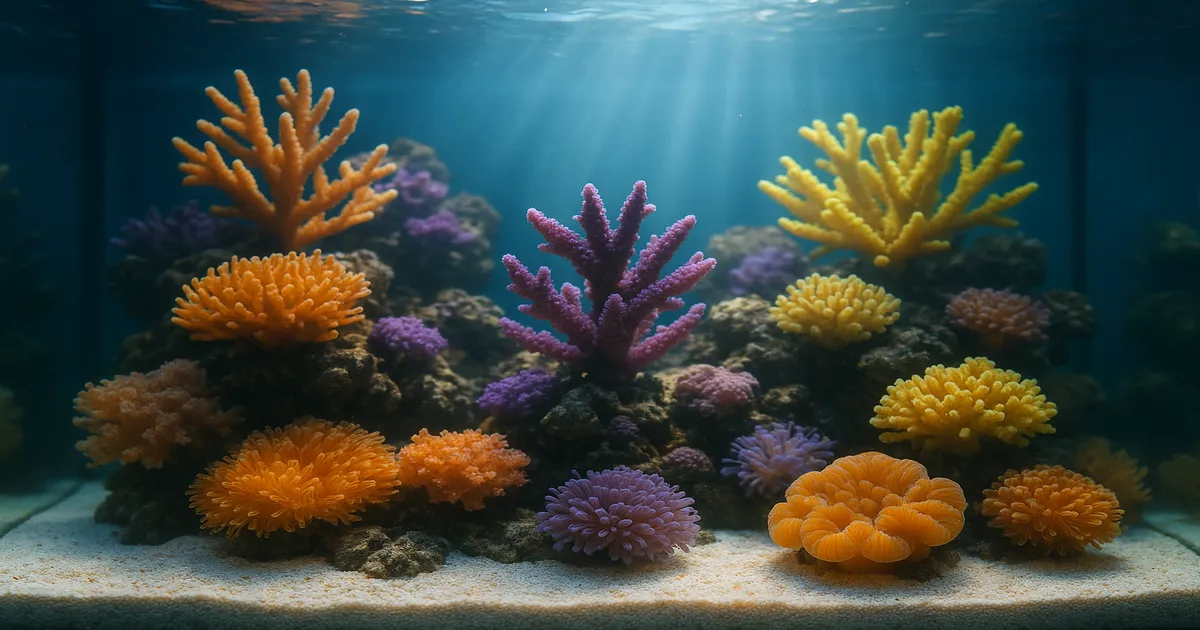
Think of your aquascape as both a visual display and a functional ecosystem. Stack rock to create caves, tunnels, and overhangs — these serve as mandarin refuges, spawning sites for copepods, and territory boundaries that reduce stress.
Clownfish and Mandarin Compatibility in a 30-Gallon
Direct Aggression Isn’t the Problem
Ocellaris and percula clownfish won’t physically attack a mandarin. They’re not predatory, and the mandarin’s toxic mucus makes it an unappealing target. Direct aggression isn’t the issue.
Feeding Competition Is
The real problem is that clownfish are bold, fast, opportunistic feeders that will hoover up anything added to the water column — including the live copepods you’re dosing specifically for your mandarin. In a 30-gallon, a bonded pair patrols and dominates the tank. Getting food to a slow-moving, shy mandarin while two active clownfish compete for the same water column is genuinely difficult. A bonded pair may also show territorial aggression around their hosting site, adding stress even without direct physical contact.
Safe Tank Mates and Fish to Avoid
Compatible species:
- Firefish (Nemateleotris spp.) — peaceful, occupy different zones
- Royal Gramma — generally calm; monitor for minor territorial behavior
- Banggai Cardinalfish — slow-moving and non-competitive
- Small gobies (watchman, clown goby)
- Cleaner shrimp (Lysmata spp.)
- Clean-up crew (snails, small hermit crabs, emerald crabs)
Avoid:
- Dottybacks — aggressive, will bully and bite mandarins
- Damsels (other than clownfish) — territorial and relentless
- Hawkfish — will stress or prey on mandarins
- Peppermint shrimp — may nip at the mandarin’s mucus coat
- Large hermit crabs — can attack resting mandarins
- Any other dragonet — two males will fight; a pair needs 90+ gallons
Feeding a Mandarin Dragonet
What They Eat and Why It’s Hard to Replicate
Mandarins are obligate micropredators. Their diet consists almost entirely of harpacticoid copepods, with amphipods, ostracods, small polychaete worms, and occasional fish eggs rounding things out. They don’t chase prey — they stalk slowly across rubble, striking with a protrusible mouth at anything small enough to swallow. It’s a highly specialized feeding strategy that makes them uniquely difficult to feed in captivity.
Live Copepod Dosing
Even captive-bred mandarins benefit from a steady supply of live pods. The three most useful species are Tisbe biminiensis, Tigriopus californicus, and Apocyclops panamensis. Dose a minimum of 1,000–5,000 live copepods per week, split across 2–3 additions. Add them at lights-out — the mandarin is most active, the clownfish are winding down, and the pods have a better chance of reaching the substrate before being eaten by the wrong fish.
Target Feeding to Outsmart Your Clownfish
A pipette or turkey baster lets you deliver food directly near the mandarin while it’s perched in its favorite spot. Feed your clownfish at the opposite end of the tank first to distract them, then use the pipette to deliver copepods or frozen food close to the mandarin. A small dish or cave positioned in the mandarin’s territory can also help concentrate food where it needs to go.
Training a wild-caught mandarin to accept frozen food is possible but slow. Start by adding live copepods alongside a small amount of frozen copepods or fine-grade Mysis near a feeding station. Some individuals will eventually associate the frozen food with the live food and start accepting it. Many won’t — which is exactly why starting with a captive-bred specimen is so strongly recommended.
Honest Assessment: Should You Do It?
For a mandarin in a 30g with a pair of clownfish to have a reasonable chance, every single one of these conditions must be met:
- Captive-bred specimen from a reputable source (Biota, ORA)
- Active refugium running Chaetomorpha on a reverse photoperiod