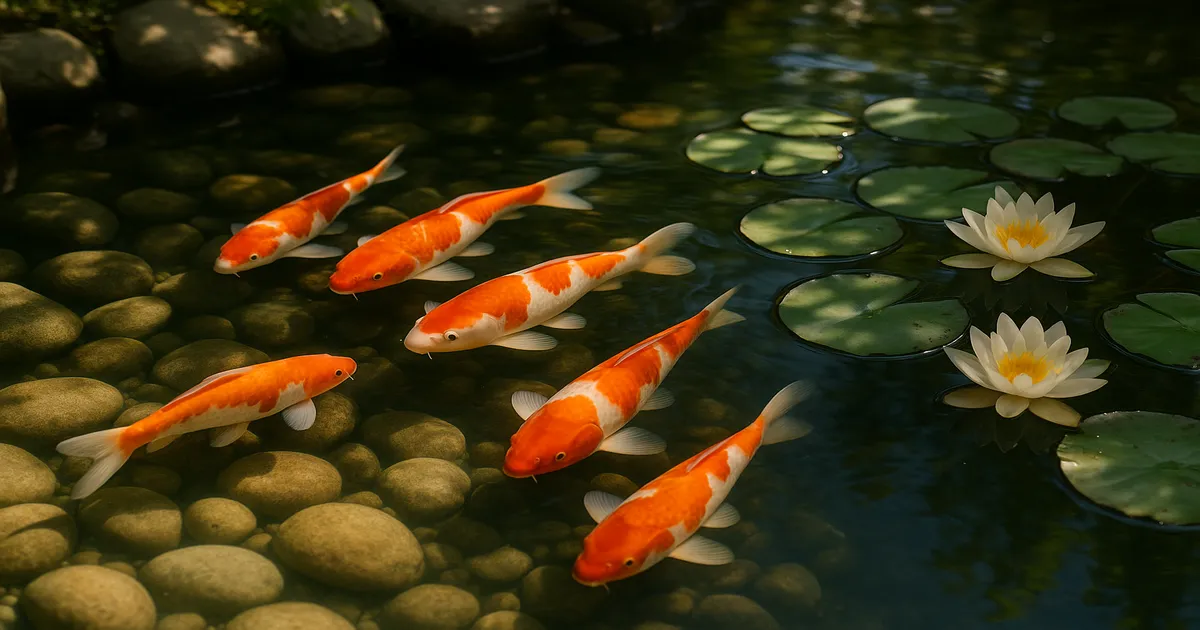
Quick Answer: Koi (Cyprinus rubrofuscus) are long-lived, large pond fish that thrive for 25–35 years and grow to 24–36 inches. They need a minimum 1,000-gallon pond, robust filtration, and consistent water quality management. If you can commit to the space, cost, and ongoing maintenance, koi are one of the most rewarding fish you can keep.
This koi fish care guide for beginners covers everything you need to know before buying your first fish — and everything you’ll need to keep them healthy for decades. Koi aren’t difficult, but they are demanding. Get the setup right from the start and you’ll avoid the most common (and costly) beginner mistakes.
What Are Koi Fish? A Beginner’s Overview
Koi, or Nishikigoi (“brocaded carp”), are ornamental fish selectively bred from wild carp in Niigata Prefecture, Japan, beginning in the early 19th century. Their scientific name is Cyprinus rubrofuscus — a recent taxonomic revision from the older Cyprinus carpio classification. In the wild, their ancestors lived in slow-moving rivers, rice paddies, and shallow lakes across East Asia.
These are not small fish. Adults routinely reach 24–36 inches and can weigh over 20 lbs. Their lifespan is equally impressive — 25–35 years is realistic in a well-maintained pond, with exceptional specimens living 50 years or more.
Are Koi Right for You?
Before you buy a single fish, be honest with yourself about a few things:
- Space: Koi need a minimum 1,000-gallon outdoor pond. A backyard water feature or preformed 300-gallon tub won’t cut it long-term.
- Cost: A proper pond with quality filtration is a significant upfront investment — often $1,000–$5,000+ depending on size and equipment.
- Time: Weekly water tests, regular partial water changes, filter maintenance, and daily observation are non-negotiable.
- Longevity: You may be caring for these fish for 30 years. Plan accordingly.
If all of that sounds manageable, read on.
Koi Varieties, Size, and Lifespan
Popular Koi Varieties
There are dozens of recognized koi varieties, but a handful dominate the hobby:
| Variety | Key Features |
|---|---|
| Kohaku | White body with red markings; the most iconic koi |
| Sanke (Taisho Sanshoku) | White base with red and black markings |
| Showa (Showa Sanshoku) | Black base with red and white markings |
| Ogon | Metallic single-color (gold, platinum, or orange) |
| Shusui | Doitsu-scaled; blue-grey body with red/orange flanks |
| Bekko | White, red, or yellow base with black markings |
| Asagi | Blue-grey scaled back; red or orange on belly and fins |
| Butterfly Koi | Long, flowing fins; a Western development |
| Ghost Koi | Koi × wild carp hybrid; metallic sheen, notably hardy |
Scale Types
Scale type is a separate trait from color pattern and applies across many varieties:
- Standard (fully scaled): Uniform scales covering the entire body — the classic look.
- Doitsu: German-scaled; a few large scales run along the lateral line and dorsal edge, with most of the body bare.
- Leather: Nearly scaleless with smooth skin. Striking and unusual.
How Big Do Koi Get — and How Long Do They Live?
Under optimal conditions, koi can reach 9–12 inches in their first year alone. Most adults settle between 24–36 inches, though “jumbo” koi occasionally exceed that. A realistic lifespan for a well-cared-for fish is 25–50 years — an extraordinary commitment compared to most pets.
Koi Pond Setup: Size, Filtration, and Equipment
How Many Gallons Do Koi Need?
Koi are pond fish, full stop. A standard aquarium — even a large one — is only suitable for juveniles under six inches, and only as a temporary measure. For adults, you need outdoor pond volume.
- Absolute minimum for 2–3 koi: 1,000 gallons
- Recommended starting size: 2,000–3,000 gallons
- Per-fish guideline: 250–500 gallons per adult koi; 1,000 gallons per fish for premium health and growth
Plan for adult size when building. That 4-inch fish you’re buying today will be 2 feet long within a few years.
Pond Depth, Liner, and Construction
Depth matters for two reasons: temperature stability and predator protection. Aim for a minimum of 3 feet, with 4–6 feet preferred in colder climates.
Liner options each have trade-offs:
- EPDM rubber (45 mil): The most popular choice — flexible, fish-safe, UV-resistant, and easy to work with.
- Preformed fiberglass/plastic: Convenient but almost always too small for serious koi keeping.
- Concrete: Extremely durable, but must be sealed with a fish-safe sealant. Raw concrete leaches lime and can drive pH dangerously high.
Bottom drains are worth installing in any purpose-built koi pond. They passively pull waste toward your external filter and make maintenance dramatically easier.
Filtration: The Most Important Investment You’ll Make
Koi produce an enormous bioload — far more waste per fish than most pond species. Undersized or low-quality filtration is the root cause of most koi health problems. A proper system has three stages:
- Mechanical filtration removes solid waste (feces, uneaten food) before it breaks down into ammonia. Drum filters, vortex chambers, and filter brushes all work well.
- Biological filtration converts ammonia to nitrite, then nitrite to nitrate, via beneficial bacteria. Moving bed biofilm reactors (K1 media), bead filters, and Japanese matting are popular choices.
- UV sterilization kills free-floating algae and reduces pathogen load. It’s optional, but highly recommended for any stocked pond. (Aqua Ultraviolet Advantage 8W UV Sterilizer)
Your pump needs to turn over the entire pond volume at least once every one to two hours. A 2,000-gallon pond needs a pump rated for at least 1,000–2,000 GPH.
Aeration and Dissolved Oxygen
Dissolved oxygen is non-negotiable. Koi are large, active fish with high oxygen demands, and warm summer water holds significantly less oxygen than cool water. Run air stones, a waterfall return, or a surface agitator — ideally more than one source. In winter, keep at least one ice-free opening in the pond surface so toxic gases can escape. A pond de-icer handles this reliably.
Plants, Shade, and Predator Protection
Koi will eat and uproot most aquatic plants, but a few hold their own: water hyacinth, water lettuce, lotus, and iris all work well, especially when their roots are protected by mesh shelves along the pond edge. Aim for 30–50% surface shade to control algae and prevent overheating.
Predator protection is something beginners often overlook until it’s too late. Herons, raccoons, and otters can wipe out a pond quickly. Pond netting, motion-activated sprinklers, and deep zones where koi can retreat are your best defenses.
Koi Water Parameters: What Every Beginner Must Monitor
Temperature
- Optimal: 65–75°F (18–24°C)
- Acceptable range: 59–86°F (15–30°C)
- Stop feeding below: 50°F (10°C) — koi’s digestive systems essentially shut down at this point
- Above 86°F (30°C): Dissolved oxygen drops sharply; heat stress and disease risk spike
pH, GH, and KH
- pH: 7.0–8.0 is ideal. Avoid swings greater than 0.3–0.5 units in a 24-hour period — stability matters more than hitting an exact number.
- GH (General Hardness): 100–200 ppm. Moderately hard water supports healthy osmoregulation and scale integrity.
- KH (Carbonate Hardness): 105–210 ppm. KH is your pH buffer. If it drops below 50 ppm, pH can crash overnight. Fix low KH with baking soda — roughly 1 teaspoon per 100 gallons raises KH by approximately 10 ppm.
The Nitrogen Cycle: Ammonia, Nitrite, and Nitrate
New pond owners must understand the nitrogen cycle before adding fish. Beneficial bacteria colonize your filter media and convert fish waste (ammonia) first into nitrite, then into the far less toxic nitrate. This process takes 4–8 weeks in a new pond. Test throughout with a quality liquid test kit.
Target parameters:
- Ammonia: 0 ppm. Above 0.5 ppm is dangerous; above 2.0 ppm is acutely lethal. At higher pH (8.0+), a greater proportion exists as toxic un-ionized NH₃, so the risk is compounded.
- Nitrite: 0 ppm. Above 0.5 ppm causes “brown blood disease” (methemoglobinemia). Emergency treatment: raise salt to 0.3% NaCl to competitively inhibit nitrite uptake across the gills.
- Nitrate: Below 20 ppm is ideal; below 40 ppm is acceptable. Manage with regular partial water changes.
Dissolved Oxygen
- Ideal: above 8 mg/L
- Minimum: above 6 mg/L
- Lethal threshold: below 4 mg/L
Koi gasping at the surface is a dissolved oxygen emergency. It’s most likely to occur on hot summer nights or in heavily stocked ponds. Always run aeration.
Salt
Therapeutic salt at 0.1–0.3% NaCl reduces osmotic stress, supports slime coat recovery, and can treat certain parasites and nitrite poisoning. Always use pure pond salt or non-iodized sodium chloride — never table salt or iodized salt.
Feeding Koi Fish: Diet, Frequency, and Seasonal Adjustments
What Do Koi Eat?
Koi are opportunistic omnivores. In the wild they eat aquatic invertebrates, insect larvae, plant matter, algae, and organic detritus. In a pond they’ll graze naturally, but they still need supplemental feeding to thrive.
A quality floating pellet is the foundation of a captive koi diet. Floating pellets are preferred because you can see exactly how much the fish are eating and remove uneaten food before it breaks down.
- High-protein growth pellets (35–40% protein): Best for summer when water is warm and metabolism is high.
- Wheat-germ pellets: Lower protein, easier to digest — ideal for spring and autumn when temperatures cool.
- Treats: Watermelon, orange slices, blanched lettuce, and shrimp are all safe in moderation.
- Avoid: Bread, processed human food, and anything high in simple carbohydrates.
How Often and How Much
Feed only what your koi can consume within five minutes, once or twice daily. Remove any uneaten food immediately — decomposing food is one of the fastest ways to spike ammonia. When in doubt, feed less. Koi can go several days without food without harm; they cannot survive a serious ammonia spike.
Seasonal Feeding Schedule
| Season | Water Temp | Food Type | Frequency |
|---|---|---|---|
| Spring | 50–65°F (10–18°C) | Wheat-germ; reintroduce gradually | Once daily or less |
| Summer | 65–75°F (18–24°C) | High-protein growth pellets | 2–3× daily |
| Autumn | 50–65°F (10–18°C) | Transition back to wheat-germ | Once daily or less |
| Winter | Below 50°F (10°C) | Stop feeding entirely | None |
Koi Compatibility: Pond Mates and Species to Avoid
Best Pond Mates for Koi
Koi are peaceful but will eat anything small enough to fit in their mouths. Good companions are hardy, similarly sized, and share the same water parameters:
| Species | Notes |
|---|---|
| Common/Comet Goldfish | Classic pairing; ensure goldfish are large enough not to be eaten |
| Shubunkin | Hardy single-tail goldfish; excellent companion |
| Golden Orfe | Active surface swimmer; needs well-oxygenated water |
| Tench | Bottom-dwelling; helps clean up waste; very compatible |
| Rudd | Peaceful mid-water swimmer |
| Sterlet/Sturgeon | Impressive bottom feeder for large ponds; needs cool, highly oxygenated water |
Species to Avoid
- Small fish (tetras, minnows, small livebearers): They will be eaten.
- Fancy goldfish (Orandas, Ryukins, Telescopes): Too slow to compete for food; prone to injury from koi.
- Tropical fish requiring temperatures consistently above 78°F (26°C): Temperature mismatch makes cohabitation impractical.
- Aggressive species (cichlids and similar): Will injure koi.
- Invertebrates (shrimp, snails, crayfish): Koi will eat them.
- Amphibians: Koi will eat tadpoles and frog eggs; adult frogs may be harassed.
Stocking Density
Overstocking is the single most common error new koi keepers make. It leads to poor water quality, disease, and stunted growth — often all three simultaneously.
- Minimum: 500 gallons per adult koi
- Ideal: 1,000 gallons per adult koi
Always stock for adult size, not the size of the fish you’re buying today.
Koi Health: Common Diseases, Prevention, and Treatment
Signs of a Healthy Koi vs. a Sick Koi
Healthy koi are active, curious, and quick to surface at feeding time. Their eyes are clear, fins are upright and intact, and their colors are vibrant. Watch for these warning signs:
- Flashing (rubbing against the pond floor or walls)
- Lethargy or isolation from the group
- Clamped fins
- Open sores or ulcers
- White spots on skin or fins
- Gasping at the surface
Common Koi Diseases and Parasites
- Koi Herpesvirus (KHV): A serious, highly contagious viral disease with no cure. Quarantine is your only reliable prevention.
- Bacterial ulcers (Aeromonas): Open sores on the body, often triggered by poor water quality or physical injury. Treatable with antibacterial medications if caught early.
- Anchor worm (Lernaea): Visible parasites attached to the skin. Remove manually and treat with an appropriate antiparasitic. (Interpet Anti Parasite Pond Treatment)
- Fish lice (Argulus): Flat, disc-shaped parasites visible to the naked eye. Treat with appropriate pond medications.
- Ich (white spot): White specks on fins and body caused by Ichthyophthirius multifiliis. Treatable with pond-safe ich medications.
- Brown blood disease (nitrite poisoning): Caused by elevated nitrite; fish appear lethargic and may gasp. Emergency salt treatment and large water changes are required.
Quarantine Protocols
Every new fish — regardless of source — should spend 4–6 weeks in a separate quarantine tank before entering your main pond. This is the single most effective way to prevent introducing KHV and other pathogens. A bare 100–150 gallon tank with its own filtration is sufficient.
Prevention Is the Best Medicine
The overwhelming majority of koi disease outbreaks trace back to water quality problems. Stable parameters, appropriate stocking density, and consistent maintenance prevent most issues before they start. When something goes wrong despite good husbandry, don’t hesitate to consult an aquatic veterinarian — they’re more accessible than most hobbyists realize.
Routine Maintenance Schedule
Daily, Weekly, and Monthly Tasks
Daily:
- Observe fish behavior and appetite — changes are often the first sign of trouble
- Check that pump, filter, and aeration equipment are running
- Remove any uneaten food
Weekly:
- Test water parameters (ammonia, nitrite, nitrate, pH, KH)
- Perform a 10–20% partial water change
- Rinse mechanical filter media in pond water (never tap water — it kills beneficial bacteria)
- Clear debris from skimmer and pump pre-filter
Monthly:
- Inspect all equipment for wear or blockages
- Check liner for damage or leaks
- Trim or thin aquatic plants as needed
- Review fish for any early signs of disease or injury
Seasonally:
- Spring: Deep-clean filter media; restart feeding gradually; inspect pond after winter
- Autumn: Reduce feeding as temperatures drop; remove leaf debris before it decays
- Winter: Stop feeding below 50°F; ensure de-icer or air stone keeps a hole in the ice
Koi Fish Care FAQ
How many koi can I keep in a 1,000-gallon pond? Two to three adult koi at most — and only with excellent filtration. A 1,000-gallon pond is the bare minimum, not a comfortable stocking target. For healthy, growing fish, aim for 1,000 gallons per fish.
Do koi need a heater? No. Koi are cold-water fish and tolerate temperatures from near-freezing up to about 86°F (30°C). In most climates, a heater is unnecessary. What you do need in winter is a de-icer or air stone to keep a hole in the ice so gases can exchange.
Can koi live in an aquarium? Only temporarily, and only as juveniles under six inches. Adult koi need pond volumes — a standard aquarium, even a very large one, cannot support their size, waste output, or behavioral needs long-term.
How do I know if my koi pond is cycled? Test daily with a liquid test kit. Your pond is cycled when ammonia and nitrite both read 0 ppm consistently for at least a week, and nitrate is detectable but rising slowly. This typically takes 4–8 weeks in a new pond.
Why are my koi jumping out of the pond? Jumping is almost always a water quality signal. Check ammonia, nitrite, and dissolved oxygen immediately. Other causes include parasites (especially gill flukes), low pH, or a sudden temperature swing. Don’t dismiss it as normal behavior.