Quick Answer: Cycling a 10 gallon fish tank means establishing colonies of beneficial bacteria that convert toxic ammonia into nitrite, then into the far less harmful nitrate. A fishless cycle typically takes 3–6 weeks; fish-in cycling runs 4–8 weeks. The tank is ready when both ammonia and nitrite drop to 0 ppm within 24 hours of dosing 2 ppm ammonia, and nitrate is climbing.
Getting the nitrogen cycle right is the single most important thing you can do when learning how to cycle a 10 gallon fish tank. Skip it — or rush it — and you’ll be doing emergency water changes at midnight wondering why your fish look miserable. In a small 10-gallon, there’s almost no buffer: ammonia can spike from safe to lethal in hours, not days. Understanding the process before you add a single fish makes everything that follows dramatically easier.
How to Cycle a 10 Gallon Fish Tank: The Nitrogen Cycle Explained
What Is the Nitrogen Cycle?
Fish produce ammonia constantly through waste, respiration, and uneaten food. Left unchecked, ammonia is lethal. The nitrogen cycle is the biological process by which two groups of bacteria colonize your filter and convert that ammonia — first into nitrite (still toxic), then into nitrate (manageable with regular water changes).
Think of it as building a tiny sewage treatment plant inside your filter. Once it’s running, it runs indefinitely — as long as you don’t accidentally destroy it.
How Long Does Cycling a 10 Gallon Tank Take?
- Fishless cycling (pure ammonia): 3–6 weeks
- Fish-in cycling: 4–8 weeks
- Seeded cycling (established filter media): 1–7 days
- Bottled bacteria products: 1–3 weeks, results vary
How Do You Know When the Cycle Is Complete?
The gold standard test: dose your tank to 2 ppm ammonia, wait 24 hours, then test. If both ammonia and nitrite read 0 ppm and nitrate has risen, your cycle is complete. Don’t guess — test with a quality liquid test kit.
The Three Stages of the Nitrogen Cycle in a 10 Gallon Tank
Stage 1: Ammonia Accumulates
Ammonia (NH₃/NH₄⁺) is the starting point. In a fish-in tank, it comes from fish waste and respiration. In a fishless cycle, you add it deliberately. Bacteria from the genus Nitrosomonas (and the related Nitrosospira) begin colonizing your filter media and oxidizing ammonia into nitrite — a process that typically kicks off within the first one to two weeks.
Stage 2: The Nitrite Spike
Once ammonia-oxidizing bacteria establish themselves, nitrite climbs — often dramatically. A second group, primarily Nitrospira (the dominant genus in established aquaria) along with Nitrobacter, then colonizes and converts nitrite into nitrate. The nitrite spike typically follows the ammonia spike by 7–14 days. It can look alarming, but it means your cycle is progressing exactly as it should.
Stage 3: Nitrate Builds and the Cycle Completes
As Nitrospira populations grow, nitrite crashes and nitrate accumulates. Rising nitrate is your signal that the finish line is close. Nitrate is only harmful at high concentrations and is easily managed with regular water changes.
This science isn’t new — Sergei Winogradsky identified nitrifying bacteria in the 1890s. We’ve spent the past century figuring out how to harness them in a glass box on a bookshelf.
Why a 10 Gallon Tank Is Especially Vulnerable
A 10-gallon holds roughly 38 liters of water. That’s not much dilution. One overfeeding session, one dead snail you didn’t notice, one skipped water change — and ammonia can spike fast enough to kill fish before your next morning test. Bacterial colonies are also proportionally smaller, making them more vulnerable to disruption from temperature swings, pH crashes, or accidental die-off. This is exactly why cycling education matters so much for beginners starting small.
Choosing a Cycling Method for Your 10 Gallon Tank
| Method | Duration | Risk Level | Best For |
|---|---|---|---|
| Fishless cycling (pure ammonia) | 3–6 weeks | Low | Planned setups |
| Fish-in cycling | 4–8 weeks | High | Beginners who already have fish |
| Seeded cycling (established media) | 1–7 days | Very Low | Experienced hobbyists |
| Bottled bacteria | 1–3 weeks | Low–Medium | Quick-start situations |
Fishless Cycling with Pure Ammonia (Recommended)
This is the cleanest, most controllable method. Add pure ammonia — unscented, no surfactants; it should foam minimally when shaken — to an empty tank and dose to 2–4 ppm. Test daily, keep dosing to maintain that range, and monitor as the cycle progresses. No fish are stressed, and you can optimize temperature, pH, and KH without worrying about livestock.
Fish-In Cycling: What You Need to Know
If you already have fish, this is your reality. It works, but it demands daily testing and frequent partial water changes to keep ammonia and nitrite below 0.25 ppm. Use a water conditioner that detoxifies ammonia between water changes — Seachem Prime is the go-to choice for most hobbyists.
One useful trick for fish-in cycling in a 10-gallon: add 1 tablespoon of aquarium salt per 10 gallons. Chloride ions compete with nitrite for gill uptake sites, reducing nitrite toxicity during the spike. It’s not a cure, but it buys you time. Note that salt-sensitive species — corydoras, most tetras, and live plants — may not tolerate even this low dose, so research your fish before adding it.
Seeded Cycling with Established Filter Media
This is the fastest method by far. Take a handful of ceramic rings, a sponge, or some bio-balls from a healthy, established tank and drop them into your new filter. You’re transplanting a living bacterial colony. Combined with a small ammonia source, a seeded tank can be fully cycled in days rather than weeks. If you have a friend with an established aquarium, it’s absolutely worth asking.
Bottled Bacteria Products: Do They Work?
Yes — with caveats. Products containing live Nitrospira bacteria perform significantly better than older formulas based solely on Nitrobacter, which don’t establish as reliably in aquarium conditions. DrTim’s Aquatics One & Only is a well-regarded option. Bottled bacteria won’t cycle your tank overnight, but they can meaningfully shorten the process to 1–3 weeks. Always check the expiration date — dead bacteria in a bottle do nothing.
Essential Water Parameters During Cycling
Parameter Summary Table
| Parameter | Cycling Target | Post-Cycle Ideal | Danger Zone |
|---|---|---|---|
| Ammonia | 2–4 ppm (fishless) | 0 ppm | > 0.25 ppm (with fish) |
| Nitrite | Spike expected, then 0 ppm | 0 ppm | > 0.25 ppm |
| Nitrate | Rising during cycle | < 20–40 ppm | > 80 ppm |
| pH | 7.0–8.0 | Species-dependent | < 6.5 or > 8.5 |
| KH | 4–8 dKH | 4–8 dKH | < 3 dKH |
| Temperature | 80–82°F (27–28°C) | Species-dependent | < 65°F or > 90°F |
Ammonia
For fishless cycling, dose to 2–4 ppm and maintain that level throughout. With fish present, anything above 0.25 ppm total ammonia is in the danger zone. At higher pH (above 7.5) and warmer temperatures, a larger proportion of ammonia exists in the toxic un-ionized NH₃ form — worth keeping in mind in a 10-gallon where both can drift.
Nitrite
Nitrite commonly peaks at 2–10 ppm during mid-cycle. Like ammonia, 0.25 ppm is the danger threshold for fish. The spike can feel endless, but it typically resolves within 1–2 weeks once Nitrospira populations are established. Keep testing, keep dosing ammonia for fishless cycles, and be patient.
pH and KH: Preventing a Cycle-Stalling Crash
Nitrifying bacteria thrive at pH 7.0–8.0 and slow significantly below pH 6.5. The sneaky problem: nitrification itself produces hydrogen ions that consume alkalinity, which can crash your pH mid-cycle — especially in a small tank with limited buffering capacity.
KH (carbonate hardness) is your buffer. Keep it at 4–8 dKH throughout cycling. If it drops below 3 dKH, pH becomes unstable and your cycle can stall completely. If your tap water is soft, add baking soda in small doses — roughly 1 teaspoon raises KH by about 4 dKH in 10 gallons. Crushed coral in the filter works as a slower, self-regulating alternative.
Temperature and Dissolved Oxygen
Nitrifying bacteria thrive at 80–82°F (27–28°C). Below 65°F (18°C), bacterial metabolism slows to a crawl and cycling can stall for months. Don’t exceed 90°F (32°C) either — above that, bacterial activity declines and dissolved oxygen drops.
Nitrifying bacteria are obligate aerobes. Run an airstone or ensure strong surface agitation throughout the cycling process. (Tetra Whisper Air Pump 10) This matters most in warm tanks, since warmer water holds less dissolved oxygen.
Setting Up Your 10 Gallon Tank for a Successful Cycle
Filter Choice and Biological Media
Your filter is where the cycle actually lives. For a 10-gallon, hang-on-back (HOB) filters like the AquaClear 20 offer good surface area and are easy to seed with established media. Sponge filters are ideal for shrimp tanks and breeding setups. Target a flow rate of 40–100 GPH (4–10× the tank volume per hour).
The most important rule: never replace all your filter media at once. That media is your bacterial colony. Swapping it all out resets the cycle completely. Rinse mechanical media in old tank water — never tap water — and replace only one component at a time.
Substrate, Hardscape, and Plants
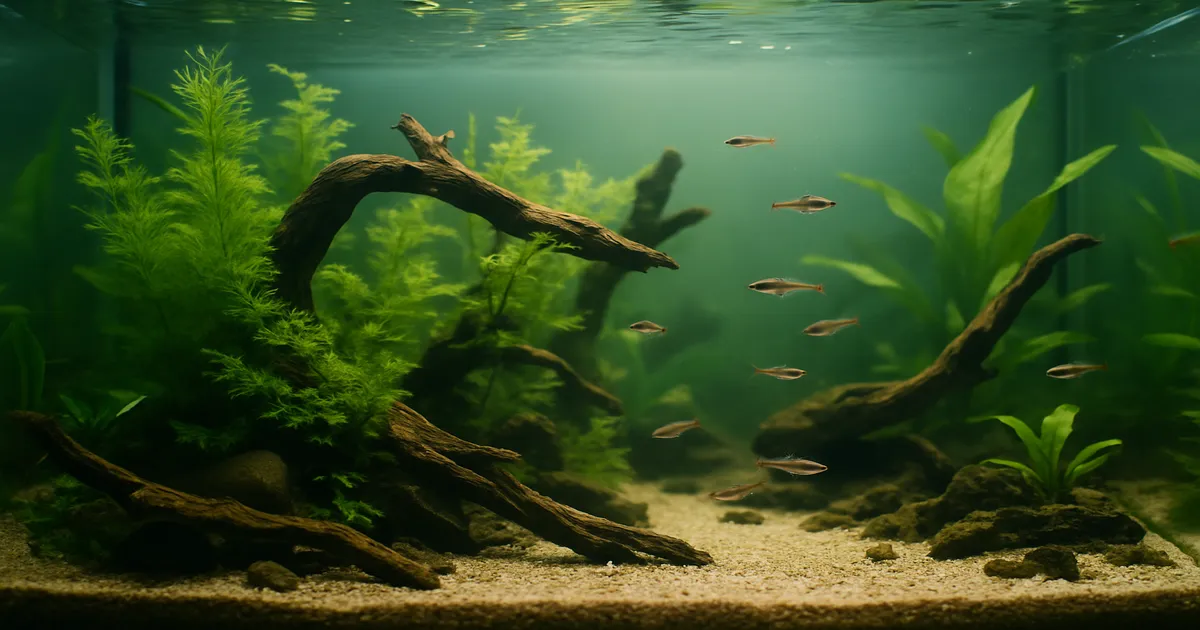
Porous materials give bacteria more surface area. Lava rock and dragon stone are excellent choices. Driftwood adds character but leaches tannins that lower pH and KH slightly — worth monitoring during cycling. Planted substrates like Fluval Stratum and ADA Aqua Soil also lower pH and KH, so test more frequently if you use them.
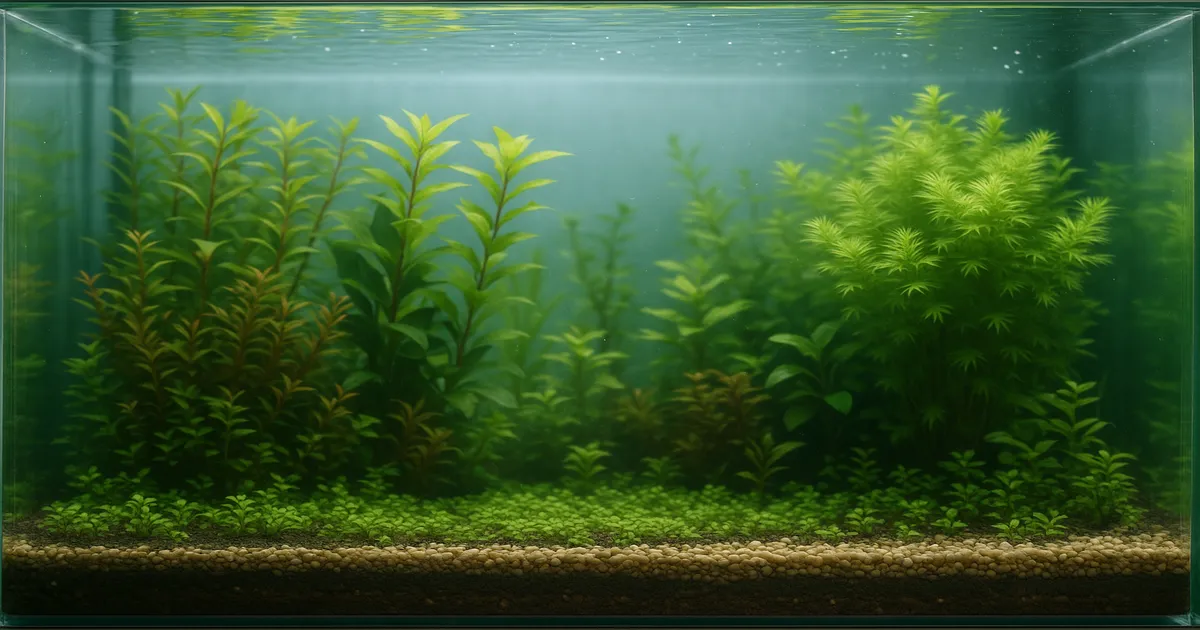
Fast-growing plants genuinely help during cycling. Anacharis (Egeria densa), hornwort (Ceratophyllum demersum), water sprite, and floating plants like frogbit absorb ammonia directly, buffering spikes and keeping conditions more stable. A heavily planted 10-gallon often cycles faster and with lower peak toxin levels than a bare tank. That said, plants assist the cycle — they don’t replace it. You still need established bacterial colonies before adding fish.
Heater Setup
A 50W submersible heater is the right size for a 10-gallon. (Eheim Jager 50W) Place it near the filter output for even heat distribution, and always verify temperature with a separate digital thermometer — heater dials are notoriously imprecise.
Step-by-Step Guide to Cycling a 10 Gallon Fish Tank
Week 1: Setup and First Dose
- Fill the tank with dechlorinated tap water.
- Set the heater to 80–82°F (27–28°C) and confirm with a separate thermometer.
- Run the filter and add an airstone.
- Add hardscape, substrate, and any live plants.
- Dose pure ammonia to 2–4 ppm and confirm with your test kit.
- Begin daily testing for ammonia, nitrite, nitrate, and pH.
Weeks 2–3: The Ammonia and Nitrite Spikes
Ammonia will begin dropping as Nitrosomonas establish themselves — your first sign that the cycle is moving. Nitrite will spike, sometimes dramatically. This is normal. Continue dosing ammonia to maintain 2 ppm; don’t let it drop to zero or the bacteria lose their food source. Check pH every 2–3 days to catch any KH-related crashes early.
Weeks 4–6: Nitrite Falls, Nitrate Rises
This is the most satisfying phase. Nitrite begins dropping as Nitrospira populations grow, and nitrate climbs steadily. You can ease off ammonia dosing slightly as you approach completion. Keep testing daily.
Confirming the Cycle Is Complete
Dose your tank to 2 ppm ammonia. Wait exactly 24 hours. Test:
- Ammonia: 0 ppm ✓
- Nitrite: 0 ppm ✓
- Nitrate: Higher than before ✓
All three? Your tank is cycled. Do a 50% water change to bring nitrate down, then add your first fish.
Troubleshooting a Stalled Cycle
| Problem | Likely Cause | Fix |
|---|---|---|
| Ammonia not dropping | Low pH, low KH, low temperature | Check and correct all three |
| pH crashed | KH depleted by nitrification | Add baking soda in small doses |
| Cycle stalled after water change | Chloramine in tap water killed bacteria | Switch to a dechlorinator that neutralizes chloramine |
| Temperature too low | Heater malfunction or wrong setting | Raise to 80–82°F (27–28°C) |
| Nitrite won’t drop | Nitrospira not yet established | Be patient; consider adding seeded media |
What to Stock in a Cycled 10 Gallon Tank
Stocking Principles
The old “inch per gallon” rule is outdated. A 10-inch goldfish doesn’t belong in a 10-gallon, and 10 tiny chili rasboras produce far less waste than one large, messy fish. Think about bioload, body shape, temperament, and swimming space instead.
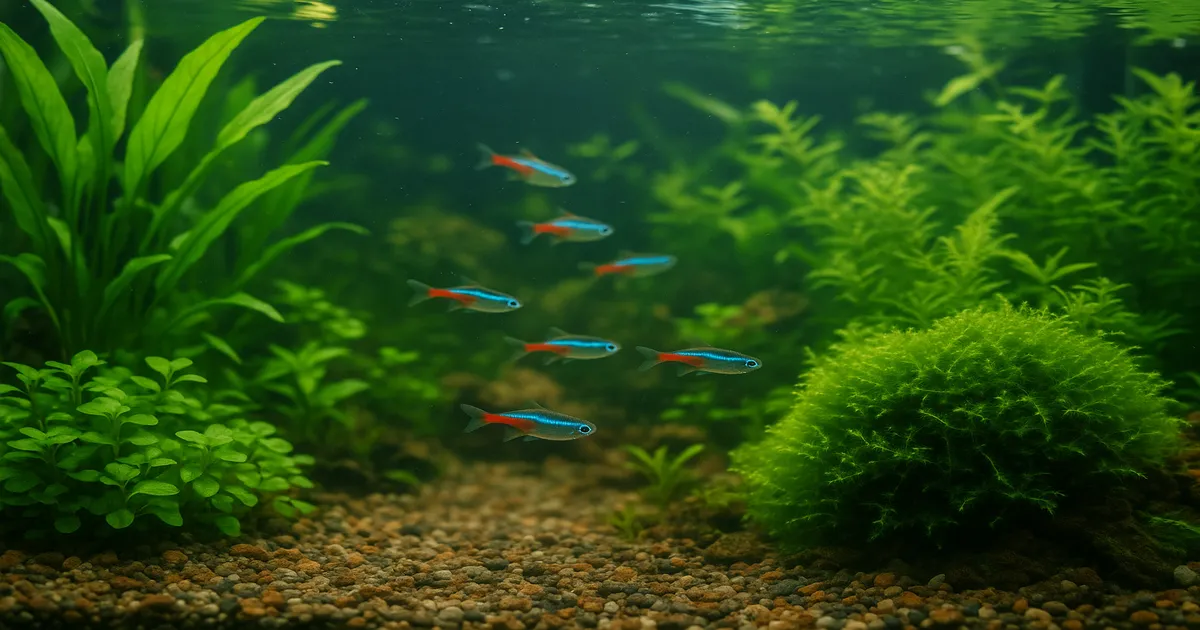
Best Fish and Invertebrates for a 10 Gallon Tank
| Species | Notes |
|---|---|
| Betta (Betta splendens) | Solo or with peaceful nano tankmates |
| Ember tetras | School of 8–10; tiny bioload |
| Chili rasboras | School of 10–15; perfect for nano tanks |
| Endler’s livebearers | Hardy; breed readily |
| Pygmy corydoras | Group of 6; active bottom dwellers |
| Neocaridina shrimp (cherry shrimp) | Colony of 20–30; great algae control |
| Caridina shrimp (crystal red/black) | Need precise water parameters; pH 6.0–6.8, TDS 100–150 |
| Nerite snails | Excellent algae control; won’t breed in freshwater |
| Sparkling gourami | Peaceful; 2–3 individuals |
| Pea puffer | 1–2 max; semi-aggressive; snail eaters |
Species to Avoid
- Goldfish: Massive bioload; need 20+ gallons minimum per fish
- Common plecos: Grow to 18 inches and produce enormous waste
- Most cichlids: Too large and territorial (exception: some Apistogramma pairs in well-planted setups)
Introducing Fish Without Crashing Your Cycle
Add no more than 25–30% of your planned bioload at once. Your bacterial colony is sized to match the ammonia load it’s been processing — double it overnight and you’ll trigger a mini-cycle. Test daily for the first two weeks after adding new fish and be ready to do water changes if ammonia or nitrite ticks above zero.
Maintaining Water Quality After Cycling
Change 25–30% of the water weekly. In a 10-gallon, nitrate accumulates faster than in larger tanks simply because the water volume is small relative to the bioload. Test nitrate monthly even in a stable tank — it’s easy to let it creep up unnoticed. Rinse filter media in old tank water during water changes, never under the tap. Chlorine kills the bacterial colony you spent weeks building.
Frequently Asked Questions
Can I cycle a 10 gallon tank faster than 3 weeks? Yes. The fastest method is seeded cycling — adding established filter media from a healthy tank. Combined with warm water (80–82°F) and a stable ammonia source, a seeded tank can be fully cycled in as little as 1–7 days. Bottled bacteria products like DrTim’s Aquatics One & Only can also shorten a fishless cycle to 1–3 weeks, though results vary by product and storage conditions.
Do I need a test kit, or can I use test strips? Use a liquid test kit. Test strips are convenient but notoriously inaccurate, especially for nitrite and ammonia — the two parameters that matter most during cycling. The API Freshwater Master Test Kit covers all the parameters you need and costs less per test than strips over time.
What happens if I add fish before the cycle is complete? Ammonia and nitrite will accumulate faster than your incomplete bacterial colony can process them. Fish will show signs of stress — rapid gill movement, lethargy, loss of appetite — and can die within days in a 10-gallon with no dilution buffer. If you’ve already added fish, begin daily water changes and use Seachem Prime to detoxify ammonia between changes.
Will a water change crash my cycle? A partial water change (25–50%) won’t crash a cycle. Bacteria live on surfaces — filter media, substrate, hardscape — not in the water column. What can crash a cycle is using unchlorinated tap water that contains chloramine, replacing all filter media at once, or adding medications that kill bacteria. Always dechlorinate water before adding it to the tank.
Can I cycle a 10 gallon tank with plants instead of ammonia? Fast-growing plants absorb ammonia and help stabilize water chemistry, but they don’t build the bacterial colonies your filter needs. You still need an ammonia source — fish waste, pure ammonia, or a small piece of raw shrimp — to feed Nitrosomonas and Nitrospira. Plants and bacteria work together; neither replaces the other.