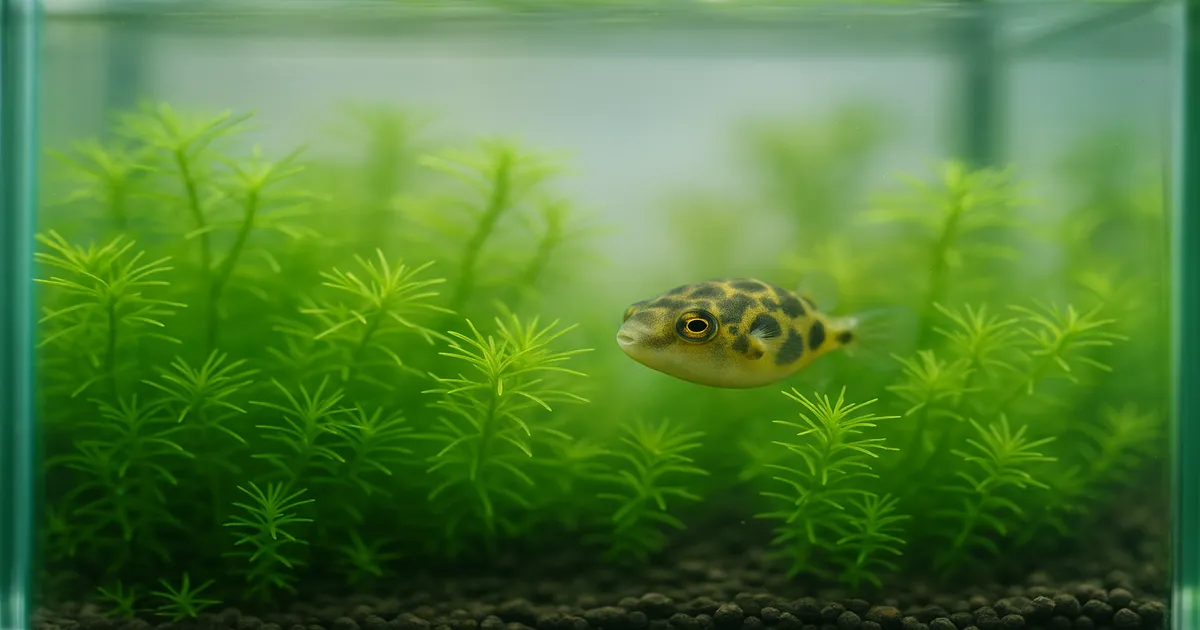
Quick Answer: Adult pea puffers should be fed once daily, five to six days per week, with one fasting day built in. Juveniles under six months need two smaller meals per day to support rapid growth. Overfeeding is one of the most common mistakes new owners make, and a consistent routine makes all the difference.
If you’ve ever watched a pea puffer patrol its tank, you already know these tiny fish have enormous personalities packed into a body barely bigger than a grape. Knowing how often to feed a pea puffer — and what to feed it — is the single most important factor in keeping one healthy long-term. Get the feeding right and you’ll have a bold, colorful fish that greets you at the glass every day. Get it wrong and you’re looking at bloating, overgrown teeth, and a fish that refuses to eat.
This guide covers everything: frequency, portion size, the best foods, fasting days, and the health problems that almost always trace back to diet.
How Often Do You Feed a Pea Puffer? Frequency by Life Stage
Feeding Schedule at a Glance
| Life Stage | Frequency | Meals Per Day |
|---|---|---|
| Adult (6+ months) | 5–6 days per week | 1 |
| Juvenile (under 6 months) | Daily | 2 (smaller portions) |
One fasting day per week is standard practice for adults. It’s not cruelty — it’s good husbandry.
Why Routine Matters
Pea puffers have tiny stomachs — roughly the size of their eye — and a high-protein diet that produces significant waste. Overfeeding fouls the water fast, which stresses a fish that’s already sensitive to water quality. A consistent schedule also helps you catch problems early: a puffer that suddenly stops approaching the glass at mealtime is telling you something is wrong.
Pea Puffer Species Overview
Natural Habitat and Wild Foraging Behavior
Carinotetraodon travancoricus is endemic to the slow-moving rivers, lakes, and heavily vegetated backwaters of Kerala and Karnataka in India’s Western Ghats. Think dense plant growth, soft muddy substrate, leaf litter, and barely moving water. In that environment, pea puffers are constant opportunistic hunters, picking through vegetation and substrate all day for snails, worms, insect larvae, and tiny crustaceans.
That foraging instinct doesn’t disappear in captivity. It’s why enrichment matters and why a varied diet keeps them mentally engaged.
Size, Lifespan, and What Makes Them Unique
Maxing out at around 1.0–1.4 inches (2.5–3.5 cm), pea puffers are the world’s smallest pufferfish. With good care they can live 4–10 years, though 4–5 years is more typical in home aquaria. They’re fully freshwater fish — unlike many puffer species that need brackish or marine conditions — and they’re genuinely intelligent. Regular keepers report that individuals recognize their owners and actively beg for food.
They’re also listed as Vulnerable on the IUCN Red List due to habitat loss and overcollection. Source captive-bred specimens whenever possible.
Why Their Wild Diet Shapes Captive Feeding
Pea puffers are obligate carnivores. Their fused, beak-like teeth grow continuously throughout their lives, and hard-shelled prey — primarily snails — is what keeps those teeth worn to a healthy length. A diet of soft foods alone leads to overgrown teeth, which eventually prevents the fish from eating at all. This is one of the most overlooked aspects of pea puffer care.
What Do Pea Puffers Eat?
Live Foods: The Gold Standard
Live food triggers the pea puffer’s predatory instinct instantly. Movement is everything — these fish hunt by sight, and a wriggling worm or darting shrimp gets an immediate response.
- Snails — bladder snails, ramshorn snails, and Malaysian trumpet snails are the top choice. Easy to culture in a separate container, and essential for wearing down the puffer’s teeth.
- Blackworms (Lumbriculus variegatus) — highly nutritious and eagerly accepted. Keep them in a shallow dish with cool, clean water and rinse daily.
- Daphnia — excellent nutritional profile, high in fiber, and acts as a natural digestive aid. Easy to culture or buy live.
- Brine shrimp — readily accepted; gut-load them before feeding to boost nutritional value.
- Mosquito larvae — nutritious and enthusiastically hunted. Easy to cultivate outdoors in a small container of standing water.
Frozen Foods: The Practical Staple
Frozen foods are the backbone of most pea puffer diets. They carry no pathogen risk like wild-caught live foods, they’re nutritious, and they’re widely available.
- Frozen bloodworms — the most popular staple. Thaw a small amount in tank water before feeding.
- Frozen brine shrimp — good for variety; lower nutritional density than bloodworms but still useful.
- Frozen daphnia — especially helpful if your puffer shows signs of constipation.
- Frozen mysis shrimp — nutritionally dense; a solid rotation food.
- Frozen cyclops — great for smaller specimens or juveniles.
Always thaw frozen foods before offering them. Dropping a frozen cube into a small tank chills the water and can shock the fish.
Freeze-Dried Foods: Use Sparingly
Freeze-dried bloodworms and tubifex are convenient but shouldn’t be a staple. They’re low in moisture, which can cause digestive issues, and they lose nutritional value in processing. If you use them, soak them in tank water for a minute or two first. Treat them as an occasional supplement, not a regular meal.
Pellets and Dry Foods
Most pea puffers flatly refuse pellets and flakes. Their predatory instinct is movement-triggered — a stationary pellet sinking to the bottom simply doesn’t register as food to most individuals. Some keepers have success training pea puffers to accept high-quality micro pellets with patient target-feeding using tweezers, but this is the exception rather than the rule. If your puffer accepts pellets, use them as a supplement. If it doesn’t, don’t stress about it.
Snails and Dental Health: Non-Negotiable
Snails are not optional. A pea puffer fed exclusively on soft foods like bloodworms and brine shrimp will eventually develop overgrown teeth. Once the teeth get long enough, the fish can’t close its mouth and will stop eating. Setting up a small snail colony — even just a plastic container with some java moss, a little fish food, and a handful of bladder snails — gives you a constant, free supply of the most important food in your puffer’s diet.
How Often Do You Feed a Pea Puffer? Portions and Scheduling
Adults
Feed adults once daily, five to six days per week. That skipped day isn’t just acceptable — it’s recommended. A weekly fast gives the digestive system time to fully process food and helps prevent the chronic overfeeding that causes most pea puffer health problems.
Juveniles
Fish under six months are growing fast and need the fuel to match. Feed them twice daily in smaller portions — roughly half what an adult would eat per session. Once they approach adult size at around six months, transition to the once-daily schedule.
How Much Per Feeding
Not much. A pea puffer’s stomach is approximately the size of its eye. Feed only what the fish consumes in two to three minutes, then stop. For frozen bloodworms, that’s often just three to five worms per fish. For snails, one or two small snails per puffer per day is typically plenty.
A well-fed pea puffer has a gently rounded belly — not pinched and sunken, but not visibly distended either. If the belly looks like a balloon, you’re overfeeding.
Practical Feeding Tips
- Use tweezers or a pipette to target-feed individual fish, especially in a group tank where one dominant puffer might eat everything before others get a chance.
- Remove uneaten food within five minutes. Decaying food in a small tank spikes ammonia fast.
- Rotate foods across the week. Bloodworms Monday, snails Tuesday, daphnia Wednesday — variety prevents deficiencies and keeps the fish mentally stimulated.
- Feed at the same time each day. Pea puffers learn routines quickly and will be waiting at the glass, which also makes it easy to notice when something’s off.
Water Parameters and Tank Setup
Ideal Water Parameters
| Parameter | Ideal Range |
|---|---|
| Temperature | 74–82°F (23–28°C) |
| pH | 6.5–7.5 |
| GH | 5–15 dGH |
| KH | 3–8 dKH |
| Ammonia / Nitrite | 0 ppm |
| Nitrate | < 20 ppm |
Pea puffers can adapt to a fairly wide range of conditions, but stability matters more than hitting a precise number. Swings in pH or temperature are more damaging than a value that sits slightly outside the ideal window. Keep KH above 3 dKH to prevent pH crashes, and aim to hold nitrates below 20 ppm — their messy, high-protein diet makes this genuinely challenging in smaller tanks.
A reliable liquid test kit is essential for staying on top of these numbers. Always treat tap water with a quality dechlorinator (Seachem Prime) before adding it to the tank, and temperature-match your replacement water to avoid shocking the fish. Twenty-five to thirty percent weekly water changes are the standard; tanks under 10 gallons or with multiple fish may need twice-weekly changes.
Tank Size and Setup
Five gallons is the absolute minimum for a single pea puffer, but 10 gallons is strongly preferred. For a small group of three to five fish, 20 gallons is the realistic starting point. Long, shallow tanks work better than tall ones — pea puffers are mid-to-bottom dwellers who benefit more from horizontal swimming space.
Fine sand is the ideal substrate — soft on their bodies, easy to forage on, and similar to the silty riverbeds of their home waters. Heavy planting is non-negotiable. Java moss, hornwort, anubias, java fern, and floating plants like frogbit reduce aggression by breaking lines of sight, provide foraging surfaces, export nitrates, and support thriving snail colonies.
Sponge filters are the go-to choice for pea puffer tanks. (Hikari Bacto-Surge Foam Filter) They provide gentle, low-flow filtration, their surface cultivates biofilm that puffers pick at, and they pose zero risk of sucking in a small fish. Aim for a turnover rate of four to six times the tank volume per hour. These fish are adapted to near-still water, and strong current stresses them out.
Common Health Problems Linked to Feeding
Overgrown Teeth
Almost always the result of insufficient hard-shelled prey. When the beak-like teeth get too long, the puffer can’t close its mouth and eventually stops eating. You’ll notice it if the fish struggles to bite or if the teeth visibly protrude. Prevention is simple: offer snails regularly. If overgrowth has already occurred, a vet experienced with fish can trim the teeth under anesthesia — but prevention is far easier than treatment.
Bloating and Constipation
A swollen belly that persists after a fasting day is a red flag. Bloating is usually caused by overfeeding, freeze-dried foods fed without soaking, or a diet too heavy in rich foods like bloodworms. Live or frozen daphnia is a well-established natural remedy — the high fiber content acts as a gentle digestive aid. Cut back on bloodworms, offer daphnia for a few days, and keep up with water changes.
Refusing Food
A pea puffer that suddenly stops eating is almost always reacting to stress, poor water quality, or dietary boredom. Test your water first — elevated nitrates or an ammonia spike will shut down appetite fast. If parameters are fine, try offering live food. The movement of a live snail or wriggling blackworm will often trigger feeding in a fish that’s been ignoring frozen food for days.
Signs of a Healthy, Well-Fed Pea Puffer
A healthy pea puffer is active, curious, and approaches the glass eagerly at feeding time. Its belly is gently rounded. Its coloration is bright and vivid, with clear yellow-green markings and well-defined spots. It forages between meals, exploring the tank and picking at surfaces. These are the benchmarks to aim for.
Frequently Asked Questions
How often do you feed a pea puffer if it’s new to the tank?
Give a newly introduced pea puffer two to three days to settle before offering food. Offer live food first — a small snail or a few blackworms — since movement is the strongest trigger for a stressed or shy fish. Don’t panic if it doesn’t eat immediately; it’s normal for new fish to take up to a week to start feeding confidently.
How many snails should I feed my pea puffer per day?
One to two small snails per puffer per day is a good general guideline, though this varies with snail size. Bladder snails and small ramshorn snails are ideal — the right size for pea puffers to crack open easily. Offering snails several times per week at minimum is essential for keeping the teeth worn down.
Can pea puffers eat frozen bloodworms every day?
Frozen bloodworms are fine as a regular part of the diet, but feeding them exclusively every day isn’t ideal. They’re high in protein and fat, and a diet with no variety can lead to nutritional deficiencies and digestive issues over time. Rotate bloodworms with frozen daphnia, mysis shrimp, brine shrimp, and live snails throughout the week.
Why is my pea puffer not eating?
The most common causes are poor water quality, stress, or being offered only one type of food for too long. Test your water first — even slightly elevated nitrates can suppress appetite in pea puffers. If parameters are good, switch to live food to trigger the predatory instinct. A puffer that’s been eating only frozen bloodworms for weeks will sometimes go on hunger strike purely out of boredom.
Do pea puffers need a fasting day?
Yes. One fasting day per week is standard practice for adult pea puffers. It gives the digestive system time to fully empty, reduces the risk of constipation and bloating, and mirrors the natural variability of wild foraging. Most experienced keepers build it into their routine automatically — feed five or six days, skip one, repeat.