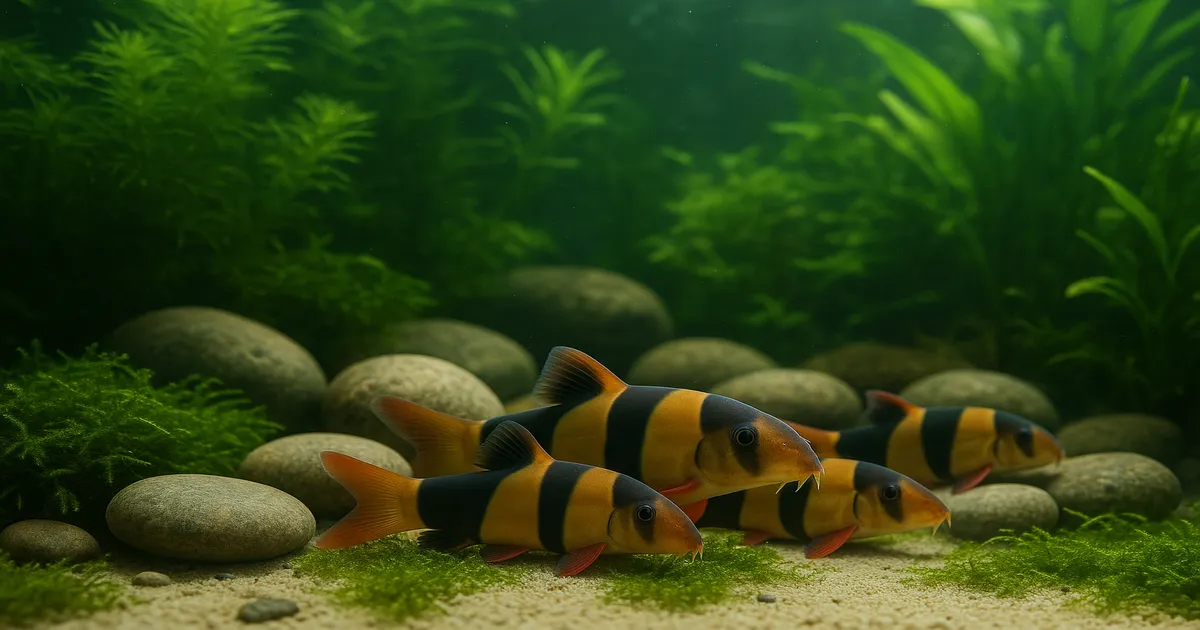
Quick Answer: Feed juvenile clown loaches (1–3 inches) 2–3 times daily, sub-adults (3–6 inches) twice daily, and adults (6–12+ inches) once or twice daily. Use the 5-minute rule — offer only what your fish can consume in about five minutes — and always use sinking foods that reach the bottom where these fish naturally feed.
Knowing how often to feed clown loaches is one of the most common questions new keepers ask, and it’s a fair one. These fish grow fast when young, live for 20+ years, and are surprisingly sensitive to both overfeeding and poor nutrition. Get the feeding schedule right and your loaches will grow steadily, colour up beautifully, and stay healthy for decades.
How Often Should You Feed Clown Loaches?
Feeding Frequency at a Glance
| Life Stage | Size | Frequency | Portion Guide |
|---|---|---|---|
| Juvenile | 1–3 inches | 2–3× daily | Consumed in 3–5 minutes |
| Sub-adult | 3–6 inches | 2× daily | Consumed in ~5 minutes |
| Adult | 6–12+ inches | 1–2× daily | Consumed in 5–10 minutes |
Clown loaches are opportunistic foragers in the wild. They don’t wait for one big meal — they graze continuously during active periods, picking off snails, worms, and larvae as they find them. Mimicking that pattern with small, frequent meals is healthier than one large daily feeding, especially for growing fish.
The 5-minute rule is your practical anchor: offer only as much food as your fish will completely consume in about five minutes. Any more and you’re overfeeding. Any less and smaller or shyer individuals may go hungry.
Clown Loach Feeding Behaviour: What the Wild Tells Us
Natural Diet of Chromobotia macracanthus
In the river systems of Sumatra and Borneo — specifically the Batanghari and Kapuas basins — clown loaches forage along the riverbed for mollusks, worms, insect larvae, small crustaceans, plant matter, and biofilm. Their pharyngeal teeth (throat teeth) are built for crushing snail shells, which is why they’re such effective pest-snail controllers in the aquarium.
During flood season they migrate into forested floodplains rich in leaf litter and organic debris, expanding their diet with whatever the water brings. This varied, opportunistic approach to eating is baked into their biology.
Why Feeding Frequency Matters
Rather than hunting discrete large meals, clown loaches pick and probe constantly throughout their active hours. Their digestive systems are tuned for small, regular inputs — not one large bolus of food. Multiple feedings per day, especially for juveniles, directly mirrors this natural rhythm.
Wild clown loaches are most active around dawn and dusk. In a well-established aquarium with plenty of hiding spots they often become more active during the day, but scheduling at least one feeding around dusk still gets the best response. It aligns with their instincts and makes it easier to spot any fish that aren’t eating.
Feeding Clown Loaches by Life Stage
Juveniles (1–3 Inches): 2–3 Times Daily
Juveniles have high metabolic rates and need consistent fuel to grow. Skipping meals at this stage slows development and increases competition within the group. A morning, midday, and evening schedule works well — varying food types across those feedings keeps nutrition balanced. Try sinking pellets in the morning, a small portion of frozen food in the evening, and a blanched vegetable available throughout the day.
Keep portions tiny. Uneaten food degrades water quality fast in a tank that may not yet have a fully mature biofilter.
Sub-Adults (3–6 Inches): Twice Daily
Sub-adults are still in active growth mode, so twice-daily feedings — morning and evening — keep that momentum going. At this stage they’re more competitive at feeding time, so distribute food across multiple spots on the tank floor to reduce squabbling. Irregular feeding schedules can cause stress-related appetite suppression, which is often the first visible sign that something is off.
Adults (6–12+ Inches): Once or Twice Daily
Adult clown loaches have a slower metabolism and don’t need the same frequency as juveniles. Once or twice daily is plenty, with portions the group finishes comfortably within 5–10 minutes. Some experienced keepers feed adults once daily with an occasional fast day each week — this mimics natural feast-or-famine cycles and helps prevent fatty liver disease in long-lived fish.
Spotting Overfeeding and Underfeeding
| Sign | Likely Cause |
|---|---|
| Uneaten food on the substrate after 10 minutes | Overfeeding |
| Cloudy water, ammonia spikes | Overfeeding / poor filtration |
| Bloated belly | Overfeeding or constipation |
| Sunken, pinched belly | Underfeeding or internal parasites |
| Lethargy, hiding more than usual | Underfeeding or illness |
| Aggression at feeding time | Competition / underfeeding |
If fish are hovering near the feeding area long after food is gone, increase portion size slightly. If food sits uneaten, cut back.
What to Feed Clown Loaches: Best Foods for a Balanced Diet
Sinking Pellets and Wafers
High-quality sinking pellets should form the core of your clown loach’s diet. Look for formulas with 40–50% protein and whole-food ingredients — are all solid choices. Algae wafers add a useful plant-matter component and are eagerly accepted. The key word is sinking — food that reaches the bottom is the only food that reliably feeds these fish.
Frozen Foods
Frozen foods are excellent for nutrition and for tempting reluctant eaters. Bloodworms are highly palatable — use them 2–3 times per week as a treat rather than a staple, since they’re protein-rich but nutritionally incomplete. Mysis shrimp and blackworms offer a better all-round profile. Include daphnia regularly for its digestive benefits; it acts as a natural laxative and helps prevent constipation. For tubifex worms, use frozen or irradiated versions only — wild-caught tubifex carries a real disease risk.
Vegetables and Plant Matter
Clown loaches eat plant matter in the wild and appreciate it in captivity. Blanch zucchini, cucumber, spinach, or shelled peas briefly in boiling water to soften them, then weigh them down with a veggie clip or a small rock. Most clown loaches will be grazing within minutes. Vegetables provide fibre, which supports digestive health and reduces bloating — a genuine concern in heavily fed fish.
Live Foods and Snails
Live pond snails and bladder snails are one of the best things you can offer a clown loach. They trigger natural hunting behaviour, provide excellent nutrition, and give the fish something to do. Toss a handful of pest snails into the tank and watch your loaches go to work. Live or frozen blackworms and earthworm pieces are also highly nutritious and eagerly taken.
Repashy Gel Foods
is a convenient, nutritionally complete option that sinks immediately and stays on the substrate without fouling the water as quickly as some other foods. Mix the powder with boiling water, let it set, and cut it into portions. Many keepers use gel food as a reliable daily staple alongside frozen and live treats.
Foods to Avoid or Limit
- Floating flake food — clown loaches can eat it, but surfacing repeatedly is unnatural and stressful. Use sinking alternatives.
- Freeze-dried foods — lower nutritional value than frozen equivalents and a known cause of bloating if fed regularly.
- Feeder fish — disease risk isn’t worth it, and they offer poor nutritional balance.
- Excess high-fat foods — over-reliance on fatty frozen foods can contribute to fatty liver disease in older fish.
Tank Setup and Water Quality: How They Affect Feeding
Water Parameters and Appetite
A clown loach that isn’t eating is almost always signalling a water problem. These fish are extremely sensitive to ammonia and nitrite — even brief spikes suppress appetite and can trigger ich outbreaks within days. Target these parameters:
- pH: 6.5–7.5
- Temperature: 77–86°F (25–30°C)
- Ammonia and nitrite: 0 ppm
- Nitrate: below 20 ppm
If your fish suddenly go off food, test your water before assuming it’s a dietary issue.
Substrate and Filtration
Fine sand (0.5–1 mm grain size) is the best substrate for clown loaches. They’ll sift through it naturally, which is enriching behaviour and a sign of a content fish. Coarse gravel can damage their sensitive barbels over time, reducing their ability to locate food on the substrate.
A school of clown loaches produces a significant bioload, and multiple daily feedings increase that load further. Robust canister filtration rated for at least 8–10× your tank volume per hour is recommended, paired with 25–30% weekly water changes. Overfeeding in an under-filtered tank is one of the fastest ways to crash water quality and trigger disease.
Lighting and Feeding Time
Subdued lighting — 8–10 hours on a timer, supplemented by floating plants to diffuse overhead glare — helps the whole group feel confident enough to feed openly. Under bright, harsh lighting, shyer individuals often hide during feeding time and miss out.
Feeding Clown Loaches in a Community Tank
Adults need 125 gallons at minimum, and realistically 200+ gallons for a proper school of six or more. In a cramped tank, dominant individuals monopolise food and subordinate fish go underfed even when you think everyone is eating.
Keep clown loaches in groups of at least 5–6, ideally 8–12 or more. Solitary or paired fish frequently refuse food, hide constantly, and have significantly shortened lifespans. A properly sized group distributes feeding competition naturally — no single fish can dominate every feeding spot simultaneously.
In a mixed community, faster-eating tank mates can clean up sinking food before your loaches arrive. A few practical strategies:
- Drop sinking wafers and vegetable pieces in multiple spots across the tank floor simultaneously
- Feed upper and mid-water tank mates first, then add bottom foods while they’re occupied
- Schedule the main feeding at dusk when loaches are naturally most active and bold
- Avoid aggressive feeders that will outcompete loaches at the substrate, and avoid nano fish entirely — large adult clown loaches will eat them
Common Feeding Mistakes and How to Fix Them
Using floating flakes instead of sinking foods. Clown loaches are bottom feeders. Repeatedly surfacing to grab flakes is stressful and means they’re competing with mid-water fish for food they’re not designed to eat at the surface. Switch to sinking pellets, wafers, and gel foods as your primary staples.
Overfeeding. Excess food decays rapidly, spikes ammonia, and stresses fish — in clown loaches this often manifests as an ich outbreak within days. Use the 5-minute rule strictly and remove any uneaten food promptly.
Feeding only one type of food. A diet of nothing but sinking pellets will sustain your fish but won’t help them thrive. Rotate pellets, frozen foods, vegetables, and live snails throughout the week to cover all nutritional bases.
Ignoring feeding behaviour as a health indicator. Refusal to eat is often the very first sign of ich, internal parasites, or water quality problems — sometimes before any visible spots or physical symptoms appear. Know your fish’s normal behaviour so you notice immediately when something changes.
Not adjusting frequency as fish grow. Many keepers set a schedule when their fish are juveniles and never revisit it. Continuing to feed adults three times daily leads to overfeeding and water quality issues. Reassess every few months as your fish move through life stages.
Frequently Asked Questions About Feeding Clown Loaches
How often should I feed clown loaches?
Juveniles (1–3 inches) need 2–3 feedings per day, sub-adults (3–6 inches) do well with twice-daily feedings, and adults (6–12+ inches) need only once or twice daily. Use the 5-minute rule to calibrate portion size at every stage.
What is the best food for clown loaches?
A combination of high-protein sinking pellets (40–50% protein), frozen foods like mysis shrimp, bloodworms, and daphnia, and blanched vegetables makes an excellent balanced diet. Live or frozen snails are a fantastic enrichment food that triggers instinctive hunting behaviour.
Can you overfeed clown loaches?
Yes, and it’s a common mistake. Uneaten food decays quickly, spikes ammonia, and can trigger ich outbreaks — a disease clown loaches are particularly vulnerable to. Stick to the 5-minute rule and remove any uneaten food promptly.
Why is my clown loach not eating?
The most common causes are poor water quality (check ammonia, nitrite, and temperature immediately), a group that’s too small (solitary or paired loaches often refuse food), or early-stage illness such as ich or internal parasites. A sudden loss of appetite in an otherwise healthy fish is almost always a water quality or health issue — investigate before changing the diet.
Do clown loaches eat at night or during the day?
Wild clown loaches are crepuscular — most active around dawn and dusk. In established aquaria with plenty of hiding spots they often become more active during daylight hours, but scheduling at least one feeding around dusk tends to get the best response and makes it easier to monitor who’s eating.