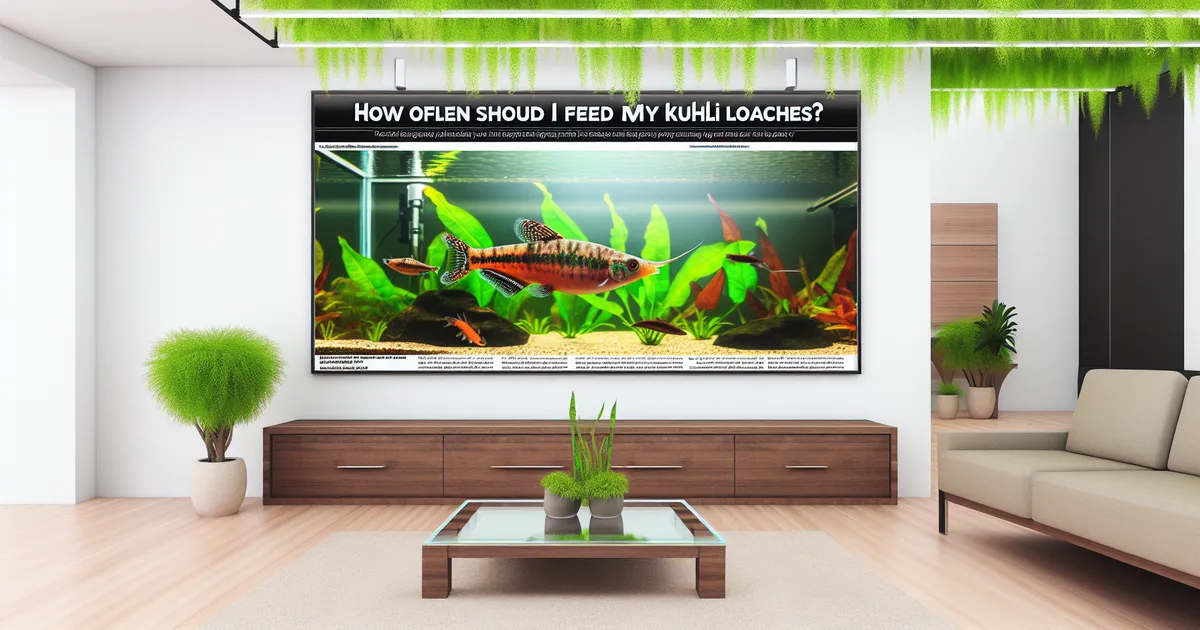
Quick Answer: Feed your kuhli loaches once daily in the evening or just after lights-out, five to six days per week, with one or two fasting days built in. Offer only what they can consume in two to three hours, make sure the food sinks to the substrate, and remove anything left over. Rotating through sinking pellets, frozen bloodworms, daphnia, and live foods keeps them healthy long-term.
If you’ve ever asked yourself how often should I feed my kuhli loaches — and why you so rarely see them eating — you’re not alone. These eel-like little scavengers are secretive, nocturnal, and surprisingly easy to underfeed without realizing it. Get the schedule and food choices right, though, and you’ll have loaches that are visibly active, well-colored, and thriving for a decade or more.
Understanding Kuhli Loach Feeding Behaviour in the Wild
What Do Kuhli Loaches Eat in Nature?
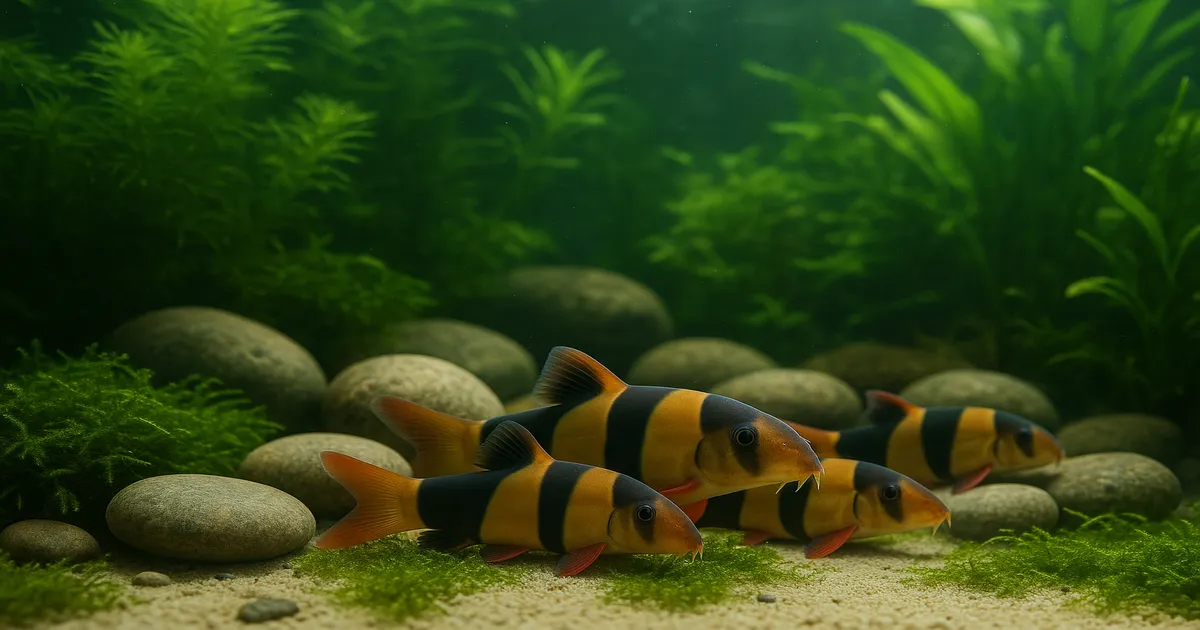
Kuhli loaches are opportunistic omnivores. In the wild, they spend their nights foraging along the benthic zone — the very bottom of slow-moving streams, rice paddies, and shaded forest waterways across Southeast Asia. Their natural diet is varied: insect larvae like bloodworms and mosquito larvae, small worms, microcrustaceans such as daphnia and copepods, detritus, and biofilm scraped from substrate surfaces. They don’t gorge — they graze at low intensity all night long, sifting through soft sand and leaf litter with their sensitive barbels.
Those barbels matter more than most fishkeepers realize. They’re sensory organs that detect chemical signals and subtle movement in the substrate. A kuhli loach with healthy barbels is an efficient forager. One with damaged barbels — from coarse gravel or poor water quality — struggles to find food even when it’s right there.
Why Their Nocturnal Lifestyle Affects How Often You Should Feed Kuhli Loaches
Kuhli loaches are crepuscular to nocturnal: most active at dusk, through the night, and into dawn. During daylight hours, they hide. This isn’t shyness — it’s a survival instinct that doesn’t disappear in captivity. Drop food into the tank at noon under bright lights, and there’s a good chance your loaches won’t emerge to eat it. Your tetras or rasboras will clean it up long before it reaches the bottom. Feeding after lights-out mirrors their natural rhythm and dramatically improves how much food actually reaches them.
The Best Foods for Kuhli Loaches
Staple Sinking Pellets and Wafers
Your foundation should be a high-quality sinking micro pellet or bottom-feeder pellet. Several reputable brands make pellets specifically sized for small bottom dwellers, and any of them work well as a daily staple. Algae wafers are a useful supplement — just break them into smaller pieces so your loaches can manage them. The non-negotiable rule: the food must reach the substrate. Kuhli loaches will not chase food mid-column or pick at the surface.
Frozen Foods: The Key to Vibrant, Healthy Loaches
Frozen foods are where the magic happens. Bloodworms (frozen Chironomus larvae) are irresistible to kuhli loaches and make an excellent protein treat two to three times per week. Daphnia is useful for digestive health — think of it as a natural gut flush. Brine shrimp, mysis shrimp, frozen blackworms, and tubifex round out a solid rotation.
The key advantage of frozen over freeze-dried is nutritional integrity. Freeze-dried options are convenient but noticeably less nutritious, and they must be pre-soaked before feeding — dry freeze-dried food can expand in the stomach and cause digestive problems.
Live Foods for Enrichment and Conditioning
Live blackworms are arguably the food kuhli loaches respond to most enthusiastically. They’ll emerge from hiding faster for blackworms than almost anything else. Microworms, grindal worms, live daphnia, and mosquito larvae are all excellent options. Live foods are especially valuable when conditioning loaches for breeding. Gut-loading them beforehand — feeding the live food something nutritious before offering it to your fish — boosts their value further.
Vegetables and Freeze-Dried Options
Blanched zucchini or cucumber occasionally adds variety, and some individuals take to it readily. Don’t expect every kuhli loach to show interest — they vary. Freeze-dried foods are fine as a backup, but treat them as the last resort in your rotation, not the cornerstone.
Kuhli Loach Feeding Frequency and Schedule
How Often to Feed: Daily Feeding With Fasting Days
Feed kuhli loaches once daily, five to six days per week. The one or two weekly fasting days aren’t punishment — they give the biological filter time to process waste, help prevent organic buildup in the substrate, and keep nitrate levels in check. In a healthy planted tank with good filtration, the loaches will graze on biofilm and microorganisms on off days, so they won’t go hungry.
Timing matters as much as frequency. Feed in the evening, or better yet, right after the tank lights go off. You’ll notice an immediate difference in how confidently your loaches come out to eat.
Sample Weekly Feeding Schedule
| Day | Food | Purpose |
|---|---|---|
| Monday | Sinking micro pellets | Staple |
| Tuesday | Frozen bloodworms | Protein treat |
| Wednesday | Sinking pellets + algae wafer | Variety |
| Thursday | Fast | Water quality |
| Friday | Frozen daphnia or brine shrimp | Digestive health |
| Saturday | Live or frozen blackworms | Enrichment |
| Sunday | Sinking micro pellets | Staple |
How Much Food to Offer Per Feeding
Offer only what your loaches can consume within two to three hours. That’s a deliberately wider window than you’d give surface feeders, because bottom dwellers take time to locate food — especially in a decorated tank full of hiding spots. Start conservatively: a small pinch of pellets or a pea-sized portion of thawed frozen food. Watch what’s left after a few hours and adjust from there.
Feeding Juveniles vs. Adult Kuhli Loaches
Juvenile kuhli loaches are growing fast and benefit from two small feedings daily rather than one. Keep portions tiny — overfeeding young fish pollutes the water quickly, and juveniles are even more sensitive to ammonia spikes than adults. Once they reach about two inches, transitioning to a single evening feeding is appropriate.
Pro Tips for Feeding Kuhli Loaches Successfully
Feed After Lights-Out for Best Results
Dim the tank lights or switch them off entirely before feeding. Even a few minutes of low light before adding food encourages loaches to emerge from their hiding spots. If your tank has a moonlight setting, that works perfectly.
Preventing Competition From Tankmates
Tetras, rasboras, and other mid-water fish are fast and opportunistic — they’ll intercept sinking food before it ever reaches the bottom. A few strategies help:
- Feed the upper-level fish first in a different area of the tank, then drop the sinking food while they’re distracted.
- Use a feeding tube or pipette to deliver food directly to the substrate near your loaches’ favorite spots.
- Create a feeding zone with a small cave or dish that mid-water fish are less likely to enter.
Removing Uneaten Food to Protect Water Quality
Check the tank two to three hours after feeding and siphon out anything uneaten. Decomposing food in the substrate is one of the fastest routes to an ammonia spike, and kuhli loaches — being scaleless — are among the first fish to suffer when water quality drops. A small gravel vacuum or pipette makes this quick work.
Signs Your Kuhli Loaches Are Under- or Overfed
Signs of Underfeeding
- Visibly sunken or hollow abdomen — the most reliable indicator; a healthy kuhli loach has a gently rounded belly
- Lethargy and excessive hiding, even at feeding time when lights are low
- Pale or washed-out coloration — well-fed loaches show warm, defined banding
- Barbel erosion — though coarse substrate and poor water quality also contribute
If you spot these signs, increase feeding frequency slightly and add more protein-rich frozen foods. Confirm that food is actually reaching the bottom and not being intercepted by tankmates.
Signs of Overfeeding
- Uneaten food decomposing on the substrate after a few hours
- Rising nitrate or ammonia readings between water changes
- Bloated appearance — distinguish this from disease-related dropsy or internal parasites
- Increased algae growth from excess nutrients
The fix is straightforward: reduce portion sizes, add an extra fasting day, and do a 30–40% water change to reset nutrient levels. Then stick to the schedule.
Tank Setup and Water Quality for Optimal Feeding
Why Fine Sand Substrate Is Essential
Kuhli loaches need fine sand — ideally 0.5–1 mm grain size at a depth of two to three inches. Coarse gravel damages their delicate undersides and abrades their barbels, impairing their ability to detect food in the substrate. The result is a vicious cycle: bad substrate leads to barbel damage, barbel damage leads to underfeeding, underfeeding weakens the fish. Play sand, pool filter sand, and purpose-made aquarium sands all work well.
Ideal Water Parameters
Kuhli loaches are scaleless, which means pollutants hit them harder and faster than scaled fish. Appetite is often the first thing to go when water quality slips.
| Parameter | Ideal Range |
|---|---|
| pH | 6.0–7.0 |
| Temperature | 75–82°F (24–28°C) |
| GH | 2–8 dGH |
| KH | 2–5 dKH |
| Ammonia | 0 ppm |
| Nitrite | 0 ppm |
| Nitrate | under 20 ppm |
Note on pH and hardness: Kuhli loaches originate from soft, slightly acidic blackwater environments and do best toward the lower end of these ranges (pH 6.0–6.5, GH 2–5 dGH). They can adapt to slightly harder or more neutral water, but breeding is unlikely outside their preferred parameters.
Weekly water changes of 25–30% keep nitrates in check. Testing your water regularly with a quality liquid test kit — not strips — is the only reliable way to catch problems before they affect your fish. Adding driftwood or Indian almond leaves naturally acidifies the water and adds tannins that replicate their native blackwater environment; loaches kept in tannin-rich water tend to be more active and better colored.
Creating a Feeding-Friendly Environment
A stressed kuhli loach is a hiding kuhli loach — and a hiding loach isn’t eating. Provide plenty of cover: PVC pipes (1–1.5 inch diameter), driftwood, coconut shell caves, and dense planting. Floating plants like frogbit or water lettuce diffuse overhead light and reduce stress noticeably.
Keep groups of at least four to six loaches. Kuhli loaches are social, and a lone loach or a pair will hide almost constantly. A group of six or more produces confident, visible behavior — you’ll actually see them feeding. The minimum tank size for a small group is 20 gallons, with 30 gallons or more preferred for a community setup.
Common Health Issues Linked to Poor Feeding
Ich (White Spot Disease)
Ich presents as small white salt-grain spots on the body and fins, often accompanied by flashing (rubbing against surfaces). Because kuhli loaches lack proper scales, they’re highly vulnerable, and standard ich treatments at full dose can kill them. Raise the temperature gradually to 82–86°F (28–30°C) to accelerate the parasite’s life cycle, and use a half-dose of a formalin- or malachite green–based treatment. (Ich-X) Avoid aquarium salt entirely — kuhli loaches are very sensitive to it.
Skinny Disease and Internal Parasites
A loach that eats normally but steadily loses weight — developing a hollow, pinched belly — likely has internal parasites. Camallanus worms and other nematodes are treated with levamisole or fenbendazole; flagellate infections respond to metronidazole. Quarantine all new fish for four to six weeks, and be cautious with wild-caught live foods, which can introduce parasites. Prevention is far easier than treatment.
Barbel Erosion
Barbel erosion has two main causes: coarse substrate and poor water quality from overfeeding or infrequent water changes. Either way, the result is a loach that can’t find food efficiently, which leads to underfeeding, which weakens the immune system, which worsens the problem. Check your substrate, stick to your feeding schedule, and keep up with water changes — those three habits prevent the majority of health problems in kuhli loaches.
Frequently Asked Questions
How often should I feed my kuhli loaches if I have other bottom feeders in the tank?
The same schedule applies — once daily, five to six days per week — but you’ll need to ensure there’s enough food for everyone. Corydoras and kuhli loaches share similar dietary needs and get along well, but corydoras are more active during the day and may reach food first. Feed after lights-out and consider using a pipette to place food in multiple spots so all your bottom dwellers get a share.
How do I know if my kuhli loaches are getting enough food?
The most reliable sign is body condition. A well-fed kuhli loach has a gently rounded, full abdomen. If the belly looks sunken or the area behind the head appears pinched, they’re not getting enough. Healthy coloration — warm yellowish-pink with defined dark banding — is another positive indicator. If you rarely see them and their bellies look hollow, increase feeding frequency and confirm that food is actually reaching the substrate.
Will kuhli loaches eat algae wafers?
Yes, most will, especially if you break the wafers into smaller, manageable pieces. Algae wafers make a useful supplement a couple of times per week, but they shouldn’t be the primary staple. Kuhli loaches are omnivores that need protein-rich foods like frozen bloodworms and worms to thrive long-term.