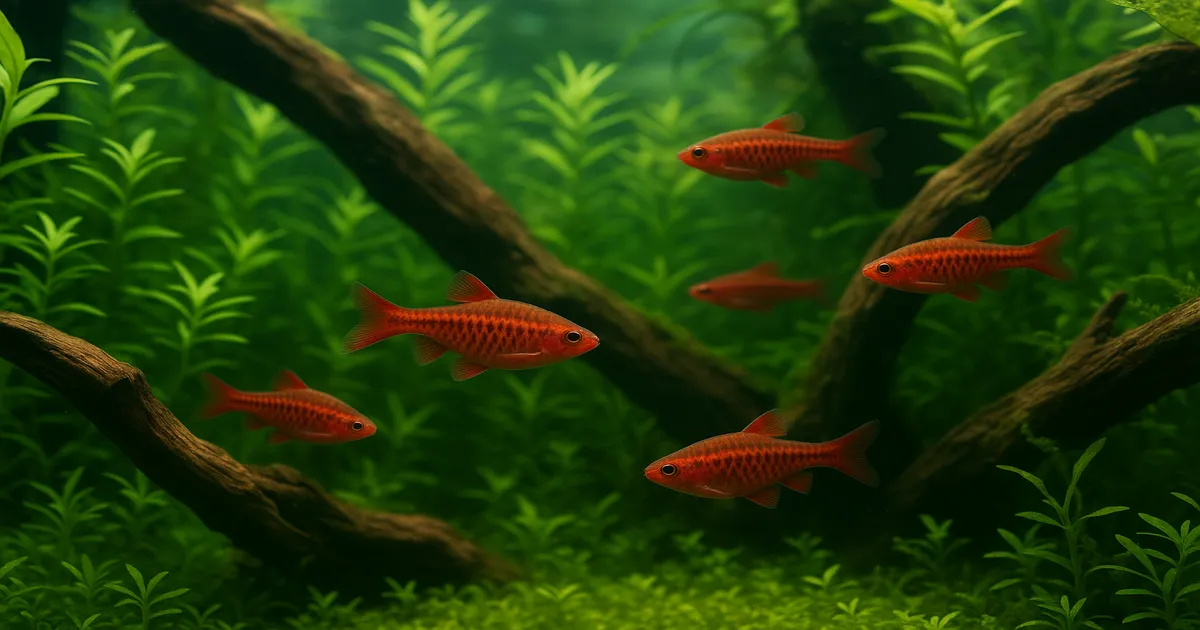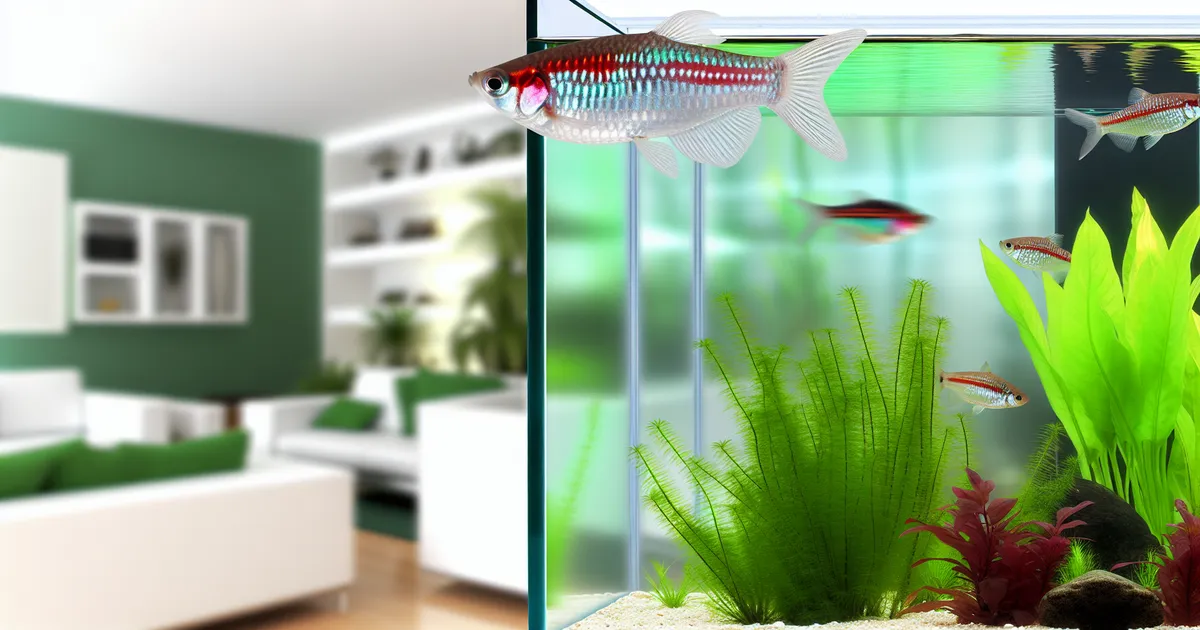
Quick Answer: Adult cherry barbs should be fed twice daily — once in the morning and once in the evening — with only as much food as they can finish in 2–3 minutes. Juveniles need three feedings per day, and fry require three to four smaller micro-meals daily. One fasting day per week is recommended for healthy adults.
Knowing how often to feed cherry barbs is one of the most common questions new keepers ask, and for good reason — both overfeeding and underfeeding cause real problems. These small Sri Lankan natives are easy to please at the dinner table, but a consistent feeding routine makes the difference between fish that merely survive and fish that show their best color, health, and behavior.
How Often Should You Feed Cherry Barbs?
Feeding Frequency by Life Stage
- Fry (0–4 weeks): 3–4 times daily
- Juveniles (1–3 months): 3 times daily
- Adults (3+ months): Twice daily, plus one fasting day per week
- Breeding adults: 2–3 times daily during conditioning
That weekly fasting day is not optional fluff. It gives the digestive system time to clear, cuts down on waste, and mirrors the natural feast-famine cycle wild cherry barbs experience in Sri Lanka’s forest streams.
Feeding Summary Table
| Life Stage | Frequency | Recommended Foods |
|---|---|---|
| Fry (0–4 weeks) | 3–4× daily | Infusoria, baby brine shrimp, microworms, finely crushed flakes |
| Juvenile (1–3 months) | 3× daily | Micro-pellets, crushed flakes, baby brine shrimp, daphnia |
| Adult (3+ months) | 2× daily + 1 fast day/week | Flakes, micro-pellets, frozen and live foods |
| Breeding adults | 2–3× daily | Live daphnia, baby brine shrimp, bloodworms, frozen cyclops |
Cherry Barb Feeding Schedule: Breaking Down Each Life Stage
Adult Cherry Barbs: Twice Daily
The twice-daily schedule — morning and evening — closely mimics the opportunistic foraging behavior cherry barbs display in the wild. In their native Kelani and Nilwala river basins, they pick at insects, zooplankton, and biofilm throughout the day rather than eating one large meal. Two smaller feedings keeps energy levels stable without flooding the tank with excess nutrients.
A typical schedule might look like 8 AM and 7 PM. The exact times matter less than consistency — fish adapt to a routine and will actively look for food at the same times each day.
Juvenile Cherry Barbs: Three Times Daily
Young cherry barbs have faster metabolisms and much smaller stomachs than adults. Three small feedings spread evenly across the day supports the rapid growth they need during their first three months. Finely crushed flakes, micro-pellets, and baby brine shrimp all work well at this stage. Keep each portion tiny — the goal is frequent, small meals rather than larger ones.
Fry (0–4 Weeks): Frequent Micro-Meals
Newly hatched cherry barb fry are minuscule and need food that matches their size. Infusoria is the classic first food for the first few days. Once the fry are free-swimming and growing, baby brine shrimp (BBS) and microworms become the staples.
Three to four feedings per day keeps their tiny bellies fueled without overwhelming water quality. In a dedicated fry tank with a sponge filter, frequent small feedings are manageable — just monitor water parameters closely and do small, frequent water changes.
Breeding Adults: Conditioning for Spawning
To trigger spawning, feed adults 2–3 times per day for one to two weeks before moving them to a breeding setup. Variety and protein are the keys — live daphnia, baby brine shrimp, bloodworms, and frozen cyclops all signal to the fish that conditions are favorable for reproduction and improve egg quality in females. Think of it as sending a “food is abundant, now is a good time to breed” signal.
The Weekly Fasting Day
Skipping one feeding day per week is one of the best habits you can build as a fish keeper. It prevents obesity (yes, fish get fat), reduces ammonia and nitrate accumulation from uneaten food and waste, and gives the digestive tract a chance to fully clear. Many hobbyists pick Sunday as their default fast day — easy to remember and harmless to healthy adults.
How Much to Feed Cherry Barbs
The 2–3 Minute Rule
Add only as much food as your cherry barbs can consume within 2–3 minutes. If food is still drifting around after three minutes, you gave too much. This rule works for flakes, pellets, and frozen foods alike.
A useful visual backup is the “fish-eye rule” — offer an amount roughly equal to the size of one fish’s eye per fish per feeding. It sounds oddly specific, but it’s a genuinely practical reference when calibrating portions for a new group.
When in doubt, err on the side of slightly less. Underfeeding a healthy fish for a day is harmless. Overfeeding pollutes the tank within hours.
Removing Uneaten Food
Any food not eaten within 3–5 minutes should be removed. A turkey baster is the easiest tool for this — it lets you suck up sunken flakes and pellets without disturbing the substrate or the fish. Leaving uneaten food to decompose is one of the fastest ways to spike ammonia and destabilize a tank.
What to Feed Cherry Barbs
Staple Dry Foods
A high-quality dry food should form the base of the diet. Look for products where fish meal, whole fish, or shrimp meal is the first ingredient — not wheat or corn. Hikari Micro Pellets, New Life Spectrum Small Fish Formula, Omega One, and Fluval Bug Bites are all solid choices that deliver real nutrition without cheap fillers. Spirulina-based flakes are worth rotating in — they support immune health and noticeably enhance the red coloration in males.
Frozen Foods (2–3 Times Per Week)
Frozen foods add variety, stimulate natural feeding behavior, and provide nutrients dry foods alone can’t fully replicate:
- Daphnia — a great digestive aid that mimics natural zooplankton prey; helps prevent constipation
- Brine shrimp — highly palatable and a reliable protein source
- Cyclops — nutritionally dense and small enough for cherry barbs to handle easily
- Bloodworms — very palatable but rich; limit to once or twice a week to avoid digestive issues
- Mysis shrimp — a good occasional treat
Live Foods for Enrichment and Breeding
Live daphnia and baby brine shrimp are safe, nutritious, and trigger strong natural feeding responses — especially valuable when conditioning adults for spawning. Microworms work well for smaller fish and fry. Live blackworms are highly nutritious but should be fed sparingly given their richness.
Vegetable Matter
Cherry barbs are omnivores and will graze on soft algae and biofilm in a mature planted tank. Supplement this with small pieces of blanched zucchini, spinach, or cucumber a couple of times a week. Spirulina flakes count toward this category too.
Foods to Avoid
- Cheap flakes with corn, wheat, or soy as primary ingredients
- Bloodworms as a daily staple (too rich; leads to digestive problems over time)
- Live food from unknown or potentially contaminated sources
Signs You Are Overfeeding or Underfeeding
Overfeeding
- Uneaten food collecting on the substrate after feedings
- Cloudy water (a bacterial bloom feeding on decomposing food)
- Elevated ammonia or nitrate on your test kit
- Visibly distended, round bellies
- Increased algae growth from excess nutrients
Underfeeding
- Sunken or pinched bellies on multiple fish
- Heightened aggression or frantic competition at feeding time
- Fish constantly picking at the substrate, glass, or plants
- Pale or washed-out coloration (though stress and illness can also cause this)
Overfeeding is one of the leading causes of poor water quality in home aquariums. Decomposing food drives up ammonia, which the nitrogen cycle converts to nitrite and then nitrate — and elevated nitrate suppresses immune function, making fish vulnerable to ich, fin rot, and other opportunistic diseases. A disciplined feeding schedule combined with 20–30% weekly water changes keeps the tank stable.
Cherry Barb Tank Setup and Water Parameters
Ideal Water Parameters
| Parameter | Ideal Range |
|---|---|
| pH | 6.5–7.5 |
| Temperature | 73–81°F (23–27°C) |
| GH | 4–15 dGH |
| KH | 3–10 dKH |
| Ammonia | 0 ppm |
| Nitrite | 0 ppm |
| Nitrate | <20 ppm |
Cherry barbs are more forgiving of parameter variation than many tropical fish, but stability always matters more than hitting exact numbers. Avoid sudden temperature swings greater than 2–3°F (1–2°C).
Note on parameters: The original commonly cited range of pH 6.5–7.0 is conservative. Cherry barbs are found across a broader range in Sri Lanka and adapt well up to pH 7.5 and GH up to 15 dGH in captivity, making them suitable for moderately hard tap water in many regions.
Tank Size and Layout
A minimum 20-gallon tank works for a small group of six, but a 29–30 gallon gives a community setup room to breathe and makes water quality easier to manage. Longer tanks are better than tall ones — cherry barbs are active mid-level swimmers who need horizontal space.
Dark, fine sand substrate reduces stress and makes the fish’s red coloration pop. Heavy planting with Java fern, Anubias, Cryptocoryne, and floating plants like frogbit creates the shaded, structured environment these fish come from. Driftwood and leaf litter complete the picture and release beneficial tannins.
Filtration and Flow
Cherry barbs come from slow-moving forest streams, so strong flow stresses them. A sponge filter or a hang-on-back filter with a baffle or spray bar to reduce output is ideal. Low to moderate lighting suits them well — floating plants help diffuse overhead light naturally. A consistent 8–10 hour photoperiod on a timer keeps things predictable for both fish and plants.
Tank Mates and Community Feeding Tips
Best Tank Mates
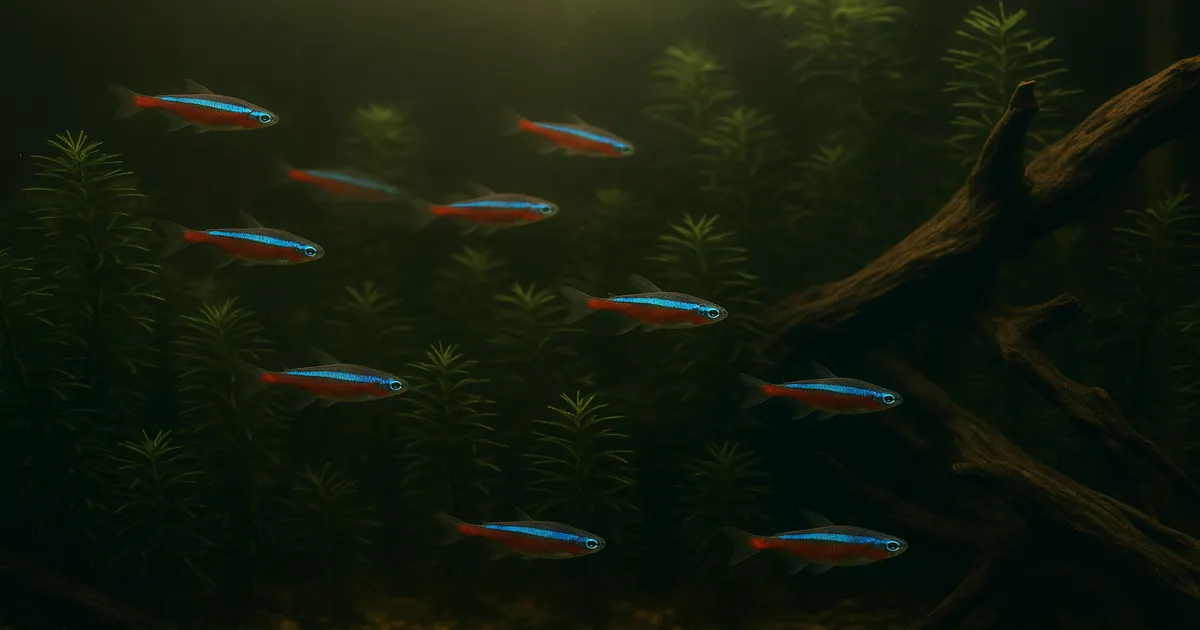
- Harlequin rasboras, neon tetras, cardinal tetras, rummy-nose tetras
- Pygmy or peppered corydoras
- Kuhli loaches
- Cherry shrimp and nerite snails
- Endlers livebearers or platies
Species to Avoid
- Tiger barbs and serpae tetras — fin nippers that will harass cherry barbs relentlessly
- Large or aggressive cichlids — will bully or eat them
- Any fish large enough to swallow a cherry barb (they max out around 2 inches/5 cm)
Feeding in a Community Tank
In a mixed community, cherry barbs can get outcompeted by faster or more aggressive feeders. A few strategies help:
- Target feed shy fish using a pipette or turkey baster to direct food to specific areas
- Feed at multiple zones — drop food at the front and back of the tank to spread competition
- Use sinking pellets for corydoras and loaches so they’re not competing with mid-level fish
- Watch your cherry barbs during every feeding to confirm they’re actually eating — it only takes a minute and catches problems early
Common Health Issues Linked to Poor Feeding
Bloating and Swim Bladder Disorder
Swim bladder disorder often traces back to overfeeding rich foods — bloodworms are a frequent culprit. Affected fish struggle to maintain buoyancy, floating at the surface or sinking to the bottom. Fasting for 24–48 hours, then offering blanched daphnia, can help mild cases. Prevention is far easier than treatment: feed bloodworms no more than once or twice a week and always follow the 2–3 minute rule.
Fin Rot
Fin rot is a bacterial infection, but poor water quality is almost always the underlying cause — and overfeeding is one of the fastest ways to degrade it. Frayed, ragged fin edges that progress toward the body are the telltale sign. Immediate large water changes combined with an (Kanaplex) antibacterial treatment are the standard response. Keeping nitrates below 20 ppm through disciplined feeding and regular water changes is the best prevention.
Dropsy
Dropsy is a bacterial infection that causes fluid retention, a swollen abdomen, and the distinctive raised “pinecone” scales visible from above. By the time pineconing is visible, the prognosis is often poor. Isolate affected fish immediately, try Epsom salt baths (1 tablespoon per 5 gallons) to reduce fluid retention, and treat with antibiotics. A varied, high-quality diet and consistently clean water dramatically reduce the risk.
Frequently Asked Questions About Feeding Cherry Barbs
How often to feed cherry barbs: is once a day enough?
Once daily is acceptable — especially in heavily planted tanks where fish can supplement their diet by grazing on biofilm and microfauna. That said, twice daily is preferred because it more closely mimics natural foraging behavior. If you feed once a day, make the portion slightly larger while still staying within the 2–3 minute rule.
How long can cherry barbs go without food?
Healthy adult cherry barbs can comfortably go 7–10 days without food, which makes them easy to manage during vacations. For trips longer than a week, an automatic feeder or a trusted fish sitter is a good idea.
Why are my cherry barbs not eating?
The most common causes are new tank stress (fish often refuse food for the first day or two after being moved), poor water quality, illness, or unfamiliar food. Check your water parameters first — ammonia or nitrite above 0 ppm will suppress appetite immediately. If parameters are fine and the fish have been in the tank for more than a few days, try live or frozen daphnia, which is hard for most fish to resist.
Can cherry barbs eat bloodworms every day?
They can, but they shouldn’t. Bloodworms are very rich in protein and fat, and daily feeding frequently leads to digestive issues, constipation, and swim bladder problems. Feed them as a treat no more than once or twice a week and rotate with daphnia, brine shrimp, and quality dry foods for a balanced diet.
Do cherry barbs eat algae?
They will graze on soft algae and biofilm growing on tank surfaces and plants, but they won’t make a significant dent in a serious algae problem. Think of it as a dietary supplement rather than algae control. For real algae management, nerite snails or amano shrimp are far more effective and make excellent tank mates.