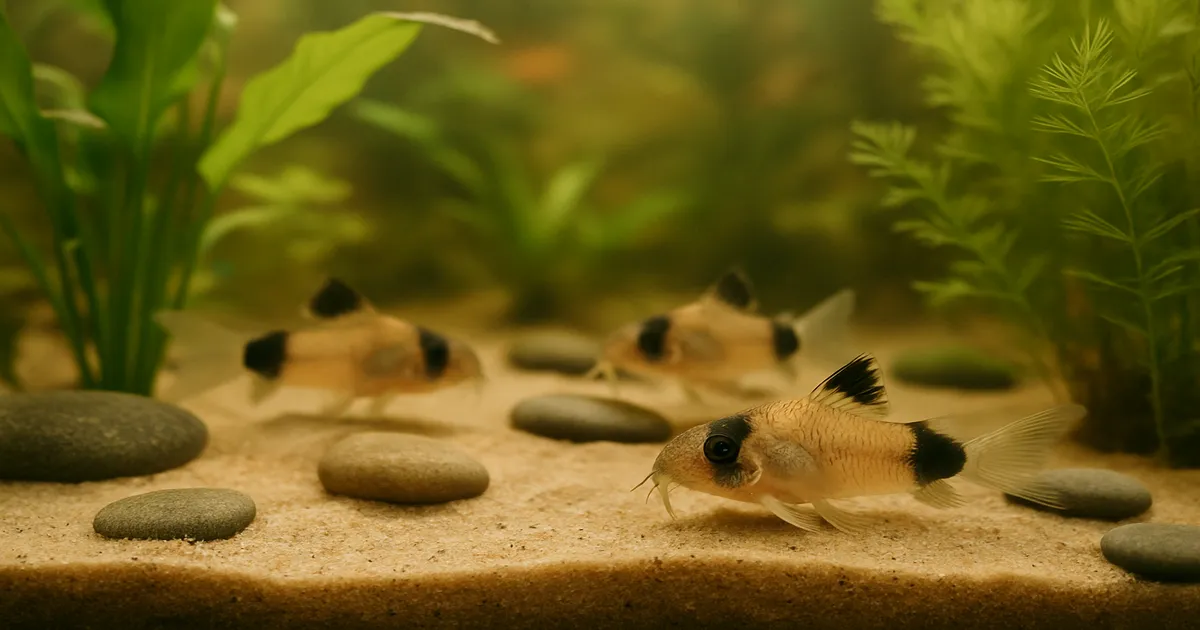
Quick Answer: Panda cories are active, social bottom-dwellers, and most of what you’re seeing is perfectly normal — sifting sand, darting to the surface for air, schooling with tankmates, and occasionally twitching during spawning. That said, behaviors like glass surfing, constant hiding, or surface gasping can signal water quality problems or temperature issues. This guide breaks down exactly what each behavior means and what (if anything) you need to do about it.
What Is My Panda Cory Doing? Common Behaviors Explained
If you’ve found yourself staring at your tank wondering what is my panda cory doing, you’re not alone. These little fish have a surprisingly rich behavioral repertoire that can look alarming if you don’t know what to expect.
Here’s a fast reference for the behaviors you’re most likely to observe:
- Sifting through sand — completely normal foraging behavior
- Schooling and chasing each other — healthy social activity
- Hiding or staying still — normal if occasional; a concern if constant
- Glass surfing — often signals a water quality or group-size problem
- Gasping at the surface — urgent warning sign; check water immediately
- Twitching and T-position with another cory — spawning behavior
- Flashing (rubbing on decorations) — possible ich or skin irritation
- Rapid gill movement — can indicate low oxygen or ammonia stress
Corydoras panda are native to cool, fast-moving Andean foothill streams in Peru, and that origin shapes almost everything about how they behave in a tank. Understanding where they come from makes their actions make a lot more sense.
Most panda cory behavior is benign. Sifting, schooling, and the occasional surface dash are all part of a healthy fish’s day. Start troubleshooting when you see behaviors that are sustained, out of character, or paired with physical symptoms like pale color, clamped fins, or visible spots.
What Is My Panda Cory Doing? A Behavior-by-Behavior Guide
Sifting and Rooting Through the Substrate
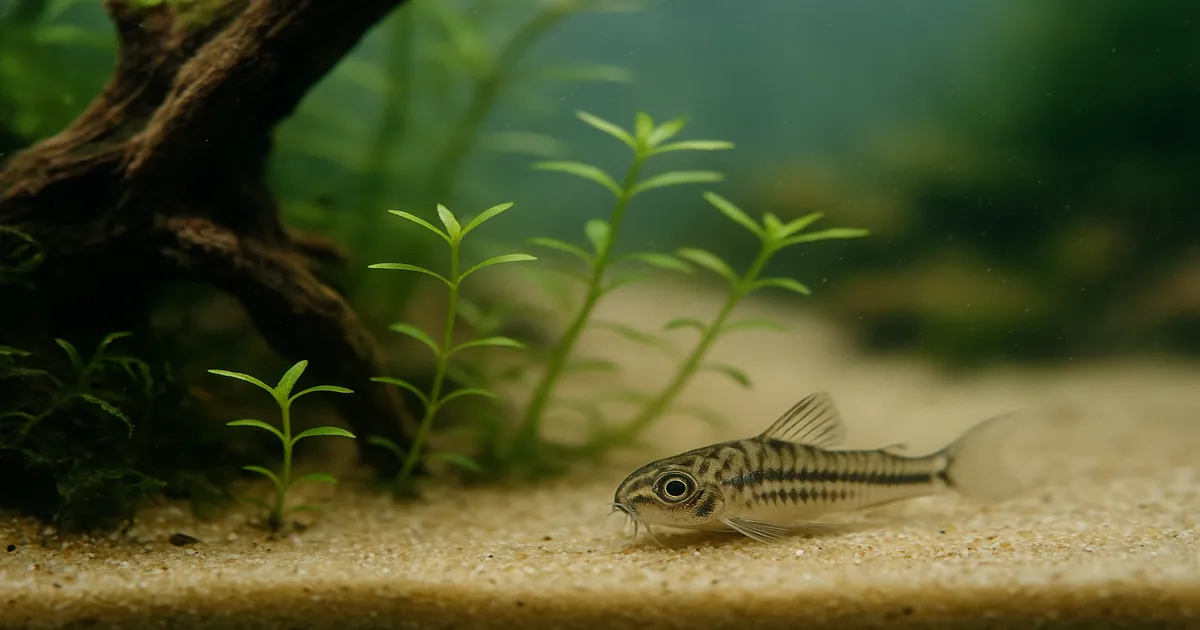
This is the behavior you’ll see most often, and it’s exactly what panda cories are built for. They use their sensitive barbels — the whisker-like appendages around their mouth — to detect food buried in the substrate, then sift sand through their gills to extract it. It looks almost like they’re vacuuming the bottom, and in a sense, they are. Constant sifting is a great sign: it means they’re comfortable and behaving exactly as they would in the wild.
Schooling, Shoaling, and Playing Together
Panda cories are genuinely social fish. In a proper group of six or more, you’ll see them actively seek each other out, forage together, and occasionally “play” — chasing, nudging, and swimming in synchronized bursts. A panda cory that spends most of its time alone in a corner, even when tankmates are nearby, may be stressed or unwell.
Hiding or Staying Motionless
Some hiding is completely normal, especially in a newly set up tank or after a water change. Panda cories are naturally shy and appreciate caves, driftwood, and leaf litter to retreat to. Give a newly introduced fish at least two weeks before drawing conclusions.
Constant hiding — where the fish barely comes out even at feeding time — is a different story. It usually points to one of three things: a group that’s too small, a tankmate causing stress, or water parameters that are off.
Glass Surfing and Erratic Swimming
Glass surfing (repeatedly swimming up and down the glass in a frantic pattern) almost always means something is wrong. The most common causes are:
- Poor water quality — elevated ammonia, nitrite, or nitrate
- Temperature too high — panda cories are cool-water fish and heat stress shows up fast
- Group size too small — fewer than six fish causes chronic anxiety
- A new tank that hasn’t fully cycled
Test your water before doing anything else. A liquid test kit gives you accurate ammonia and nitrite readings within minutes.
Gasping at the Surface
This is an urgent signal. Repeated surface gulping tells you that dissolved oxygen is critically low or that ammonia/nitrite has spiked to dangerous levels. Do a 25–30% water change immediately and test your parameters.
One important distinction: corydoras do occasionally make a quick dart to the surface to gulp air — this is normal intestinal breathing behavior inherited from their wild ancestors. The key is frequency. An occasional dash is fine; repeated, labored surface visits are not.
Flashing or Rubbing Against Decorations
Repeated scraping against rocks, driftwood, or the substrate usually signals skin irritation. The most common culprit is ich (Ichthyophthirius multifiliis), especially if you also notice tiny white spots on the body or fins. Other causes include gill flukes or a sudden drop in water quality. Check the fish carefully under good light and treat promptly if you see white spots — see the health section below for treatment options safe for panda cories specifically.
Twitching or Shaking (Spawning Behavior)
If you see a male cory trembling or vibrating next to a female, and the female is holding eggs between her pelvic fins while the male’s snout is pressed against her — that’s the classic T-position — congratulations, you’re watching panda cories spawn. It’s completely normal and a strong sign your fish are healthy and comfortable. After spawning, females deposit sticky eggs on flat surfaces like broad plant leaves or the aquarium glass.
Panda Cory Species Profile
Natural Habitat and Origins
Corydoras panda was first described by Nijssen & Isbrücker in 1971. In the wild, they inhabit the Ucayali River system in Peru — specifically clear, shallow tributaries like the Río Pachitea, where cold Andean snowmelt keeps temperatures noticeably cooler than the lowland Amazon basin. The substrate is typically fine sand and smooth pebbles covered in leaf litter, with moderate to strong current and excellent oxygenation. That cool, clean, fast-moving environment is the template for everything in their care.
Size, Lifespan, and Appearance
Adults reach 1.5–2 inches (3.8–5 cm), with females noticeably broader than males when viewed from above. Their coloration is striking: a pale silver-white body with three bold black patches — one covering the eyes like a mask, one at the base of the dorsal fin, and one at the base of the tail. The name panda is well-earned.
With good care, panda cories live 8–15 years. They’re a long-term commitment, which makes getting their setup right from the start genuinely worthwhile.
How Panda Cories Differ From Other Corydoras
The single most important difference is temperature. Most corydoras are tropical fish comfortable at 76–80°F. Panda cories are not. Sustained temperatures above 79°F cause chronic stress, immune suppression, and a significantly shortened lifespan — and this is the most commonly overlooked aspect of their care.
Two look-alikes worth knowing: C. leucomelas has similar patterning but lacks the clean black eye mask, and C. melini has a lateral stripe rather than the panda’s dorsal spot. Most fish sold as panda cories in the hobby are captive-bred, making them hardier than wild-caught specimens.
Ideal Water Parameters
| Parameter | Ideal Range | Hard Limit |
|---|---|---|
| Temperature | 68–77°F (20–25°C) | 79°F (26°C) max |
| pH | 6.0–7.2 | — |
| Hardness (GH) | 2–12 dGH (ideally 4–8) | — |
| Carbonate Hardness (KH) | 1–6 dKH | — |
| Ammonia | 0 ppm | 0 ppm |
| Nitrite | 0 ppm | 0 ppm |
| Nitrate | <20 ppm ideally | 40 ppm max |
Temperature is the most critical parameter. Treat 79°F as a hard ceiling, not a target. If your home runs warm in summer, a small fan directed at the water surface can help through evaporative cooling.
Ammonia and nitrite must be zero — always. Panda cories act as a “canary” species: they’ll show stress behaviors before hardier fish even notice a problem. A 25–30% weekly water change is the most reliable way to keep nitrate in check.
Tank Setup
Tank Size and Footprint
The minimum for a group of six panda cories is a 20-gallon tank — but a 20-gallon long is far better than a 20-gallon tall. These fish live on the bottom, so floor space matters far more than water column height. A 29- to 40-gallon long tank gives a colony of 8–12 fish room to forage, school, and behave naturally. Never keep fewer than six.
Substrate: Fine Sand Is Non-Negotiable
Fine, smooth sand is the single most important substrate choice you can make. Panda cories sift constantly, and coarse or sharp gravel erodes their delicate barbels, leading to bacterial infection. Pool filter sand, play sand, or purpose-made aquarium sand at 1–2 inches depth is ideal. If you currently have coarse gravel, switching to sand is one of the highest-impact changes you can make for your fish’s health.
Decorations, Plants, and Hiding Spots
Mimic the natural habitat: driftwood, Indian almond leaves, smooth river stones, and live plants. Anubias, Java Fern, and Cryptocoryne species all thrive in the same cool, soft water that panda cories prefer and provide natural cover without requiring high light. Indian almond leaves release beneficial tannins, provide foraging surfaces, and make the tank feel more secure for shy fish. Balance hiding spots with open sand patches — panda cories need both retreat areas and open space to forage and socialize.
Filtration and Flow
A sponge filter, canister, or hang-on-back filter all work well. Aim for 8–10x tank volume turnover per hour, but diffuse the output so it’s not blasting the substrate directly. Sponge filters are a popular choice — they provide solid biological filtration, gentle flow, and a biofilm grazing surface. Always cover the filter intake with a pre-filter sponge to prevent cories from being injured by suction.
Tankmates
Best Tankmates for Panda Cories
The key is finding species that share the cool, soft-water preference and won’t compete aggressively for bottom territory:
- Zebra danios — an excellent match; they actively prefer cooler water and are entirely peaceful
- Ember tetras, neon tetras, harlequin rasboras — small, peaceful, and compatible with soft, slightly acidic water
- Otocinclus catfish — nearly identical habitat requirements; one of the best pairings
- Neocaridina shrimp — safe with adult panda cories; a great cleanup crew
Species to Avoid
- Discus — require 82–86°F, which is dangerously warm for panda cories
- Tiger barbs, serpae tetras — confirmed fin-nippers that will target barbels
- Large cichlids (Oscars, Jack Dempseys) — will harass or eat panda cories
- Goldfish — temperature overlap exists, but their waste output is far too high
Bettas are a gray area. Some individuals are perfectly peaceful with bottom-dwellers; others will harass them relentlessly. Have a backup plan before trying the combination.
One passive defense worth knowing: panda cories have a locking, mildly venomous pectoral fin spine — primarily a deterrent against being swallowed, but it can cause a sharp sting if you’re pricked while handling them.
Feeding
Why Sinking Foods Are Essential
Panda cories are benthic feeders. They forage along the bottom using their barbels and will not reliably feed at the surface. If you’re dropping flake food into the tank and assuming they’ll get their share, they almost certainly aren’t. All food must sink and reach the substrate.
High-quality sinking wafers and pellets should form the backbone of their diet. Repashy gel foods sink immediately, don’t foul the water quickly, and are highly digestible — an excellent staple. Supplement with frozen bloodworms, daphnia, or brine shrimp two to three times per week, and blanched zucchini or cucumber once or twice a week for plant matter.
Feed once or twice daily — in the evening if possible, since panda cories are most active at dusk. Offer only what they can consume within 2–3 minutes. In community tanks, use a pipette or feeding tube to deliver food directly to the bottom before surface feeders intercept it.
The “cleanup crew” myth needs to be addressed plainly: panda cories will not thrive on leftovers from other fish. The idea that corydoras don’t need dedicated feeding is one of the leading causes of malnutrition and early death in captive cories. They need their own targeted food, every single day.
Common Health Problems
Barbel Erosion
Shortened, stubby, or missing barbels — often with reddened bases — are almost always caused by rough substrate, poor water quality, or both. Caught early, switching to fine sand and improving water quality is often enough for partial regrowth. If the barbel bases are visibly inflamed or infected, a course of kanamycin or nitrofurazone-based antibiotics may be necessary. (Seachem KanaPlex) Barbel erosion is largely preventable: fine sand and clean water are the entire solution.
Bacterial Infections (Red Blotch Disease)
Red streaks, blotches on the belly or fins, lethargy, and loss of appetite are the hallmarks of hemorrhagic septicemia — a bacterial infection typically triggered by stress or a water quality crash. Quarantine affected fish immediately and treat with kanamycin or nitrofurazone. Address the underlying water quality issue at the same time, or treatment won’t hold.
Ich (White Spot Disease)
Ich presents as tiny white salt-grain spots on the body and fins, often accompanied by flashing and clamped fins. Treatment requires extra care with panda cories: they are scaleless on the belly and sensitive to many medications. Use heat treatment (gradually raising temperature to 82°F for 10–14 days, combined with increased aeration) or a half-dose of ich medication specifically labeled as safe for scaleless fish. Never use full-dose copper-based treatments — they can be fatal to corydoras.
Frequently Asked Questions
Why is my panda cory swimming erratically or in circles? Erratic swimming is usually a water quality problem — test for ammonia and nitrite first. If parameters are fine, check temperature (above 79°F causes neurological stress) and look for signs of internal parasites or swim bladder issues.
Why is my panda cory not eating? New fish often refuse food for the first few days. If an established fish stops eating, check water parameters and look for other symptoms like clamped fins or lethargy. Also confirm that food is actually reaching the bottom before other fish eat it.
Can I keep just one or two panda cories? Technically yes, but they will be chronically stressed and far less active. Panda cories are shoaling fish that need the security of a group. A minimum of six is the standard recommendation; eight or more is better.
How do I know if my panda cories are spawning or fighting? Spawning involves the T-position — the female holds the male’s snout between her pelvic fins while he fertilizes the eggs. It looks intense but is not aggressive. True fighting (which is rare in cories) involves chasing without the T-position and may result in nipped fins.
Why do my panda cories keep dying? The most common causes are temperature too high, water quality issues (ammonia/nitrite spikes), coarse substrate damaging barbels, and malnutrition from not receiving dedicated sinking food. Check all four before assuming disease.