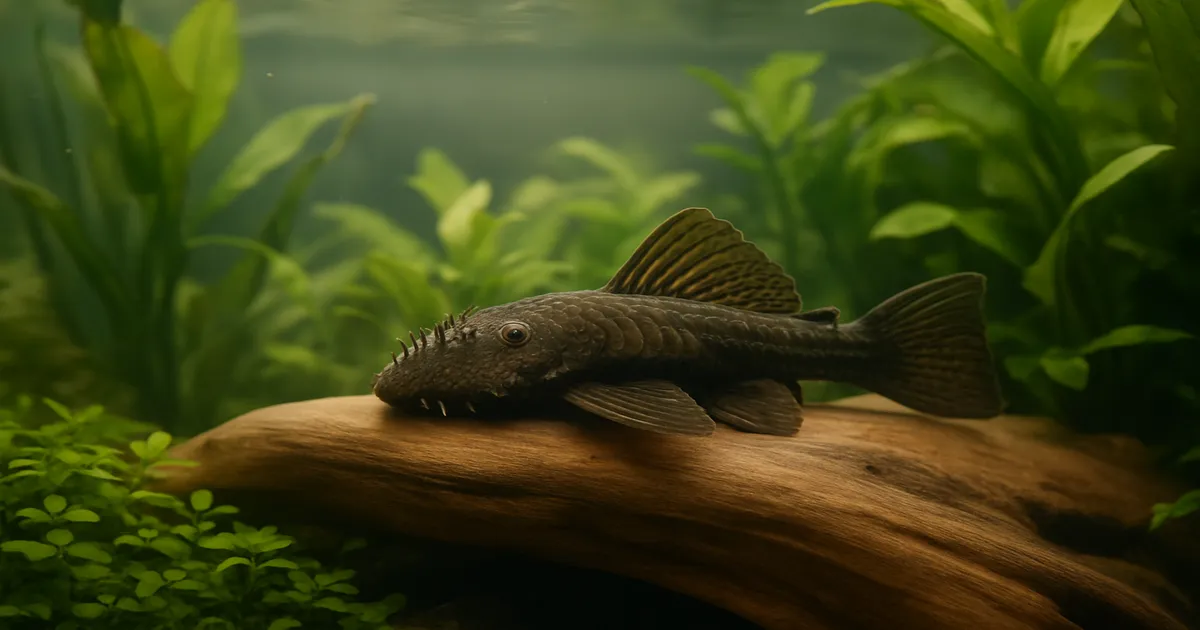
Quick Answer: Bristlenose plecos are hardy, peaceful bottom-dwellers that stay small (4–6 inches), making them one of the best algae-eating fish for home aquariums. They need a minimum 20-gallon tank, clean water, driftwood, and a mostly plant-based diet. With proper care, they can live 10–15 years.
Learning how to take care of a bristlenose pleco correctly from the start makes a real difference in how long these fish thrive. Despite their reputation as “beginner fish,” they have genuine needs — and understanding those needs is what separates a pleco that lives 15 years from one that barely makes it to two.
Bristlenose Pleco Care at a Glance
| Parameter | Recommended Range |
|---|---|
| Adult Size | 4–6 inches (10–15 cm) |
| Lifespan | 10–15 years |
| Minimum Tank Size | 20 gallons |
| Temperature | 73–80°F (23–27°C) |
| pH | 6.5–7.5 |
| GH | 3–15 dGH |
| KH | 2–10 dKH |
| Ammonia / Nitrite | 0 ppm |
| Nitrate | Below 20–40 ppm |
| Diet | Primarily herbivorous |
| Temperament | Peaceful |
Bristlenose plecos are a far better choice for home aquariums than the common pleco (Pterygoplichthys spp.), which routinely grows to 18–24 inches. A bristlenose tops out at around 6 inches, fits comfortably in a community tank, and earns its keep by grazing algae without outgrowing its home.
Species Overview: What Is a Bristlenose Pleco?
Bristlenose plecos belong to the family Loricariidae — the armored suckermouth catfish. Fish sold in most pet stores are labeled Ancistrus cirrhosus, but the majority are captive-bred hybrids from the broader Ancistrus genus, which contains 70+ described species. They originate from the Amazon and Orinoco River basins across Brazil, Peru, Bolivia, and Venezuela.
In the wild, they live in fast-flowing, well-oxygenated rivers with rocky or sandy bottoms, driftwood, and submerged roots. Their natural environment is warm, soft, and slightly acidic — though captive-bred specimens have adapted to a much wider range of conditions.
Males vs. Females
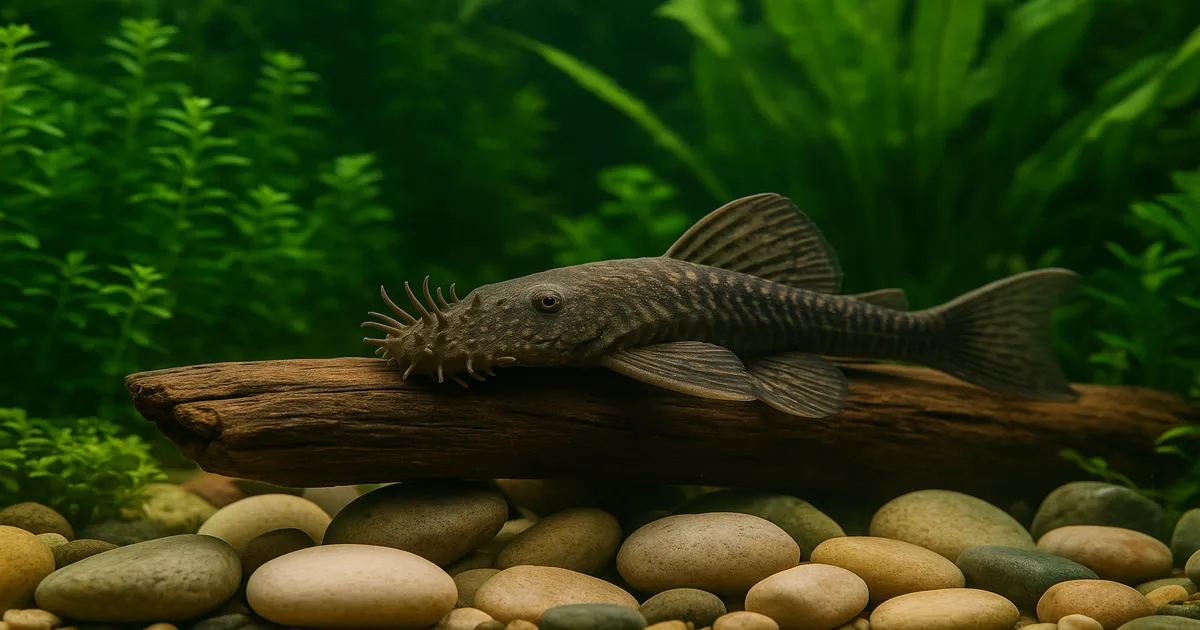
The easiest way to tell them apart is the bristles. Males develop prominent, fleshy tentacles across the snout and forehead — sometimes quite dramatic in older fish. Females may have small bristles around the snout edge, but nothing like the full display a mature male produces. Males also tend to run slightly larger overall. This clear sexual dimorphism makes bristlenose plecos one of the easier pleco species to sex, which is part of why they’re so popular with breeders.
Popular Color Variants
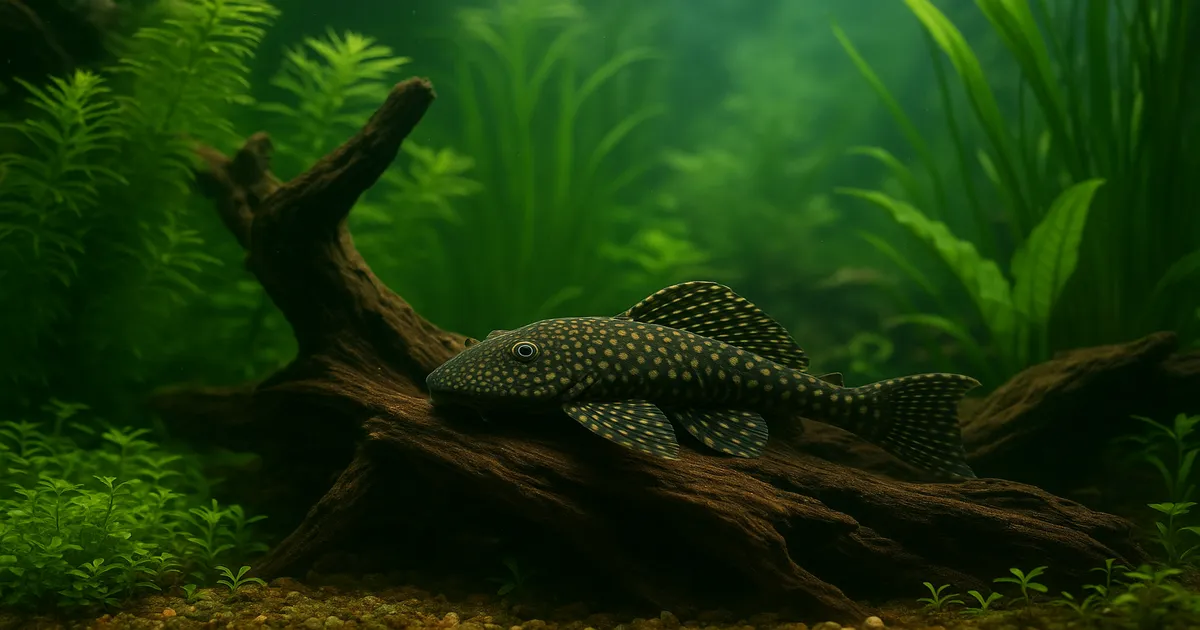
- Common bristlenose — Dark brown or grey with lighter spots; the hardiest and most widely available
- Albino bristlenose — Pink/white body with red eyes; very common and just as easy to keep
- Longfin bristlenose — Selectively bred for extended fins; same care requirements
- Super red bristlenose — Deep orange-red coloration; increasingly popular
- Starlight bristlenose (L183) — Dark body with white-tipped fins; slightly more demanding
- Blue-eyed lemon (L144) — Pale yellow with striking blue eyes
How to Take Care of a Bristlenose Pleco: Water Parameters
Temperature, pH, and Hardness
Bristlenose plecos thrive in water kept between 73–80°F (23–27°C). They can handle short-term variation, but temperatures consistently outside this range will stress them over time. Aim for a pH of 6.5–7.5, general hardness of 3–15 dGH, and carbonate hardness of 2–10 dKH.
Stability matters more than hitting a perfect number. A pH swing of more than 0.3–0.5 units in 24 hours, or a temperature jump of more than 2–3°F per day, can stress even a healthy fish. A reliable aquarium heater with a built-in thermostat makes it easy to hold a steady temperature .
Ammonia, Nitrite, and Nitrate
Ammonia and nitrite must stay at 0 ppm. Bristlenose plecos produce a surprisingly large amount of waste for their size, so a well-established biological filter is essential. Test regularly with a liquid test kit to catch problems early . Nitrates should stay below 20 ppm ideally, and no higher than 40 ppm — chronic exposure above that level is linked to disease and shortened lifespan.
Oxygenation and Water Changes
These fish come from fast-moving rivers, so they need well-oxygenated water with good surface agitation. A quality filter with a strong return flow handles most of this, but in warmer tanks — where water holds less dissolved oxygen — an air stone provides useful backup.
Do 25–30% water changes weekly. In heavily stocked tanks or during breeding, twice-weekly changes are even better.
Tank Setup for Bristlenose Plecos
Tank Size and Footprint
A single bristlenose pleco needs at least a 20-gallon tank. For a pair or small group, step up to 30+ gallons. These are bottom-dwelling fish, so a long, wide footprint matters more than height — a 30” × 12” base gives them far more usable territory than a tall, narrow tank of the same volume.
Substrate
Fine to medium sand is the most natural option and gentlest on their soft undersides. Smooth river gravel (2–5 mm) also works well. Avoid sharp or coarse substrates — bristlenose plecos spend a lot of time moving along the bottom, and rough gravel can abrade their bellies over time. Dark substrates tend to bring out their natural coloration as a bonus.
Driftwood
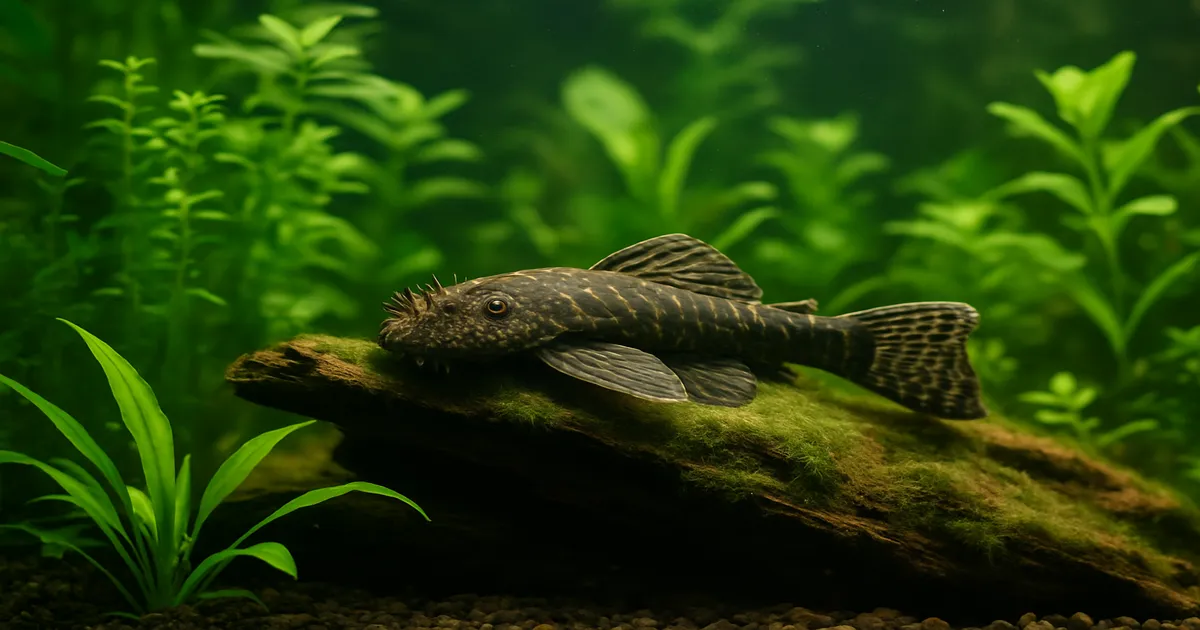
Driftwood isn’t just decoration — it’s a dietary staple. Bristlenose plecos rasp wood continuously, extracting cellulose that aids digestion and supports gut health. A tank without driftwood is missing something fundamental. Malaysian driftwood, spider wood, and cholla wood are all excellent options. Soak or boil new pieces before adding them to reduce tannin leaching, or embrace the tannins for a natural blackwater look.
Caves and Hiding Spots
Caves are non-negotiable, especially if you’re keeping more than one fish or planning to breed. Provide at least one cave per fish, plus a few extras. Good options include clay or ceramic caves, PVC pipe sections (2–3 inch diameter, 6–8 inches long), coconut shell halves, and commercial pleco tubes . Without enough caves, males will fight. With enough, most territorial disputes resolve on their own.
Plants and Filtration
Hardy plants like Java Fern, Anubias, and Amazon Sword handle the occasional pleco bumbling through the foliage and help absorb nitrates. Avoid delicate stem plants — plecos may uproot or graze on soft-leaved species.
For filtration, target a turnover rate of 8–10× the tank volume per hour. Canister filters are the gold standard — high capacity for mechanical and biological filtration, with flexible outlet positioning to create good floor-level flow . Hang-on-back filters work well for smaller tanks. Prioritize high-surface-area biological media like ceramic rings to handle the ammonia load these fish produce.
Lighting
Bristlenose plecos are crepuscular — most active at dawn, dusk, and after lights out. They prefer low to moderate lighting. Floating plants like frogbit create natural shaded zones and noticeably increase daytime activity. A standard LED on a 10–12 hour photoperiod is plenty.
Compatible Tank Mates
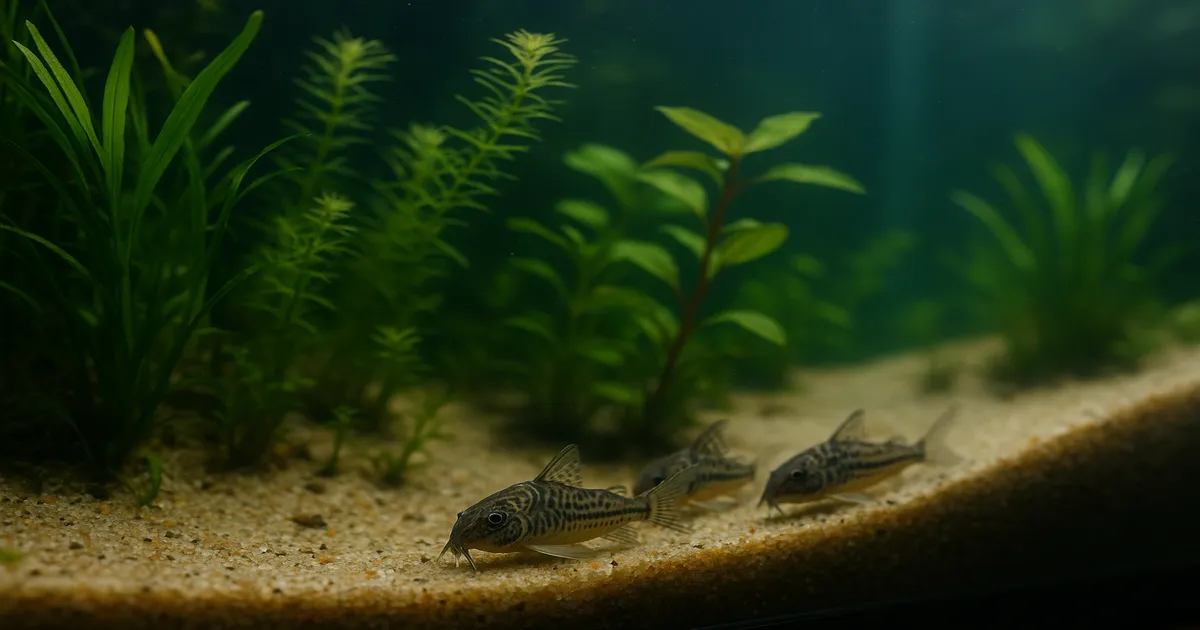
Bristlenose plecos are peaceful with virtually any fish that isn’t large enough to bully or eat them. Excellent companions include tetras, rasboras, corydoras catfish, livebearers, dwarf cichlids, gouramis, otocinclus, and freshwater shrimp (Amano and Cherry shrimp are generally safe with adult plecos).
Use caution with large aggressive cichlids like Oscars and Jack Dempseys, which can bully plecos at feeding time. Avoid goldfish — they prefer cooler water (65–72°F) and produce waste loads that can overwhelm even solid filtration. Other male plecos can trigger territorial conflicts, particularly in smaller tanks.
Keeping Multiple Bristlenose Plecos
Multiple bristlenose plecos can coexist with the right setup. Male-to-male aggression is the main concern. Aim for one male to two or three females. If you want multiple males, use a 55+ gallon tank with plenty of caves and driftwood to establish separate territories. Aggression is usually posturing and chasing rather than serious injury, but fin damage can happen in cramped conditions.
How to Take Care of a Bristlenose Pleco: Feeding
What They Eat
The bulk of their diet (70–80%) should be plant-based. Algae wafers are the backbone of most feeding regimens , alongside spirulina-based sinking pellets and blanched vegetables. Zucchini is the most universally accepted vegetable — blanch briefly and weigh it down with a fork or veggie clip. Cucumber, spinach, kale, peas, sweet potato, and romaine lettuce are all good options too. Remove any uneaten vegetables within 24 hours; rotting produce tanks water quality fast.
Protein should make up about 20–30% of the diet. Frozen bloodworms, daphnia, and brine shrimp are all suitable — but feed protein sparingly, once or twice a week at most. A diet too heavy in protein can cause fatty liver disease over time.
Feeding Schedule
Feed adults once daily, or every other day if the tank has healthy algae growth. Juveniles need once or twice daily feeding to support their growth rate. Always feed in the evening after lights go out — that’s when bristlenose plecos are naturally most active, and nighttime feeding means less competition from daytime fish. A healthy pleco has a slightly rounded belly; a visibly sunken belly means you need to feed more.
Foods to avoid: floating flake foods (plecos can’t feed at the surface), avocado, onion, and garlic (toxic to fish), and high-protein foods as dietary staples.
Common Health Issues
Ich (White Spot Disease)
Ich appears as tiny white spots — like grains of salt — on the body and fins. Affected fish will flash (rub against surfaces) and may breathe rapidly. Treat by gradually raising the temperature to 82–86°F to accelerate the parasite’s life cycle, combined with a gentle medication. Use caution with standard ich treatments — bristlenose plecos lack true scales and can be sensitive to malachite green or formalin. Always start at the lower end of the recommended dose.
Hole-in-the-Head (HITH) and HLLE
These show up as pitting or erosion along the head and lateral line. They’re linked to Hexamita parasite infections, poor diet, and chronically poor water quality. Treatment involves improving water conditions, feeding a more varied diet, and — in confirmed Hexamita cases — metronidazole. Catching it early makes a significant difference.
Fin Rot and Bacterial Infections
Fin rot presents as fraying or receding fin edges. It’s almost always triggered by poor water quality or injury. Start with large water changes and address the root cause first. If the infection continues to progress despite clean water, a broad-spectrum antibacterial treatment is appropriate.
Dropsy
Dropsy causes visible swelling and the characteristic “pinecone” appearance of raised scales. It’s a symptom of systemic organ failure rather than a single disease, and by the time it’s visually obvious, the prognosis is often poor. Isolate affected fish immediately. Advanced cases rarely recover.
Prevention
The most effective disease prevention is a 4–6 week quarantine for all new fish before they enter the main tank. Beyond that, stable water parameters, a varied diet, and avoiding overcrowding eliminate the majority of disease risk.
Breeding Bristlenose Plecos
Bristlenose plecos are among the easiest plecos to breed in captivity. A dedicated breeding tank of 30–40 gallons works best, though pairs will often spawn in a well-set-up community tank. Include multiple caves of slightly different sizes, plenty of driftwood, and good filtration.
To trigger spawning, perform a slightly larger water change (30–40%) with water that’s a few degrees cooler than the tank — this mimics the seasonal rain patterns of their native habitat.
The male selects a cave and cleans it thoroughly. The female enters, deposits 20–200 bright orange eggs on the cave ceiling, and then leaves. From that point, the male takes over completely — fanning the eggs to oxygenate them and guarding the cave aggressively. Eggs hatch in 4–10 days depending on temperature.
Leave the male with the eggs and newly hatched fry. Once the fry are free-swimming (usually 3–5 days after hatching), start offering finely crushed algae wafers and small pieces of blanched zucchini. Do small, frequent water changes (10–15% every 2–3 days) to keep the water clean without shocking the fry. They grow quickly and are surprisingly hardy once free-swimming.
Frequently Asked Questions About Bristlenose Pleco Care
How big do bristlenose plecos get?
Bristlenose plecos typically reach 4–6 inches (10–15 cm) as adults. Males tend to be slightly larger than females. This compact size is one of their biggest advantages over common plecos, which can exceed 18–24 inches.
How long do bristlenose plecos live?
With good water quality, a varied diet, and a properly sized tank, bristlenose plecos regularly live 10–15 years. Some well-kept specimens exceed that. Poor water conditions and a low-quality diet are the most common reasons for shortened lifespans.
Do bristlenose plecos really clean the tank?
They do graze algae from glass, rocks, and driftwood, which helps keep surfaces cleaner. But they’re not a substitute for regular maintenance — they produce significant waste themselves and won’t touch free-floating algae or algae blooms. Think of them as a helpful supplement to your cleaning routine, not a replacement for it.
Can bristlenose plecos live with goldfish?
It’s not recommended. Goldfish prefer cooler water (65–72°F / 18–22°C), while bristlenose plecos need 73–80°F. Keeping them together means one species is always outside its comfort zone. Goldfish also produce very high waste loads that can strain filtration and push nitrates up quickly.
How often should I feed my bristlenose pleco?
Feed adults once daily in the evening, or every other day if the tank has good algae growth. Juveniles need once or twice daily feeding to support growth. Always use sinking foods — wafers, pellets, or blanched vegetables — since plecos can’t feed at the surface.