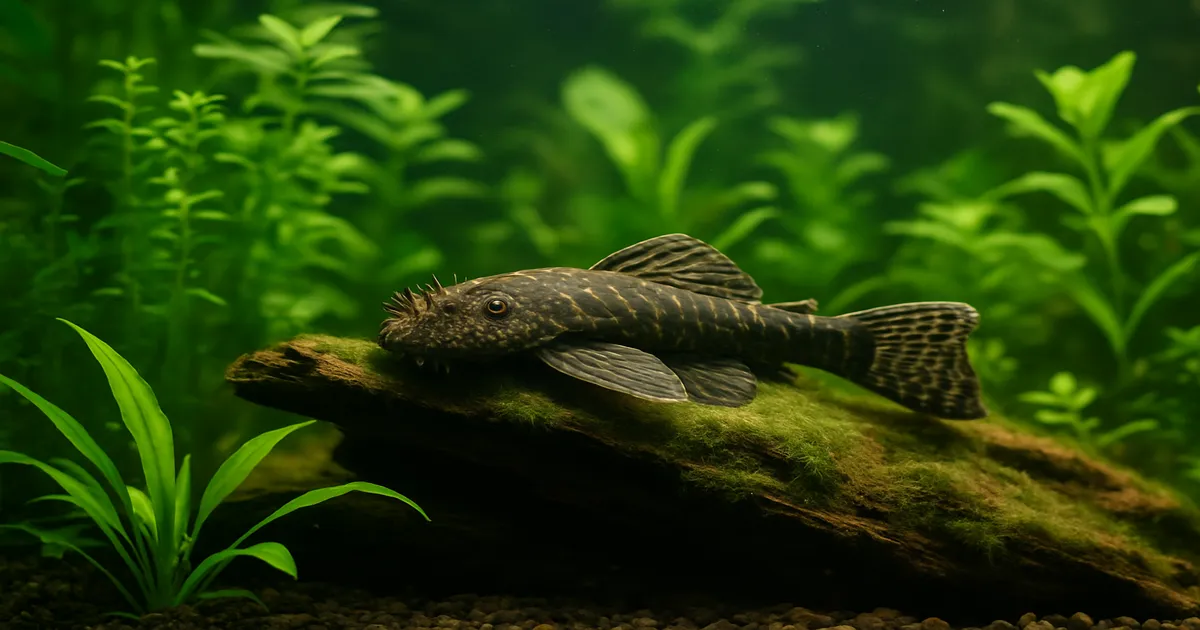
Quick Answer: Yes, you need to actively feed your pleco — every single day. The idea that plecos survive on tank algae alone is one of the most harmful myths in the hobby. A healthy, well-maintained aquarium simply doesn’t grow enough algae to sustain them. How much you need to worry about feeding your pleco, and exactly what to feed, depends heavily on which species you own.
Should You Worry About Feeding Your Pleco?
The Algae-Eater Myth Debunked
“Should I worry about feeding my pleco?” is one of the most common questions new owners ask — and the honest answer is yes. Not in a panic-inducing way, but in the same way you’d worry about feeding any other fish in your care.
The “self-cleaning tank” reputation plecos carry is genuinely damaging. A thriving, well-filtered aquarium produces very little algae, and what little there is gets grazed down quickly. Relying on it to feed your pleco is like expecting your dog to survive on crumbs under the sofa cushions.
An underfed pleco doesn’t just get thin — it gets desperate. It will rasp the slime coats off your other fish, demolish live plants, and become increasingly stressed and disease-prone. Active feeding isn’t optional; it’s the baseline.
Not All Plecos Are the Same: Know Your Species
The Loricariidae Family: 900+ Species, Very Different Diets
“Pleco” is a nickname for hundreds of fish in the family Loricariidae, which contains over 900 described species. That matters enormously for feeding, because dietary needs range from almost fully vegetarian to nearly carnivorous.
Broadly, plecos fall into three feeding categories:
- Omnivore/generalist grazers — Hypostomus, Ancistrus (bristlenose), Pterygoplichthys (sailfin/common pleco). These eat biofilm, algae, plant matter, detritus, and small invertebrates.
- Wood-eating xylivores — Panaque (royal pleco) and Cochliodon. These species digest wood fiber using specialized gut bacteria and need driftwood in the tank at all times.
- Carnivores/invertivores — Hypancistrus (zebra pleco), Peckoltia, and many L-number species. These eat primarily insect larvae, small crustaceans, and worms. Algae is a tiny, almost irrelevant part of their diet.
Common Pleco vs. Bristlenose vs. Zebra Pleco
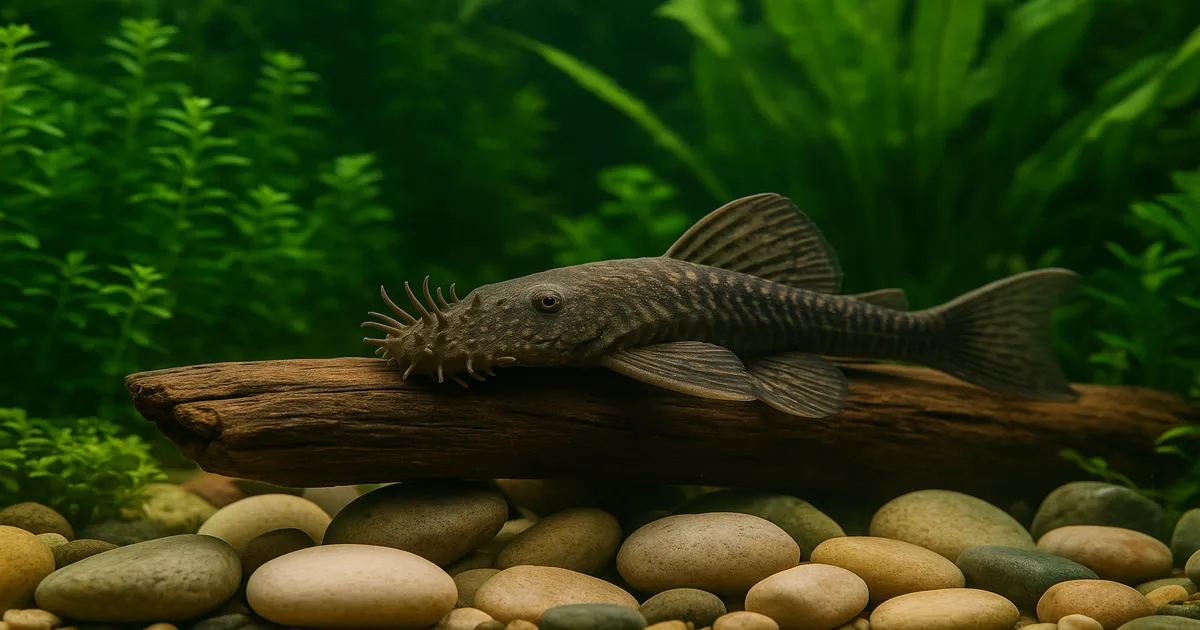
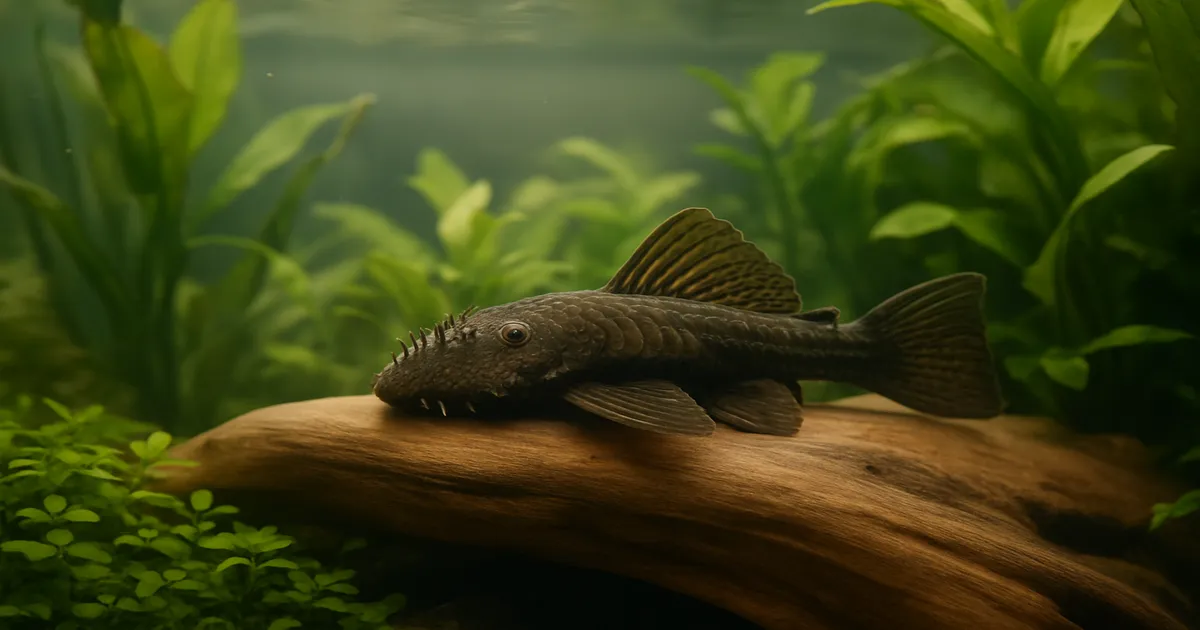
The common pleco (Pterygoplichthys pardalis, frequently mislabeled as Hypostomus plecostomus) is an omnivorous grazer that can reach 18–24 inches. It’s a heavy feeder and an even heavier waste producer. The bristlenose pleco (Ancistrus spp.) tops out at 4–6 inches — far more practical for home tanks, and also an omnivore but much more manageable. The zebra pleco (L046, Hypancistrus zebra) is a carnivore that barely glances at vegetables. Feed it a protein-heavy diet or it will slowly decline.
L-Numbers and Why They Matter for Feeding
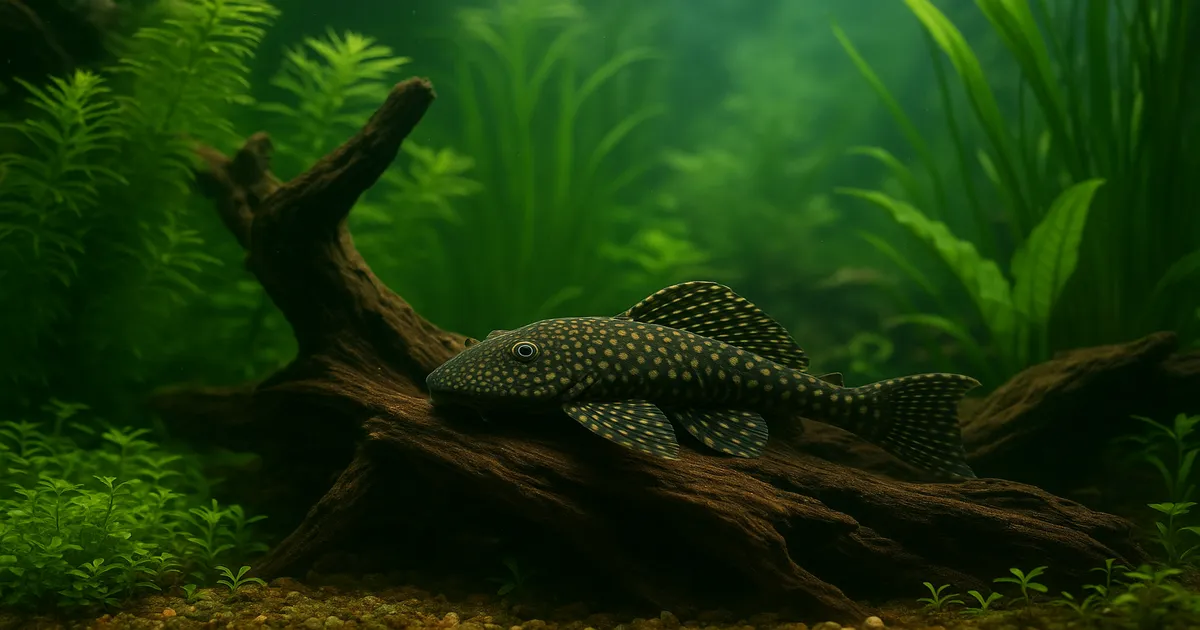
When a pleco species hasn’t been formally described by science, hobbyist publications assign it an “L-number” (e.g., L046 for the zebra pleco, L018/L085/L177 for the gold nugget pleco). These aren’t just collector labels — they’re your best guide to diet. An L-number from the Hypancistrus group signals a carnivore. One from the Baryancistrus group (gold nugget) leans more omnivorous. Always look up the L-number before buying food.
What to Feed Your Pleco: A Complete Food Guide
Sinking Wafers and Pellets: The Everyday Staple
For omnivorous species, sinking algae wafers are the practical foundation of a good diet. Hikari Algae Wafers and Omega One Veggie Rounds are both well-regarded. For carnivorous species like zebra plecos, you need sinking carnivore pellets — not algae wafers. New Life Spectrum Thera+A works well for protein-leaning species.
Fresh Vegetables: Best Choices and How to Prepare Them
Zucchini is the gold standard for omnivorous and herbivorous plecos — nutritious, easy to prepare, and almost universally accepted. Slice it, weigh it down with a veggie clip, and drop it in at lights-out. Other good options include:
- Cucumber — raw, weighted down
- Blanched spinach or kale — nutritious, but use in moderation due to oxalates
- Sweet potato, butternut squash, peas — blanch until just soft
- Green beans — blanched
Always remove uneaten vegetables within 24 hours. Rotting produce fouls water fast, and plecos already push filtration hard enough without the extra load.
Protein Foods: Frozen and Live Options
Every pleco benefits from protein, and carnivorous species depend on it. Frozen bloodworms, brine shrimp, mysis shrimp, and daphnia are all excellent options. Blackworms — live or frozen — are particularly nutritious. For larger plecos, earthworms make a fantastic high-value treat.
Omnivorous species like bristlenose plecos do well with protein two to three times per week as a supplement. Carnivorous species like zebra plecos should get protein at most feedings.
Repashy Gel Foods
Repashy gel foods have become a staple in serious pleco-keeping circles. They sink immediately, don’t cloud the water, and come in formulas suited to different dietary needs.
- Repashy Soilent Green — ideal for herbivorous and omnivorous species
- Repashy Meat Pie — better suited for carnivorous L-numbers
Mix the powder with boiling water, let it set, and slice off what you need. It keeps in the fridge for weeks and is one of the cleanest, most convenient foods available.
Driftwood: Food, Not Just Decoration
For Panaque and related species, driftwood isn’t optional — it’s food. Mopani, Malaysian driftwood, and spider wood are all suitable. Even for species that don’t actively digest wood, having driftwood available to rasp on supports gut health and provides beneficial tannins. Replace it as it gets consumed.
Foods to Avoid
- Floating flake foods — gone before they reach the bottom
- Beef heart as a staple — too rich in mammalian fats for regular use; long-term feeding risks fatty liver disease
- Citrus and acidic produce — not part of any pleco’s natural diet
- Processed human foods — no nutritional value, often contain harmful additives
How Often and When to Feed Your Pleco
Once daily is the right baseline for most species. Feed at lights-out to match their nocturnal activity pattern — food dropped in after dark is far less likely to sit untouched and foul the water. Carnivorous species like zebra plecos can be split into two smaller portions per day. Large omnivores like common plecos handle once-daily feeding well, though portions need to be generous given their size.
How much is enough? Most food should be gone within a few hours. Check the tank the next morning — significant leftovers mean you’re overfeeding; a pleco visibly searching an empty tank means increase the portion slightly. Plecos already produce a disproportionate amount of waste. Overfeeding compounds that, spiking ammonia and nitrite in ways that suppress appetite and immunity.
Signs Your Pleco Is Not Getting Enough Food
The most reliable indicator of an underfed pleco is a sunken or concave belly — the abdomen should look rounded and full, not pinched inward. A visible spine or ribcage is a more advanced warning sign. Dull coloration and persistent lethargy round out the picture.
Behaviorally, watch for slime coat rasping — a pleco latching onto other fish and rasping their sides. This is almost always a hunger response, not random aggression, and it’s frequently misread as predatory behavior. Other signs include consuming live plants, unusual daytime activity, and general restlessness.
To correct an underfed pleco: increase feeding to twice daily temporarily, introduce high-value foods like Repashy or frozen protein, and confirm you’re offering the right food for your species. Most plecos recover quickly. If the sunken belly persists after two weeks of improved feeding, investigate water quality or underlying health issues.
Tank Setup and Water Quality
Filtration
Plecos are among the highest-bioload fish in the hobby. Target a turnover rate of 8–10× your tank volume per hour. Canister filters are the preferred choice for larger species — the Fluval FX6 handles the job well for tanks 100 gallons and up. Under-filtration leads to ammonia and nitrite spikes that suppress appetite and immune function, creating a cycle where a sick pleco eats less and conditions worsen further.
Water Parameters by Species
| Species | Temperature | pH | Notes |
|---|---|---|---|
| Common Pleco | 76–82°F (24–28°C) | 6.5–7.5 | Tolerates harder water |
| Bristlenose Pleco | 76–79°F (24–26°C) | 6.5–7.5 | Very adaptable |
| Zebra Pleco (L046) | 82–88°F (28–31°C) | 6.0–7.0 | Keep nitrates below 10 ppm; needs warm, well-oxygenated water |
| Royal Pleco (Panaque nigrolineatus) | 76–86°F (24–30°C) | 6.5–7.5 | Driftwood required at all times |
Ammonia and nitrite should always read 0 ppm. Nitrates above 40 ppm suppress immune function and reduce feeding activity — keep them in check with regular water changes. Weekly changes of 25–30% are non-negotiable with plecos. Use a reliable liquid test kit to stay on top of parameters; test strips aren’t accurate enough for fish this sensitive to water quality.
Substrate and Hides
Sand or smooth gravel is ideal — plecos forage along the bottom and can injure themselves on sharp substrates. Provide at least one cave or hide per pleco. A fish that feels secure will forage more confidently and eat more consistently. PVC pipes and ceramic caves work just as well as expensive decorations.
Frequently Asked Questions About Feeding Plecos
Do plecos really clean the tank so I don’t need to worry about feeding them?
No. A healthy, well-maintained aquarium produces far too little algae to sustain a pleco nutritionally. You need to actively feed your pleco sinking foods appropriate to its species, every single day. The “self-cleaning” reputation is one of the most damaging myths in the hobby.
How do I know if my pleco is eating?
Feed at lights-out and check the tank an hour later with a dim flashlight. Most plecos become active quickly once the lights go off. If food is consistently disappearing overnight and your pleco’s belly looks full and rounded, it’s eating. A persistently sunken belly despite regular feeding suggests a water quality issue or underlying illness.
Why is my pleco rasping my other fish?
Slime coat rasping is almost always a hunger response. An underfed pleco will seek nutrition wherever it can find it, and the mucus coating of large, slow-moving fish becomes a target. Increase feeding immediately, confirm you’re offering the right food for your species, and the behavior typically stops once nutritional needs are met.
What is the best food for a bristlenose pleco?
A varied diet anchored by sinking algae wafers and blanched zucchini. Supplement with other vegetables (cucumber, sweet potato, peas) and offer frozen protein like bloodworms or brine shrimp two to three times a week. Repashy Soilent Green is an excellent all-in-one option that many bristlenose keepers rely on.
How often should I feed my pleco?
Once daily is the standard baseline. Feed at lights-out to match their nocturnal activity pattern. Carnivorous species like zebra plecos can be fed in two smaller portions per day. Adjust portion size based on what’s left the following morning — consistent leftovers mean reduce the amount; a pleco actively searching an empty tank means increase it slightly.