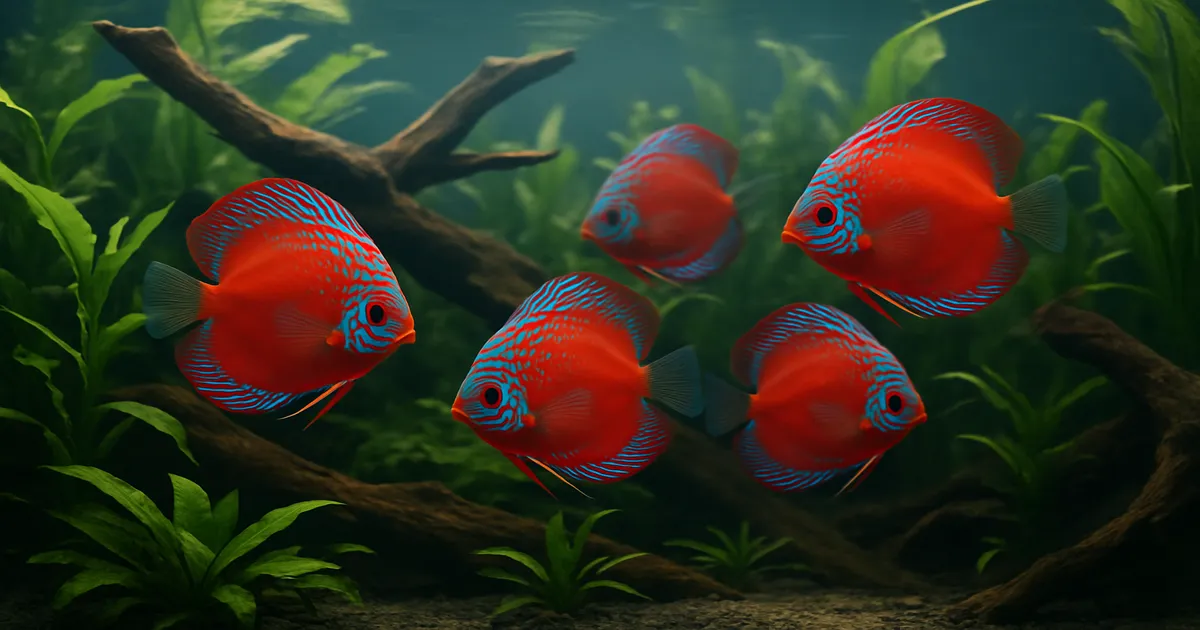
Quick Answer: Discus fish are stunning Amazonian cichlids that grow 6–9 inches and live 10–15 years, but they demand pristine water — warm (84–86°F), soft, slightly acidic (pH 6.5–7.0), with zero ammonia or nitrite. A minimum 75-gallon tank, a high-protein varied diet, and frequent water changes are non-negotiable. Tank-bred specimens are far more forgiving than wild-caught fish and are the right choice for most hobbyists.
If you’ve been researching how to care for discus fish, you already know the reputation: beautiful, rewarding, and genuinely demanding. That reputation is earned. Discus aren’t beginner fish in the traditional sense, but with the right setup and a solid understanding of their needs, they’re absolutely achievable — and endlessly worth it.
Discus Fish Species Overview and Popular Strains
Taxonomy and Recognised Species
The genus Symphysodon contains three recognised species: S. discus (the Heckel Discus, the original wild type described in 1840), S. aequifasciatus (the Green, Brown, and Blue Discus), and S. tarzoo (the Red Discus, formally described in 2007). Some ichthyologists still recognise only two species, but the three-species model is supported by DNA evidence and is now widely accepted in the hobby.
Natural Habitat in the Amazon Basin
Wild discus live in the slow-moving blackwater and clearwater rivers of the Amazon Basin — the Rio Negro, Rio Solimões, and surrounding floodplain systems. These are tannin-stained waters with almost no current, dense submerged root systems, leaf litter, and extremely soft, acidic conditions (pH 4.0–5.5, GH often under 1 dGH). Understanding this habitat explains nearly every care requirement they have.
Popular Captive-Bred Strains
Decades of selective breeding have produced hundreds of named strains. The most commonly available include:
- Pigeon Blood — cream or yellow base with red spotting; one of the most commercially widespread strains
- Blue Diamond — striking solid electric blue
- Red Marlboro / Red Melon — vivid solid red-orange coloration
- Leopard / Snakeskin — intricate patterning across the body
- Turquoise — blue-green striping on a brown base; closest to wild-type appearance
- Albino — red-eyed, melanin-free; sensitive to bright lighting
- Checkerboard / Mosaic — complex geometric patterning
Tank-Bred vs. Wild-Caught: Which Should You Choose?
For most hobbyists, tank-bred discus are the clear choice. They’re hardier, more disease-resistant, and adapted to a wider pH range (6.0–7.5). Wild-caught fish often require strict blackwater conditions (pH 4.5–6.0) and are better suited to experienced keepers who can maintain near-natural Amazonian parameters with precision.
How to Care for Discus Fish: Water Parameters
Water quality is where discus keeping is won or lost. More than any other factor, stable, clean parameters determine whether your fish thrive or slowly decline.
Temperature
The sweet spot most experienced keepers aim for is 84–86°F (29–30°C). This range supports immune function, digestion, and breeding activity. Drop below 78°F (26°C) and disease susceptibility climbs sharply. Prolonged exposure above 92°F (33°C) causes stress and oxygen depletion — at higher temperatures, water holds less dissolved oxygen, so surface agitation becomes critical.
pH and Hardness
Tank-bred discus do well in slightly acidic water (pH 6.5–7.0) and can tolerate 6.0–7.5 without issues. What they cannot tolerate is fluctuation — a stable pH of 7.2 is far preferable to one that swings between 6.5 and 7.5 daily. Target soft water at 3–6 dGH (general hardness) and 1–4 dKH (carbonate hardness). Very low KH means pH can crash quickly, so monitor it closely and use frequent water changes as your primary stability tool.
Ammonia, Nitrite, and Nitrate
Ammonia and nitrite must be zero — even 0.25 ppm ammonia causes gill damage in discus. Nitrate should stay below 20 ppm, ideally under 10 ppm for healthy adults and under 5 ppm if you’re breeding. A fully cycled tank, appropriate stocking density, and a consistent water change schedule are the only reliable ways to achieve this. A liquid test kit gives you far more accurate readings than strips.
Water Change Schedule
Change 25–30% weekly at minimum. For optimal health, 30–50% twice weekly is better — many professional discus keepers do 10–15% daily. The single most important rule: match replacement water temperature within 1–2°F of the tank. Cold water shocks are a leading cause of head and lateral line erosion (HLLE) and disease outbreaks. Always dechlorinate with a quality water conditioner that neutralises both chlorine and chloramine. (Seachem Prime)
Dissolved Oxygen
Aim for 7–8 mg/L dissolved oxygen. At discus temperatures, you’ll need active surface movement to achieve this — a gentle ripple is ideal. Avoid churning turbulence (discus dislike strong current), but don’t let the surface sit completely still.
Water Parameter Quick Reference
| Parameter | Ideal Range | Absolute Limits |
|---|---|---|
| Temperature | 84–86°F (29–30°C) | 78–92°F (26–33°C) |
| pH | 6.5–7.0 | 6.0–7.5 (tank-bred) |
| GH | 3–6 dGH | 1–10 dGH |
| KH | 1–4 dKH | 1–6 dKH |
| Ammonia | 0 ppm | 0 ppm |
| Nitrite | 0 ppm | 0 ppm |
| Nitrate | < 10 ppm | < 20 ppm |
Setting Up a Discus Tank
Tank Size
A group of 4–6 discus needs a minimum of 75–100 gallons. Six or more fish are better served by 125 gallons or larger. Discus are tall-bodied, so prioritise tanks with 18–24 inches of depth over long, shallow footprints. Larger water volumes also buffer against the rapid parameter swings that can catch you off guard.
Substrate
Bare bottom is the most practical choice for beginners and breeders — easy to clean, no waste accumulation, and full visibility of what’s happening on the tank floor. If you prefer a natural look, fine inert sand (pool filter sand or CaribSea Super Naturals) works well. Avoid calcium-based substrates like aragonite or crushed coral entirely — they’ll raise your pH and KH in ways that are difficult to control.
Filtration
Canister filters offer the best combination of mechanical, biological, and chemical filtration with minimal flow disruption. Size your filtration for 8–10× tank volume per hour — a 75-gallon tank needs at least 600–750 GPH of filtration capacity. The Fluval FX series and Eheim Classic or Pro series are both reliable choices. A supplemental sponge filter is a smart addition: it provides gentle biological filtration, acts as a backup if your main filter fails, and is safe for fry.
Heaters
Use two heaters rather than one. Set one slightly lower (84°F) and one slightly higher (86°F) — if one fails stuck-on, the other prevents a fatal spike; if one fails off, the other keeps the tank warm. Titanium heaters are excellent for longevity. Position heaters near filter intake or output for even heat distribution.
Lighting and Décor
Low to moderate intensity works best. Aim for 8–10 hours per day on a consistent timer — gradual dawn/dusk transitions prevent the startled dashing that can injure fish. Floating plants like Amazon Frogbit diffuse overhead light to a comfortable level while still supporting plants below.
Malaysian driftwood and Indian almond leaves are excellent additions — both release tannins that naturally lower pH and soften water, and Indian almond leaves have mild antibacterial properties. Safe live plants include Amazon Sword, Vallisneria, Java Fern, Anubias, and Cryptocoryne. Use inert granite or slate for hardscape; avoid limestone and any calcium-rich rocks.
Discus Fish Tank Mates
Compatibility isn’t just about behaviour — stress from the wrong tank mates directly suppresses immune function and triggers disease. Choose companions that share discus water requirements and won’t create chronic anxiety.
Best Tank Mates
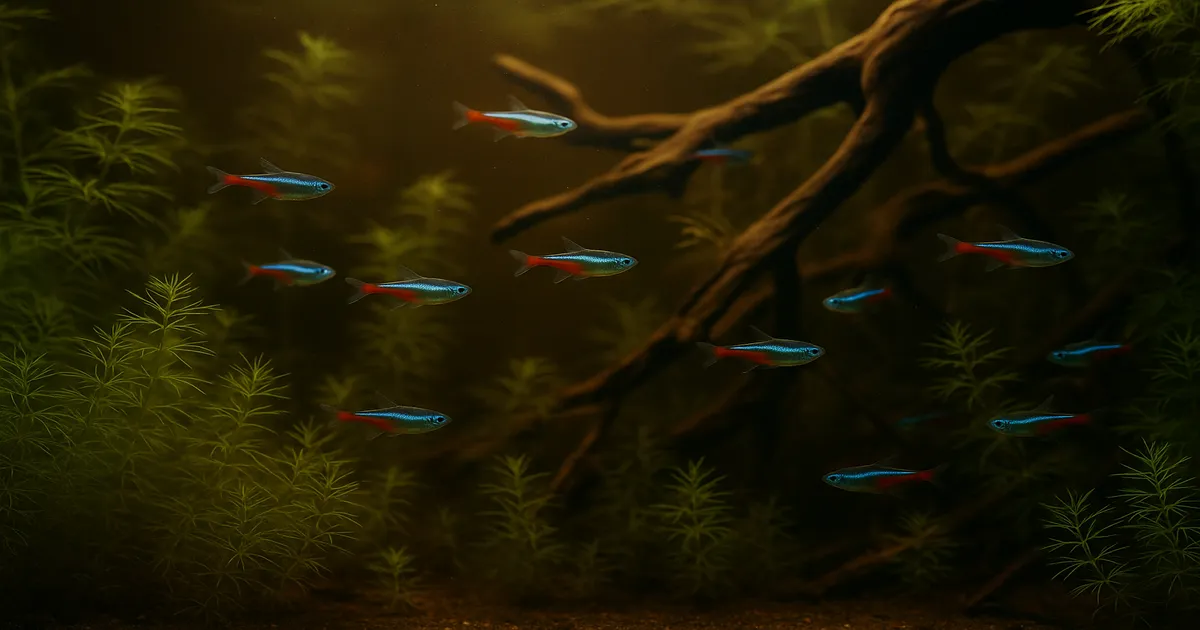
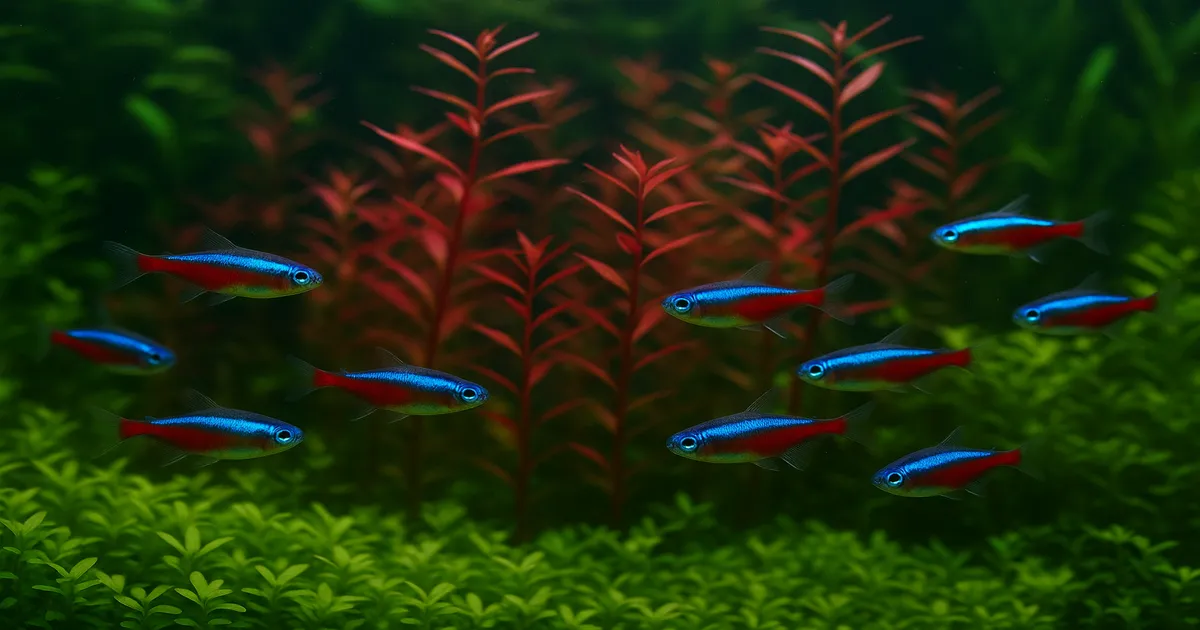
- Cardinal Tetras — the iconic discus companion; thrive in identical water conditions and add beautiful schooling movement
- Rummy-Nose Tetras — excellent water quality indicators; tight schooling is a visual sign your parameters are right
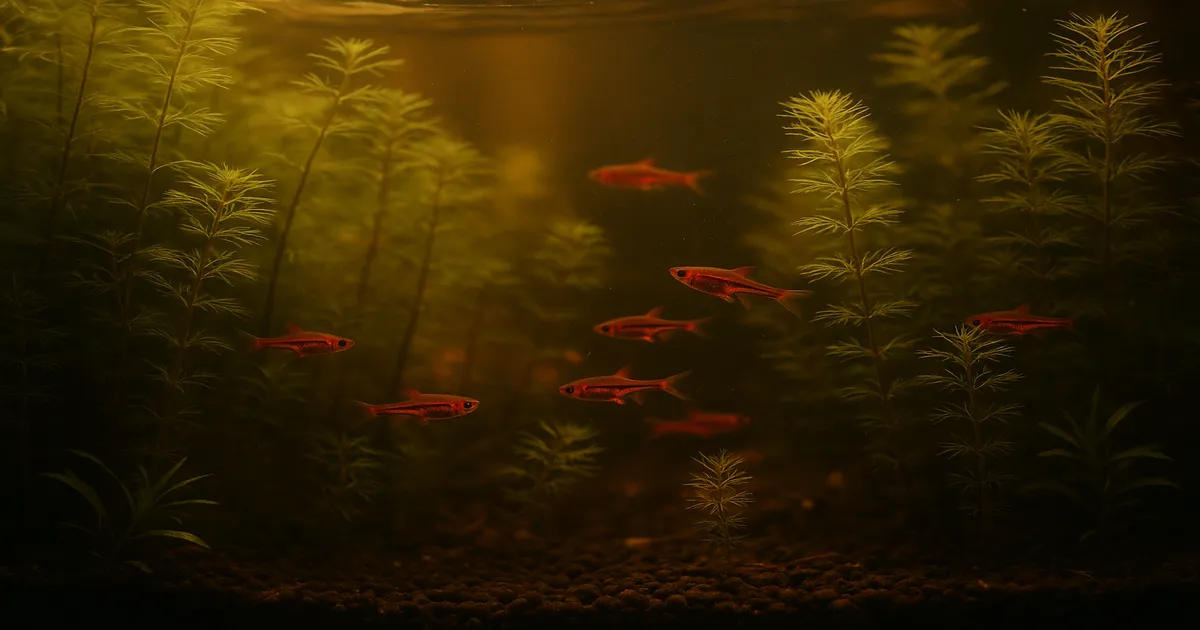
- Ember Tetras — small, peaceful, and perfectly suited to warm soft water
- Corydoras sterbai — the gold-standard bottom dweller; one of the few Corydoras species that genuinely tolerates 84–86°F
- Otocinclus — peaceful algae cleaners that occupy a completely different tank zone
- German Blue Rams — share warm-water requirements and make stunning tank mates; monitor for minor territorial behaviour
Fish to Avoid
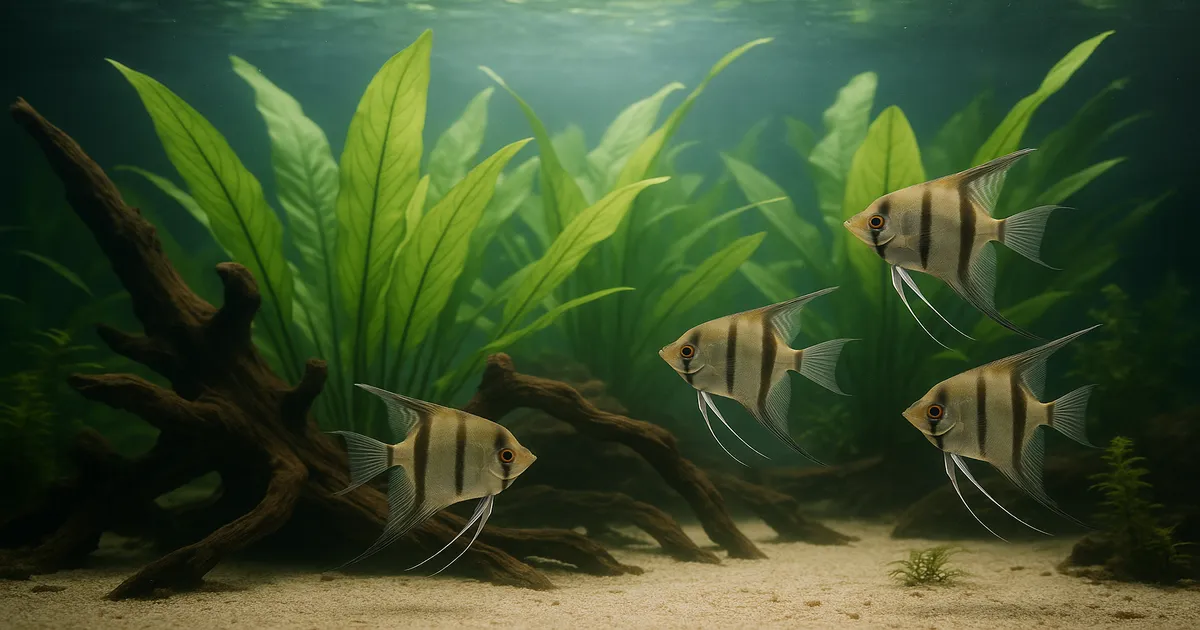
- Common Angelfish (Pterophyllum scalare) — known disease vectors for Hexamita and other parasites discus are highly susceptible to
- Tiger Barbs and Serpae Tetras — relentless fin nippers that will stress discus into illness
- Aggressive cichlids (Oscars, Jack Dempseys, etc.) — completely incompatible
- Large common plecos — can latch onto discus and damage their slime coat; use Bristlenose Plecos instead
- Cold-water species and most ornamental shrimp — either incompatible temperatures or will become expensive snacks
Keep a minimum of four to six discus together. In a group, aggression is distributed across the hierarchy rather than concentrated on a single subordinate. A lone discus will decline — they’re genuinely social animals.
Feeding Discus Fish
What Discus Eat
Wild discus are omnivores with a strong carnivorous lean — invertebrates, insect larvae, small crustaceans, and zooplankton. They’re slow, deliberate feeders that pick at food rather than competing aggressively at the surface.
Best Foods
Variety and high protein are the keys. No single food should make up the entire diet.
- Beef heart mix — the traditional discus staple; available as commercial preparations or homemade blends with added vegetables, vitamins, and shrimp
- Frozen foods — bloodworms, brine shrimp, mysis shrimp, and daphnia are all excellent; daphnia is particularly useful as a digestive aid
- High-quality discus pellets or granules — a good commercial discus food provides a nutritional baseline and is convenient for daily feeding
- Live foods — use occasionally to stimulate feeding response; blackworms and live brine shrimp are good options
Feeding Schedule
Adults do well with 2–3 small meals daily. Juveniles need 4–5 feedings per day to support rapid growth. Feed only what the fish can consume in about 5 minutes, then remove any uneaten food immediately — leftover food is one of the fastest ways to spike ammonia in a discus tank.
For shy or picky feeders, dim the lights slightly at feeding time. Feed at consistent times every day; discus learn the schedule quickly. Target feeding with a pipette or turkey baster works well for hesitant individuals.
Common Discus Diseases and Prevention
Most Common Health Problems
- Hexamita / Hole-in-the-Head (HLLE) — internal flagellate infection; often triggered by poor water quality or nutritional deficiency
- Internal parasites — worms and flagellates are common in new fish, especially wild-caught specimens
- Bacterial infections — fin rot and body ulcers typically follow physical injury or immune suppression from poor water quality
- Ich (Ichthyophthirius multifiliis) — less common at discus temperatures (higher heat accelerates the parasite’s lifecycle), but still possible
- Gill flukes — can cause laboured breathing and flashing
Early Warning Signs
- Clamped fins and darkened coloration — the most universal stress signal in discus
- Loss of appetite or disinterest in food
- White, stringy faeces — classic sign of internal parasites
- Pitting or erosion near the lateral line (HLLE)
- Hiding, lethargy, or laboured breathing
- Unusual spots, patches, or mucus on the body
Quarantine
Every new fish — no exceptions — should spend a minimum of 4–6 weeks in a separate, fully cycled quarantine tank before joining your display tank. Most disease introductions are entirely preventable with this one step. A basic 20–30 gallon bare-bottom tank with a sponge filter and heater is all you need.
Treatment
Here’s the most important thing to understand about discus disease: 90% of health problems are water-quality-related. Before reaching for medication, test your water and perform a large water change. If a specific disease is confirmed, metronidazole is the standard treatment for Hexamita, and praziquantel is effective against flukes and worms. Salt baths can help with minor bacterial infections and external parasites. Always confirm a diagnosis before medicating — incorrect treatment stresses fish further and can damage your biological filter. When in doubt, consult an aquatic veterinarian.
Frequently Asked Questions: How to Care for Discus Fish
Are discus fish hard to keep?
Discus are considered advanced fish, but “hard” is relative. Their demands are specific rather than complicated — warm, clean, stable water and a high-protein diet. The biggest challenge is consistency. Tank-bred discus are significantly more forgiving than wild-caught fish and are the recommended starting point for anyone new to the species.
What water temperature do discus fish need?
The ideal range is 84–86°F (29–30°C). This supports immune health, digestion, and natural behaviour. Never let the temperature drop below 78°F (26°C), as this sharply increases disease susceptibility. At the upper end, ensure strong surface agitation to maintain adequate dissolved oxygen.
How big do discus fish get, and what tank size do they need?
Adult discus typically reach 6–9 inches (15–23 cm) in diameter. A group of 4–6 fish needs a minimum 75–100-gallon tank; six or more fish are better housed in 125 gallons or larger. Tall tanks with 18–24 inches of depth are preferred over shallow designs.
Can discus fish live with angelfish?
Common angelfish (Pterophyllum scalare) are generally not recommended as discus tank mates. They’re known carriers of Hexamita and other parasites that discus are highly susceptible to, and the temperature overlap is marginal for angelfish health. Altum Angelfish (Pterophyllum altum) share more similar habitat requirements and can work, but require careful monitoring.
How long do discus fish live?
Well-cared-for discus typically live 10–15 years in captivity, with some hobbyists reporting fish reaching 18 years under exceptional conditions. Lifespan is directly tied to water quality consistency — fish kept in stable, clean conditions with a varied diet live significantly longer than those in suboptimal environments.