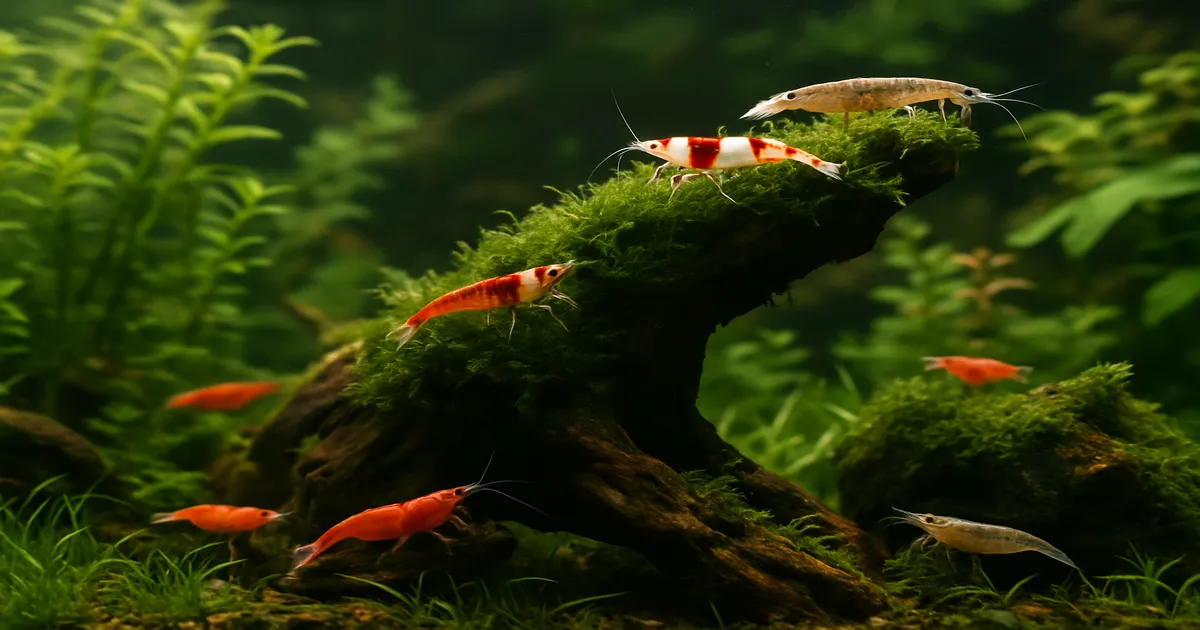
Quick Answer: Wondering “why is my shrimp like that?” Most unusual shrimp behaviour comes down to a handful of causes — moulting, water parameter problems, stress, breeding activity, or illness. Many things that look alarming (a shrimp lying still, an empty shell, frantic swimming) are completely normal. When in doubt, test your water first.
If you’ve ever found yourself Googling “why is my shrimp like that?” at midnight, you’re not alone. Dwarf shrimp are fascinating but sometimes baffling little creatures, and even experienced keepers occasionally catch one doing something that looks deeply wrong. The good news: most of the time, it isn’t.
This guide covers everything from normal behaviour that just looks weird, to genuine red flags, to the water parameters and tank setup that underpin almost every shrimp health issue.
The Most Common Reasons Shrimp Behave Strangely
Here’s a quick-reference table to match what you’re seeing to the most likely cause:
| What You’re Seeing | Most Likely Cause |
|---|---|
| Shrimp not moving, lying on side | Moulting (normal) or ammonia/toxin issue |
| Empty shell in the tank | Normal moult — not a dead shrimp |
| All shrimp swimming frantically | Breeding swarm (normal) or parameter crash |
| Shrimp turning white or opaque | Stress, bacterial infection, or failed moult |
| Shrimp at the surface | Low oxygen or parameter spike |
| Shrimp hiding, not eating | New tank stress (normal) or illness |
| Sudden multiple deaths | Ammonia spike, copper, or chloramine poisoning |
| White fuzz on body or rostrum | Parasites (Vorticella or Scutariella) |
Why is My Shrimp Like That? Start With a Water Test
The single most useful thing you can do is test your water. An API Freshwater Master Test Kit will tell you within minutes whether you’re dealing with a chemistry problem or just a shrimp being a shrimp. If ammonia and nitrite are both 0 ppm and the rest of your parameters are in range, most strange behaviour has a perfectly innocent explanation.
Normal Shrimp Behaviours That Look Alarming (But Aren’t)
Moulting: Why Your Shrimp Looks Dead or Has Disappeared
Moulting is the most misunderstood shrimp behaviour, full stop. All shrimp periodically shed their exoskeleton to grow. During this process they can look completely dead — lying on their side, motionless, sometimes twisted into an awkward position. Young shrimp in a growing colony may moult every one to two weeks; adults every three to six weeks.
After the moult, you’ll often find an empty, translucent shell on the substrate. Leave it there. The shrimp will frequently eat it to reclaim calcium and minerals. A freshly moulted shrimp is also extremely vulnerable for the first few hours, which is why they tend to hide. This is entirely normal — not illness.
Breeding Swarms: Why All Your Shrimp Are Going Crazy
When a female Neocaridina or Caridina moults and releases pheromones, every male in the tank goes into a frenzy. You’ll see them darting erratically in all directions, swimming up and down the glass, seemingly frantic. This is a breeding swarm, and it means your colony is healthy and reproducing. It typically lasts a few hours and then stops as suddenly as it started.
Grazing and Scavenging: What Healthy Shrimp Do All Day
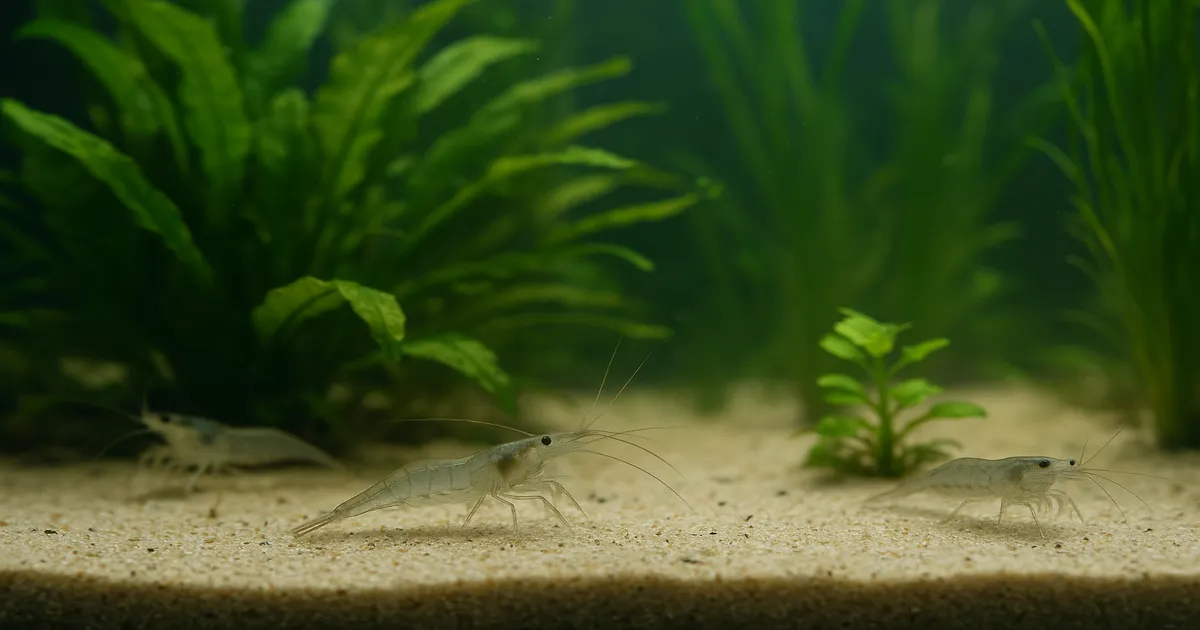
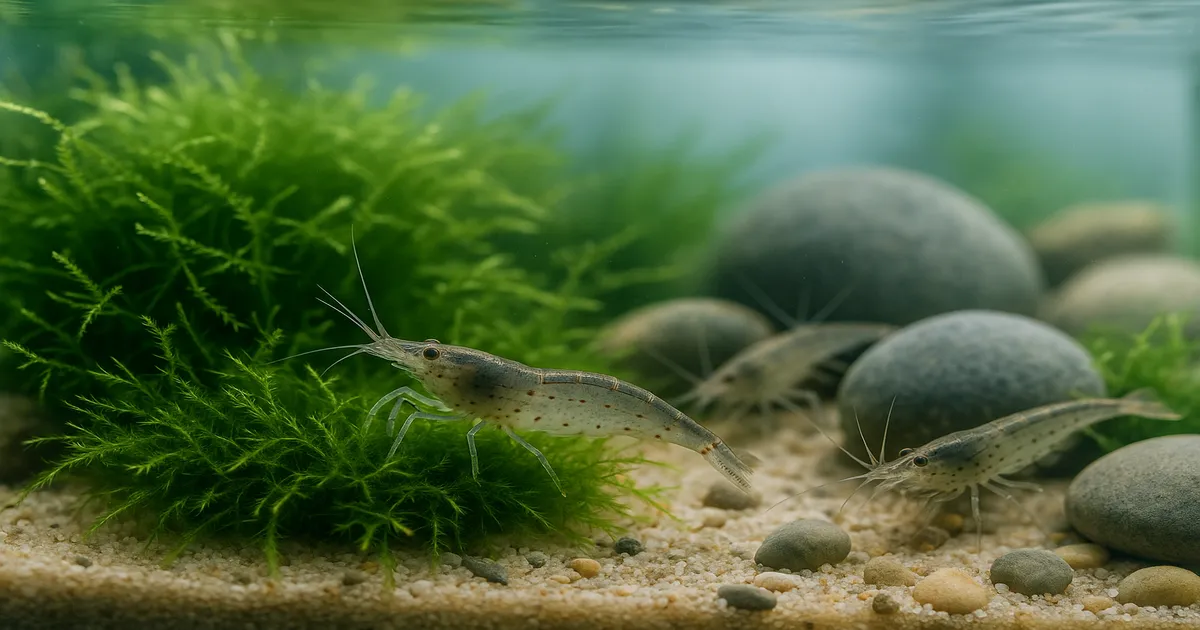
A healthy shrimp is a busy shrimp. They should be constantly picking at surfaces — glass, plants, substrate, driftwood, leaf litter — grazing on the biofilm and algae that colonise everything in a mature tank. If your shrimp are actively moving around and foraging, that’s the best sign of good health you can get.
Hiding After Introduction: New Tank Stress Is Normal
Newly introduced shrimp — whether Neocaridina cherry shrimp, Caridina crystal shrimp, Amano shrimp, or ghost shrimp — often disappear for several days after being added to a new tank. They’re acclimating. As long as you drip-acclimated them properly and your water parameters are good, give them time. They’ll come out when they’re ready.
Warning Signs: When “Why Is My Shrimp Like That?” Has a Serious Answer
Erratic Swimming or Spinning
Erratic, spiralling, or twitching movement that isn’t a breeding swarm is a serious red flag. The most common culprits are an ammonia or nitrite spike, copper poisoning, or pesticide contamination. Test your water immediately. If ammonia or nitrite reads above 0 ppm, do a 30–50% water change with dechlorinated water right away.
If parameters look fine, think about anything new you’ve added recently — a medication, a fertiliser, new plants that weren’t rinsed, or new décor. Copper is acutely lethal to all invertebrates, even at trace levels.
Shrimp Lying on Their Side or Gathering at the Surface
A shrimp lying still on its side could simply be moulting. But if shrimp are gathering at the water surface or appear to be gasping, that’s a different situation entirely. Surface clustering almost always signals low dissolved oxygen or a sudden parameter crash. Check that your filter is running, increase surface agitation, and test the water immediately.
Colour Loss, Turning White, or Looking Pale
Some colour change is normal — shrimp often look paler right after moulting. But a shrimp that turns milky white or opaque, especially in the body muscle rather than just the shell, is frequently showing signs of bacterial infection or a failed moult. Chronic paleness across a whole colony usually points to stress, poor nutrition, or consistently poor water quality.
Sudden Mass Deaths
This is almost always a water quality event. The most common causes are:
- Ammonia spike from overfeeding, a dead fish, or an uncycled tank
- Copper from a medication, copper pipes, or a liquid fertiliser
- Chloramine from tap water that wasn’t properly dechlorinated
- Pesticides from new plants added without rinsing
Act fast. Do a large water change, remove any obvious source of contamination, and dose a water conditioner like Seachem Prime to neutralise chloramine and temporarily detoxify ammonia.
Water Parameters: The Root Cause of Most Shrimp Problems
Neocaridina (Cherry Shrimp) Requirements
Neocaridina are the hardy, beginner-friendly option, tolerating a fairly wide range of conditions.
| Parameter | Acceptable Range | Ideal Range |
|---|---|---|
| Temperature | 65–80°F (18–27°C) | 72–76°F (22–24°C) |
| pH | 7.0–8.0 | 7.2–7.6 |
| GH | 6–20 dGH | 8–12 dGH |
| KH | 2–15 dKH | 3–6 dKH |
| TDS | 150–400 ppm | 200–300 ppm |
| Ammonia / Nitrite | 0 ppm always | 0 ppm |
| Nitrate | <40 ppm | <20 ppm |
Caridina (Crystal & Bee Shrimp) Requirements
Caridina are a different story. They need soft, acidic water and are far less forgiving of swings.
| Parameter | Acceptable Range | Ideal Range |
|---|---|---|
| Temperature | 62–74°F (17–23°C) | 65–70°F (18–21°C) |
| pH | 6.0–6.8 | 6.2–6.6 |
| GH | 3–6 dGH | 4–5 dGH |
| KH | 0–2 dKH | 0–1 dKH |
| TDS | 100–200 ppm | 120–150 ppm |
| Ammonia / Nitrite | 0 ppm always | 0 ppm |
| Nitrate | <20 ppm | <10 ppm |
Most serious Caridina keepers use RO water remineralised with a Caridina-specific mineral salt like Salty Shrimp GH+ and an active buffering substrate to hold that near-zero KH.
Amano and Ghost Shrimp
Both are considerably more adaptable. Amano shrimp do well in slightly acidic to neutral water (pH 6.5–7.5) with moderate hardness (GH 6–12 dGH) at 65–80°F (18–27°C). Ghost shrimp tolerate a similar range. Neither requires the precision of Caridina keeping.
The Invisible Killers: Ammonia, Nitrite, Copper & Chloramine
Ammonia and nitrite must always read 0 ppm. There is no safe level for shrimp — even low concentrations cause chronic gill damage before killing outright. Copper is equally dangerous. It’s present in many common fish medications, some liquid fertilisers, and occasionally old plumbing. Always check labels before adding anything to a shrimp tank.
Chloramine — used by many municipal water suppliers instead of chlorine — won’t off-gas the way chlorine does. You need a dechlorinator that specifically neutralises chloramine, not just chlorine.
Why Stability Matters More Than Perfection
A shrimp living in slightly hard water at pH 7.8 is fine. The same shrimp suddenly shifted to pH 7.0 via a large water change can go into shock. Stability matters more than hitting exact numbers. Always drip-acclimate new shrimp for at least one to two hours, match water change water to tank temperature, and avoid large, rapid changes.
Tank Setup and Feeding: The Basics
Tank Size, Substrate, and Filtration
Five gallons is the bare minimum for a nano shrimp colony; ten gallons is genuinely recommended. A larger water volume buffers against temperature swings and parameter spikes — in a five-gallon tank, one overfeeding incident can crash ammonia overnight.
Neocaridina are happy on inert substrates like plain gravel or sand. Caridina need an active buffering substrate — ADA Amazonia, Fluval Stratum , or SL-Aqua More — that actively lowers and maintains pH. These substrates exhaust after 12–24 months and need replacing, which many beginners don’t anticipate.
For filtration, a sponge filter is the shrimp keeper’s best friend. It houses beneficial bacteria, provides a biofilm-covered grazing surface, and creates zero risk of shrimplets being sucked into an intake. The Hikari Bacto-Surge is a popular and reliable option. If you prefer an HOB or canister filter, always cover the intake with a pre-filter sponge — shrimplets are tiny and will disappear into an unprotected filter.
Plants, Leaf Litter & Hardscape
The more surface area you can provide, the better. Java Moss, Indian Almond leaves, cholla wood, and driftwood all colonise rapidly with biofilm — the shrimp’s primary food source. Indian Almond (Catappa) leaves also release tannins with mild antibacterial properties, which is why many shrimp keepers swear by them. Live plants like Java Fern, Anubias, and floating plants add oxygen, absorb nitrates, and make shrimp feel secure.
Feeding
In a mature, planted tank, biofilm largely sustains a colony on its own. Supplemental feeding is just that — supplemental. Good staple options include algae wafers and dedicated shrimp foods like the Dennerle Shrimp King range. GlasGarten Bacter AE is popular as a biofilm stimulator — it’s added to the water column and encourages the natural grazing shrimp love.
Feed small amounts every one to two days and remove uneaten food within 24 hours. Overfeeding degrades water quality faster than almost anything else in a small tank. If you’re keeping Neocaridina in soft tap water, consider adding a cuttlebone to the tank as a calcium source — calcium and magnesium deficiency is directly linked to failed moults.
Common Shrimp Health Problems
Failed Moulting (Moult Death Syndrome)
Failed moulting — where a shrimp gets stuck in its old exoskeleton and dies — is the number one cause of captive shrimp death. It’s almost always linked to mineral deficiency (low GH, insufficient calcium or magnesium) or sudden parameter swings that trigger an emergency moult before the shrimp is ready. Maintain stable GH, feed mineral-rich foods, and avoid rapid water changes.
Bacterial Infections
A shrimp with a milky, cloudy, or opaque body — not just a pale shell — is often showing signs of bacterial infection, which can spread through a colony. Remove affected shrimp promptly. Maintain excellent water quality and consider Indian Almond leaves for their mild antibacterial tannins. Most standard fish antibiotics are not safe for shrimp tanks.
Parasites: Vorticella, Scutariella & Green Fungus
Three parasites are most commonly encountered:
- Vorticella — white, fuzzy tufts on the body or gills; treatable with salt baths or potassium permanganate dips
- Scutariella japonica — tiny white worms visible on the rostrum; treatable with brief freshwater or salt baths
- Ellobiopsidae (Green Fungus) — a green growth on the underside; highly contagious and difficult to treat; remove and quarantine infected shrimp immediately
Poisoning
Copper from medications or fertilisers, pesticides on new plants, and chloramine in tap water can all wipe out a colony within hours. Always quarantine new plants and rinse them thoroughly — or use tissue-culture plants from the start. Never dose copper-based medications in a shrimp tank; they’re common in many ich and anti-parasitic treatments.
Tank Mates: Who Can Live With Your Shrimp?
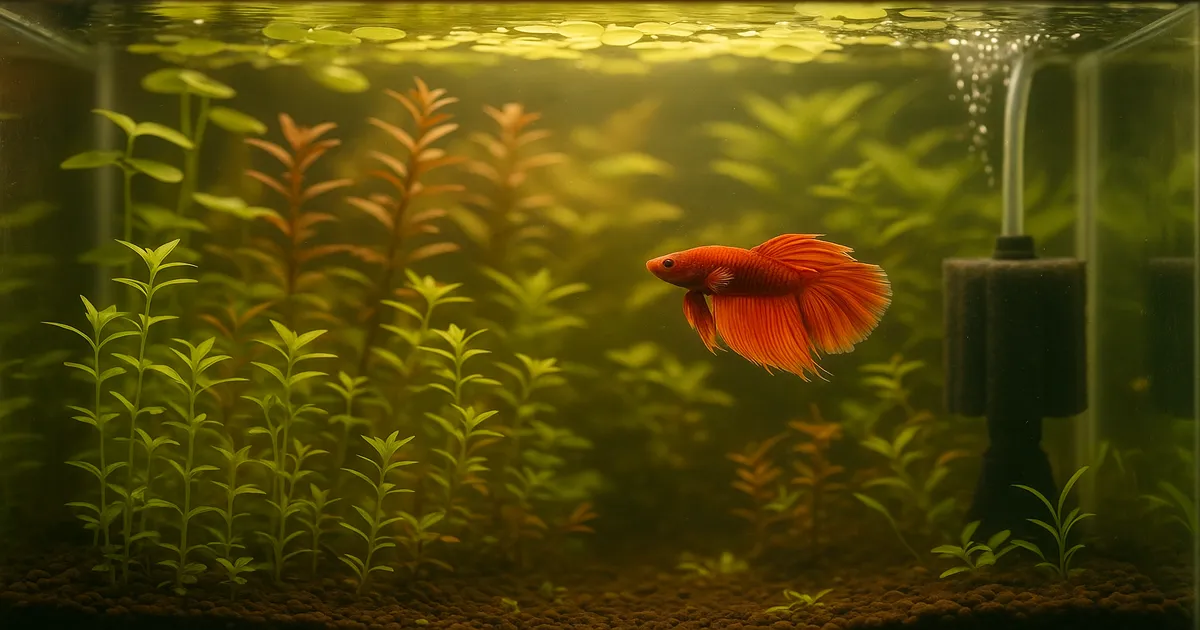
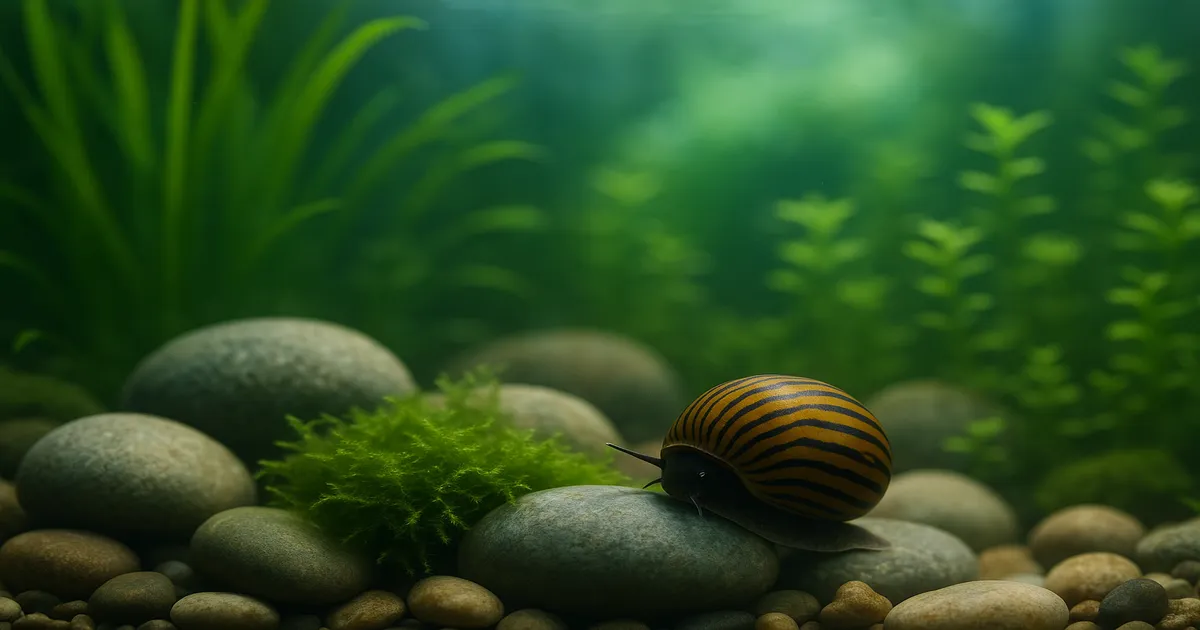
Neocaridina do well in community tanks with the right neighbours. Safe options include Otocinclus catfish, small Corydoras species (C. habrosus, C. pygmaeus), Ember Tetras, Chili Rasboras, Endler’s Livebearers (safe with adults, may eat shrimplets), and Nerite Snails. Avoid any fish large enough to eat a shrimp — bettas, gouramis, and most tetras above nano size are risky.
Caridina are best kept in a species-only tank or with other small invertebrates. Their precise water requirements make community setups harder to manage.
FAQ: Why Is My Shrimp Like That?
Q: Why is my shrimp lying on its side and not moving? It’s most likely moulting. Leave it alone for a few hours. If it doesn’t recover or is at the water surface, test your water immediately for ammonia and nitrite.
Q: Why did my shrimp turn white? Pale colouring right after a moult is normal. A milky or opaque white body — especially in the muscle tissue — often signals bacterial infection or a failed moult. Check water parameters and remove the shrimp if others are at risk.
Q: Why are all my shrimp swimming frantically? If it started suddenly and involves mostly males chasing one female, it’s a breeding swarm — completely normal. If all shrimp are swimming erratically or spinning, test your water immediately for ammonia, nitrite, and signs of copper or pesticide contamination.
Q: I found an empty shell — did my shrimp die? Almost certainly not. That’s a shed exoskeleton from a moult. Leave it in the tank; the shrimp will often eat it to reclaim minerals.
Q: Why are my shrimp hiding and not eating? Newly added shrimp commonly hide for several days while acclimating. In an established tank, a shrimp that stops eating for more than a day or two may be about to moult — or, if combined with lethargy, it’s worth running a water test.