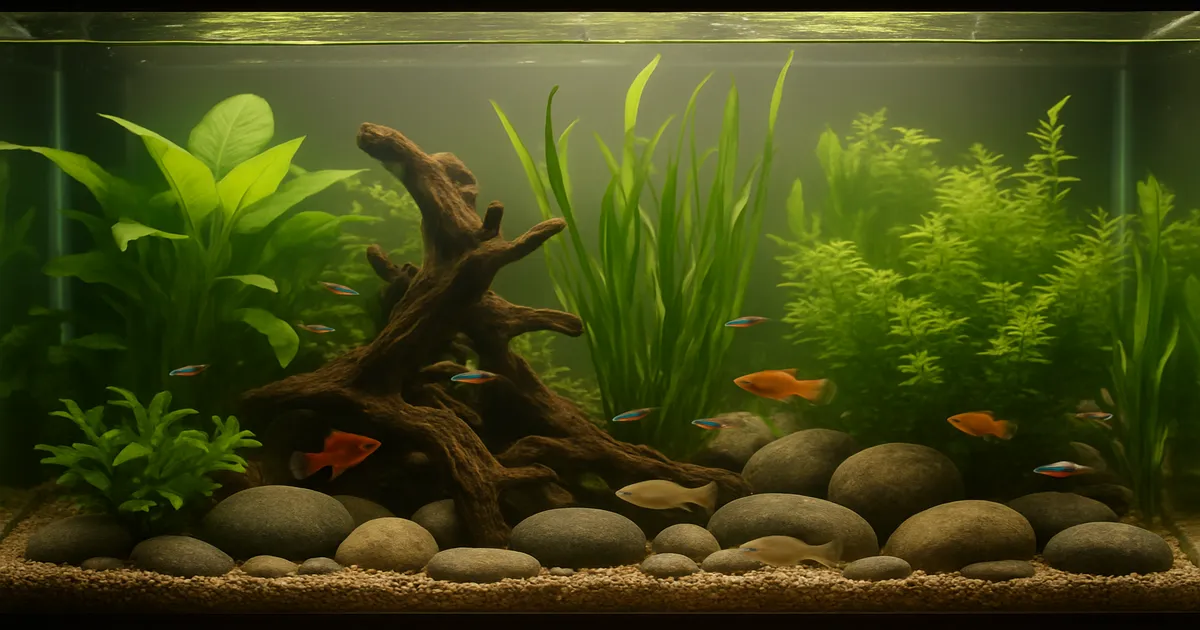
Quick Answer: A 60-gallon aquarium is an excellent mid-to-large tank for hobbyists upgrading from smaller setups. It offers enough room for a thriving community, a cichlid display, or a planted aquascape — without the full commitment of a 75-gallon or larger system. Expect 600–700 lbs fully loaded, moderate ongoing maintenance, and a meaningful equipment investment. If budget or floor space is tight, a 40-gallon breeder is the smarter move. If you want Oscars or large predatory cichlids, step up to a 75-gallon minimum.
Deciding whether to get a 60-gallon aquarium sounds simple, but it opens up a whole world of choices. The 60-gallon sits in a genuine sweet spot — big enough for impressive fish and aquascapes, yet manageable enough that a dedicated intermediate hobbyist can handle it solo. This guide covers everything you need to know before you commit.
Is a 60-Gallon Aquarium Right for You?
Who Should Get a 60-Gallon Tank?
A 60-gallon is ideal if you’re graduating from a 10–29-gallon starter tank and want more stocking options without committing to a true large-scale system. It’s also a strong choice for:
- Community tanks with schooling tetras, corydoras, and centerpiece gouramis or angelfish
- Cichlid displays — African Mbuna setups, Firemouth pairs, or Apistogramma colonies
- Planted aquascapes where you want room for a proper hardscape and mid-to-background plants
- Anyone who wants a visually striking display tank that doesn’t require a dedicated fish room
Who Should Consider a Different Size?
Size down to a 40-gallon breeder if floor space or budget is the limiting factor — it’s more widely available and cheaper to equip. Size up to a 75-gallon or larger if you have your heart set on an Oscar, a large predatory cichlid like a Dovii, or a common pleco. Those fish simply outgrow a 60-gallon.
60-Gallon Aquarium Dimensions, Weight, and Key Specs
Standard vs. Cube/Breeder Footprint
Two dimension variants dominate the market. The standard 60-gallon measures 48” L × 12” W × 24” H — long and narrow, great for active swimmers and creating depth in an aquascape. The cube/breeder variant runs 36” L × 18” W × 24” H, offering a wider footprint that suits territorial fish like cichlid pairs and bottom-dwellers that need horizontal space.
The 24” height on both variants is a genuine advantage for angelfish, which prefer vertical swimming room.
Glass vs. Acrylic
Glass is heavier but scratch-resistant and holds its clarity for decades — the default choice for most hobbyists. Acrylic is lighter (helpful if floor load is a concern) and optically clearer, but scratches easily during routine cleaning. At the 60-gallon size, either works well; glass tanks are simply more common and usually less expensive.
Floor Load and Structural Considerations
A fully loaded 60-gallon weighs 600–700 lbs — water (~500 lbs), substrate, rock, the glass itself, and the stand. Always place the tank on a dedicated aquarium stand rated for that weight, positioned against a load-bearing wall. If you’re on an upper floor of an older home, verify joist capacity before setup. Use a level to confirm the tank sits perfectly flat; even a slight tilt stresses the seams over time.
How It Compares to 40-Gallon and 75-Gallon Tanks
The 60-gallon occupies a less common niche between the wildly popular 40-gallon breeder and the 75-gallon standard. It’s available from Aqueon, Marineland, and Fluval, but you may not find it at every big-box pet store. The 75-gallon adds a critical few inches of width (18” vs. 12” on the standard 60) that opens up more stocking options — worth considering if you’re on the fence.
Best Fish for a 60-Gallon Aquarium
Peaceful Community Fish
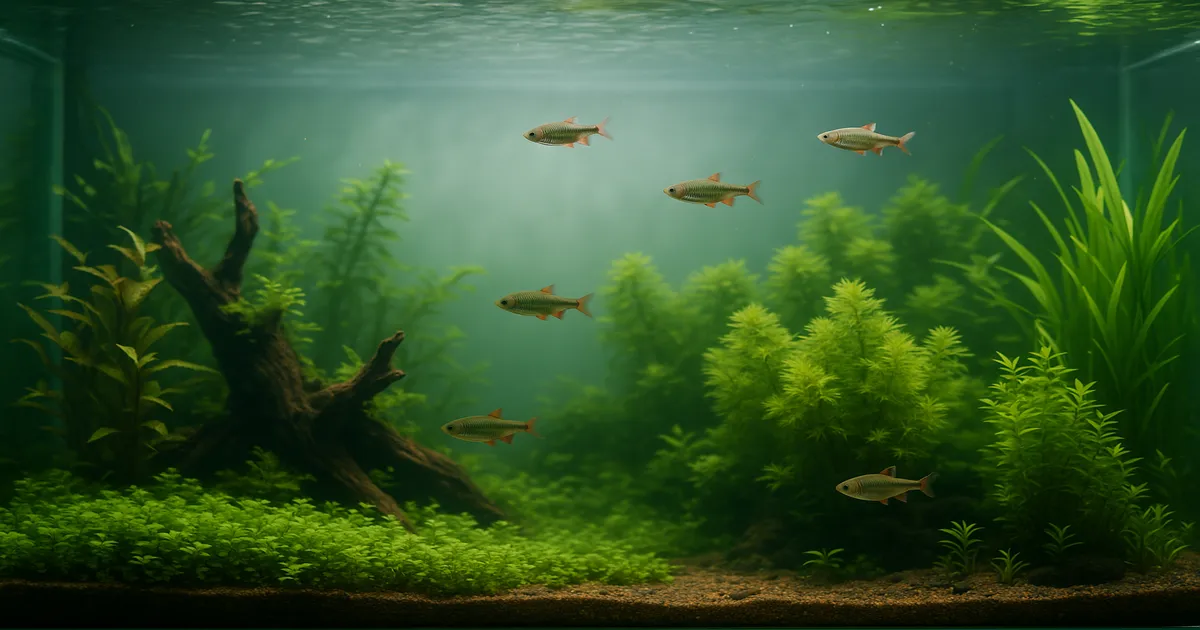
This is where a 60-gallon genuinely shines. You have enough water volume to keep large, impressive schools — think 15–20 cardinal tetras or harlequin rasboras moving together as a unit. Add 6–8 corydoras working the substrate, a trio of pearl gouramis as centerpiece fish, and a bristlenose pleco for algae control, and you have a complete, balanced community. Boesemani and turquoise rainbowfish are another excellent option — active, colorful, and spectacular in groups of six or more.
Cichlid Options
The 60-gallon handles three very different cichlid styles:
- African Mbuna: Yellow Labs, Acei, Rusty cichlids, and Maingano in a densely decorated rock setup
- Central American: A Firemouth pair or Sajica pair with dither fish like giant danios
- Dwarf cichlids: Apistogramma (1 male + 2–3 females) or a pair of German blue rams in a planted tank
Each requires completely different water chemistry, so pick a direction and commit to it.
Angelfish and Discus
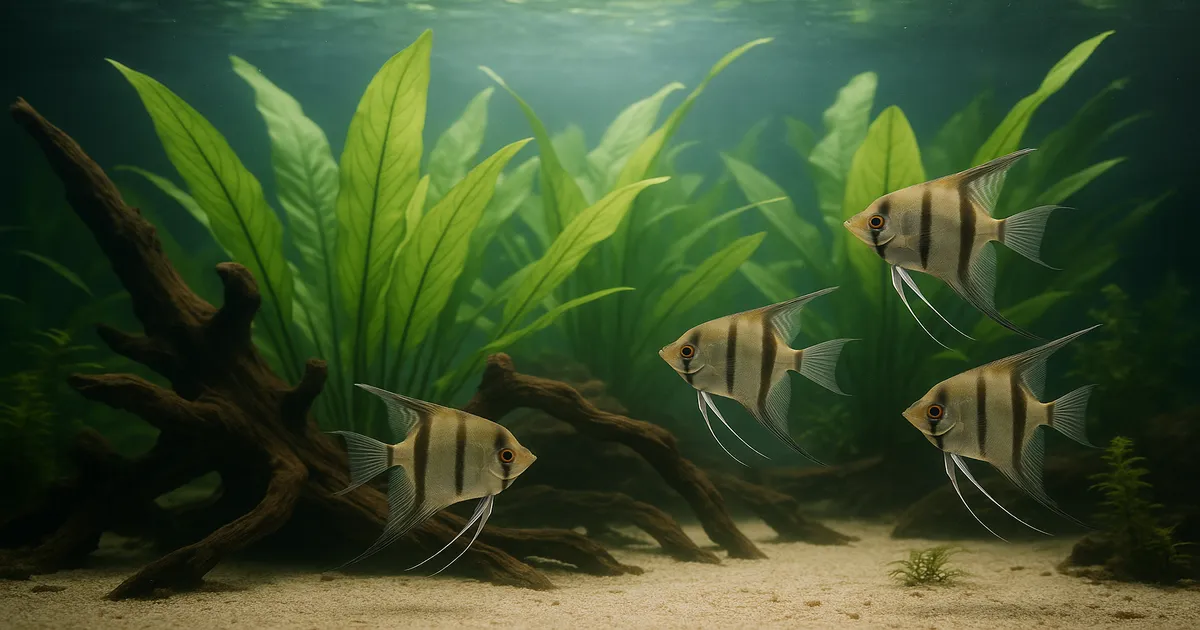
Angelfish do well in a 60-gallon, especially the taller variants. Start with six juveniles and let pairs form naturally — rehome the unpaired fish once bonding occurs. The 24” height gives them the vertical space they prefer.
Discus are possible but demanding. They need pristine water, temperatures of 82–86°F (28–30°C), and nitrate kept below 10 ppm. A group of five or six is the minimum for healthy social dynamics. Expect frequent water changes and likely RO water — this is an advanced setup, not a beginner project.
Fish to Avoid in a 60-Gallon Tank
Some fish are simply too large or produce too much waste:
| Species | Why It Doesn’t Work |
|---|---|
| Oscar | Grows to 12–14”; needs 75–125 gallons minimum |
| Common pleco | Reaches 18–24”; enormous bioload |
| Red-tailed catfish | Grows to 4 feet; not suitable for home aquaria |
| Dovii / Umbee cichlid | Highly aggressive; needs massive space |
| Clown loaches | Grow to 12”+; need a large group and a very large tank |
Water Parameters for a 60-Gallon Tank
Soft, Acidic Water: Tetras, Discus, Angelfish, and Apistogramma
Target pH 6.0–7.0, GH 2–8 dGH, and KH 1–4 dKH. Temperature should run 76–82°F (24–28°C) for angelfish and tetras; bump to 82–86°F (28–30°C) for discus. If your tap water is hard, blend it with RO water to hit these targets.
Neutral to Moderately Hard Water: Livebearers, Rainbowfish, and Gouramis
Aim for pH 7.0–7.8, GH 8–15 dGH, and KH 4–8 dKH. Temperature range is 74–80°F (23–27°C). Most municipal tap water falls right in this range, making this community type the most beginner-accessible.
Hard, Alkaline Water: African Cichlid Setups
African cichlids from Lake Malawi and Tanganyika need pH 7.8–8.5, GH 12–20 dGH, and KH 10–18 dKH. Using aragonite or crushed coral as substrate helps maintain these parameters naturally between water changes. Temperature sits at 76–82°F (24–28°C).
Universal Water Quality Rules
Regardless of which community you choose, these rules never change:
- Ammonia: Always 0 ppm. Even 0.25 ppm causes gill damage over time.
- Nitrite: Always 0 ppm. It binds hemoglobin and can kill fish quickly.
- Nitrate: Below 20 ppm for sensitive species; 40 ppm is the absolute ceiling for hardy fish.
- Dissolved oxygen: Above 6 mg/L; surface agitation is your primary tool.
- Dechlorination: Always treat tap water before adding it. A sodium thiosulfate-based conditioner neutralizes chlorine and chloramine and detoxifies trace ammonia during water changes. Seachem Prime is the most widely recommended option.
A reliable liquid test kit is essential for monitoring these parameters, especially during the nitrogen cycle.
Setting Up Your 60-Gallon Aquarium
Substrate
Match your substrate to your intended setup:
- Fine sand (pool filter sand or CaribSea): Best for corydoras, cichlids, and planted tanks. Use 1–2” depth.
- Aragonite/crushed coral: Essential for African cichlid tanks — buffers pH upward naturally.
- Aquasoil (ADA Amazonia, Fluval Stratum): Best for planted tanks and soft-water fish. Use 3–4” depth.
- Bare bottom: Easiest to clean; ideal for discus or hospital tanks.
Rinse everything thoroughly before adding it — even “pre-washed” substrates cloud the water.
Filtration
Target a flow rate of 5–10× tank volume per hour — at least 300–600 GPH for a 60-gallon. For African cichlid tanks, push toward the higher end.
Canister filters are the gold standard for this tank size. The Fluval 307 and Eheim Classic 350 offer excellent biological and mechanical filtration, run quietly, and stay hidden from view. Hang-on-back filters like the AquaClear 70 are easier to maintain and provide good surface agitation — they work well as a primary or secondary filter. Prioritize biological media: ceramic rings or quality sponge media harbor the nitrifying bacteria that keep your water safe.
Heating
A 60-gallon needs 180–300 watts of heating capacity. Rather than one large heater, use two smaller units — for example, two 150W heaters. If one fails, the other keeps the temperature stable while you source a replacement. Place heaters near the filter return to distribute heat evenly. The Eheim Jäger 150W is a reliable, widely available option. Always verify temperature with a separate thermometer — never trust the heater’s built-in dial alone.
Lighting
- Low-tech planted tanks: 15–30 PAR at the substrate; a Fluval Plant 3.0 or Finnex Stingray works well.
- High-tech planted tanks with CO2: 50–80+ PAR; the Fluval Plant 3.0 on higher settings or a Kessil A360 handles this.
- Fish-only and cichlid tanks: Standard LED with a timer; aesthetics matter more than PAR.
Run lights on a consistent 8–10 hour photoperiod using a timer. Inconsistent lighting stresses fish and encourages algae blooms. Keep the tank away from windows — direct sunlight causes temperature swings and explosive algae growth.
Stocking Strategy for a 60-Gallon Tank
Why the Inch-Per-Gallon Rule Falls Short
The old “one inch of fish per gallon” rule is a rough starting point at best. A 12” Oscar and 12 one-inch neon tetras both hit the same number, but they couldn’t be more different in bioload, territory, and behavior. Think instead about swimming levels (surface, mid-water, bottom), aggression, and how much waste each fish produces relative to your filtration capacity.
Peaceful Community Examples
- 15–20 cardinal tetras + 6–8 Sterbai corydoras + 1 male / 2 female pearl gouramis + 1–2 bristlenose plecos
- 12–15 harlequin rasboras + 6 dwarf chain loaches + 2–3 honey gouramis
- 8–10 Boesemani rainbowfish + 6 corydoras + 1 bristlenose pleco
Each example covers multiple swimming levels and keeps compatible water parameter needs.
African Cichlid Overstocking Strategy
Here’s the counterintuitive part: Mbuna tanks often do better with more fish, not fewer. Keeping 30–40 Mbuna in a 60-gallon with dense rockwork diffuses aggression — no single fish becomes a target because there are too many to fixate on. Compatible combinations include Yellow Labs, Acei, Rusty cichlids, and Maingano. Avoid keeping two males of the same color pattern together; they’ll fight relentlessly. This stocking density demands excellent filtration and consistent water changes.
What Not to Mix
Never mix African and South American cichlids — their water chemistry requirements are fundamentally incompatible. African cichlids need hard, alkaline water; South Americans and tetras need soft, acidic water. Trying to split the difference leaves both groups stressed. Always research adult size before buying — what’s cute at the fish store may be a tankbuster six months later.
Feeding Your 60-Gallon Community
Feed two to three times daily, offering only what your fish consume within two to three minutes. A 60-gallon is large enough that uneaten food can sink into the substrate and decompose unnoticed — and decomposing food is a fast track to ammonia spikes.
Match diet to species:
- Cichlids and carnivores: High-protein pellets or frozen foods like bloodworms, brine shrimp, and krill
- Tetras and rasboras: Quality micro-pellets or flake food supplemented with frozen daphnia or baby brine shrimp
- Mbuna: Spirulina-based flake or pellet food; avoid high-protein meaty foods, which can cause Malawi bloat
- Corydoras and bottom-dwellers: Sinking wafers or pellets that reach the substrate before other fish eat them
- Plecos: Algae wafers, blanched zucchini or cucumber, and occasional driftwood to graze on
Frequently Asked Questions About 60-Gallon Aquariums
How long does it take to cycle a 60-gallon aquarium? A fish-less nitrogen cycle typically takes 4–6 weeks. You can speed this up by seeding the tank with established filter media, adding a bottled bacteria product, and keeping ammonia at 2–4 ppm throughout the process. Test daily near the end — the cycle is complete when ammonia and nitrite both read 0 ppm within 24 hours of dosing.
How often should I do water changes on a 60-gallon tank? For most community tanks, a 25–30% water change weekly is the standard. Heavily stocked tanks — like an African cichlid setup — may need 30–50% weekly. Discus tanks often require daily or every-other-day changes to keep nitrate below 10 ppm. Consistency matters more than volume; small, frequent changes are gentler on fish than large, infrequent ones.
Can I keep a 60-gallon aquarium on a regular floor? In most modern homes, yes — but verify before you set up. A fully loaded 60-gallon weighs 600–700 lbs, which is roughly equivalent to three or four adults standing in one spot. Ground floors on concrete slabs are no issue. Upper floors in older homes with wide joist spans may need reinforcement. When in doubt, consult a contractor.
What’s the difference between a standard 60-gallon and a 60-gallon breeder? The standard 60-gallon (48” × 12” × 24”) is long and narrow — better for displaying active swimmers and creating aquascape depth. The breeder variant (36” × 18” × 24”) has a wider footprint, which suits territorial fish, bottom-dwellers, and breeding projects. Both hold 60 gallons, but the breeder’s extra width makes a meaningful difference for fish behavior.
Is a 60-gallon aquarium good for beginners? It’s better suited to intermediate hobbyists. The larger water volume is more forgiving of mistakes than a 10-gallon, but the equipment cost, weight, and maintenance commitment are significant. If you’ve successfully kept a 20–29-gallon tank stable for at least six months, a 60-gallon is a reasonable next step.