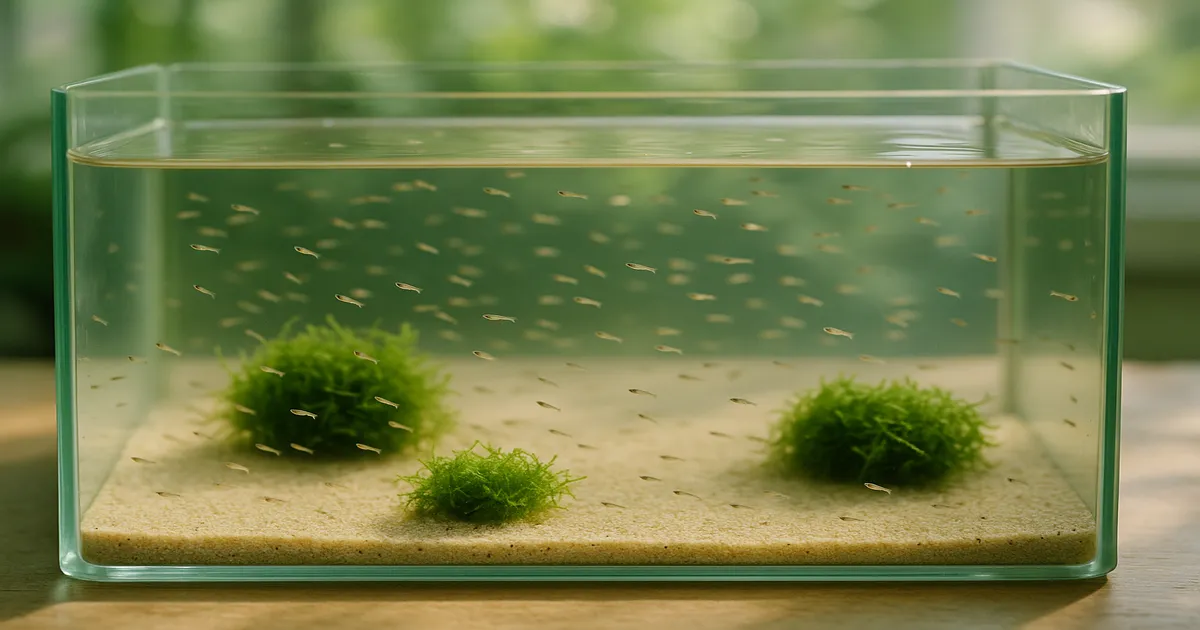
Quick Answer: The most common “freaky worms” in a corydora fry tub are Planaria (flat, arrow-headed gliders), detritus worms (thin, red, wriggling from the substrate), Hydra (tentacled, not actually a worm), Camallanus worms (red threads emerging from a fish’s anus), and free-living nematodes (tiny, transparent, mostly harmless). Planaria and Hydra are the most dangerous to fry and need immediate action. Camallanus is a medical emergency requiring medication. Detritus worms and nematodes are usually harmless but signal water quality problems.
What Is That Freaky Worm in Your Corydora Fry Tub?
Spotted something strange wriggling in your corydora fry tub? You’re not alone — and the good news is that most of these uninvited guests can be identified quickly and dealt with effectively. The bad news is that some of them will kill your fry if you don’t act fast.
The Five Most Likely Culprits at a Glance
| Organism | Appearance | Danger Level | Action Required |
|---|---|---|---|
| Planaria | Flat, arrow-headed, white/tan, gliding motion | High | Remove immediately — manual + chemical |
| Hydra | Tubular body with tentacles, green/brown/clear | High | Remove immediately — heat or chemical |
| Camallanus | Red/orange thread from fish’s anus | Extreme | Treat all fish with levamisole now |
| Detritus Worms | Thin, red, wriggling from substrate | Low | Improve husbandry and water quality |
| Free Nematodes | Microscopic, transparent, thrashing motion | Low | Reduce feeding, vacuum substrate |
Planaria and Hydra are active predators that will hunt and kill your fry. Camallanus is an internal parasite that destroys fish from the inside out — a different kind of emergency, but equally urgent. Detritus worms and free-living nematodes are scavengers. They signal a dirty tank but rarely harm fry directly, and larger fry will often eat them.
Visual ID Guide: Know Your Freaky Worm Before You Act
Planaria (Flatworms): The Arrow-Headed Gliders
Planaria belong to the flatworm phylum (Platyhelminthes) and are one of the most recognizable aquarium pests once you know what to look for. They’re genuinely flat — like a tiny piece of wet tissue — with a triangular or arrow-shaped head and two visible eyespots that give them a “cross-eyed” look. Color ranges from creamy white to pale tan or pinkish, and they typically measure 1–15 mm long.
Their movement is the giveaway: a smooth, effortless glide along glass or hard surfaces, almost like they’re floating just above it. No thrashing, no wriggling.
- Where to look: Glass walls, underside of lids, and along the bottom of the tub
- Best time to spot them: Planaria are photophobic. Check with a flashlight after lights-out for an accurate count
- White vs. brown: White Planaria (Stenostomum spp.) are predatory and the most dangerous to fry; brown/tan Dugesia spp. are mostly detritivores but still a sign of trouble
Detritus Worms: Thin, Red, and Wriggling from the Substrate
These are aquatic oligochaetes — relatives of earthworms — and the most common genus you’ll encounter is Tubifex. They’re very thin and thread-like, usually red or pinkish-red due to hemoglobin, and range from 1–20 mm long. The classic sighting is a cluster poking out of the substrate or filter sponge, moving in a frantic S-shaped whipping motion.
Unlike Planaria’s smooth glide, detritus worms thrash. That vigorous, whipping S-motion is unmistakable.
- Where to look: Substrate surface, filter media, and corners where waste accumulates
Camallanus Worms: The Red Thread Emerging from Your Fish
This one is unmistakable and alarming: a red or orange-red thread visibly protruding from the fish’s anus. Camallanus cotti is the most common species in aquarium fish, and adults live inside the intestinal tract. What you’re seeing is the worm itself — 5–20 mm of it hanging out of the fish. Affected fish may also appear wasted, lethargic, or bloated.
This is not a worm in your tank. It’s a worm in your fish. That distinction matters enormously for treatment.
Hydra: The Tentacled Impostor (Not Actually a Worm)
Hydra (Phylum Cnidaria) isn’t a worm at all, but it gets mistaken for one constantly. It has a tubular body — 1–25 mm long — with 5–10 tentacles radiating from the top, giving it a tiny anemone-like appearance when attached to glass. It can be green (the Chlorohydra viridissima species, which contains symbiotic algae), brown, or nearly transparent.
When Hydra contracts, it looks like a small blob. When extended, those tentacles wave slowly in the current — that’s what catches hobbyists’ eyes. It attaches to glass, plant leaves, and the sides of the tub.
- Where to look: Glass walls, plant surfaces, and the underside of lids
- Distinguishing feature: The tentacles. Nothing else in a fry tub looks like a tiny, slow-moving anemone
Free-Living Nematodes: Tiny, Transparent, and Mostly Harmless
Free-living nematodes (Phylum Nematoda) are microscopic to about 2 mm long, nearly transparent, and move in a distinctive C-shape or rapid thrashing motion. A small population in any established tank is completely normal — they’re among the most abundant animals on Earth. You’re most likely to spot them as near-invisible threads writhing in the water column or on the glass after you disturb the substrate.
Why These Pests Appear in Corydora Fry Tubs
A fry tub is essentially an ideal pest incubator: small water volume, high feeding frequency, warm temperatures, and deliberately gentle filtration. Organic waste accumulates faster than in a display tank, and there are few or no predators to keep pest populations in check.
Planaria and detritus worms arrive most commonly via contaminated live food — particularly live Tubifex worms, which are essentially the same animal as your detritus worm problem. They also hitchhike on plants, shared equipment, and substrate transferred from another tank.
Hydra’s most common entry route is live food cultures, especially Daphnia and Cyclops copepod cultures collected from natural water sources. It also arrives on unquarantined live plants. Even a single polyp can establish a colony quickly in a fry tub with low fish density and abundant tiny prey.
Camallanus arrives either in infected parent fish that weren’t properly quarantined, or via wild-collected live copepods (Cyclops spp.) that carry larval stages. Once one fish in a batch is infected, the parasite spreads through the fry tub relatively quickly.
Overfeeding is the single biggest driver of Planaria, detritus worm, and nematode blooms. Uneaten food rots, ammonia spikes, organic load climbs — and all three organisms thrive in exactly those conditions.
How to Eliminate Each Pest Safely Around Corydora Fry
Removing Planaria: Manual, Chemical, and Environmental Methods
Start mechanical: use a turkey baster or fine pipette to remove any visible Planaria during a water change. Set a Planaria trap overnight — a small container baited with a piece of raw liver works well; Planaria congregate on it by morning and can be discarded with the trap.
At the same time, cut feeding by 30–50% and vacuum the substrate thoroughly (or siphon all visible waste in a bare-bottom tub).
For chemical treatment, No-Planaria (betel nut extract) is effective and widely used by hobbyists. It is toxic to snails and some invertebrates, so do not use it in any tub containing snails. Follow dosing instructions carefully and run activated carbon after treatment to remove residues.
Eliminating Hydra: Heat Treatment and Chemical Options
If you can move your fry to a safe holding container, raising the tub temperature to around 104°F (40°C) for several hours will kill Hydra reliably. Corydora fry cannot survive that temperature, so complete removal first is non-negotiable.
Alternatively, a dilute fenbendazole (Panacur) treatment at approximately 1 mg/L is effective against Hydra and generally safer for fish than for invertebrates. Remove any snails before treatment.
Treating Camallanus Worms: Levamisole Protocol
Levamisole hydrochloride is the gold-standard treatment for Camallanus. (Hikari Prazipro) Dose at 1–2 mg/L as a bath treatment with normal filtration running (remove carbon first). Leave for 24–48 hours, then perform a 50% water change. Repeat the full treatment in three weeks — levamisole does not kill eggs, so the second dose catches the next generation.
Fenbendazole is an effective alternative if levamisole isn’t available in your region, dosed at ~1 mg/L in the water or mixed into food.
Do not use praziquantel or metronidazole for Camallanus. Neither is effective against nematodes. These are common mistakes that waste critical time while the parasite continues spreading.
Reducing Detritus Worms and Nematodes: The Husbandry Fix
No chemical treatment is needed for detritus worms or free nematodes. The fix is purely husbandry:
- Vacuum the substrate or siphon the bare bottom thoroughly
- Reduce feeding quantity immediately
- Rinse sponge filter media in old tank water (never tap water, which kills beneficial bacteria)
- Increase water change frequency temporarily — 20–30% daily until populations decline
What NOT to Use Around Fragile Corydora Fry
- Copper-based medications — highly toxic to fry and invertebrates at any concentration
- High salt concentrations — corydoras lack true scales and are sensitive; salt above 1–2 g/L can stress or kill fry
- Adult-dose anthelmintics — always err toward the lower end of the recommended range for fry tanks
- Potassium permanganate — too harsh for a fry environment
Fry Tub Setup That Prevents Pest Outbreaks
Bare-Bottom vs. Substrate
Bare-bottom wins for fry tubs. Without substrate, there’s nowhere for Planaria to hide, no anaerobic zones for detritus worms to colonize, and every piece of uneaten food is visible and easy to remove. If you feel strongly about using substrate, fine sand at less than 1 cm depth is the acceptable compromise. Avoid gravel entirely — the gaps trap waste and create exactly the conditions pest organisms love.
Filtration
A sponge filter provides gentle biological filtration without any risk of sucking up fry. Run it on air rather than a powerhead to keep flow gentle, and rinse the sponge weekly in old tank water to prevent it from becoming a Planaria habitat.
Water Parameters for a Corydora Fry Tub
- pH: 6.5–7.2
- GH: 4–12 dGH (soft to moderately hard)
- KH: 3–8 dKH (lightly buffered to prevent pH crashes)
- Temperature: 74–80°F (23–27°C) for most species
- Ammonia: 0 ppm — any detectable ammonia is dangerous to fry
- Nitrite: 0 ppm
- Nitrate: Under 20 ppm; lower is better — elevated nitrates signal the pest-friendly conditions you want to avoid
Test regularly with a reliable liquid test kit.
Keep flow very gentle — 3–5× tank volume turnover per hour maximum. Corydora fry are weak swimmers in the early weeks and strong flow exhausts them. A 5–10 gallon (19–38 L) tub is the practical sweet spot: stable enough to maintain parameters, small enough to monitor closely.
Quarantining Live Food and Plants
Never add live plants directly to a fry tub without quarantine. An alum dip (1 tablespoon of alum per gallon of water for 2–3 hours) kills Hydra polyps and most other hitchhikers on plant surfaces. A dry quarantine of 24–48 hours also kills Hydra, which cannot survive without water.
For live food cultures, source from reputable hobbyist suppliers rather than wild-collected sources — particularly for copepods and Daphnia, which carry the highest risk of introducing Hydra and Camallanus larvae.
Feeding Corydora Fry Without Creating a Pest Problem
- Days 0–5: Fry consume their yolk sac. No feeding required — adding food now only pollutes the water.
- Days 3–14: Introduce infusoria, microworms (Panagrellus redivivus), or baby brine shrimp nauplii. Start with tiny amounts.
- Weeks 2–6: Newly hatched baby brine shrimp (BBS), micro pellets (100–300 micron), (Hikari First Bites) finely crushed high-protein flake, and Daphnia nauplii.
- 6+ weeks: Transition to sinking wafers, mini catfish pellets, frozen bloodworm, and blanched vegetables.
Feed 3–5 small portions per day — portions small enough that everything is consumed within 30 minutes. Any uneaten food after that window must be removed with a turkey baster or fine siphon. This single rule, applied consistently, prevents the majority of pest outbreaks in fry tubs.
Frequently Asked Questions
Can Planaria kill corydora fry? Yes. White Planaria (Stenostomum spp.) are active predators that attack newly hatched larvae, causing wounds, fin damage, and death. Even brown Dugesia spp. can stress fry. Remove them immediately.
Is it safe to use No-Planaria in a fry tub? Yes, with caution. No-Planaria (betel nut extract) is generally safe for fish fry but is lethal to snails and most invertebrates. Remove any snails first, follow the dosing instructions precisely, and run activated carbon afterward to clear residues.
How do I know if the worm is in my tank or in my fish? If you see a red or orange thread protruding from a fish’s anus, that’s Camallanus — a worm living inside the fish, not free in the water. Worms crawling on the glass, substrate, or water column are environmental pests. The distinction determines your entire treatment approach.
Will my corydora fry eat detritus worms? Larger fry (4+ weeks) will often eat detritus worms enthusiastically. However, a heavy detritus worm bloom means your water quality is poor enough to harm fry regardless, so treat the root cause — overfeeding and insufficient cleaning — rather than relying on the fry to control the population.
How do I prevent these pests from coming back? The three-part answer: quarantine all new plants and live food before they enter the fry tub, never overfeed, and remove uneaten food within 30 minutes of every feeding. A bare-bottom tub with a sponge filter makes both prevention and cleanup dramatically easier.