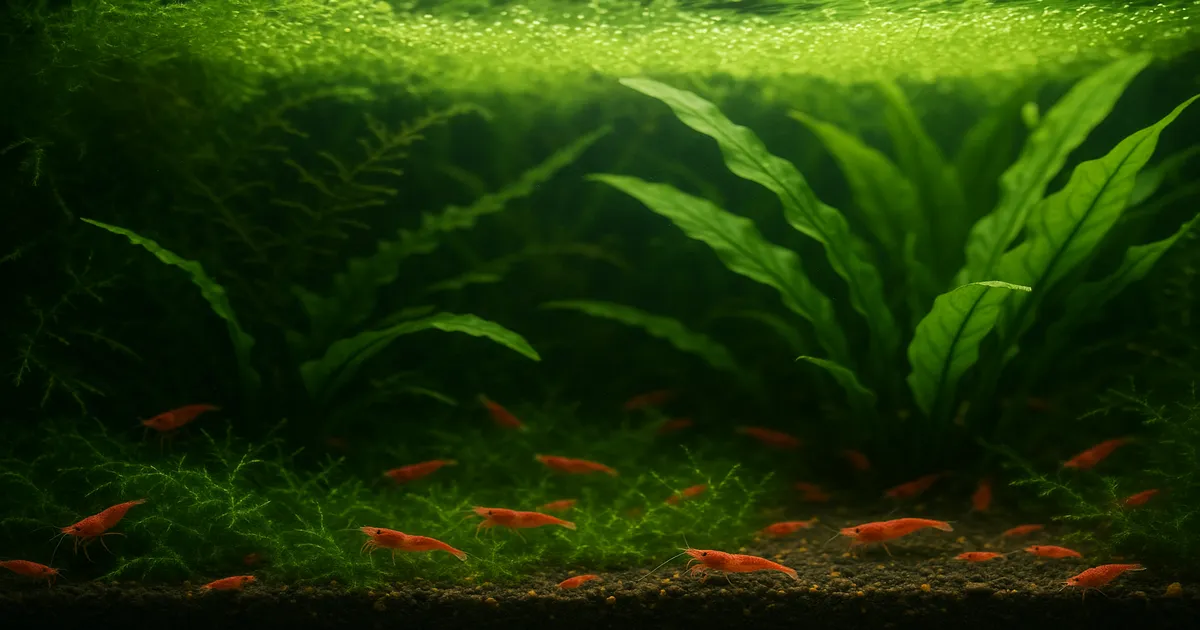
Quick Answer: A successful breeding tank for cherry shrimps starts with a cycled 10–20 gallon tank running a sponge filter, stable water at pH 7.0–7.5, GH 6–8 dGH, and 72–78°F (22–26°C), plus dense live plants and a dark substrate. Keep ammonia and nitrite at zero, run a species-only setup, and these prolific little shrimp will reward you with shrimplets in no time.
Cherry shrimp (Neocaridina davidi) are one of the best entry points into the world of dwarf shrimp — they’re forgiving, colorful, and breed readily once conditions are right. But “readily” is the key word. Setting up a proper breeding tank for cherry shrimps isn’t complicated, but skipping steps like cycling or using the wrong filter can stall your colony before it starts. This guide walks you through everything — water chemistry, filtration, plants, feeding, and common health issues — so you can build a setup that works from day one.
Cherry Shrimp Species Background
Natural Habitat and Behaviour
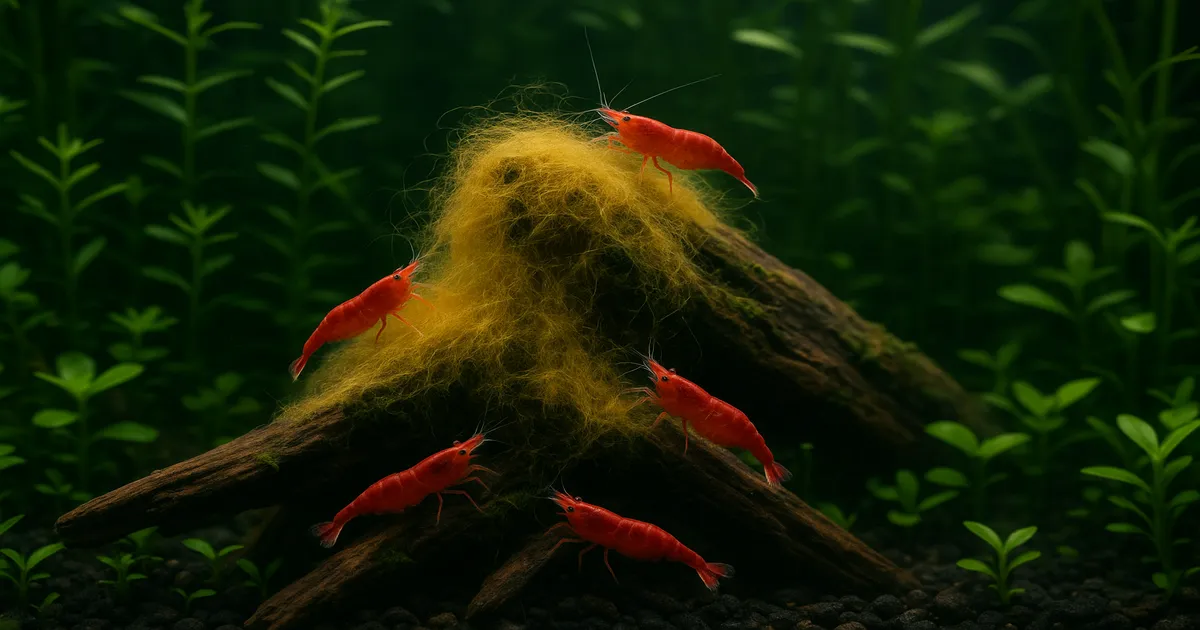
Cherry shrimp originate from Taiwan, where they live in slow-moving freshwater streams, ponds, and irrigation channels packed with vegetation, leaf litter, and biofilm-covered rocks. Their natural waters are moderately hard and slightly alkaline — quite different from the soft, acidic conditions preferred by Caridina species like Crystal Reds.
In the aquarium, they’re completely peaceful and spend most of their time grazing across every available surface. Females reach about 1.2–1.5 inches; males are smaller at 0.8–1.0 inches. A healthy individual lives one to two years. Seasonal temperature shifts in the wild naturally trigger breeding cycles, which is worth keeping in mind if your colony seems sluggish.
Color Grades and Morphs
All cherry shrimp variants are the same species — just selectively bred for color intensity:
- Cherry Shrimp — light, translucent red; entry-level grade
- Sakura — deeper, more uniform red; mid-grade
- Fire Red / Painted Fire Red — intense, opaque red; high-grade
- Bloody Mary — deep wine-red; premium
- Other morphs — Yellow, Blue Dream/Blue Velvet, Black Rose, Orange Pumpkin
Every one of these morphs will interbreed freely. Put a Blue Velvet with a Fire Red and their offspring will revert toward dull brownish wild-type coloration within a generation or two. If maintaining color quality matters — and it should if you’re serious about breeding — each morph needs its own dedicated tank.
Ideal Water Parameters for a Cherry Shrimp Breeding Tank
Key Parameters and Target Ranges
| Parameter | Ideal Breeding Range |
|---|---|
| pH | 7.0–7.5 |
| GH | 6–8 dGH |
| KH | 3–6 dKH |
| Temperature | 72–78°F (22–26°C) |
| TDS | 200–300 ppm |
| Ammonia | 0 ppm |
| Nitrite | 0 ppm |
| Nitrate | < 10 ppm |
| Copper | 0 ppm |
Always use a liquid test kit rather than strips — strips are notoriously inaccurate for the parameters that matter most in a shrimp tank. A reliable option is the API Freshwater Master Test Kit.
Stability Matters More Than Perfection
Shrimp tolerate parameters slightly outside the ideal range far better than they tolerate sudden swings. A pH of 7.6 held rock-steady for months is safer than one that bounces between 7.0 and 7.8 daily. Your KH (carbonate hardness) is your buffer — keeping it at 3–6 dKH prevents dangerous pH crashes, especially in planted tanks where CO₂ fluctuations are common.
Copper and Other Lethal Contaminants
Copper is acutely lethal to all invertebrates, even in trace amounts. Check every product that goes into your tank — some fertilizers, medications, and even certain tap water supplies contain copper. Use a dedicated shrimp-safe water conditioner like Seachem Prime to neutralize heavy metals and chloramine on every water change.
Best Water Sources
Conditioned tap water works for many keepers, provided it’s free of copper and heavy metals. For the most consistent results, RO/DI water remineralized with a Neocaridina-specific product like Salty Shrimp GH/KH+ gives you full control over GH, KH, and TDS. Well water is usable but must be tested thoroughly first — mineral content varies wildly by region.
Setting Up a Cherry Shrimp Breeding Tank
Tank Size
Five gallons is the absolute minimum, but a 10–20 gallon tank is the sweet spot for a breeding colony. Larger water volumes buffer against parameter swings, support more foraging surface area, and give your population room to grow without crashing water quality. Cherry shrimp breed prolifically, so plan ahead — you’ll need somewhere for the overflow.
Substrate
Go dark and fine-grained (1–3 mm). A dark substrate makes the shrimp’s red coloration pop, which helps you spot health issues quickly. More practically, it gives juveniles a grazing surface — bare-bottom tanks are a poor choice for breeding because shrimplets need biofilm on the substrate to survive their first weeks.
Aquasoil substrates are excellent options. They buffer pH into the right range, encourage beneficial bacteria colonization, and support plant roots. Fluval Stratum is a popular choice that works well for Neocaridina setups. Just note that fresh aquasoil causes an initial ammonia spike, so the tank must be fully cycled before any shrimp go in.
Filtration
Sponge filters are the unanimous choice among serious cherry shrimp breeders. The sponge surface colonizes with beneficial bacteria and biofilm, giving shrimp a constant food source. More importantly, there’s zero risk of juveniles or eggs being sucked into the intake — a real and common tragedy with HOB and canister filters.
Run a dual sponge setup if you can. It gives you redundancy and lets you seed a new tank instantly by moving one sponge over. The Hikari Bacto-Surge is a well-regarded option that holds up well long-term. If you prefer a HOB or canister for aesthetic reasons, fit the intake with a fine sponge pre-filter — this is non-negotiable in a breeding setup.
Live Plants
A heavily planted tank isn’t just decorative — it’s functional infrastructure. Plants absorb nitrates, grow biofilm, and give berried females and newborn shrimplets somewhere to hide and feel safe. The best options:
- Java moss, Christmas moss, flame moss — females hide in moss when berried, and juveniles live in it for weeks
- Java fern, Anubias — hardy, low-light, and develop excellent biofilm surfaces
- Hornwort, guppy grass — fast-growing nitrate sponges that provide dense cover
- Marimo moss balls — great biofilm surface, zero maintenance
Hardscape and Leaf Litter
Cholla wood is a breeding tank staple — it’s hollow, porous, and develops biofilm rapidly. Rocks and small caves give molting shrimp somewhere to retreat when they’re vulnerable. Indian almond (Catappa) leaves release tannins with mild antibacterial properties and become prime biofilm grazing surfaces within days.
Lighting and Flow
Low to moderate lighting for 6–8 hours a day on a timer is all you need. A 6,500–7,000K spectrum suits planted setups well, and a modest amount of algae on the glass and hardscape is a feature, not a bug — it’s free food. Keep flow gentle, targeting 3–5× tank volume turnover per hour. Cherry shrimp are poor swimmers; strong current stresses them and suppresses breeding.
Cycling Your Breeding Tank Before Adding Cherry Shrimps
The Nitrogen Cycle
The nitrogen cycle converts toxic ammonia (from waste and decomposing matter) first into nitrite — also toxic — then into the far less harmful nitrate. Beneficial bacteria living in your filter and substrate do this work. Shrimp are dramatically more sensitive to ammonia and nitrite than fish are. A spike that a guppy shrugs off can wipe out an entire colony overnight.
How to Speed Up Cycling
The fastest method is seeded media from an established, disease-free tank — a used sponge filter or a handful of substrate can cut your cycle time from weeks to days. Bottled bacteria products are a solid backup; Fritz Zyme 7 is a reliable choice that’s widely used in shrimp keeping. Fishless cycling with pure ammonia is reliable but slower, typically taking four to six weeks. If you’re using aquasoil, account for the initial ammonia spike it produces — this is part of the cycling process, not a problem to panic over.
Testing Before You Add Shrimp
Before a single shrimp enters the tank, confirm:
- Ammonia: 0 ppm
- Nitrite: 0 ppm
- Nitrate: under 10 ppm
Test on consecutive days to make sure readings are stable, not just a one-day fluke. Adding shrimp to an uncycled or partially cycled tank is the single most common reason new colonies fail.
Compatible Tank Mates
Species-Only Is Best for Breeding
If maximizing shrimplet survival is the goal, keep the breeding tank species-only. Every fish you add — even peaceful nano species — increases the risk to juveniles. A 10-gallon tank packed with shrimp, moss, and leaf litter is a genuinely beautiful setup that doesn’t need fish to be interesting.
Relatively Safe Tank Mates for a Community Setup
If you want company in a larger tank, these species pose the least risk:
- Otocinclus catfish — peaceful algae eaters; too small to threaten adults
- Pygmy Corydoras (C. pygmaeus, C. habrosus) — generally ignore shrimp
- Ember Tetras, Chili Rasboras — tiny nano fish; low risk to adults, though they may pick off shrimplets
- Nerite snails, Mystery snails, Ramshorn snails — completely peaceful, great tank cleaners
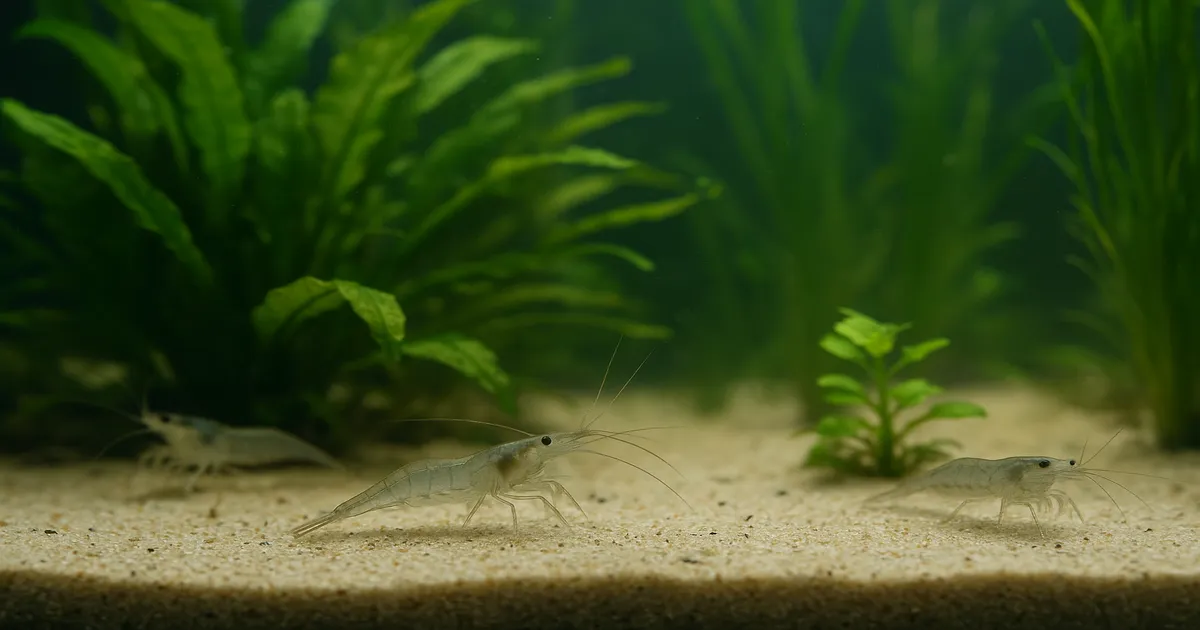
- Amano shrimp — no interbreeding risk with Neocaridina; may compete for food
Fish to Avoid
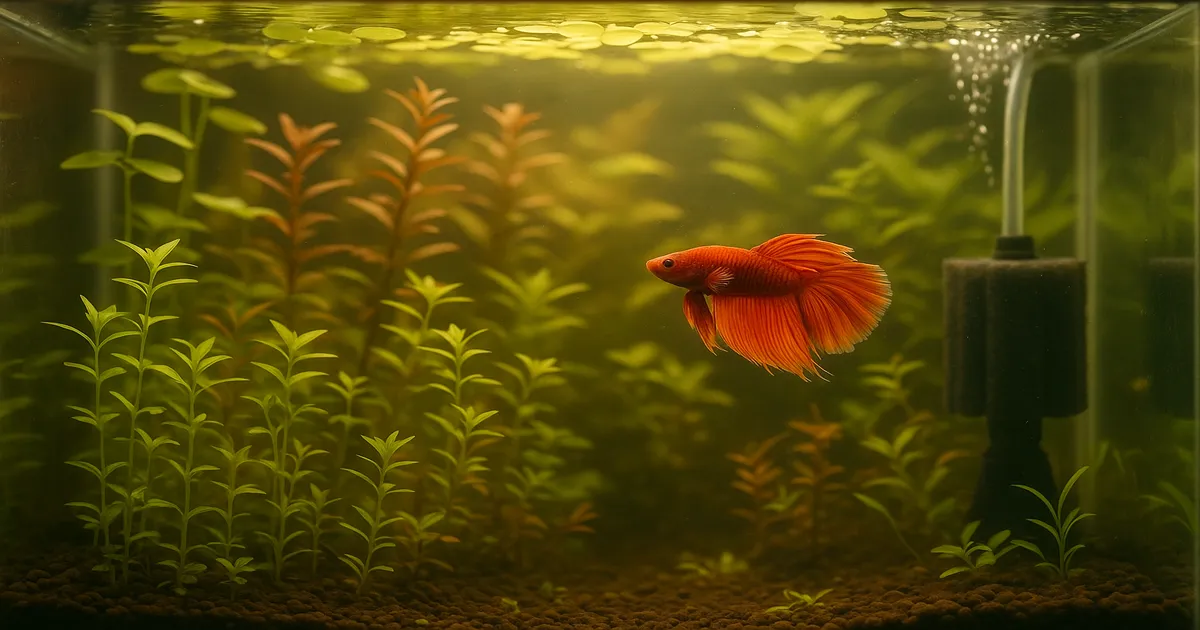
The rule is simple: if a fish can fit a shrimp in its mouth, it will eventually try. Avoid bettas, all cichlids, goldfish, angelfish, discus, gouramis, loaches, and larger Corydoras species. Keep other Neocaridina morphs out of the breeding tank too — they’ll interbreed and undo your selective breeding work.
Feeding Cherry Shrimps in a Breeding Tank
Staple Foods
Cherry shrimp are constant grazers in the wild, picking through biofilm, algae, and decomposing leaves all day. A mature, well-planted breeding tank replicates this reasonably well, but regular supplemental feeding noticeably accelerates breeding activity. Good staple options include:
- Algae/spirulina wafers — reliable plant-based staple
- Blanched vegetables — zucchini, cucumber, spinach, sweet potato; blanch for 1–2 minutes, cool completely, remove after 24 hours
- Repashy gel foods (Soilent Green, Community Plus) — nutritionally complete, won’t cloud water
- Shrimp-specific pellets — Shrimp King Complete by Dennerle is a popular choice
Protein and Breeding Supplements
Once or twice a week, offer a small protein boost: freeze-dried bloodworms, daphnia, or brine shrimp. Keep portions tiny — protein foods foul water fast. For breeding specifically, GlasGarten Bacter AE powder is worth adding to your routine. It stimulates biofilm growth across every surface in the tank, which is essentially baby food for shrimplets in their first weeks of life.
Feeding Schedule
Feed adults every one to two days, offering only what they’ll consume in two to four hours. Remove anything left after 24 hours — rotting food is one of the fastest ways to crash water quality in a small tank. A weekly fasting day is genuinely beneficial; it lets shrimp graze on biofilm and prevents organic waste from building up. For juveniles, daily fine powder feeding makes a real difference in survival and growth rates.
Common Health Issues in Cherry Shrimp Breeding Tanks
Bacterial Infections
Watch for lethargy, white or opaque patches on the body, loss of color, and erratic swimming. Poor water quality is almost always the underlying cause. Respond immediately with a water change, quarantine affected individuals, and check your parameters. Some keepers use Maracyn (erythromycin) at reduced doses, but treat with caution — antibiotics can crash your biological filter.
Vorticella
Vorticella appears as white, fuzzy, flower-like growths attached to the shrimp’s body. It’s a protozoan infection almost always linked to poor water quality or overcrowding. Improving conditions is the first step; some keepers use salt dips or fenbendazole for persistent cases. Quarantine affected shrimp to prevent spread.
Failed Molt Syndrome
A shrimp gets stuck in its old shell and dies trying to escape it. The culprit is almost always insufficient GH (below 4 dGH) or sudden parameter swings that disrupt the molting process. Maintaining GH consistently at 6–8 dGH and avoiding large, rapid water changes eliminates most cases.
Prevention
Consistent water quality prevents the vast majority of shrimp health problems. Quarantine all new plants and livestock before adding them to your breeding tank, never use copper-containing products near the tank, and don’t add shrimp until the tank is fully cycled.
Frequently Asked Questions About Cherry Shrimp Breeding Tanks
What is the best tank size for a cherry shrimp breeding tank?
A 10–20 gallon tank is the sweet spot. It provides enough water volume to keep parameters stable between water changes while remaining manageable for a home aquarium. Five-gallon tanks can work but require more frequent monitoring and leave little margin for error.
How long does it take for cherry shrimps to breed in a new tank?
Most colonies begin breeding within four to eight weeks of being introduced to a well-cycled, stable tank. Females typically become berried (carrying eggs) within a few weeks of settling in, and eggs hatch after roughly 21–30 days. If breeding isn’t happening, water quality and temperature are the first things to check.
Do cherry shrimps need a heater in their breeding tank?
It depends on your ambient room temperature. Cherry shrimp thrive at 72–78°F (22–26°C), so if your home stays consistently in that range, a heater may not be necessary. In cooler climates or air-conditioned rooms, a small adjustable heater like the Eheim Jager prevents the temperature fluctuations that suppress breeding.
What plants are best for a cherry shrimp breeding tank?
Java moss is the single most recommended plant — it provides shelter for berried females, gives juveniles somewhere to hide, and grows thick biofilm that shrimplets graze on. Christmas moss, flame moss, guppy grass, and hornwort are excellent additions for nitrate absorption and cover. Hardy low-light plants like Anubias and Java fern round out a breeding setup nicely.
Why are my cherry shrimps not breeding?
The most common reasons are unstable or incorrect water parameters, temperatures outside the 72–78°F range, nitrates above 20 ppm, or a tank that isn’t fully cycled. Stress from tank mates, heavy flow, or insufficient hiding spots can also suppress breeding. Check your GH — if it’s below 4 dGH, females may struggle to develop eggs properly. Once parameters are dialed in and the colony feels secure, breeding usually follows naturally.