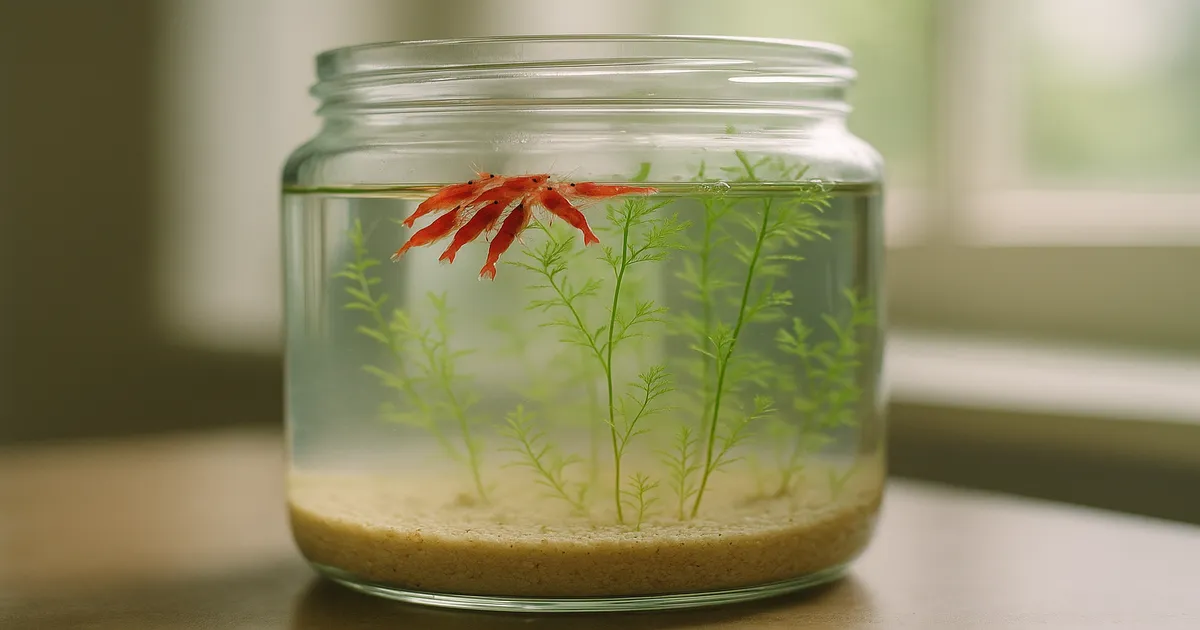
Quick Answer: If all your shrimp are at the top of the jar, this is an emergency — not normal behaviour. The most likely causes are oxygen depletion or ammonia poisoning, both of which can kill shrimp within hours. Act immediately.
Why Are All My Shrimp at the Top of the Jar? (And What to Do Now)
Seeing your shrimp cluster at the surface is one of the clearest distress signals in the hobby. When people search “why are all my shrimp at the top of the jar,” they’re usually watching it happen in real time — and the clock is already ticking.
Shrimp are bottom and mid-column dwellers by nature. They graze on surfaces, pick through substrate, and explore plants. When they abandon all of that and head for the surface, something in the water is forcing them up. The two most likely culprits are oxygen depletion and ammonia or nitrite toxicity — and in a small, unfiltered jar, both can reach dangerous levels surprisingly fast.
Here’s a quick overview of what you’re probably dealing with:
- Low dissolved oxygen — stagnant water has almost no gas exchange
- Ammonia or nitrite spike — no filter means waste accumulates rapidly
- pH crash — CO₂ builds up in still water overnight, crashing pH
- Temperature spike — jars near windows or vents swing fast
- New tank syndrome — uncycled water has zero biological filtration
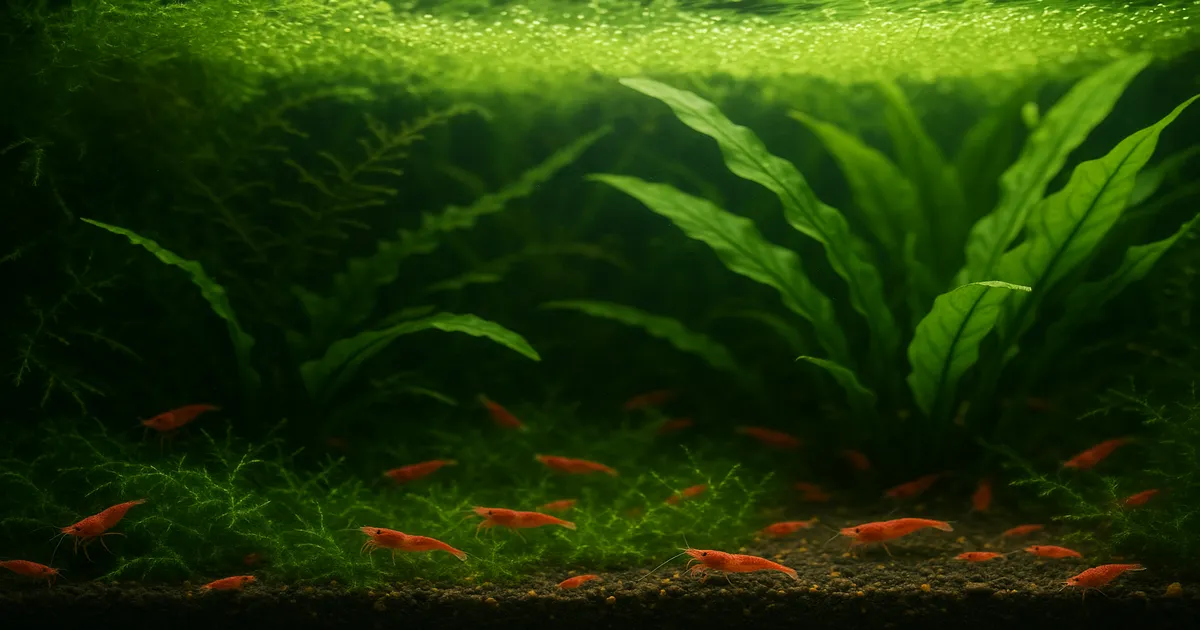
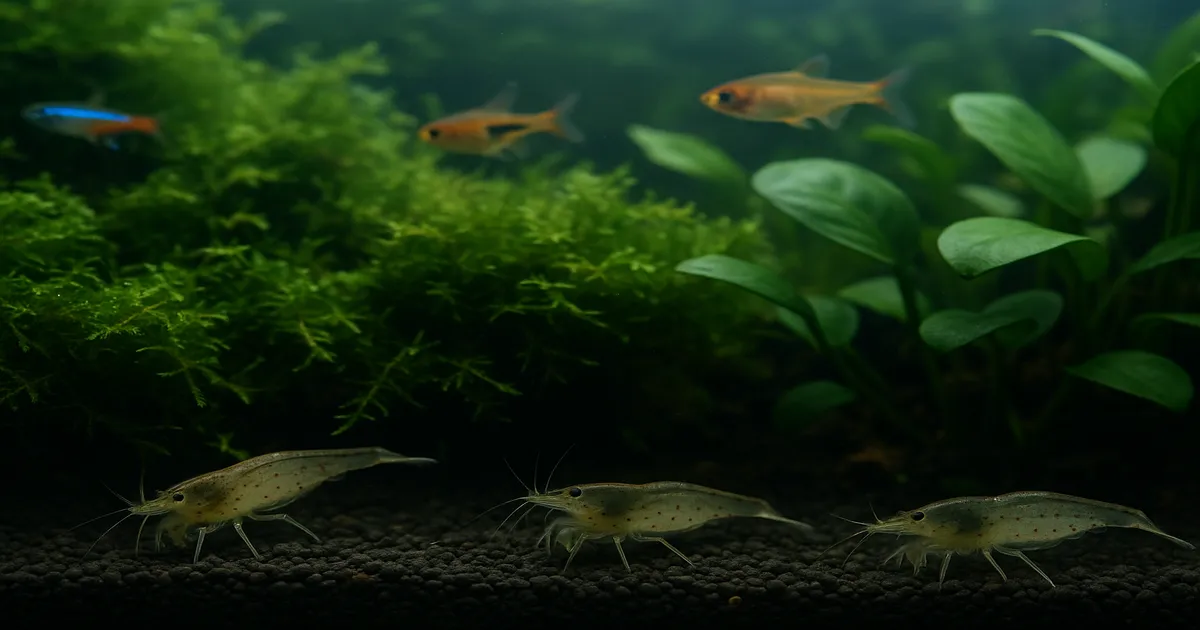
The vast majority of jar-kept shrimp are Neocaridina davidi variants — Red Cherry Shrimp, Blue Dream, Snowball, and Yellow Neon among them. Amano shrimp (Caridina multidentata) and Ghost shrimp (Palaemonetes spp.) are the next most common. All of them need the same thing right now: better water.
The Top Causes of Shrimp Surfacing in a Jar
Oxygen Depletion: The Most Immediate Threat
In a jar with no filter, no air stone, and no surface movement, gas exchange is almost non-existent. The thin layer of water right at the surface holds the most dissolved oxygen — and that’s exactly why your shrimp are heading there. They’re gasping.
Warm water holds less oxygen than cool water, which makes this worse in summer or near heat sources. Algae and decaying organic matter also consume oxygen as they break down. Overnight, plants switch from producing oxygen to consuming it, accelerating the problem further.
Ammonia and Nitrite Poisoning
Without a biological filter, nothing breaks down the waste your shrimp produce. Uneaten food, shed exoskeletons, and shrimp waste all decompose into ammonia — and even 0.25 ppm is enough to trigger visible stress. At 1 ppm and above, you’re looking at organ damage and death.
Nitrite follows the same logic. In an uncycled jar, both compounds can spike to dangerous levels within 24–48 hours of adding shrimp.
pH Crash in Stagnant Water
CO₂ dissolves into water naturally. In a tank with flow or surface agitation, it off-gasses continuously. In a still jar, CO₂ accumulates — especially overnight — and drives pH down. If your water has little or no KH (carbonate hardness) to buffer against this, the pH can crash dramatically in just a few hours.
A pH below 6.0 is acutely stressful for most shrimp. Neocaridina prefer a slightly alkaline pH of 7.2–7.6, so even a moderate drop can push them into distress.
Temperature Spikes and Swings
Jars have almost no thermal mass. A jar sitting near a sunny window can swing 10°F or more over the course of a day, and shrimp are extremely sensitive to rapid temperature changes. Even if the temperature stays within an acceptable range, the speed of change matters — a sudden 5°F shift can trigger a stress response or a failed moult.
New Tank Syndrome
If you’ve just set up the jar and added shrimp within the first few days or weeks, you’re almost certainly dealing with new tank syndrome. There are no established nitrifying bacteria to convert ammonia into nitrite and then into the far less harmful nitrate. That process — the nitrogen cycle — takes four to six weeks to establish and requires surfaces for bacteria to colonise. A bare glass jar provides almost none.
Cause-and-Symptom Reference
| Cause | Key Symptoms | Urgency |
|---|---|---|
| Oxygen depletion | All shrimp at surface, rapid gill movement | Immediate |
| Ammonia/nitrite spike | Surface clustering, lethargy, loss of colour | Immediate |
| pH crash | Surface clustering, erratic swimming | High |
| Temperature spike | Erratic swimming, surface clustering | High |
| New tank syndrome | Ammonia/nitrite detectable on test kit | High |
Emergency Steps: What to Do Right Now
Step 1 — Increase Surface Agitation Immediately
Before anything else, get oxygen into the water. If you have an air stone and a pump, add it now. If not, use a turkey baster to gently squirt water back into the jar repeatedly to create surface movement. Even removing the lid and gently stirring the top inch of water will help more than doing nothing.
Step 2 — Test Your Water
Resist the urge to do a massive water change before you know what you’re dealing with. Check:
- Ammonia (target: 0 ppm)
- Nitrite (target: 0 ppm)
- Nitrate (target: under 20 ppm)
- pH (target for Neocaridina: 7.2–7.6)
The API Freshwater Master Test Kit covers all four and is the most reliable option at a beginner-friendly price. Knowing the cause tells you how aggressive your response needs to be.
Step 3 — Perform a Careful Partial Water Change
If ammonia or nitrite is detectable, a partial water change is your best immediate tool. Change no more than 20–30% at a time — a larger change can shock shrimp that are already stressed, especially if the replacement water differs in temperature or pH.
Match the temperature of your replacement water as closely as possible. Use a dechlorinator like Seachem Prime — it removes chlorine and chloramine and, critically, temporarily detoxifies ammonia and nitrite for 24–48 hours, giving your shrimp a buffer while you address the root cause.
Step 4 — Remove Uneaten Food and Waste
Decaying food is likely the primary ammonia source in your jar. Use a turkey baster or pipette to suck out any uneaten food, visible waste, or dead plant matter from the bottom. Do this gently to avoid stirring debris into the water column. Don’t feed again until parameters are stable and shrimp are behaving normally.
When to Move Shrimp to a Safer Container
If ammonia is above 1 ppm and shrimp are visibly lethargic, lying on their sides, or dying, a partial water change won’t be enough. Move them. A clean bucket or storage tub filled with dechlorinated, temperature-matched water is better than leaving them in toxic conditions. Add an air stone if you have one. It’s not a permanent fix, but it’s a lifeline.
Why Are All My Shrimp at the Top of the Jar? The Real Answer Is the Jar Itself
Small Volume Amplifies Every Problem
In a 10-gallon tank, a single shrimp’s daily waste output is diluted across a large volume of water. In a 1-quart jar, that same waste is concentrated into almost nothing. Toxins accumulate faster, temperature swings are more extreme, and oxygen depletes more quickly. There’s no margin for error and no room for the biological systems that would normally buffer against these problems.
Minimum Viable Setup: What Shrimp Actually Need
| Factor | Jar | Proper Nano Tank |
|---|---|---|
| Volume | Under 1 gallon | 5–10+ gallons |
| Filtration | None | Sponge filter (cycled) |
| Oxygen | Near-zero gas exchange | Surface agitation from filter |
| Temperature stability | Poor | Good (with heater) |
| Biological filtration | None | Established bacteria colony |
| Parameter stability | Very poor | Good to excellent |
The minimum setup that gives shrimp a real chance: a 5–10 gallon tank, a cycled sponge filter, live plants, and stable water parameters. Ten gallons is the beginner sweet spot — big enough for a colony of 20–50 shrimp, affordable, and forgiving enough that small mistakes don’t immediately become disasters.
A sponge filter driven by an air pump is the single best filtration choice for shrimp tanks. It provides gentle flow, excellent biological surface area, and surface agitation for gas exchange. Running one for four to six weeks before adding shrimp is the most impactful thing you can do for their long-term survival. The Hikari Bacto-Surge is a reliable, widely available option that works well in tanks up to 20 gallons.
Water Parameters: What Shrimp Need to Thrive
Neocaridina davidi (Cherry Shrimp) Parameter Guide
| Parameter | Acceptable Range | Ideal Range |
|---|---|---|
| pH | 6.5–8.0 | 7.2–7.6 |
| GH | 4–8 dGH | 6–8 dGH |
| KH | 2–8 dKH | 3–6 dKH |
| Temperature | 65–80°F (18–27°C) | 72–76°F (22–24°C) |
| Ammonia | — | 0 ppm |
| Nitrite | — | 0 ppm |
| Nitrate | Under 40 ppm tolerable | Under 20 ppm |
| TDS | 150–300 ppm | 200–250 ppm |
GH provides the calcium and magnesium shrimp need to build their exoskeletons and moult successfully. KH acts as a pH buffer — without it, pH can crash overnight in a still jar. Both are invisible without a test kit. An API GH & KH Test Kit is worth adding alongside your basic kit, and a TDS meter (HM Digital TDS-EZ Water Quality Tester) gives you a fast snapshot of overall dissolved solids.
Caridina Species: Stricter Requirements
Crystal Red and Crystal Black Shrimp (Caridina cantonensis) need cooler, softer, more acidic water — pH 6.2–6.8, GH 4–5 dGH, KH 0–1 dKH, and temperatures of 65–70°F (18–21°C). They also require an active buffering substrate and have a nitrate tolerance of under 5 ppm. Caridina are completely unsuitable for jar setups — they’re demanding even in a purpose-built tank.
Amano shrimp are hardier but still need neutral water (pH 7.0–7.2) and good oxygenation that a jar simply can’t provide.
Feeding: Less Is Always More
Overfeeding is the most common mistake in jar setups and a leading cause of the ammonia spikes that drive surface clustering. Feed every one to two days at most, and only what shrimp can consume within two to three hours. Remove anything left over with a pipette. Good choices include blanched vegetables (zucchini, spinach, cucumber), commercial pellets like Hikari Shrimp Cuisine , and Indian almond leaves for continuous grazing. Avoid any food containing copper additives — copper is acutely toxic to shrimp even at trace levels.
FAQ: Shrimp at the Top of the Jar
Q: Is it normal for shrimp to swim near the surface? No. Healthy shrimp spend almost all their time grazing on the bottom and mid-column. Consistent surface clustering is a distress signal, not normal behaviour.
Q: How quickly can ammonia kill shrimp in a jar? Very quickly. In a small, unfiltered jar, ammonia can reach lethal levels within 24–48 hours of adding shrimp. At 2 ppm and above, death can occur within hours.
Q: Can I keep shrimp in a jar long-term if I do frequent water changes? It’s possible to keep shrimp alive in a jar with very frequent water changes, but it’s genuinely difficult and stressful for the shrimp. Even daily partial changes can’t replicate the stability of a cycled, filtered tank. A 5–10 gallon setup is a far better long-term solution.
Q: My shrimp were fine yesterday — why did this happen so fast? Small water volumes have no buffer. A single piece of uneaten food, a temperature spike from afternoon sun, or a CO₂ buildup overnight can push parameters from acceptable to dangerous within hours. This is the core problem with jar setups.
Q: What’s the fastest way to save shrimp that are at the surface right now? Increase surface agitation immediately (air stone, turkey baster, or gentle stirring), test your water, and perform a 20–30% water change with dechlorinated, temperature-matched water dosed with Seachem Prime. If ammonia is above 1 ppm and shrimp are lethargic, move them to a larger container of clean water.