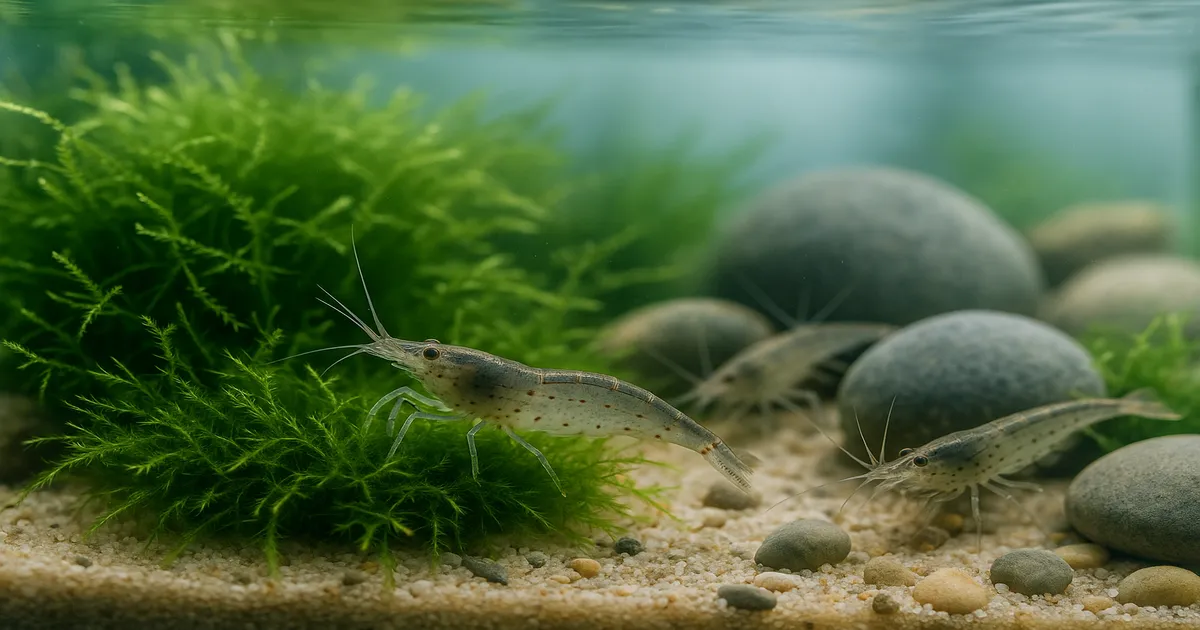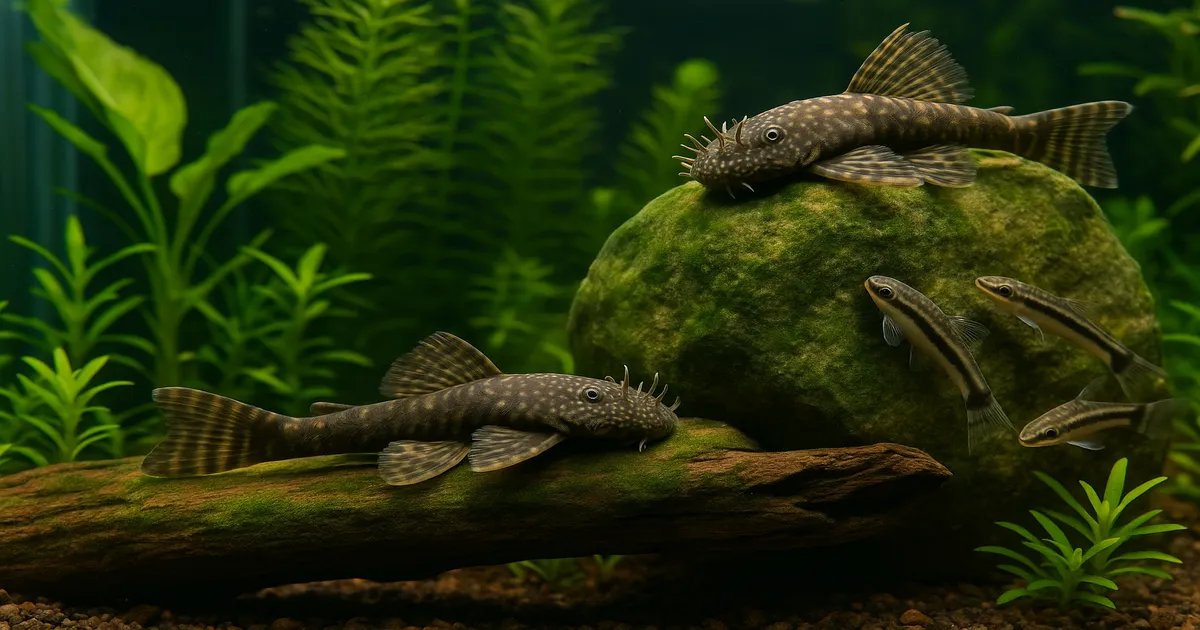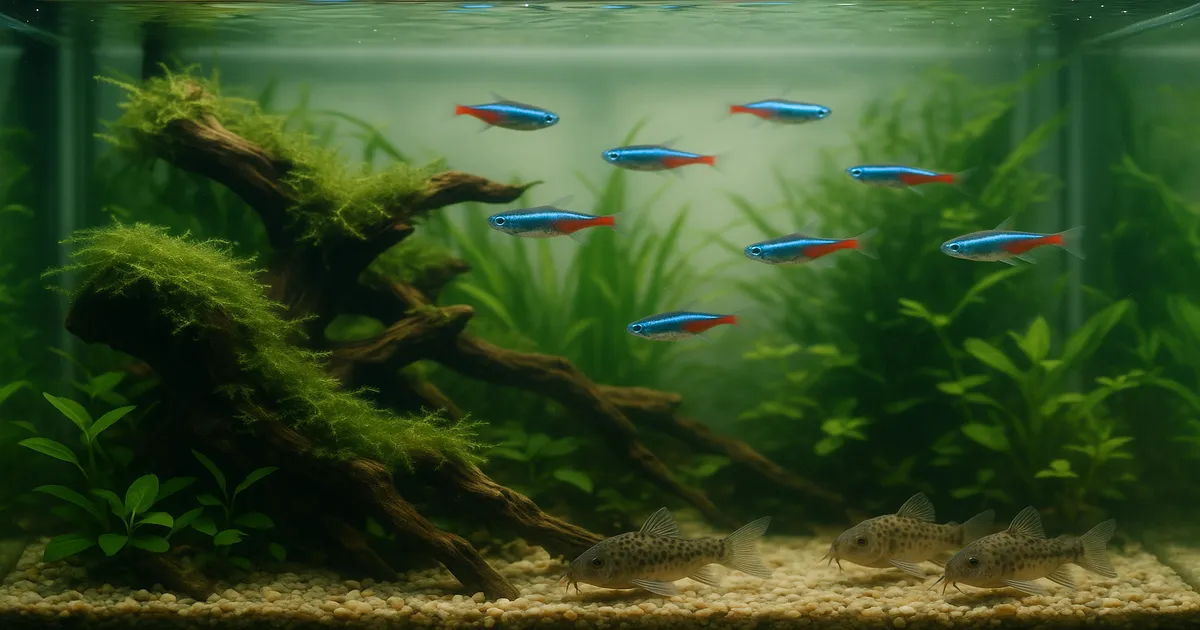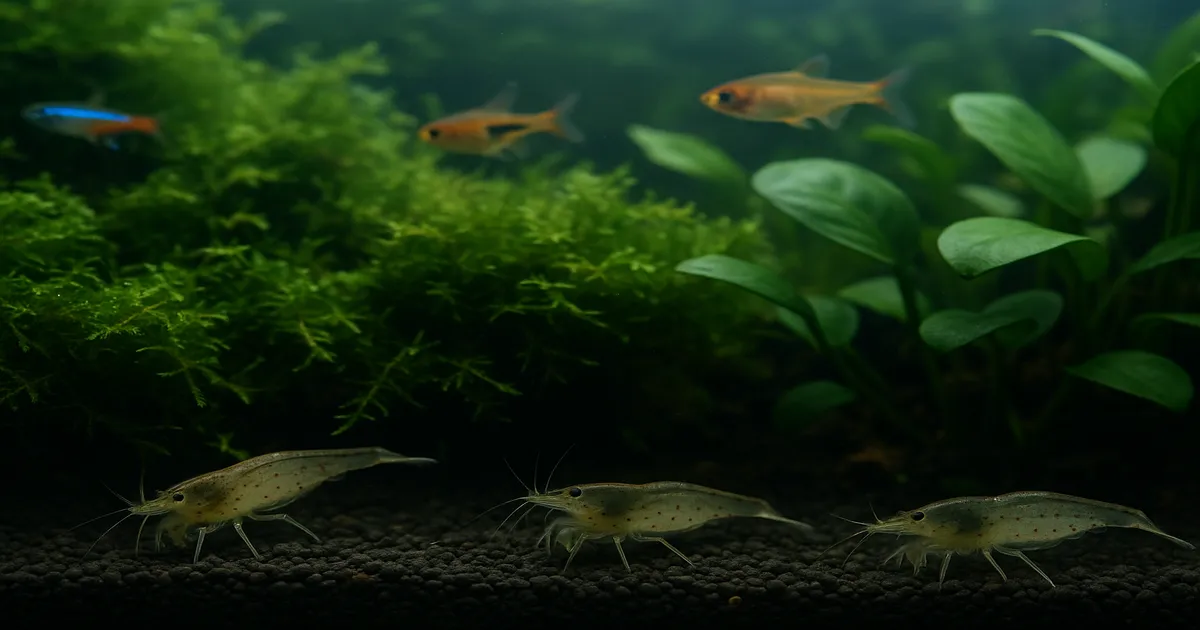
Quick Answer: The best Amano shrimp tank mates are Otocinclus catfish (peaceful algae-eating partners with identical water parameters and zero predation risk) and Ember Tetras (tiny, shrimp-safe nano fish that leave Amanos completely alone). This guide ranks and reviews the top compatible species so you can build a thriving community tank with confidence.
Choosing the best Amano shrimp tank mates is one of the most important decisions you’ll make when setting up a community planted tank. Amano shrimp (Caridina multidentata) are peaceful, industrious algae eaters — but that peaceful nature makes them vulnerable to bullying, harassment, and outright predation if you pick the wrong neighbors. The good news is that adult Amanos reach up to 2 inches, making them more robust than smaller Neocaridina species like Cherry Shrimp. The bad news is that predation risk is never zero, especially during the 12–24 hour window after a molt when their shells are dangerously soft.
This guide covers the safest, most compatible species — ranked, reviewed, and compared so you can make the right call for your specific setup.
Best Amano Shrimp Tank Mates at a Glance
Our Top Two Picks
- Otocinclus Catfish — The single best overall tank mate. Identical water parameters, complementary algae-eating roles, and zero aggression toward shrimp at any life stage.
- Ember Tetras — The top pick for nano planted tanks. Their mouths are physically too small to threaten even a freshly molted Amano, and their fiery coloration looks stunning against green plants and translucent shrimp.
Why Tank Mate Choice Matters
Amano shrimp are constantly on the move — grazing substrate, climbing plants, picking at driftwood. That constant visibility is exactly what makes them targets. A fish that ignores a healthy Amano on a normal day may still strike opportunistically during a molt, when the shrimp is soft, disoriented, and slow.
Adult Amanos are safer than nano shrimp simply because fewer fish can fit a 2-inch invertebrate in their mouths. But “safer” isn’t “safe.” The species you choose, tank size, planting density, and group dynamics all affect how well your shrimp actually do.
What to Look For in an Amano Shrimp Tank Mate
Mouth Size and Predation Risk
This is the single most important factor. If a fish can physically fit an Amano shrimp in its mouth, it will eventually try — usually during feeding time or right after a molt. Stick to fish that max out under 2 inches, or larger species with demonstrably small mouths like Otocinclus.
Water Parameter Overlap
Amano shrimp thrive in slightly acidic to neutral water (pH 6.8–7.5), moderate hardness (GH 6–8, KH 2–5), and temperatures of 72–78°F (22–26°C). Any tank mate must be comfortable in this same range. Forcing a compromise outside either species’ optimal zone creates chronic stress for both. A reliable liquid test kit is essential for keeping these parameters dialed in.
Temperament and Activity Level
Avoid fin-nippers, territory defenders, and anything labeled “semi-aggressive.” Even if a nippy fish never directly attacks a shrimp, constant harassment causes chronic stress that suppresses immune function, reduces feeding, and shortens lifespan. Peaceful schooling fish are almost always the better choice.
Bottom-Dwelling Competition
Amano shrimp are relentless bottom foragers. Loading a small tank with multiple bottom-dwelling species — Corydoras, loaches, and shrimp all competing for the same substrate — creates food competition and stress. It’s manageable in larger tanks with good feeding practices, but it’s a real consideration in tanks under 20 gallons.
Schooling Behavior as a Safety Factor
Schooling fish tend to stay focused on each other rather than on invertebrates below them. A tight school of Harlequin Rasboras or Ember Tetras occupying the mid and upper water column essentially ignores what’s happening on the substrate. This behavioral separation is one of the most underrated safety factors in a shrimp community tank.
Sensitivity to Copper and Medications
Copper is lethal to Amano shrimp — even trace amounts. Many common fish medications, algaecides, and some plant fertilizers contain copper. If any fish in your tank ever needs treatment, you’ll need shrimp-safe alternatives. A dechlorinator that also detoxifies heavy metals is a smart baseline precaution. (Seachem Prime)
Amano Shrimp Tank Mate Comparison Table
| Species | Max Size | Temperament | pH Range | Temp Range | Shrimp Safety | Best Tank Size |
|---|---|---|---|---|---|---|
| Otocinclus spp. | 1.5–2 in | Peaceful | 6.0–7.5 | 72–79°F | ⭐ High | 20 gal+ |
| Ember Tetras | 0.8 in | Peaceful | 5.5–7.0 | 72–82°F | ⭐ High | 10 gal+ |
| Neon Tetras | 1.5 in | Peaceful | 6.0–7.0 | 70–81°F | ⭐ High | 15 gal+ |
| Harlequin Rasboras | 2 in | Peaceful | 6.0–7.5 | 72–77°F | ⭐ High | 20 gal+ |
| Chili Rasboras | 0.7–0.8 in | Peaceful | 5.0–7.0 | 73–82°F | ⭐ High | 10 gal+ |
| Pygmy Corydoras | 1 in | Peaceful | 6.0–7.2 | 72–79°F | ⭐ High | 20 gal+ |
| Panda Corydoras | 2 in | Peaceful | 6.0–7.2 | 68–77°F | ✅ Medium-High | 20 gal+ |
| Kuhli Loaches | 3–4 in | Peaceful | 5.5–6.5 | 75–86°F | ✅ Medium | 20 gal+ |
| Hillstream Loaches | 2–3 in | Peaceful | 6.5–7.5 | 65–75°F | ⭐ High | 30 gal+ |
| Endlers Livebearers | 1–1.5 in | Peaceful | 7.0–8.5 | 72–82°F | ✅ Medium-High | 10 gal+ |
| Bolivian Rams | 3 in | Semi-peaceful | 6.5–7.5 | 72–79°F | ⚠️ Medium | 30 gal+ |
| Cherry Shrimp | 1–1.5 in | Peaceful | 6.5–7.5 | 65–80°F | ⭐ High | 10 gal+ |
| Nerite Snails | 0.5–1 in | Peaceful | 7.0–8.5 | 72–78°F | ⭐ High | 10 gal+ |
| Mystery Snails | 1–2 in | Peaceful | 7.0–7.5 | 68–82°F | ⭐ High | 10 gal+ |
| Bamboo Shrimp | 2–3 in | Peaceful | 6.5–7.5 | 72–78°F | ⭐ High | 20 gal+ |
Otocinclus Catfish — Best Overall Amano Shrimp Tank Mate
Otocinclus are small, peaceful, and completely algae-focused — making them the closest thing to a perfect companion for Amano shrimp. Both species spend their days grazing surfaces and ignoring everything else in the tank. The feeding niches complement each other beautifully: Otos work the glass and broad plant leaves, while Amanos handle hair algae, substrate surfaces, and driftwood.
Key specs:
- Max size: 1.5–2 inches
- pH: 6.0–7.5 | Temp: 72–79°F (22–26°C)
- GH: 5–15 | KH: 2–10
- Recommended group size: 6+
- Minimum tank size: 20 gallons
Pros
- Zero aggression — Otos cannot harm adult or juvenile Amano shrimp
- Identical water parameter requirements; no compromise needed
- Complementary feeding roles mean less algae competition and more effective algae control overall
- Reinforce the “cleanup crew” dynamic that makes planted tanks so satisfying
Cons
- Sensitive to water quality; drip acclimation is essential and wild-caught specimens can be fragile
- Require an established tank with existing algae growth — they struggle in new setups
- May need supplemental feeding with algae wafers or blanched zucchini once biofilm thins out
Best for: Any planted community tank where you want maximum algae control and zero shrimp risk. This is the tank mate we’d recommend to beginners and experienced aquarists alike.
Ember Tetras — Best for Nano Planted Tanks
At under an inch long, Ember Tetras are physically incapable of threatening an Amano shrimp at any life stage — including right after a molt. They’re fast, active, and visually striking, with warm orange-red coloration that pops against green plants and the subtle gray of Amano shrimp. They occupy the upper and mid water column almost exclusively, leaving the substrate entirely to the shrimp.
Key specs:
- Max size: 0.8 inches
- pH: 5.5–7.0 | Temp: 72–82°F (22–28°C)
- GH: 5–12 | KH: 1–5
- Recommended school size: 8–12
- Minimum tank size: 10 gallons
Pros
- 100% shrimp-safe — mouth size makes predation physically impossible
- Stunning visual contrast in planted aquascapes
- Low bioload; easy to maintain water quality alongside shrimp
- Thrive in the same planted, low-flow conditions Amanos prefer
Cons
- Prefer slightly more acidic water (pH 5.5–6.5 ideally) than Amano shrimp’s neutral sweet spot — aim for a workable middle ground around pH 6.5–7.0
- Very small and can be outcompeted for food by larger tank mates if mixed species are present
Best for: Nano aquascapes of 10–20 gallons where aesthetics and shrimp safety are equally important. Our top nano pick without hesitation.
Harlequin Rasboras — Best Mid-Size Schooling Fish
Harlequin Rasboras are a staple of the planted community tank for good reason — they’re hardy, beautiful, and genuinely peaceful. Their tight schooling behavior is a key safety factor. A school of 8–10 Harlequins stays focused on each other, moving through the mid column in formation while the shrimp do their thing below. Water parameter requirements align closely with Amano shrimp’s optimal range, removing one of the most common compatibility headaches.
Key specs:
- Max size: 2 inches
- pH: 6.0–7.5 | Temp: 72–77°F (22–25°C)
- GH: 5–12 | KH: 1–8
- Recommended school size: 8–10
- Minimum tank size: 20 gallons
Pros
- Excellent water parameter overlap with Amano shrimp — no compromise required
- Tight schooling behavior significantly reduces shrimp harassment
- Widely available, hardy, and forgiving for beginners
- Striking copper-and-black patterning looks exceptional in planted tanks
Cons
- At 2 inches, they’re larger than nano tetras — monitor behavior closely with juvenile shrimp
- In smaller tanks under 20 gallons, they can dominate mid-column space and feel cramped
Best for: Community tanks of 20 gallons and up where you want a reliable, visually impactful schooling fish with a proven shrimp-safe track record.
Pygmy Corydoras — Best Peaceful Bottom Dweller
Pygmy Corydoras (Corydoras pygmaeus) are the smallest of the Corydoras genus, topping out at just 1 inch — and that size difference matters enormously in a shrimp tank. Larger Corydoras species can accidentally stress or displace shrimp while foraging; Pygmies are small enough that they barely register as a threat. They’re gentle, sociable, and add constant low-level activity to the lower water column without competing aggressively for food.
Key specs:
- Max size: 1 inch
- pH: 6.0–7.2 | Temp: 72–79°F (22–26°C)
- GH: 4–12 | KH: 2–8
- Recommended group size: 8–10
- Minimum tank size: 20 gallons
Pros
- Tiny size virtually eliminates predation risk to adult Amano shrimp
- Non-territorial and calm — won’t stress shrimp through chasing or displacement
- Share similar water parameters without requiring any compromise
- Add charming, active energy to the bottom of the tank
Cons
- All Corydoras share bottom space with Amano shrimp — in smaller tanks, food competition is real; target-feed shrimp with dedicated wafers to compensate
- Groups of 8+ are required for healthy shoaling behavior, which increases bioload and demands consistent water quality management
Best for: 20-gallon planted setups where you want a bottom-dwelling species that genuinely won’t threaten your shrimp. The safest Corydoras choice, full stop.
Chili Rasboras — Best Micro Fish for Shrimp Safety
Chili Rasboras (Boraras brigittae) are as close to a guaranteed shrimp-safe fish as the hobby offers. At 0.7–0.8 inches, they are physically incapable of harming an Amano shrimp at any stage of life. Their vivid crimson coloration creates one of the most visually striking combinations in the planted tank hobby — bright red fish darting through green plants above translucent gray shrimp below.
Key specs:
- Max size: 0.7–0.8 inches
- pH: 5.0–7.0 | Temp: 73–82°F (23–28°C)
- GH: 3–10 | KH: 1–5
- Recommended school size: 8–12
- Minimum tank size: 10 gallons
Pros
- Absolute shrimp safety — size makes predation impossible at every life stage, including juveniles
- Stunning visual contrast that elevates any planted aquascape
- Very low bioload; easy to maintain excellent water quality
- Thrive in the warm, planted tank conditions Amanos enjoy
Cons
- Prefer more acidic water (pH 5.0–6.5 ideally) than Amano shrimp’s neutral preference — a compromise around pH 6.5–7.0 is workable but not optimal for either species
- Very small and can easily be outcompeted at feeding time if larger fish are present
Best for: Soft, slightly acidic planted tanks where pH can be managed in the 6.5–7.0 range. If shrimp safety is your absolute top priority in a nano setup, nothing beats Chili Rasboras.
Hillstream Loaches — Best for High-Flow Biotope Tanks
Hillstream Loaches are a uniquely satisfying match for Amano shrimp because the compatibility runs deeper than just temperament — it’s biotope-level compatibility. Both species originate from fast-moving, highly oxygenated streams. Both thrive in cooler, clean water with strong flow. And just like Otocinclus, their feeding niches complement each other: loaches graze biofilm from smooth rocks and glass, while Amanos work the plants and substrate.
Key specs:
- Max size: 2–3 inches (species-dependent; Sewellia lineolata and Beaufortia kweichowensis are common choices)
- pH: 6.5–7.5 | Temp: 65–75°F (18–24°C)
- GH: 8–15 | KH: 3–8
- Flow requirement: Moderate to high — powerheads or strong filter output recommended
- Minimum tank size: 30 gallons
Pros
- Identical habitat preferences (high flow, high oxygen, cool water) — no environmental compromise
- Complementary feeding niches mean they work with Amano shrimp rather than competing
- Completely peaceful and non-aggressive toward invertebrates
- Fascinating, alien appearance — one of the most visually unique fish in the freshwater hobby
Cons
- Require a specific high-flow setup that not all hobbyists run — not a fish for a standard low-tech tank
- Cooler temperature preference (65–75°F) conflicts with most other tropical tank mates
- Less commonly available at local fish stores; may require ordering from specialty retailers
Best for: River-style aquascapes with strong flow, cool water, and a focus on biotope accuracy. If you’re building that kind of setup, Hillstream Loaches and Amano shrimp are a natural pairing.
Nerite Snails — Best Invertebrate Tank Mate
Nerite Snails are the ideal invertebrate companion for Amano shrimp — and arguably an essential addition to any planted tank that houses them. Both species are dedicated algae cleaners. Both are completely peaceful. Nerites cannot reproduce in freshwater, which eliminates the pest snail population explosion that plagues tanks stocked with bladder or pond snails. Their hard shells mean Amano shrimp cannot harm them, and Nerites pose zero threat in return.
Key specs:
- Max size: 0.5–1 inch
- pH: 7.0–8.5 | Temp: 72–78°F (22–26°C)
- GH: 8–18 | KH: 5–12
- No minimum group size, but 3–5 recommended for meaningful algae control
- Minimum tank size: 10 gallons
Pros
- Zero aggression in either direction — a completely stress-free pairing
- Won’t reproduce in freshwater, so no population control concerns
- Excellent algae cleaners that tackle diatoms, green spot algae, and biofilm
- Extremely hardy and tolerant of a wide range of conditions
Cons
- Prefer slightly harder, more alkaline water (pH 7.0–8.5) than Amano shrimp’s ideal — a neutral pH 7.0–7.2 satisfies both species adequately, but Nerites won’t thrive long-term in very soft water
- Won’t eat hair algae, which is Amano shrimp’s specialty — they cover different algae types, not the same ones
Best for: Any Amano shrimp tank, full stop. Nerite Snails are the safest, most practical invertebrate companion available, and we’d recommend them in virtually every setup on this list.
Our Verdict: Best Amano Shrimp Tank Mates by Use Case
Best Overall: Otocinclus Catfish
Complementary algae-eating roles, identical water parameters, and zero predation risk at any life stage. If you can only add one species to an Amano shrimp tank, make it Otos.
Best for Nano Tanks: Ember Tetras or Chili Rasboras
Ember Tetras for slightly warmer tanks where pH sits around 6.5–7.0. Chili Rasboras if shrimp safety is your absolute priority and you’re managing a softer, more acidic setup.
Best Schooling Fish: Harlequin Rasboras
The most reliable mid-size schooling option for 20-gallon-plus community tanks. Hardy, beautiful, and genuinely low-risk with adult Amanos.
Best Bottom Dweller: Pygmy Corydoras
The only Corydoras species we’d confidently recommend for a shrimp-focused tank. Small enough to be safe, active enough to be interesting.
Best for Biotope Setups: Hillstream Loaches
For river-style aquascapes with strong flow and cool, oxygen-rich water — a natural, biotope-accurate pairing with Amano shrimp.
Best Invertebrate Companion: Nerite Snails
Safe, effective, non-reproductive, and genuinely complementary. Add 3–5 to almost any Amano shrimp tank.
Species to Avoid
Some fish simply don’t belong in an Amano shrimp tank, regardless of what the fish store tells you:
- Cichlids (Oscars, Jack Dempseys, Convicts, Firemouths) — will eat shrimp without hesitation
- Tiger Barbs — notorious fin-nippers and shrimp harassers
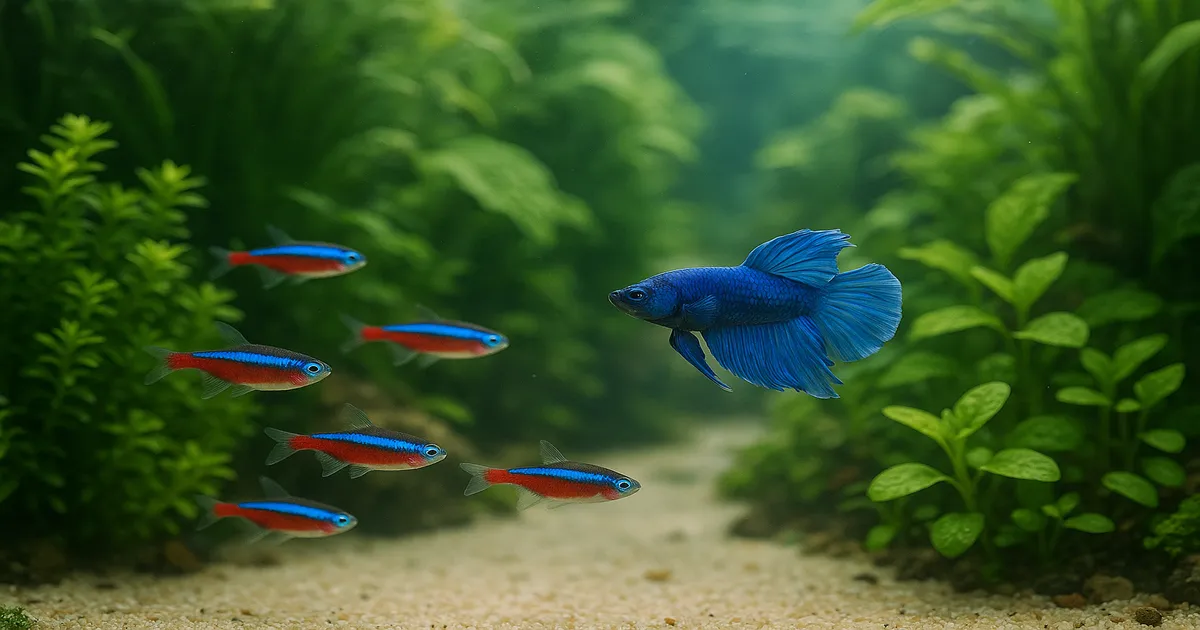
- Betta fish — individual personality varies wildly, but the risk is high enough that we don’t recommend the pairing for beginners; if you try it, use a heavily planted 20+ gallon tank and have a backup plan
- Goldfish — will eat shrimp and prefer significantly cooler water; incompatible on every level
- Discus — require temperatures of 82–88°F (28–31°C) that chronically stress Amano shrimp, and their size makes predation likely
- Any fish large enough to swallow a 2-inch shrimp whole — if it fits, eventually it will try
One final note worth repeating: even species rated “High” for shrimp safety carry some risk during the molting window. A freshly molted Amano is soft, slow, and disoriented for up to 24 hours. Dense planting, plenty of hiding spots, and dim lighting during that period make a real difference.
Frequently Asked Questions About Amano Shrimp Tank Mates
Can Amano shrimp live with betta fish?
It’s possible, but not something we’d recommend without caveats. Betta personality varies enormously — some individuals completely ignore Amano shrimp, while others treat them as prey from day one. A heavily planted 20+ gallon tank with dense cover and plenty of sight breaks reduces risk significantly, but never eliminates it. For beginners, choose a different centerpiece fish.
Will Amano shrimp eat other shrimp or fish fry?
Amano shrimp are opportunistic scavengers, not predators. They will consume dead or dying shrimp and very small fry if they come across them, but they don’t actively hunt healthy tank mates. If you’re seeing Amanos “attacking” something, it’s almost certainly already dead or critically weakened — they’re just doing their cleanup job.
Can Amano shrimp live with Cherry Shrimp?
Yes, fully. Amano shrimp (Caridina multidentata) and Cherry Shrimp (Neocaridina davidi) are different genera and cannot hybridize, so there’s no crossbreeding concern. The one thing to watch is feeding: Amanos are larger and more assertive at food time, so distribute food in multiple spots to ensure smaller Neocaridina get enough to eat.
What fish will not eat Amano shrimp?
The key factor is mouth size relative to a 1.5–2 inch shrimp. Fish that reliably leave adult Amanos alone include Ember Tetras, Chili Rasboras, Otocinclus, Pygmy Corydoras, and Endlers Livebearers — all have mouths too small to do any damage. Tight-schooling fish like Harlequin Rasboras are also generally very safe. The smaller the fish and the tighter the school, the lower the risk.
How many Amano shrimp should I keep in a community tank?
Keep a minimum of 6, and aim for 10–20 in a community setup. A lone Amano shrimp is more stressed, less active, and more vulnerable than one kept in a group. In a community tank with fish, larger numbers also mean that any individual shrimp spends less time exposed in open water — the group dynamic itself is a safety mechanism.