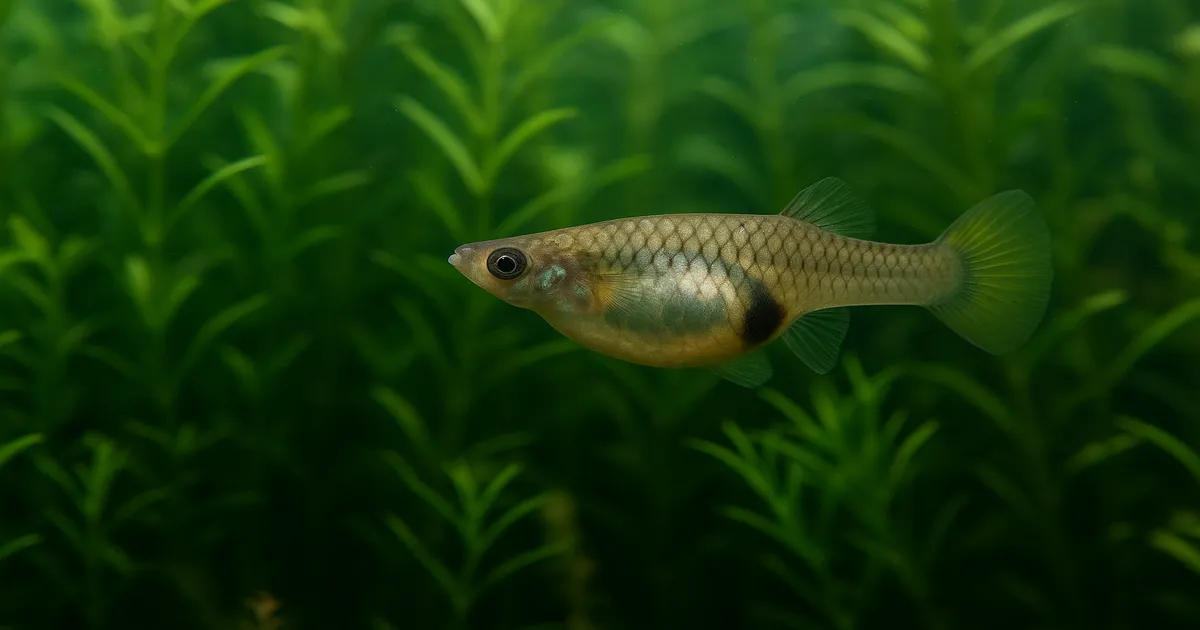
Quick Answer: If your female livebearer has a rounded, boxy belly, a darkening gravid spot near her anal fin, and is hiding more than usual, she almost certainly has fry on the way. Read on to confirm pregnancy, prepare for birth, and keep both mother and newborns healthy — from first signs to grow-out tank.
So you’re staring at your guppy tank wondering, does she have fry? You’re not alone. This is one of the most common questions new livebearer keepers ask, and for good reason. Female livebearers can be pregnant almost constantly, and the signs aren’t always obvious until you know exactly what to look for.
Does She Have Fry? The Three Signs to Check Right Now
Don’t overthink it. These three signs will tell you most of what you need to know at a glance:
- A rounded, boxy belly — viewed from above, a pregnant female looks squared off at the sides rather than smoothly tapered
- A darkening gravid spot — a dark patch near the anal fin that deepens from light gray to near-black as pregnancy progresses
- Behavioral changes — seeking out corners, hiding in plants, reduced appetite, or hovering near the heater
If you’re seeing all three, she’s pregnant — and likely further along than you’d think.
What “Having Fry” Actually Means
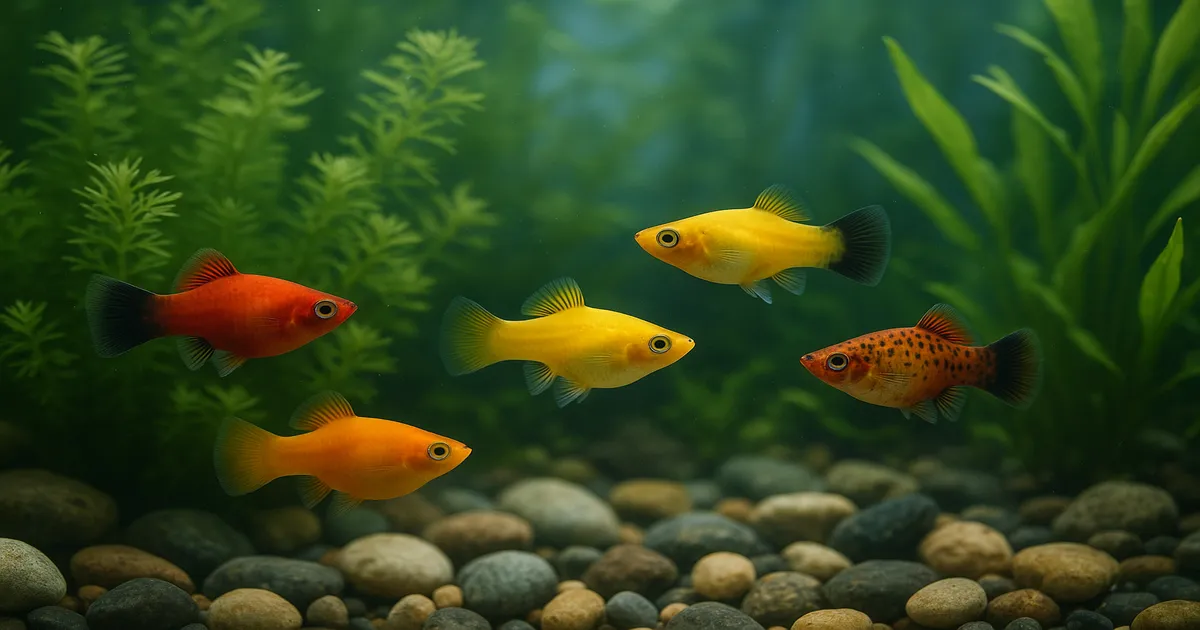
“Fry” is the term for newborn or juvenile fish. Unlike egg-layers, livebearing species such as guppies, mollies, platies, swordtails, and Endler’s livebearers give birth to fully formed young that can swim and feed immediately. That’s what makes them so beginner-friendly, and so prolific.
How Sperm Storage Changes Everything
Here’s something that surprises many new keepers: female livebearers can store sperm for up to six months. A female you bought from a pet store — even if she’s been alone in your tank since day one — may already be pregnant. No male required. If your female is showing signs of pregnancy and there’s no male in sight, sperm storage is almost certainly the explanation.
Visual Signs Your Female Fish Is Pregnant
The Gravid Spot
The gravid spot is a darkened patch of skin located just above and in front of the anal fin. It’s caused by the developing embryos showing through the mother’s translucent abdominal wall. Early in pregnancy it may appear as a faint gray smudge. As the fry develop, it deepens — in guppies, it can turn nearly black by the final week. In darker-colored fish like some mollies, it’s harder to see, but it’s still there.
Belly Shape: Rounded vs. Boxy
A healthy, non-pregnant female has a gently curved belly. A pregnant female’s abdomen expands outward and downward, developing a distinctly boxy, squared-off profile when viewed from above. The sides push outward rather than tapering smoothly toward the tail. The further along the pregnancy, the more pronounced this becomes.
Seeing Fry Eyes Through the Skin
In the final few days before birth, you may be able to see tiny black dots through the mother’s stretched abdominal wall. Those are the eyes of the developing fry. If you can see them clearly, birth is very close — often within 24–48 hours.
Pregnancy vs. Bloating vs. Dropsy
This distinction matters, because bloating and dropsy are medical problems that need treatment.
| Condition | Belly Shape | Gravid Spot | Other Signs |
|---|---|---|---|
| Pregnancy | Gradual, symmetrical swelling | Present and darkening | Normal behavior until late gestation |
| Dropsy | Rapid, severe swelling | Absent | Scales protrude outward (“pinecone” appearance), lethargy |
| Constipation/Bloating | Mild to moderate swelling | Absent | No other symptoms; treat with live daphnia as a natural laxative |
If the scales are sticking out like a pinecone, that’s dropsy — a serious condition unrelated to pregnancy. A constipated fish will have no gravid spot and usually responds to a diet of live daphnia within a day or two.
Behavioral Signs That Birth Is Near
Hiding and Seeking Isolation
As birth approaches, females instinctively seek shelter. You’ll notice her spending more time in dense plant cover, hovering in corners, or tucking behind decorations. This ramps up significantly in the final 24–48 hours.
Changes in Appetite and Movement
A female close to giving birth often reduces her feeding and becomes noticeably less active. Some stop eating entirely for a day or two beforehand. Births most commonly happen overnight or in the early morning — don’t be surprised if you wake up to a tank full of fry.
Physical Posture in Late Labor
Watch for a slightly arched back, shimmying in place, and rapid shallow breathing. The shimmying is caused by fry pressing against the swim bladder. These are strong indicators that birth is imminent.
Gestation periods by species:
- Guppies: 21–30 days
- Mollies: 28–40 days
- Platies: 28–35 days
- Swordtails: 28–40 days
Warmer water (toward the upper end of the species’ preferred range) shortens gestation slightly.
Tank Setup for Pregnant Fish and Newborn Fry
Tank Size Recommendations
- Breeding pair or trio: 10 gallons minimum
- Dedicated fry grow-out tank: 5–10 gallons
- Community tank with livebearers: 20 gallons minimum
Plants and Hiding Spots
Dense live plants are the single most effective way to give fry a fighting chance in a community tank. Java moss, hornwort, and floating water sprite create thick cover that fry can disappear into immediately after birth. Artificial spawning mops work if you’d rather skip live plants, but live plants also improve water quality — a genuine double benefit.
Filtration: Use a Sponge Filter
Standard hang-on-back and power filters will suck up newborn fry. In a dedicated fry tank, use a sponge filter exclusively — a model like the Hikari Bacto-Surge is a reliable, widely available choice. In a community tank, fit your existing filter intake with a fine pre-filter sponge to block fry from being drawn in.
Breeding Traps: Use Sparingly
Breeding traps are often overused. Confining a pregnant female in a small box for days causes real stress and can trigger premature birth. Use one only in the final 24–48 hours when birth is clearly imminent. For most situations, a heavily planted separate tank is far less stressful for the mother.
Water Parameters by Species
| Species | pH | GH | KH | Temperature |
|---|---|---|---|---|
| Guppy | 7.0–7.8 | 8–20 dGH | 4–8 dKH | 74–82°F (23–28°C) |
| Molly | 7.5–8.5 | 15–30 dGH | 6–12 dKH | 76–82°F (24–28°C) |
| Platy | 7.0–8.0 | 10–25 dGH | 4–10 dKH | 65–78°F (18–26°C) |
| Swordtail | 7.0–8.0 | 12–25 dGH | 4–10 dKH | 72–79°F (22–26°C) |
Keep nitrates below 20 ppm for adults and below 10 ppm in fry tanks — newborns are far more sensitive to water quality than adults. Test regularly with a quality liquid test kit like the API Freshwater Master Test Kit.
Feeding Pregnant Fish and Raising Fry
Conditioning Adults During Pregnancy
A varied, high-protein diet keeps pregnant females strong and produces healthier fry. Aim for a staple food with 40–50% protein, and supplement with frozen or live baby brine shrimp, daphnia, and microworms. Mollies also benefit from blanched vegetables like zucchini or spinach, since they naturally graze on algae. Feed adults two to three times daily and remove uneaten food within a few minutes.
What Newborn Fry Can Eat
Fry mouths are tiny, and most adult foods are simply too large. Work through these in order of developmental stage:
- Infusoria — microscopic organisms, ideal for the first few days
- Vinegar eels and microworms — excellent early foods, easy to culture at home
- Newly hatched baby brine shrimp (BBS) — the gold standard; nauplii are around 450–500 microns and packed with nutrition
- Commercial fry powder — Hikari First Bites is a reliable option when live cultures aren’t practical
Feeding Schedule for Fry
Feed fry 4–6 times daily in very small amounts. Their stomachs are tiny and they need near-constant access to food to grow properly. Offer only what they consume in a minute or two — overfeeding quickly degrades water quality. Fry raised on live foods grow noticeably faster than those fed dry food alone.
Compatible Tank Mates When Fry Are Present
Safe Tank Mates
- Other peaceful livebearers of similar size
- Corydoras catfish — bottom dwellers that don’t actively hunt fry
- Otocinclus catfish — gentle algae eaters
- Nerite and mystery snails
- Small rasboras (in tanks 20 gallons and larger)
Fish to Remove Before Birth
Angelfish, cichlids, bettas, larger tetras, and gouramis will all eat fry — some enthusiastically. The rule is simple: if a fish has a mouth large enough to swallow a newborn, it eventually will. Remove these species before birth or move the pregnant female to a separate tank.
Managing Male Aggression
Male livebearers will harass females relentlessly, and that stress can cause premature birth or injure the mother. Maintain a 1:2 or 1:3 male-to-female ratio and provide plenty of visual breaks through plants and decor. With swordtails specifically, keep only one male per tank unless you have 55+ gallons — males will fight each other seriously.
Common Health Problems in Pregnant Fish and Fry
Ich presents as white salt-like spots on the body and fins. Raise the temperature gradually to 82–86°F (28–30°C) and treat with aquarium salt or a copper-based medication. Note that copper is toxic to invertebrates — remove snails before treating.
Velvet looks like a fine gold or rust-colored dust on the skin and is particularly lethal to fry. Dim the lights (the parasite is photosynthetic) and treat with copper immediately. Early detection is everything.
Fin rot shows as ragged, disintegrating fin edges. Start with a water change, then treat with an antibacterial medication if it doesn’t resolve within a few days. (Seachem KanaPlex)
Camallanus worms appear as thin red threads protruding from the vent — a parasitic roundworm common in livebearers from pet stores. Treat the entire tank with levamisole or fenbendazole.
Stress-induced premature birth is caused by temperature swings, ammonia spikes, aggressive tank mates, or overcrowding. Premature fry are rarely viable. Stable parameters and a calm environment are the only reliable prevention — there’s no treatment once premature labor begins.
After the Birth: Immediate Steps
Remove the Mother Right Away
Livebearers have no parental instinct. The moment birth is complete, the mother will eat her fry. Remove her immediately and return her to the main tank. Litter sizes vary: guppies typically produce 20–100+ fry, mollies 20–140, and platies 20–80.
Water Change Routine for the Fry Tank
Aim for 10–15% every 2–3 days rather than large weekly changes, which can stress fry with sudden parameter shifts. Use a turkey baster or sponge-tipped siphon to avoid accidentally removing fry. Treat new water with a dechlorinator like Seachem Prime before adding it to the tank.
Growth Rate and Sexual Maturity
Growth depends heavily on feeding frequency, water quality, and temperature:
- Guppies: sexually mature at 3–5 months
- Mollies: 3–4 months
- Platies: 4–6 months
- Swordtails: 3–6 months
Managing Population Growth
Here’s the honest reality of keeping livebearers: breeding is the easy part. A single female guppy can produce dozens of fry every 4–6 weeks. Plan ahead — have a grow-out tank ready, find local fish stores or aquarium clubs that accept donations, or set up a species-only breeding project with a specific goal in mind.
Frequently Asked Questions
Does she have fry — how can I tell for sure?
Look for three things: a rounded, boxy belly (especially visible from above), a darkening gravid spot near the anal fin, and behavioral changes like hiding or reduced appetite. The gravid spot is the most reliable early indicator — it darkens progressively as the embryos develop.
Will a mother fish eat her own fry?
Yes, reliably. Livebearers have no parental instinct and will consume fry immediately after birth. Remove the mother as soon as the birth is complete, or provide extremely dense plant cover if you’re relying on a community tank setup.
Can a female guppy be pregnant without a male in the tank?
Absolutely. Female livebearers can store sperm for up to six months after a single mating. A female purchased from a pet store — where she was almost certainly housed with males — may already be carrying fertilized embryos, even if she’s been alone in your tank since you brought her home.
How long after showing signs does a guppy actually give birth?
Once the gravid spot is clearly visible and the belly is noticeably boxy, birth is typically 1–3 weeks away depending on how early you caught the signs. When you can see fry eyes through the abdominal wall and the female is actively hiding and shimmying, birth is usually within 24–48 hours.
How many fry does a guppy, molly, or platy produce?
Guppies typically produce 20–100+ fry per birth, mollies 20–140, and platies 20–80. The number varies by the female’s age, size, health, and birth history. Older, larger females generally produce bigger litters than young females giving birth for the first time.