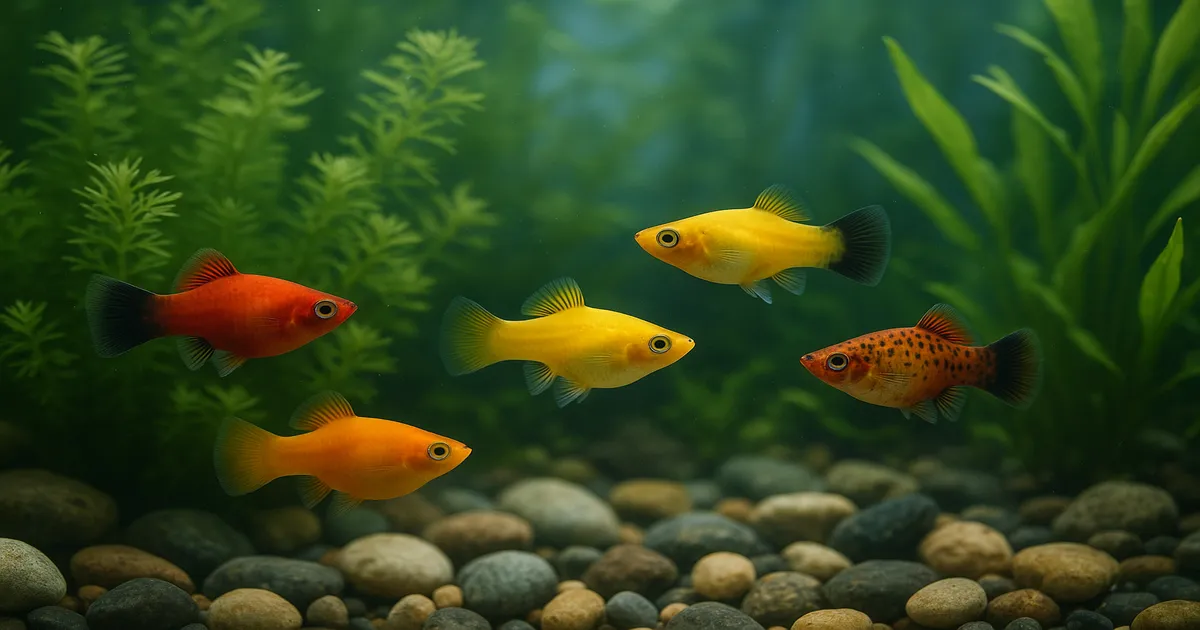
Quick Answer: Platy fish are peaceful, beginner-friendly livebearers that thrive in a 20-gallon tank with moderately hard, neutral-to-alkaline water (pH 7.0–8.0, GH 10–25 dGH, 72–78°F / 22–26°C). Feed them a varied omnivorous diet, keep them in groups of five or more with a 2:1 female-to-male ratio, and they’ll reward you with years of color and activity — and plenty of fry.
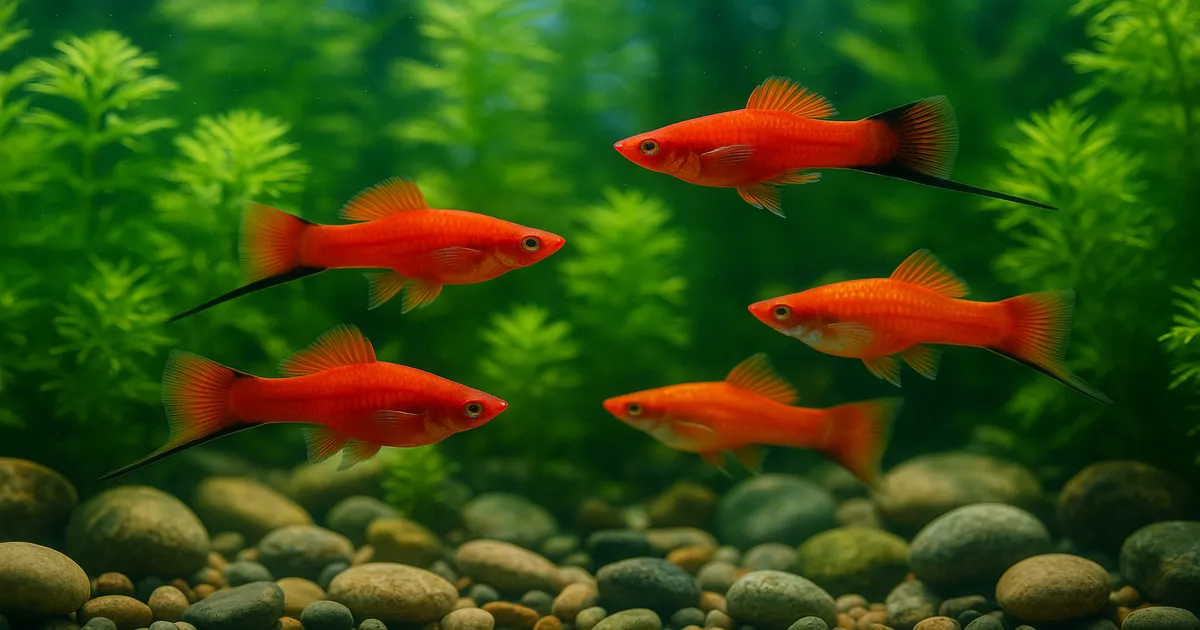
If you’re learning how to care for platy fish, you’ve picked one of the best starter species in the hobby. Platies are hardy, colorful, and endlessly entertaining. The two species you’ll find in most fish stores are Xiphophorus maculatus (Southern Platy) and Xiphophorus variatus (Variable or Sunset Platy), and between them there are dozens of color morphs — Mickey Mouse, Tuxedo, Sunset, Hi-Fin, Wagtail — to suit any tank aesthetic.
Platy Fish Species Overview and Natural Habitat
Species in the Aquarium Trade
Both hobby species belong to the family Poeciliidae, making them close relatives of guppies, mollies, and swordtails. X. maculatus is the most common in stores and comes in the widest range of color forms. X. variatus tends to run slightly larger and tolerates cooler water — down to around 65°F (18°C) — making it a reasonable choice for unheated tanks in mild climates.
Natural Habitat and Origins
X. maculatus is native to the Atlantic slope of Central America — Veracruz (Mexico) south through Guatemala and Belize. X. variatus comes from the Pánuco and Tuxpan river systems in east-central Mexico. Both species inhabit slow-moving, heavily vegetated freshwater: ditches, marshes, canals, and river margins. That habitat tells you a lot about what they need in your tank — stable, hard water and plenty of plant cover.
Size, Lifespan, and Sexual Dimorphism
Adult platies typically reach 1.5–2.5 inches (3.8–6.4 cm), with females running larger and rounder than males. With good care, they live 3–5 years. Sexing them is straightforward: males have a modified anal fin called a gonopodium — a slender, rod-like structure used for internal fertilization. Females have a standard fan-shaped anal fin and, when pregnant, display a dark gravid spot near the rear of the abdomen.
Popular Color and Fin Varieties
The most recognizable morphs include:
- Mickey Mouse — a black pattern on the tail base resembling the famous silhouette
- Sunset / Marigold — warm orange-to-yellow gradient
- Tuxedo — dark rear half, lighter front
- Hi-Fin — dramatically extended dorsal fin (avoid pairing with fin nippers)
- Wagtail — black fins contrasting with a colored body
Ideal Water Parameters for Platy Fish Care
Temperature Range
The sweet spot for most captive-bred platies is 72–78°F (22–26°C). Avoid sustained temperatures above 82°F — prolonged heat stresses their immune system and shortens their lifespan. A reliable submersible heater with a built-in thermostat keeps things consistent.
pH, Hardness, and Buffering
Platies are hard-water livebearers. That’s not a preference — it’s a biological need rooted in their mineral-rich native habitats.
- pH: 7.0–8.0 (neutral to slightly alkaline)
- General Hardness (GH): 10–25 dGH
- Carbonate Hardness (KH): 4–12 dKH
KH is especially important because it buffers your tank against pH swings. Platies are sensitive to sudden pH drops, so keeping KH above 4 dKH is your safety net. Test regularly with a quality liquid test kit.
Ammonia, Nitrite, and Nitrate Targets
- Ammonia: 0 ppm
- Nitrite: 0 ppm
- Nitrate: Below 20 ppm ideally; tolerable up to ~40 ppm short-term, but chronic elevation suppresses immunity
Tips for Soft-Water Households
If your tap water is soft and acidic, don’t just drop platies in and hope for the best. A few practical fixes:
- Crushed coral or aragonite substrate — blend 10–20% into your gravel bed; it dissolves slowly and raises both GH and KH naturally
- Commercial mineral additives — products like Seachem Equilibrium raise GH predictably without sending pH haywire
- Avoid straight RO water unless you’re remineralizing it; it’s far too soft for platies
Platies can also tolerate mildly brackish water (up to ~1.002–1.004 SG), which some keepers use therapeutically during disease treatment — though a fully freshwater setup is the everyday standard.
Setting Up the Perfect Platy Tank
Tank Size
Ten gallons can work for a very small group of 3–4 fish, but 20 gallons is the practical minimum for a mixed-sex group or any community setup. Platies are active swimmers, produce a moderate bioload, and need space to manage the inevitable male-chasing-female dynamics. More water volume also means more stable parameters — a genuine advantage for beginners.
Substrate
Fine gravel or sand both work well. Dark substrates tend to make colors pop. In soft-water areas, blending crushed coral into your substrate (about 10–20%) does double duty: it looks natural and passively buffers water chemistry.
Live Plants and Decorations
Live plants are highly recommended. They improve water quality, reduce stress, and give fry somewhere to hide. Good options include:
- Vallisneria and Hornwort — fast-growing, excellent nitrate sponges
- Java Fern and Anubias — low-light, low-maintenance, attach to hardscape
- Floating plants (Salvinia, Frogbit) — fry refuge and surface cover
Add driftwood, smooth rocks, and ceramic caves for structure. Avoid sharp decorations — Hi-Fin platies are especially prone to fin tears.
Filtration and Water Flow
A hang-on-back (HOB) or sponge filter rated for your tank’s full volume is the standard choice. Sponge filters are ideal in breeding or fry tanks since they can’t suck up newborns. Platies come from sluggish waterways, so keep flow low to moderate — if the output is too strong, diffuse it with a spray bar or aim it at the tank wall.
Lighting and Photoperiod
Standard aquarium lighting on a 10–12 hour cycle is all you need. Consistent light and dark periods support natural activity rhythms and keep live plants healthy without triggering algae blooms. A simple outlet timer removes the guesswork entirely.
Compatible Tank Mates for Platy Fish
Best Community Companions
Platies are genuinely peaceful and mix well with a wide range of similarly sized, non-aggressive species:
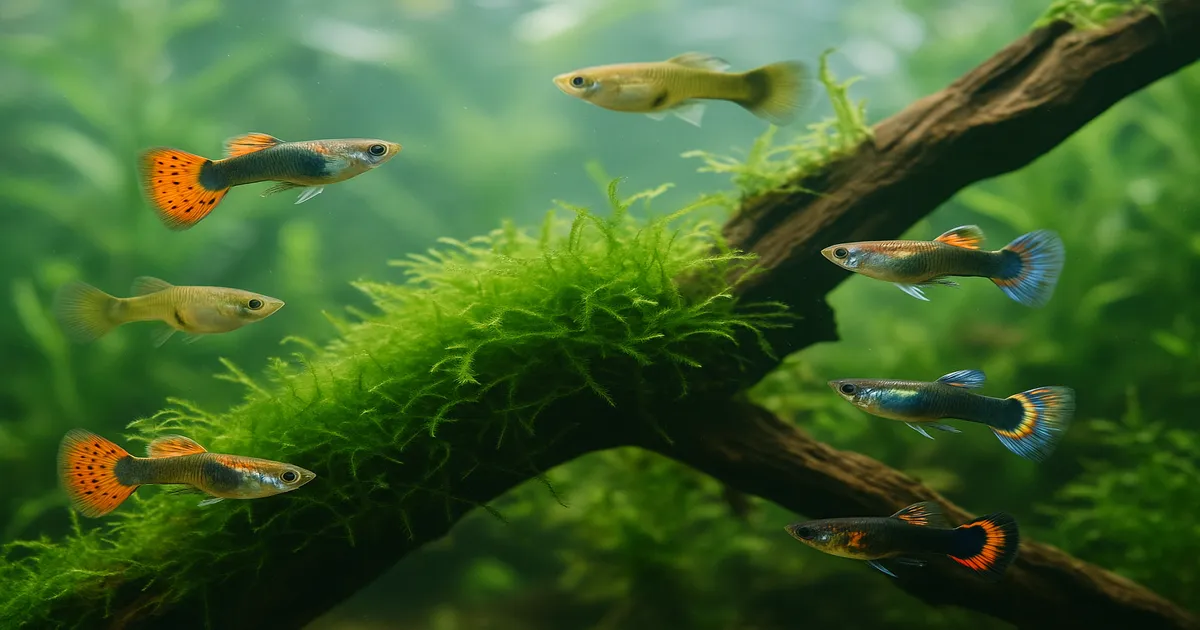
- Other livebearers: Guppies, Mollies, Endlers — all share the same water parameter preferences
- Small tetras: Pristella, X-Ray, and Black Skirt Tetras (keep parameters at the harder, more neutral end)
- Corydoras catfish: Peaceful bottom dwellers that complement platies perfectly
- Otocinclus: Excellent algae grazers, completely non-aggressive
- Harlequin Rasboras and Dwarf Gouramis for mid-water interest
- Nerite snails, Mystery snails, and Amano shrimp for the cleanup crew
Cherry shrimp can coexist, but adults may pick off shrimplets.
Maintaining the Right Male-to-Female Ratio
Keep at least two females for every male — three-to-one is even better. Males relentlessly pursue females for mating, and a single female in a group of males will be harassed to exhaustion. Spreading that attention across multiple females keeps everyone calmer and healthier.
Species to Avoid
- Large or aggressive cichlids (Oscars, Jack Dempseys) — obvious predators
- Tiger Barbs and Serpae Tetras — chronic fin nippers; disastrous for Hi-Fin varieties
- Goldfish — wrong temperature range, incompatible water chemistry, enormous waste producers
- Male Bettas — unpredictable; many will attack or harass platies, especially colorful males
Platies are social and do best in groups of five or more. A lone platy tends to become stressed and reclusive.
How to Feed Platy Fish
Diet in the Wild
Platies are omnivores with a strong herbivorous lean. In the wild they graze on algae, plant matter, small invertebrates, insect larvae, and zooplankton. Their digestive system is built for frequent small meals with plenty of plant fiber — worth keeping in mind when planning their captive diet.
Best Foods for Captive Platies
A varied diet keeps platies healthy, colorful, and disease-resistant:
- High-quality flake or micro pellets as the daily staple — look for formulas with plant-based ingredients listed early (Omega One Freshwater Flakes)
- Spirulina-based foods for color enhancement and gut health
- Frozen foods (daphnia, baby brine shrimp, bloodworms) 2–3 times per week — excellent for conditioning breeding fish
- Blanched vegetables — zucchini, spinach, shelled peas; platies graze on these enthusiastically
Feeding Schedule and Portion Size
Feed two to three small meals daily — only what the fish consume within 2–3 minutes. Overfeeding is one of the most common mistakes; leftover food decomposes quickly and tanks water quality. A one-day fast per week helps prevent constipation, which is surprisingly common in fish fed exclusively on dry food.
Common Platy Fish Diseases and Treatments
Ich (White Spot Disease)
Ich looks like someone sprinkled salt grains across your fish’s body and fins. It’s caused by the protozoan Ichthyophthirius multifiliis. Raise the temperature gradually to 82°F (28°C) to speed up the parasite’s life cycle, and treat with a copper-based medication such as Seachem Cupramine or a formalin-based product. Aquarium salt at 1 tablespoon per 5 gallons provides supportive relief.
Velvet (Gold Dust Disease)
Velvet is trickier than ich — the gold or rust-colored coating can be hard to spot without shining a flashlight across the fish’s body at an angle. The culprit is Oodinium pilularis, a photosynthetic parasite, so darken the tank while treating to weaken it. Copper-based medications are the standard treatment.
Fin Rot
Fraying, discolored, or progressively eroding fin edges signal fin rot — usually a bacterial infection triggered by poor water quality or physical damage. Fix the water first: do a 25–30% water change immediately. Then treat with an antibacterial medication like Seachem Kanaplex and add aquarium salt at 1 tablespoon per 5 gallons.
Dropsy
Dropsy presents as severe bloating with scales that stick out like a pinecone — a sign of fluid accumulation in the body cavity. It’s usually bacterial and often secondary to chronic stress or poor water quality. Isolate the fish immediately, try Epsom salt baths (1 teaspoon per gallon for 15–20 minutes), and treat with antibiotics. Be honest with yourself: dropsy caught late rarely responds to treatment.
Internal Parasites and Wasting
A platy that eats normally but keeps getting thinner — hollow belly, sometimes a curved spine — likely has internal parasites or a mycobacterial infection. For nematodes like Camallanus worms, levamisole or fenbendazole is effective. For Hexamita, use Metronidazole (Seachem Metroplex). Mycobacterial infections are largely untreatable; humanely euthanize affected fish to prevent spread.
Constipation and Swim Bladder Issues
Buoyancy problems — floating at the surface or sinking helplessly — often come down to constipation from too much dry food and not enough fiber. Fast the fish for 2–3 days, then offer a shelled, blanched pea. A short Epsom salt bath (1 teaspoon per gallon, 15–20 minutes) helps draw out excess fluid.
Quarantine: Your Best Prevention Tool
Every new fish — no exceptions — should spend 2–4 weeks in a separate quarantine tank before entering your main display. This single habit prevents the vast majority of disease introductions. A bare 10-gallon tank with a sponge filter is all you need.
Breeding Platy Fish
How Platies Reproduce
Platies are livebearers: males use the gonopodium to fertilize females internally, and females give birth to fully formed, free-swimming fry. One notable quirk is sperm storage — a single mating can fuel multiple broods over several months. A female purchased from a mixed-sex tank at the fish store may already be pregnant when you bring her home.
Gestation and Brood Size
Gestation runs approximately 24–35 days, depending on temperature and the individual fish. A typical brood contains 20–80 fry; larger, more experienced females tend toward the higher end. At 76–78°F (24–26°C) with good nutrition, females will breed continuously — plan for fry management before it becomes overwhelming.
Recognizing a Pregnant Platy
Two signs tell you birth is approaching: the gravid spot near the anal fin darkens noticeably, and the female’s abdomen takes on a distinctly squared-off shape rather than the usual rounded curve. When you see both, move her to the fry tank or set up dense floating plant cover.
Protecting and Raising Fry
Adult platies — including the mother — will eat newborn fry without hesitation. Your options:
- Dense floating plants (Salvinia, Hornwort, Guppy Grass) give fry somewhere to hide in the main tank
- A breeding box suspended in the tank isolates the female before birth — don’t leave her confined for more than a day or two
- A separate fry-rearing tank with a sponge filter gives fry the best survival rate
Do small water changes (10–15%) every 2–3 days in the fry tank. Clean water is the single biggest driver of fast, healthy growth.
Feeding Fry
Fry are tiny but capable eaters from day one. Start with:
- Crushed high-quality flake — grind it between your fingers to a fine powder
- Baby brine shrimp (Artemia nauplii) — highly nutritious and irresistible to fry
- Microworms — easy to culture at home and an excellent daily staple
- Commercial fry food such as Hikari First Bites
Fry reach sexual maturity at around 3–4 months. One important note: platies hybridize freely with swordtails (X. hellerii). If you’re keeping both species and want to maintain pure lines, house them separately.
Frequently Asked Questions About Platy Fish Care
How many platy fish should be kept together?
A minimum group of five is recommended. Platies are social and become stressed in very small numbers. For mixed-sex groups, maintain at least a 2:1 female-to-male ratio to prevent females from being harassed relentlessly.
How often do platy fish have babies?
A healthy female gives birth approximately every 24–35 days. Because females store sperm, they can produce multiple broods from a single mating — don’t be surprised if a newly purchased female delivers fry even without a male in your tank.
What is the ideal tank size for platy fish?
Twenty gallons is the practical sweet spot for a small mixed-sex group or community setup. A 10-gallon tank can house 3–4 fish, but the larger water volume makes it much easier to maintain stable parameters and gives everyone room to move.
Can platy fish live with guppies?
Yes — guppies and platies are an excellent pairing. Both are peaceful Poeciliidae livebearers with nearly identical water parameter requirements. They won’t hybridize with each other, so you can keep them together without worrying about unwanted crossbreeding.
Why is my platy fish hiding and not eating?
A platy hiding and refusing food is usually stressed, ill, or adjusting to a new environment. Check water parameters first — ammonia, nitrite, or a pH outside 7.0–8.0 are the most common culprits. Also look for signs of disease (spots, fin damage, bloating) and consider whether aggressive tank mates might be intimidating the fish.