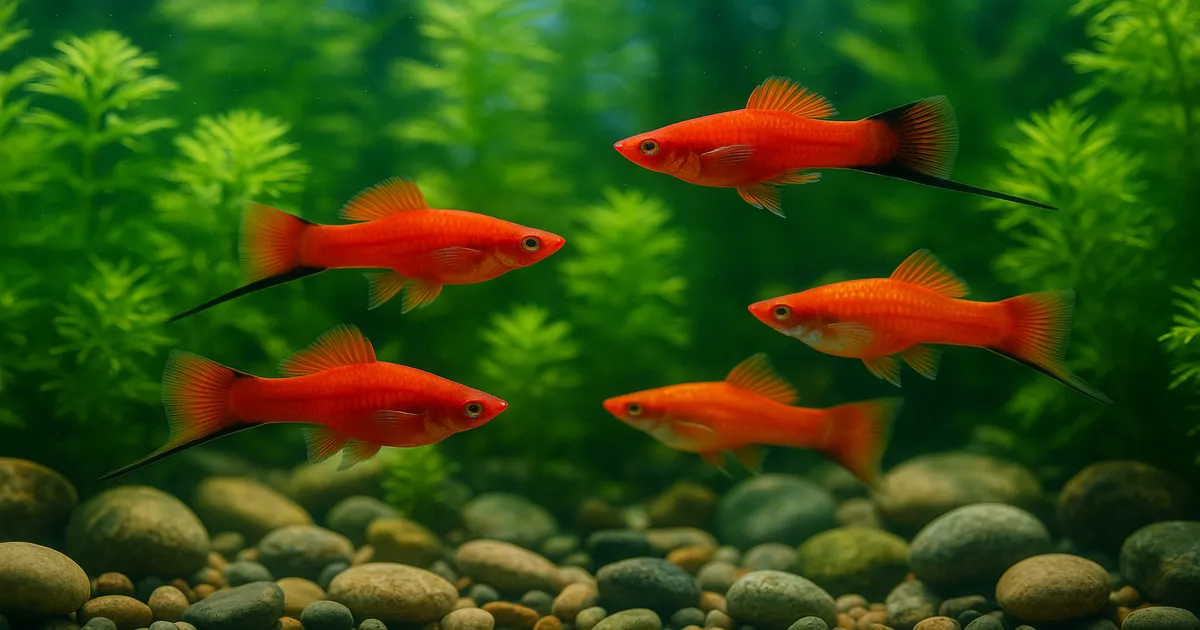
Quick Answer: Swordtail fish are hardy, beginner-friendly livebearers that thrive in slightly alkaline, moderately hard water (pH 7.0–7.8, GH 12–30 dGH) at 72–79°F (22–26°C). They need at least a 20-gallon tank with a tight-fitting lid, a varied omnivorous diet, and a sex ratio of one male per two or three females. With proper care, they live 3–5 years and reward you with brilliant color and lively behavior.
Learning how to take care of swordtail fish is one of the most rewarding starting points in the freshwater hobby. These Central American livebearers are tough enough to forgive beginner mistakes yet striking enough to anchor a display tank. This guide covers everything you need — water parameters, tank setup, compatible tank mates, feeding, and disease prevention — so your swordtails stay healthy for years.
Swordtail Fish: Species Overview
Scientific Classification and Origin
Swordtail fish (Xiphophorus hellerii) belong to the family Poeciliidae — the same family as guppies, mollies, and platies. First described by Johann Jakob Heckel in 1848, the genus name Xiphophorus literally means “sword-bearer” in Greek.
In the wild, swordtails inhabit the Atlantic-slope rivers of Central America, from Veracruz, Mexico south through Guatemala, Belize, Honduras, and into northwestern Nicaragua. They favor clear, fast-flowing highland streams with rocky substrates, dense vegetation, and naturally hard, alkaline water shaped by the region’s limestone geology. Their native range spans from sea level up to roughly 5,000 ft (1,500 m), which explains their wider temperature tolerance compared to many tropical fish.
Physical Characteristics and Sexual Dimorphism
The wild-type swordtail has an olive-green body with a red or orange-red lateral stripe — understated by captive-bred standards, but elegant. Males are easy to identify: they carry the iconic elongated lower caudal fin lobe (the “sword”) and a modified anal fin called a gonopodium, used for internal fertilization.
Males reach 4–5 inches (10–13 cm) including the sword. Females grow larger at 4.5–6.3 inches (11–16 cm) and have a noticeably deeper, rounder body — especially when gravid.
Popular Color Morphs and Fin Variants
Decades of selective breeding have produced a wide range of varieties. The most widely available include:
- Red Swordtail — solid red-orange; the most common in fish stores
- Black Swordtail — melanistic strain; prone to melanoma (more on that below)
- Pineapple Swordtail — golden-yellow body with red accents
- Koi Swordtail — red, white, and black patterning
- Neon Swordtail — iridescent blue-green lateral stripe
- Lyretail Swordtail — both upper and lower caudal lobes extended
- Hi-Fin (Simpson) Swordtail — dramatically tall dorsal fin
- Tuxedo Swordtail — dark posterior contrasting with a lighter front half
Swordtails also hybridize freely with platies (X. maculatus, X. variatus), producing fertile offspring — a quirk that makes them scientifically interesting and occasionally a source of surprise fry if both species share a tank.
Ideal Water Parameters for Swordtail Fish Care
Temperature
Swordtails are comfortable across a wide range. The ideal is 72–79°F (22–26°C), with an acceptable range of 65–82°F (18–28°C). Prolonged exposure above 82°F stresses their immune system, so keep the tank away from heat sources and direct sunlight. A reliable adjustable heater — set to 76°F as a midpoint — takes the guesswork out of temperature management.
pH and Water Hardness
Aim for slightly alkaline water: pH 7.0–7.8 is the sweet spot, though swordtails will tolerate 6.8–8.0 in a pinch. General hardness (GH) should sit at 12–30 dGH, and carbonate hardness (KH) between 10–20 dKH.
That KH figure matters more than most beginners realize. KH is your tank’s buffering capacity — it prevents dangerous pH swings. If KH drops below 5 dKH, pH can crash overnight, which is acutely stressful and potentially fatal. This is especially relevant in planted tanks running CO₂ injection. Swordtails simply aren’t suited to soft, acidic Amazonian-style setups; keeping them in those conditions means fighting their biology.
If your tap water is soft, mixing in a small amount of crushed coral or using a hardness supplement like Seachem Equilibrium can bring GH and KH into range reliably.
Ammonia, Nitrite, and Nitrate
Ammonia and nitrite must be 0 ppm at all times — no exceptions. Even low levels suppress immune function and cause gill damage. Nitrate should ideally stay below 20 ppm; chronic exposure above 40 ppm suppresses reproduction and disease resistance.
Make sure your tank is fully cycled before adding fish. A liquid test kit like the API Freshwater Master Test Kit gives far more accurate readings than strip tests and is worth the investment.
Dissolved Oxygen and Water Changes
Swordtails come from fast-flowing streams, so they appreciate well-oxygenated water. Surface agitation from your filter’s outflow — or a simple airstone — keeps dissolved oxygen levels high.
Do a 25–30% water change weekly. Always treat tap water with a dechlorinator like Seachem Prime before adding it to the tank. Never pour untreated tap water directly in.
How to Set Up a Swordtail Fish Tank
Tank Size and Dimensions
A 20–29 gallon tank suits a small group of one male and two or three females. For a community setup with other species, go 30 gallons or larger. More important than volume is footprint — choose a long, horizontal tank over a tall or cube design. Swordtails are active mid-to-upper swimmers who need lateral space, not depth.
Substrate
Fine-to-medium gravel or coarse sand both work well. If your tap water is soft, mixing crushed coral or aragonite into the substrate (roughly 10–20% by volume) helps maintain hardness and pH passively. Dark substrates like black sand make colors pop noticeably.
Plants, Decorations, and Aquascaping
Live plants are highly recommended. Dense planting along the back and sides gives females refuge from male harassment, while an open center provides swimming room. Good choices that tolerate hard, alkaline water include:
- Vallisneria spp. — thrives in hard water
- Sagittaria — similar to Vallisneria, easy to grow
- Hornwort (Ceratophyllum demersum) — fast-growing, great for nitrate control
- Anacharis (Egeria densa) — versatile and hardy
- Java fern and Java moss — attach to hardscape, no substrate needed
Smooth river rocks or limestone pieces complement the setup and help support water hardness. Use driftwood sparingly — it releases tannins that soften and acidify the water, working against swordtails’ preferences.
Filtration and Flow Rate
A hang-on-back (HOB) or canister filter with a turnover rate of 5–8× the tank volume per hour hits the right balance between clean water and manageable current. Swordtails enjoy some flow but shouldn’t be fighting the current to rest. For a fry tank, switch to a sponge filter — no risk of newborns getting sucked in.
Lighting and Tank Cover
Eight to ten hours of moderate lighting per day on a timer is plenty. Standard LED planted-tank lights work fine.
The lid is non-negotiable. Swordtails are strong, unpredictable jumpers — especially when males are chasing females or the fish are startled. Even a one-inch gap is enough for one to escape. Use a tight-fitting lid and cover every opening.
Swordtail Fish Tank Mates and Compatibility
Temperament and Sex Ratio
Swordtails are peaceful toward other species, but males are genuinely aggressive toward each other. Two males in a small tank will spar relentlessly. Keep one male per two or three females at minimum — this distributes his attention and reduces stress on individual females.
Best Tank Mates
Good companions share similar water chemistry preferences and won’t harass or be harassed:
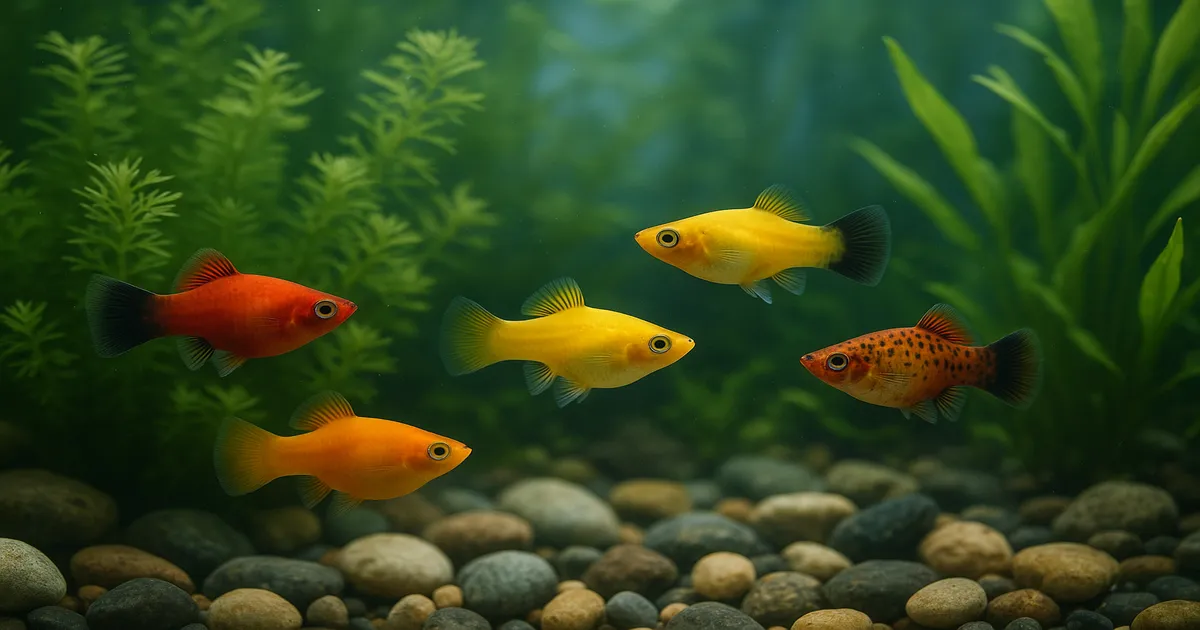
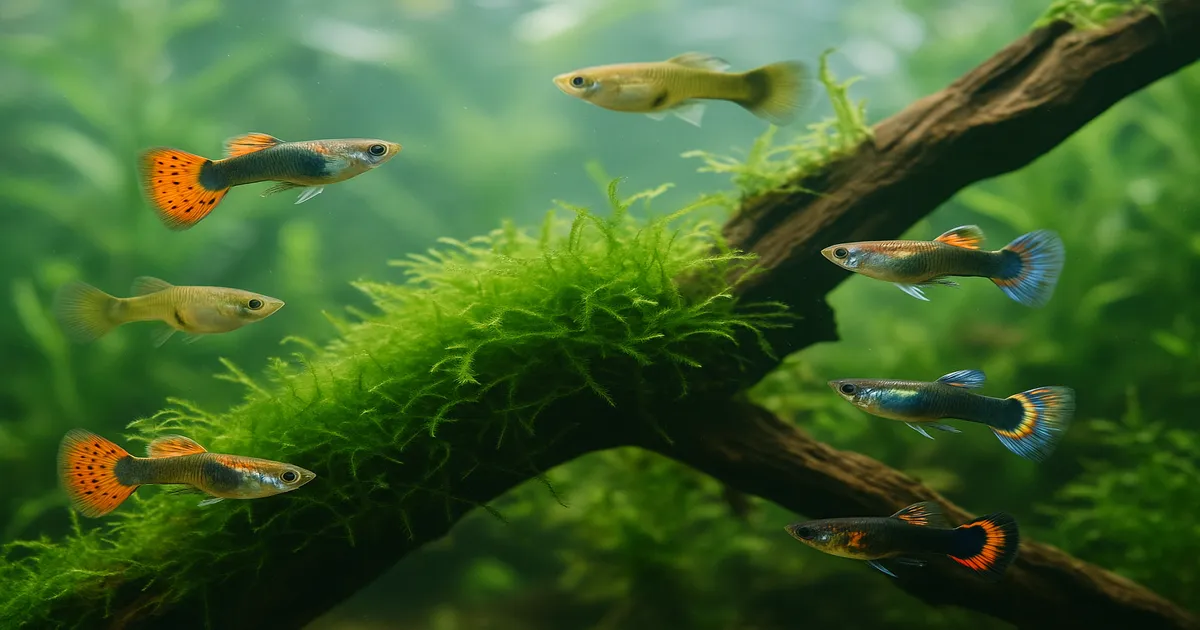
- Other livebearers: Platies, mollies, and guppies all work well. Note that swordtails can hybridize with platies, and males may harass guppy females.
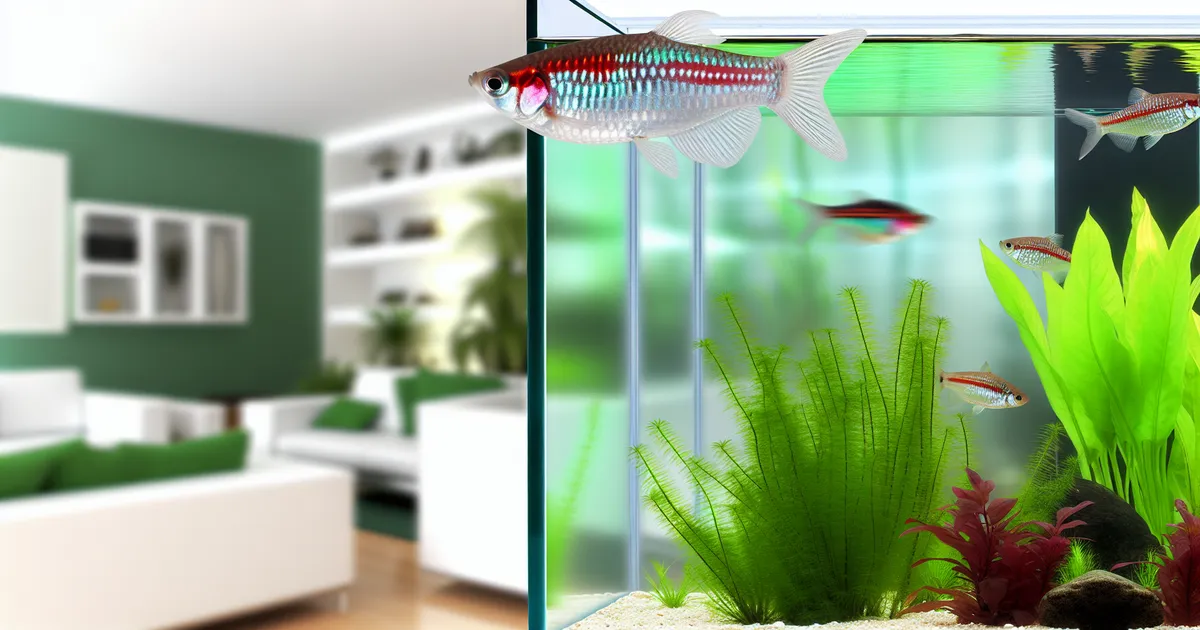
- Hardy tetras: Black skirt tetras and Buenos Aires tetras are solid choices. Avoid delicate soft-water species like cardinal or neon tetras — the water chemistry requirements don’t align.
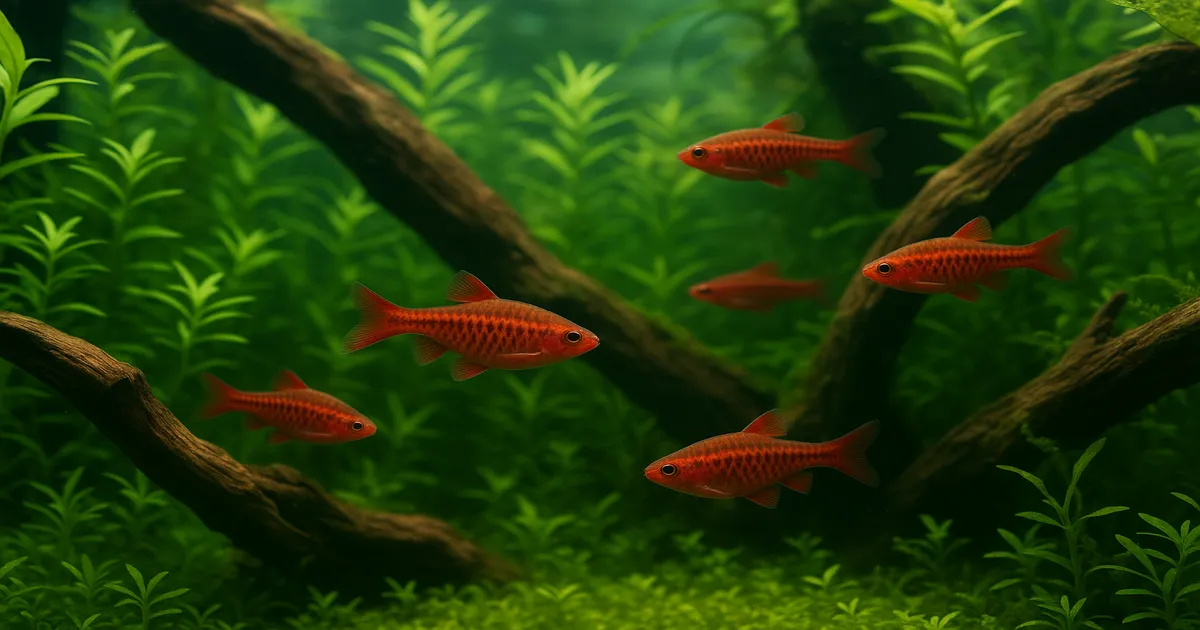
- Barbs: Cherry barbs and rosy barbs are peaceful options for larger tanks.
- Bottom dwellers: Bronze or peppered corydoras and Kuhli loaches occupy a completely different niche and coexist peacefully.
- Rainbowfish: Boeseman’s rainbowfish share similar water preferences and add great color contrast.
- Peaceful gouramis: Pearl gouramis work well in a larger community tank.
- Snails: Mystery snails and nerite snails are safe and useful for algae control.
Small shrimp like Neocaridina species will likely become snacks. Larger Amano shrimp have a better survival rate but aren’t guaranteed.
Fish to Avoid
- Tiger barbs — notorious fin-nippers that will shred the sword fin
- Serpae tetras — can be nippy, especially in groups
- Betta fish — males will attack swordtails, and the active swordtails may stress a betta in return
- Aggressive cichlids (Oscars, Jack Dempseys, Green Terrors) — will bully or eat swordtails outright
- Any predatory fish large enough to fit a swordtail in its mouth
How to Feed Swordtail Fish
Diet Basics
Swordtails are omnivores with a strong herbivorous lean. Wild stomach-content analyses show a majority of plant material and algae, supplemented with aquatic invertebrates, zooplankton, and insect larvae. In the aquarium they’ll accept virtually everything — which makes overfeeding a real risk.
Recommended Foods
Daily staple:
- High-quality spirulina flakes or micro pellets with vegetable content, such as Hikari Micro Pellets
- Pellets containing astaxanthin or carotenoids for color enhancement
Supplemental foods (2–4× per week):
- Frozen bloodworms, brine shrimp, daphnia, mysis shrimp, or mosquito larvae
- Live brine shrimp or daphnia — especially valuable for conditioning breeding pairs
- Blanched zucchini, spinach, or algae wafers to meet their herbivorous needs
Daphnia deserves a special mention: it acts as a natural laxative and is excellent for preventing constipation and swim bladder issues.
Feeding Schedule and Portion Size
Feed adults twice daily — morning and evening — offering only what they consume in 2–3 minutes. Juveniles benefit from three smaller meals per day to support growth. Build in one fasting day per week; it benefits digestion and keeps the tank cleaner.
Swordtails will eat past the point of fullness if you let them. Obesity and swim bladder problems are common consequences of chronic overfeeding, so discipline at feeding time pays off.
Common Swordtail Fish Diseases and Prevention
Ich (White Spot Disease)
Ich is caused by the protozoan Ichthyophthirius multifiliis and shows up as white, salt-grain-sized spots on the body and fins. Affected fish will often flash (rub against surfaces) and may breathe heavily if the gills are involved.
Raise the temperature gradually to 82–86°F (28–30°C) to accelerate the parasite’s life cycle, and treat with a commercial ich medication containing malachite green or formalin, such as Ich-X by Hikari. Continue treatment for a full 10–14 days — stopping early almost guarantees a rebound.
Fin Rot
Fin rot is bacterial in origin and presents as ragged, fraying, or disintegrating fin edges, sometimes with a reddish border. It’s almost always triggered by poor water quality or stress. Fix the root cause first — do a water change and check your parameters — then treat with an antibacterial medication like API Fin & Body Cure if the damage is progressing.
Velvet Disease
Velvet (Oodinium) looks like a fine gold or rust-colored dust on the body. It’s highly contagious and progresses quickly. Treat with a copper-based medication such as Seachem Cupramine and dim the lights during treatment — the parasite is photosynthetic, and reducing light exposure improves treatment efficacy.
Swim Bladder Disorder
Swim bladder issues typically appear as a fish that floats at the surface, sinks to the bottom, or swims at an odd angle. Overfeeding and constipation are the most common culprits in swordtails. Fast the fish for 2–3 days, then offer daphnia to help clear blockages naturally. If the problem persists, rule out bacterial infection.
Melanoma in Black Swordtail Variants
Black swordtail strains carry a genetic predisposition to melanoma — skin tumors that appear as dark, raised patches. This is a direct result of hybridization genetics and has been studied extensively in cancer research. There is no cure; remove affected fish to reduce stress on tank mates and avoid breeding from visibly affected individuals.
General Prevention
Most disease outbreaks are preventable with consistent husbandry:
- Quarantine all new fish for 2–4 weeks in a separate tank before introducing them to your display
- Maintain stable water parameters — sudden swings in temperature or pH are more stressful than slightly imperfect but stable conditions
- Never add untreated tap water directly to the tank
- Avoid overcrowding, which raises stress hormones and nitrate simultaneously
- Perform weekly water changes without fail
Frequently Asked Questions: How to Take Care of Swordtail Fish
How many swordtail fish can I keep in a 20-gallon tank?
A good starting group is one male and two or three females — four fish total. This respects the sex ratio needed to reduce female harassment while staying within the tank’s bioload capacity. Avoid keeping two males in a 20-gallon; the space isn’t sufficient to diffuse their aggression.
How often do swordtail fish breed, and how do I care for the fry?
Swordtails are prolific livebearers that can deliver 20–100 fry every 4–6 weeks once a female has been fertilized — and she can store sperm for multiple births. To save fry, move the pregnant female to a separate breeding tank with a sponge filter and dense plant cover just before birth, then return her to the main tank afterward. Feed fry crushed flake food or baby brine shrimp three times daily and keep up with water changes.
Can swordtail fish live with bettas?
Generally, no. Male bettas will attack swordtails — particularly males with flowing fins — and the fast, active nature of swordtails can stress a betta in return. The water chemistry overlap is workable, but the temperament mismatch makes this combination best avoided.
Why is my swordtail fish losing color?
Color loss usually signals stress, poor water quality, or nutritional deficiency. Check your parameters first — elevated nitrate, unstable pH, or low temperature are common culprits. If parameters are fine, evaluate the diet; switching to carotenoid-rich foods like spirulina flakes, brine shrimp, and astaxanthin pellets can restore faded coloration within a few weeks. Social stress from an aggressive tank mate or a poor male-to-female ratio can also cause persistent color loss.
How long do swordtail fish live?
Most swordtails live 3–5 years in a well-maintained aquarium, with some individuals reaching beyond five years under ideal conditions. Stable water parameters, a varied diet, and avoiding chronic stress are the biggest factors in reaching the upper end of that range.