Quick Answer: If your fish are gasping at the surface, you’re seeing ammonia spikes, or aggression has spiked out of nowhere, your tank is almost certainly overstocked. Overstocking isn’t just about fish numbers — it covers bioload, territorial crowding, incompatible species, and even excess décor. The old “1 inch per gallon” rule won’t save you here. Read on for a practical guide to diagnosing and fixing the problem.
Asking “do I have too much in my tank?” is one of the most important questions a fishkeeper can ask — and one of the most commonly asked too late. Overstocking is the leading cause of preventable fish death in home aquariums, and it sneaks up on hobbyists at every experience level. The good news: it’s diagnosable, fixable, and entirely preventable once you know what to look for.
What “Too Much in My Tank” Actually Means
Overstocking isn’t a single problem — it’s four overlapping ones. You can have too many fish numerically, too much bioload for your filter to handle, too little space for territorial species to coexist, or a mix of incompatible species that stress each other regardless of numbers. Even excessive décor counts, since it reduces swimming volume and can affect oxygenation.
The Four Types of Overstocking
- Numerical overstocking — more fish than your tank volume and filtration can support
- Bioload overstocking — waste production exceeds your biological filtration capacity
- Territorial overstocking — insufficient space for fish to establish natural territories
- Compatibility overstocking — species that harm each other through aggression, predation, or mismatched water requirements
Warning Signs Your Tank Is Overstocked
If you’re seeing any of these, act now:
- Fish gasping at the surface (oxygen depletion)
- Ammonia or nitrite reading above 0 ppm (API Freshwater Master Test Kit)
- Persistent fin damage or fin rot
- Unexplained aggression or constant chasing
- Fish hiding, refusing food, or showing faded colour
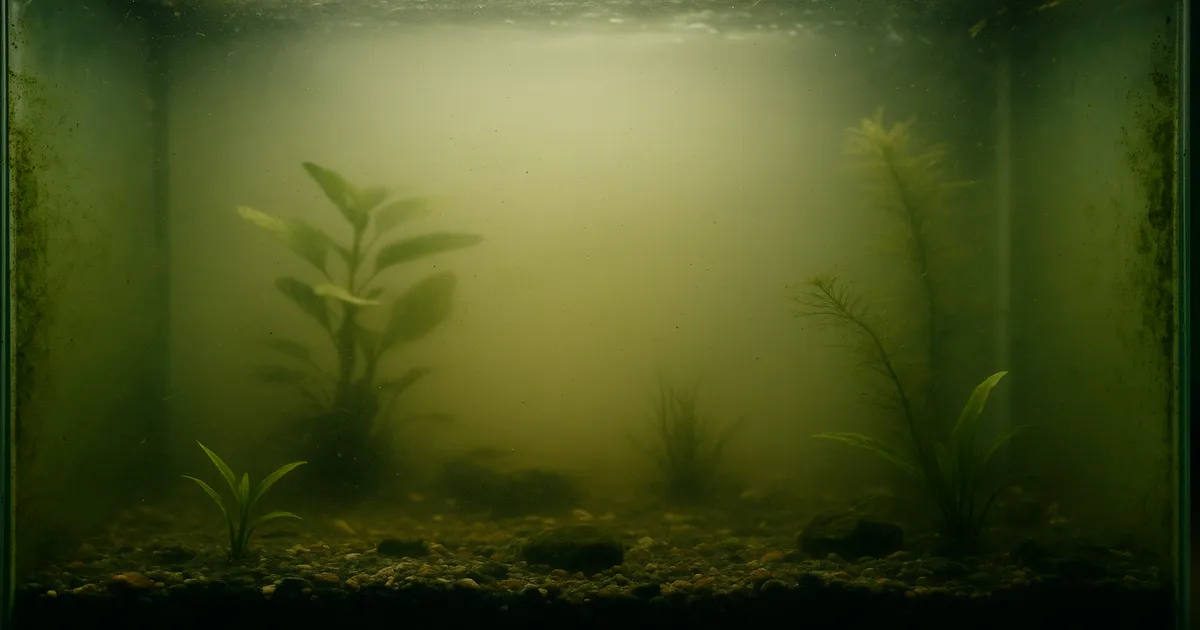
- Cloudy or foul-smelling water
- Frequent disease outbreaks
Why the 1-Inch-Per-Gallon Rule Fails
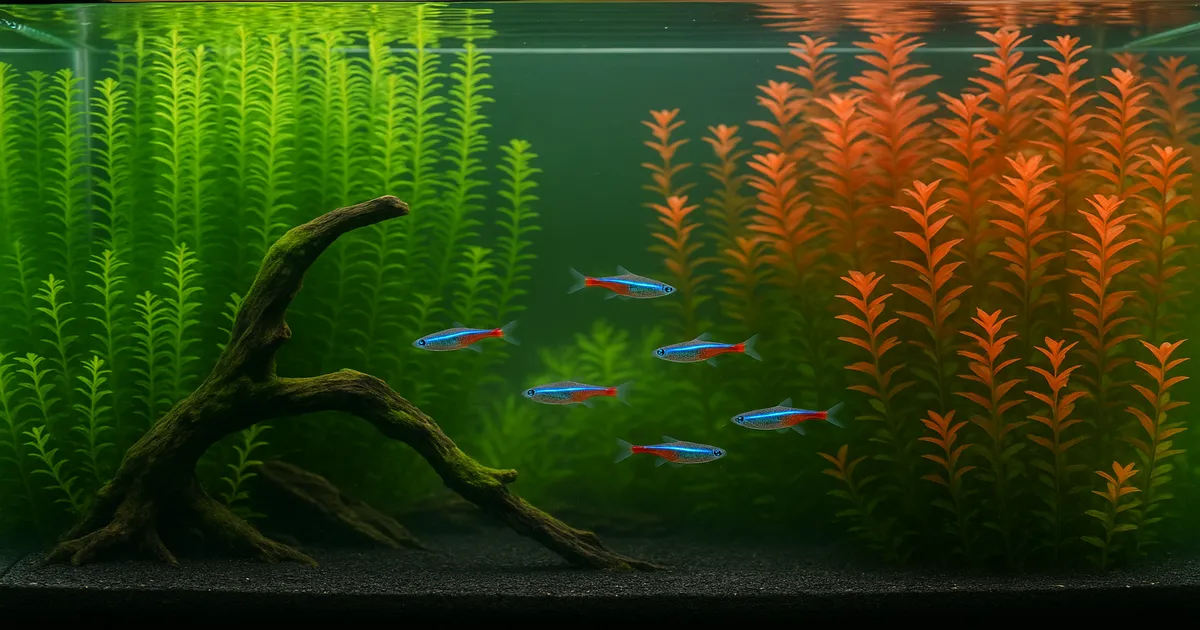
The 1-inch-per-gallon rule was always a rough shorthand, and it’s a dangerous one. It ignores body shape, waste output, oxygen consumption, aggression, and — critically — adult size. A single adult Oscar produces far more ammonia than six neon tetras, yet by the old rule both a 6-inch Oscar and six 1-inch neons are “equal.” They are not.
The rule also says nothing about territorial needs, swimming space, or species compatibility. For modern fishkeeping, it’s a relic best ignored entirely.
Realistic Stocking Capacity by Tank Size
| Tank Size | Realistic Community Stocking |
|---|---|
| 5–10 gallons (nano) | 1 betta OR 6–8 nano fish (chili rasboras, ember tetras) |
| 20 gallons | 1 small centrepiece fish + 1–2 small schools |
| 29–30 gallons | 2–3 schools + bottom dwellers (e.g., corydoras) |
| 55 gallons | Multiple schools, centrepiece species, cleanup crew |
| 75+ gallons | Medium cichlids, larger schooling fish, diverse communities |
| 125+ gallons | Large cichlids, predatory fish, large schooling species |
These are starting points, not ceilings. Your actual capacity depends on filtration quality, maintenance schedule, and the specific species involved.
Why Tank Footprint Matters More Than Volume
A tall 30-gallon column tank gives you less usable territory than a wide, shallow 30-gallon. Surface area drives gas exchange — oxygen in, CO₂ out — so a larger footprint directly improves water quality in stocked tanks. Territory for bottom-dwellers, mid-water swimmers, and surface fish is distributed horizontally, not vertically. Always prioritise footprint when choosing a tank for a heavily stocked community.
How Overstocking Poisons Your Water
Ammonia and Nitrite: The Immediate Killers
Ammonia is the first thing to spike in an overstocked tank, produced constantly through fish respiration, waste, and decomposing food. Even 0.25 ppm causes gill damage and immune suppression — and the problem worsens at higher pH and warmer temperatures, where more ammonia exists in its toxic free form (NH₃) rather than the less harmful ammonium (NH₄⁺).
Nitrite follows when your bacterial colony can’t keep pace with ammonia input. At 0.5 ppm, nitrite causes methemoglobinemia (brown blood disease), where haemoglobin loses its ability to carry oxygen. Both should always read zero.
Nitrate: The Slow Threat
Nitrate is less acutely toxic but insidious over time. In overstocked tanks it accumulates faster than water changes can remove it. Chronic levels above 80 ppm in freshwater suppress immunity, cause reproductive failure, and leave fish looking dull and lethargic. Marine and reef tanks are far less forgiving — keep nitrate below 20 ppm for fish-only systems, and ideally under 5 ppm for coral.
Dissolved Oxygen Depletion
More fish means more oxygen consumption. The bacterial colony working overtime to process excess waste consumes a significant share too. Warm water holds less dissolved oxygen than cool water, making this doubly problematic in tropical setups. Below 4 mg/L, fish begin gasping at the surface. The target is 7–8 mg/L.
pH Crashes and KH Depletion
Excess CO₂ from respiration and organic acids from decomposing waste gradually erode your tank’s carbonate hardness (KH). Once KH drops below 3–4 dKH, the buffer is gone and pH can crash suddenly — sometimes by a full point overnight. Most community freshwater fish prefer pH 6.8–7.4; swings larger than 0.5 units in 24 hours are dangerous.
Safe Parameter Quick Reference
| Parameter | Ideal | Danger Zone |
|---|---|---|
| Ammonia | 0 ppm | >0.25 ppm |
| Nitrite | 0 ppm | >0.5 ppm |
| Nitrate (freshwater) | <20 ppm | >80 ppm |
| Nitrate (marine) | <5 ppm | >20 ppm |
| Dissolved oxygen | 7–8 mg/L | <4 mg/L |
| pH (FW community) | 6.8–7.4 | Swings >0.5 in 24 hrs |
| KH | 4–8 dKH | <3 dKH |
Filtration and Tank Setup for Stocked Tanks
Choosing the Right Filter
Turn over your tank volume 4–10× per hour. Community tanks are fine at the lower end; heavily stocked tanks need 8–10×, and cichlid tanks should push 10× or higher. Turnover rate matters, but biological media capacity matters more — that’s where your ammonia-processing bacteria live.
| Filter Type | Biological Capacity | Best For |
|---|---|---|
| Hang-on-back (HOB) | Moderate | Lightly to moderately stocked tanks |
| Canister | High | Heavily stocked or large tanks |
| Sponge | Moderate | Lightly stocked, fry, breeding tanks |
| Wet/dry sump | Very high | Heavily stocked, marine tanks |
| Fluidized bed | Very high | High-bioload systems |
Running two filters simultaneously is one of the smartest moves for a heavily stocked tank. It doubles biological capacity and provides a safety net — if one filter fails, the other keeps the cycle running. Many experienced fishkeepers pair a canister as the primary filter with a sponge filter as backup.
Substrate, Décor, and Oxygenation
Bare-bottom tanks are easiest to keep clean in heavily stocked setups — waste is visible and simple to siphon. A thin layer of sand (1–2 inches) works well for bottom-dwelling species. Avoid substrate deeper than 3 inches; in high-bioload tanks, anaerobic zones can develop and produce toxic hydrogen sulfide.
Décor isn’t just aesthetic. Hiding spots and line-of-sight breaks genuinely reduce aggression in crowded tanks. The catch is that too much hardscape eats into swimming volume. Provide cover for shy species and visual barriers between territories, but leave open swimming lanes for active fish.
Surface agitation is your most powerful tool for dissolved oxygen. Directing a spray bar or powerhead toward the surface — or running an airstone — dramatically increases gas exchange. If fish are gasping, add aeration immediately while you address the underlying stocking issue.
Do I Have Too Much in My Tank? Compatibility Problems to Check
Aggression and Size Compatibility
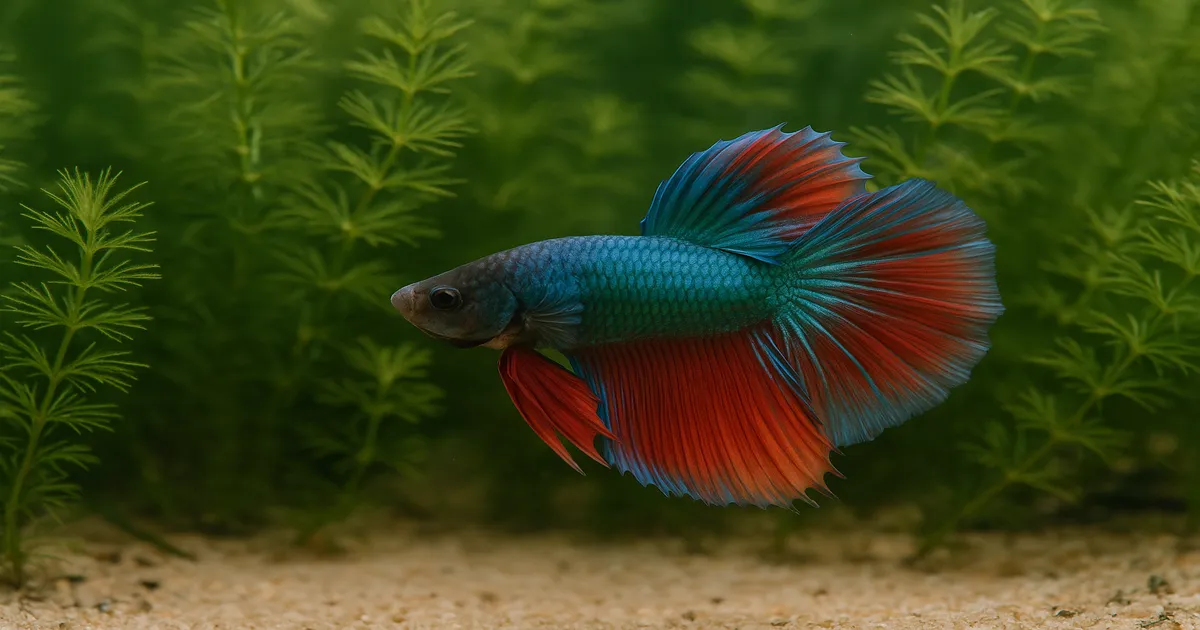
Overstocking amplifies aggression. Even naturally peaceful species like tetras and rasboras will nip and chase when space is limited. Aggressive species — cichlids, bettas, puffers — need generous territories that simply don’t exist in crowded tanks.
The size rule is straightforward: if a fish can fit another fish in its mouth, it eventually will. A size disparity greater than 3:1 in body length is risky, and mouth width matters as much as overall length.
Environmental Compatibility
Mixing species with incompatible water requirements is an easy form of overstocking to overlook. Discus need warm, soft, acidic water — 82–86°F (28–30°C), pH 6.0–6.8. Goldfish thrive in cool, hard, alkaline water — 60–72°F (16–22°C), pH 7.2–7.6. Keeping them together means one species is always under chronic stress. African cichlids (pH 7.8–8.5, hard water) are similarly incompatible with South American tetras (pH 6.0–7.0, soft water).
Common Incompatible Combinations to Avoid
| Combination | Problem |
|---|---|
| Betta + guppies or fancy-finned fish | Betta attacks flowing fins |
| Goldfish + tropical fish | Temperature and waste incompatibility |
| African cichlids + community tetras | Aggression and pH incompatibility |
| Large cichlids + small tetras | Predation |
| Common plecos in tanks under 75 gallons | Massive bioload, highly territorial |
| Multiple male bettas | Lethal aggression |
| Puffers + most community fish | Chronic fin nipping |
The Schooling Fish Paradox
Many popular fish — neon tetras, harlequin rasboras, corydoras — need groups of six or more to feel secure and behave naturally. In a small tank, meeting that minimum can push you over the bioload limit. The solution isn’t to keep fewer fish than the species needs; it’s to upgrade the tank so the school can thrive without compromising water quality.
Feeding in an Overstocked Tank
Overfeeding is functionally identical to adding more fish — it increases bioload without adding a drop of filtration capacity. Uneaten food begins decomposing within an hour and can trigger a measurable ammonia spike within 24 hours in a poorly filtered tank.
Feed only what your fish consume in 2–3 minutes, once or twice daily. If food is still drifting to the bottom after three minutes, you’re feeding too much.
Practical strategies for heavily stocked tanks:
- Drop food in several locations so dominant fish can’t monopolise it
- Use sinking pellets or wafers for corydoras, loaches, and other bottom dwellers
- Target-feed shy or slow-moving species with tongs or a pipette
- Skip one feeding day per week — it reduces bioload and mirrors natural feeding patterns
Diseases That Thrive in Overstocked Tanks
Chronic stress from overcrowding elevates cortisol in fish, directly suppressing immune function. Poor water quality compounds this by damaging the protective mucus coat and gill tissue. Add high fish density for rapid pathogen transmission, and you have a disease incubator.
Ich (Ichthyophthirius multifiliis) spreads explosively in crowded conditions. Look for white spots resembling grains of salt on the body and fins, plus flashing and lethargy. Treatment: gradually raise temperature to 86°F (30°C) for 10 days (heat-tolerant species only), or use a commercial ich treatment for severe cases.
Fin rot is almost always secondary to stress, injury, or degraded water quality. Ragged fin edges with white or reddened margins are the telltale signs. Improve water quality first, then treat with a broad-spectrum antibacterial if tissue loss is progressing. (API Fin & Body Cure)
Other conditions to watch for:
- Velvet (Oodinium spp.) — gold or rust-coloured dust on skin; treated similarly to ich
- Columnaris — white or grey patches, often mistaken for fungus; bacterial; spreads fast in warm, crowded tanks
- Oxygen deprivation — lethargy, faded colour, fish congregating near the surface without visible disease
A 4–6 week quarantine tank for every new addition is non-negotiable. Introducing an unquarantined fish into an already-stressed tank is how entire communities are lost to disease. A basic 10-gallon with a sponge filter is enough.
How to Fix an Overstocked Tank
Step 1: Test Your Water
Start with a full parameter test — ammonia, nitrite, nitrate, and pH at minimum. A dissolved oxygen test is worth doing if fish are gasping. Your results will tell you whether you’re dealing with an emergency or a slow-burn problem.
Step 2: Stabilise Parameters Immediately
If ammonia or nitrite are elevated, act the same day:
- Perform a 25–50% water change, treating tap water with a dechlorinator (Seachem Prime)
- Add supplemental aeration — an airstone or powerhead directed at the surface
- Reduce or stop feeding for 24–48 hours
- Dose beneficial bacteria to boost your biological filter (Seachem Stability)
- Repeat daily water changes until parameters hold at zero
Step 3: Rehome, Return, or Upgrade
Once the crisis is stabilised, address the root cause:
- Rehome surplus fish to other hobbyists — local fish clubs are ideal
- Return fish to your local fish store — most accept healthy fish
- Upgrade to a larger tank if you want to keep the current stock
Emergency water changes buy time. They don’t fix overstocking.
Step 4: Upgrade Filtration Before Adding More Fish
Before adding a single new fish, make sure your filtration is adequate for your actual bioload — not just your tank volume. Manufacturer ratings are almost always optimistic. If you’re running one HOB filter, add a second or upgrade to a canister. Prioritise biological media over mechanical floss.
Frequently Asked Questions
How many fish is too many for a 20-gallon tank? It depends on species, but a realistic community for a 20-gallon is one small centrepiece fish (such as a dwarf gourami or honey gourami) plus one or two schools of nano fish totalling 10–14 individuals. Avoid high-waste species like goldfish or large cichlids entirely.
Can I overstock if I have a powerful filter? Filtration helps, but it doesn’t eliminate the problem. Even the best filter can’t compensate for severe territorial crowding, incompatible species, or the physical stress of too many fish competing for space. Filtration manages bioload — it doesn’t manage behaviour or oxygen demand at the surface.
How do I know if my tank is overstocked without a test kit? Behavioural signs come first: fish gasping at the surface, persistent chasing, hiding, or faded colour. Cloudy or foul-smelling water is another strong indicator. That said, a liquid test kit is essential — ammonia and nitrite can be dangerously elevated before any visible symptoms appear.
Is it okay to overstock temporarily while I find new homes for fish? For a few days, yes — provided you increase water changes to daily 25–30% changes, reduce feeding, and add extra aeration. Beyond a week, chronic stress and water quality decline will cause real harm. Have a plan before the fish arrive, not after.
Does adding live plants help with overstocking? Live plants absorb ammonia and nitrate and produce oxygen during daylight hours, which genuinely helps in a moderately overstocked tank. They are not a substitute for adequate filtration or sensible stocking levels, but a heavily planted tank can support a meaningfully higher bioload than a bare one.