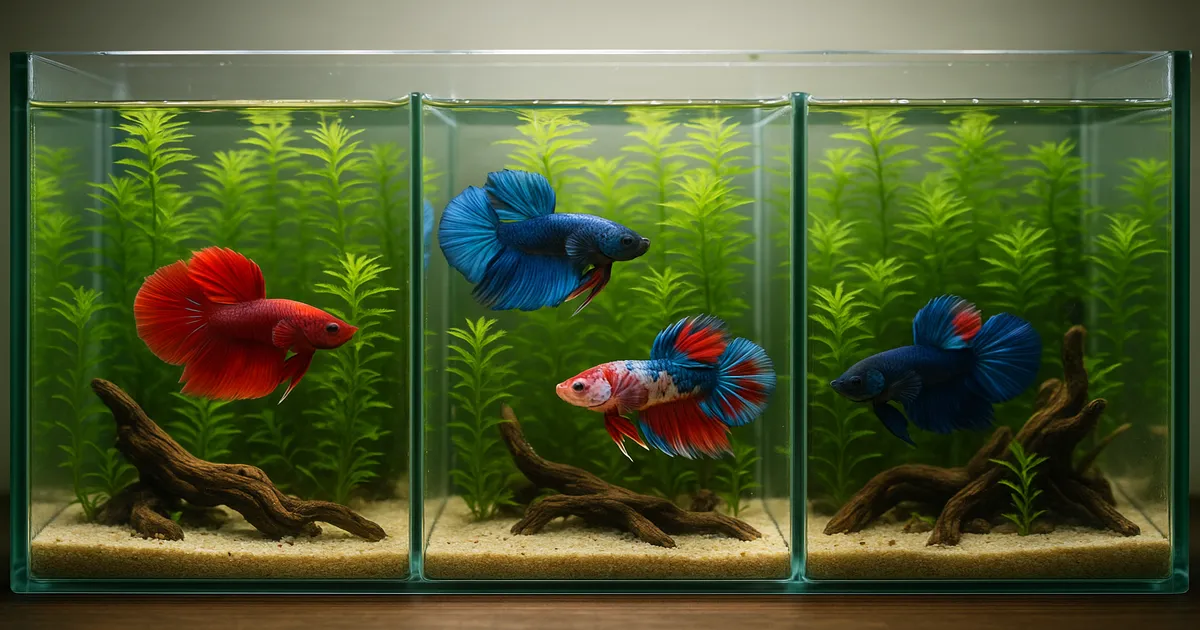
Quick Answer: “Betta fish breeds” refers to the many selectively bred varieties of Betta splendens distinguished by fin shape, tail spread, and color pattern — not separate species in the biological sense. The genus Betta contains 73 recognized wild species, but most aquarium bettas belong to a single species with dozens of ornamental forms. This guide covers every major fin type, color morph, and wild species worth knowing, plus everything you need to keep them thriving.
If you’ve ever stood in front of a pet store shelf marveling at the sheer variety of betta fish breeds on display, you’re not alone. From spiky crowntails to ruffled rosetails to fish that shimmer like hammered copper, the diversity is genuinely stunning — and that’s before you get into wild species most hobbyists have never heard of. This guide covers all of it.
What Are Betta Fish Breeds?
Species vs. Selectively Bred Varieties
In biology, “breeds” technically applies to domesticated animals selectively bred by humans. For bettas, that means the many ornamental varieties of Betta splendens — the Siamese fighting fish — developed over generations for extreme fin shapes and vivid colors. These aren’t different species; they’re more like the aquarium equivalent of dog breeds.
The genus Betta itself is a different story. It contains 73 recognized wild species, from the peaceful Betta imbellis to the prized Betta macrostoma. All share one defining trait: the labyrinth organ, a specialized structure that lets them breathe air directly from the surface.
How Many Betta Fish Breeds Exist?
There’s no fixed number. Breeders recognize around 10–15 primary fin types and dozens of color patterns, which combine in almost endless ways. When hobbyists ask about “betta fish breeds,” they almost always mean these ornamental varieties of B. splendens — native to the slow-moving waters, rice paddies, and floodplains of Southeast Asia.
Betta Fish Breeds by Tail and Fin Type
Veiltail (VT) — The Most Common Betta
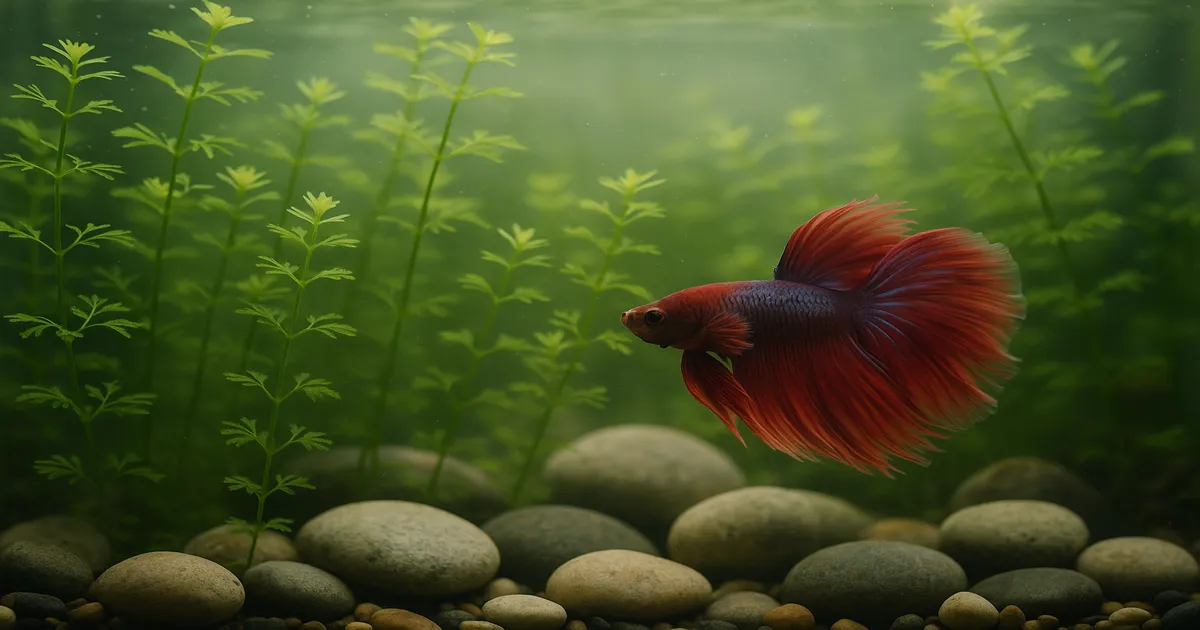
The veiltail is what most people picture: a long, flowing, asymmetrical tail that droops downward. It’s the most widely available variety and generally the hardiest, making it a solid choice for beginners. A healthy male veiltail in full color is genuinely beautiful — don’t underestimate it.
Crowntail (CT) — Spiky and Striking
Crowntails have dramatically reduced webbing between fin rays, creating a spiky, crown-like appearance. The effect ranges from subtly spiked to wildly elaborate depending on the degree of web reduction. They’re widely available and hold up well in typical home aquariums.
Halfmoon (HM) — The Show-Quality Standard
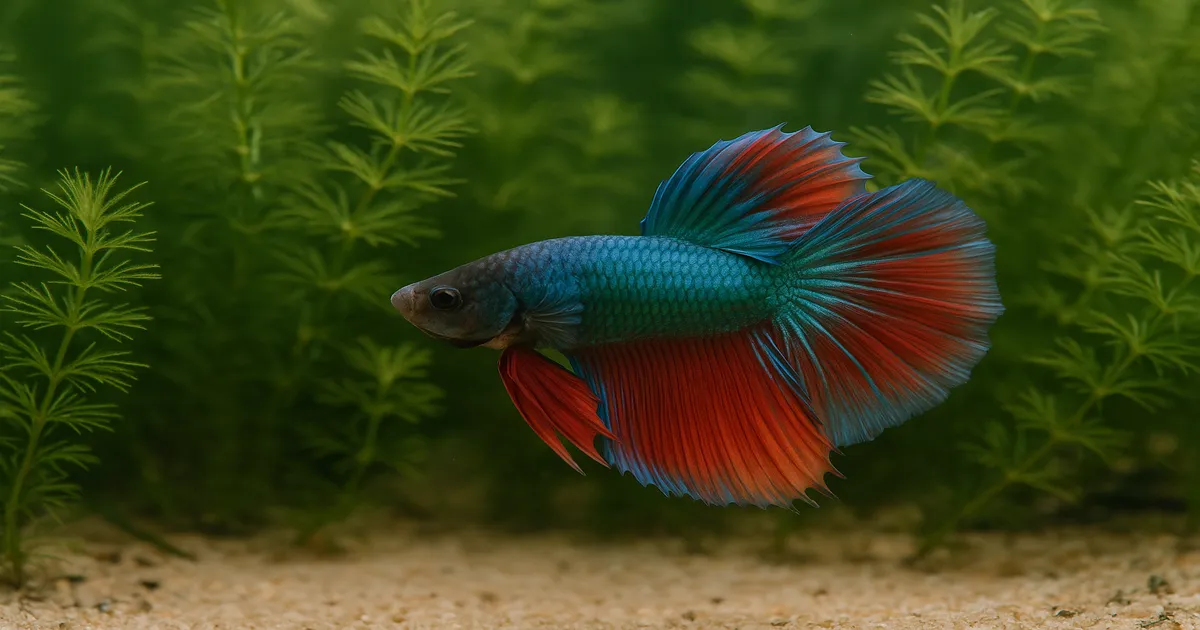
The halfmoon’s caudal fin spreads to a full 180°, forming a perfect “D” shape when flared. This is the benchmark for competitive showing. Long fins require smooth decorations, gentle filtration, and pristine water to prevent tearing and fin rot.
Double Tail (DT) — Two-Lobed Caudal Fin
Double tails have a caudal fin split into two distinct lobes and typically a shorter, deeper body than other varieties. The genetic trait causing the split tail also tends to produce a doubled dorsal fin — an interesting quirk of the mutation.
Plakat (PK) — The Wild-Type Short-Fin
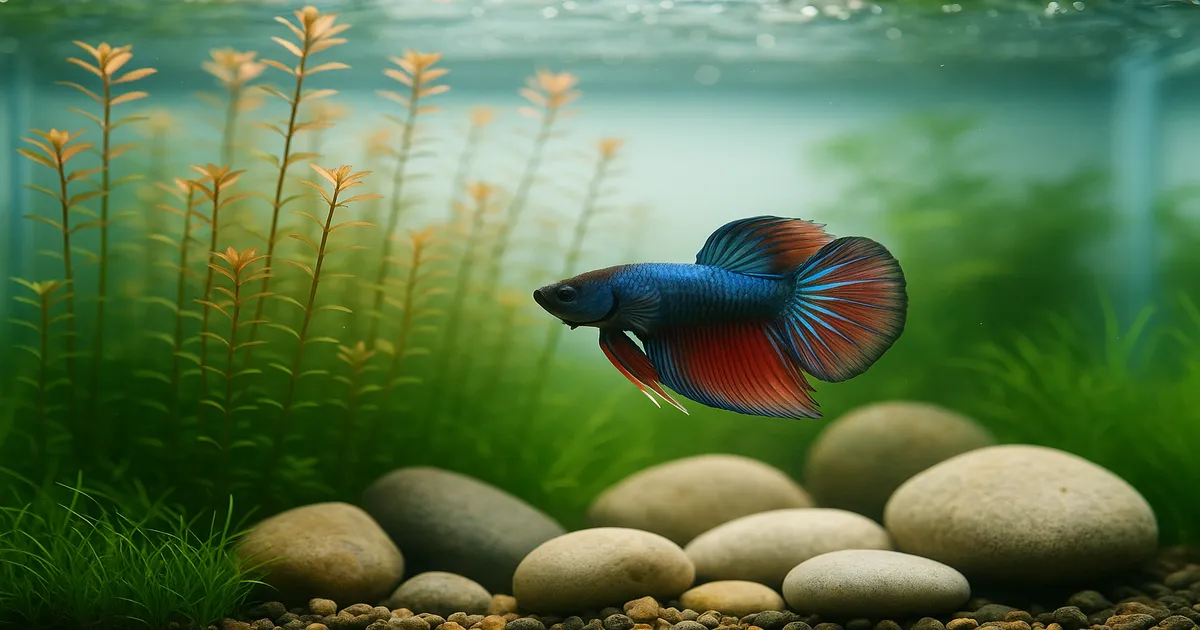
Plakats have short, rounded fins much closer to wild B. splendens than their long-finned cousins. They’re faster, more active, and far less prone to fin damage. Many keepers argue they show more personality too. If you want a betta that actually zips around the tank, a plakat is your fish.
Halfmoon Plakat (HMPK) — Short Fins, Full Spread
The HMPK combines the short fins of a plakat with the 180° tail spread of a halfmoon. Highly sought after in competitive showing, they display the full halfmoon spread without the fragility of long fins — a practical choice for keepers who want a show-quality fish they can actually manage.
Super Delta (SD) — One Step Below Halfmoon
Super deltas spread between 120° and 179° — impressive, but just shy of the halfmoon standard. In practice, many fish sold as halfmoons are technically super deltas. They’re beautiful and a touch more forgiving to keep than true halfmoons.
Rosetail and Feathertail — Ruffled Extreme Variants
These halfmoon variants are taken further, with heavily branched, overlapping fin rays that create a ruffled, rose-petal effect. Stunning in photos, but the excessive fin tissue is prone to deterioration, self-biting, and tears. Best suited to experienced keepers who can maintain ideal conditions consistently.
Dumbo / Elephant Ear (EE) — Oversized Pectoral Fins
Dumbos are defined by dramatically enlarged pectoral fins resembling elephant ears. The trait appears in combination with any tail type — dumbo halfmoons, dumbo plakats, and more. The large pectorals don’t cause health issues but make the fish look especially expressive when flaring.
Fin Type Comparison Table
| Variety | Tail Spread | Rarity | Beginner-Friendly? |
|---|---|---|---|
| Veiltail | Asymmetrical droop | Very common | ✅ Yes |
| Crowntail | Variable | Common | ✅ Yes |
| Halfmoon | 180° | Moderate | ⚠️ With care |
| Double Tail | Two lobes | Moderate | ⚠️ With care |
| Plakat | Short/rounded | Common | ✅ Yes |
| HMPK | 180° (short fin) | Less common | ⚠️ With care |
| Super Delta | 120°–179° | Moderate | ✅ Yes |
| Rosetail/Feathertail | 180°+ ruffled | Less common | ❌ Advanced |
| Dumbo/Elephant Ear | Any | Moderate | ✅ Yes |
Betta Fish Color Patterns and Morphs
Color comes down to the interplay of pigment cells and iridophores — specialized reflective cells that produce metallic and iridescent effects. Selective breeding amplifies or suppresses these cells to create the patterns below.
Solid colors: Red and blue are most common. True black (melano) and white (cellophane or opaque white) are rarer. Yellow bettas are less frequently seen and harder to breed to a clean, even tone.
Marble bettas display irregular blotches of color on a lighter base — and their colors can shift throughout their lifetime. This happens because marble bettas carry a transposon, sometimes called a “jumping gene,” that causes pigment cells to activate or deactivate unpredictably. A blue-and-white marble might turn mostly red over a year. It’s one of the most biologically interesting traits in the hobby.
Koi and Galaxy / Nemo patterns mimic the orange, black, and white patterning of koi pond fish. Galaxy and “Nemo” bettas add multi-colored spotting — typically orange and black on a white or yellow base. Both command premium prices.
Dragon scale bettas have thick, metallic, iridescent scaling that covers much of the body. Striking fish, but worth monitoring as they age: the gene responsible for heavy scaling can cause overgrowth that eventually affects the eyes, leading to partial or complete blindness in some individuals.
Butterfly, Mustard Gas, and Metallic morphs: Butterfly bettas show a clean two-tone split between body and fin color. Mustard gas bettas typically pair a dark blue or green body with yellow or orange fins. Copper and metallic morphs are defined by an almost mirror-like sheen produced by intense iridophore expression.
Wild Betta Species Worth Knowing
Most hobbyists never look beyond B. splendens, but wild species are genuinely rewarding — often more behaviorally complex and visually subtle.
- Betta imbellis (Peaceful Betta) — Less aggressive than B. splendens; males can sometimes coexist in well-planted tanks. Prefers soft, slightly acidic water (pH 5.5–6.5, GH 1–5 dGH) and does well in nano setups.
- Betta smaragdina (Emerald Betta) — Iridescent green scaling, bubble-nesting, similar temperament to B. splendens. Found in Thailand and Laos.
- Betta mahachaiensis (Brackish Specialist) — Described from coastal habitats near Bangkok; tolerates and arguably prefers slightly brackish conditions. Needs pH 7.0–8.0 and harder water (GH 8–15 dGH) — essentially the opposite of blackwater species.
- Betta albimarginata / Betta channoides (Borneo Mouthbrooders) — Paternal mouthbrooders from Borneo; the male incubates eggs in his mouth. Smaller and more peaceful than B. splendens; prefer soft, acidic blackwater (pH 5.0–6.5).
- Betta macrostoma (Brunei Beauty) — Arguably the most coveted wild betta. Large, stunning, paternal mouthbrooder from Brunei and Sarawak. Rare, expensive, and best left to experienced keepers with a dedicated species tank.
- Betta fusca (Dusky Betta) — Native to Sumatra, reaches about 3.2 inches. A mouthbrooder that thrives in soft, acidic, tannin-rich blackwater. Less commonly kept but appeals to serious species enthusiasts.
Ideal Water Parameters for Betta Fish Breeds
Temperature, pH, and Hardness
| Parameter | B. splendens | Wild Blackwater Species | B. mahachaiensis |
|---|---|---|---|
| Temperature | 76–82°F (24–28°C) | 75–80°F (24–27°C) | 75–82°F (24–28°C) |
| pH | 6.5–7.5 | 5.0–6.5 | 7.0–8.0 |
| GH | 3–12 dGH | 1–5 dGH | 8–15 dGH |
| KH | 2–8 dKH | 1–3 dKH | 4–10 dKH |
For B. splendens, aim for pH 6.8–7.0 as a sweet spot. Temperatures below 72°F (22°C) suppress immune function; above 86°F (30°C) stresses the fish and depletes dissolved oxygen. A reliable submersible heater keeps things stable — the Fluval E Series digital heaters are a good choice for smaller tanks.
Ammonia, Nitrite, and Nitrate
- Ammonia: 0 ppm — even 0.25 ppm causes gill damage
- Nitrite: 0 ppm — toxic at any detectable level
- Nitrate: Under 20 ppm ideally; chronic exposure above 40 ppm weakens immunity
Test regularly with a liquid test kit rather than strips, which are notoriously inaccurate.
The Labyrinth Organ Myth
Bettas can breathe air from the surface — but that doesn’t make them immune to ammonia, nitrite, or disease. A betta in a dirty bowl is a stressed, sick betta. The labyrinth organ is an adaptation for low-oxygen environments, not an excuse for poor husbandry.
Tank Setup for Betta Fish
Tank Size
Five gallons (19 liters) is the absolute minimum for a single B. splendens. Bowls and vases can’t maintain stable water parameters and don’t give the fish room to behave naturally. A 10-gallon (38-liter) tank is genuinely better and opens the door to compatible tank mates.
Substrate, Plants, and Decorations
Fine sand or smooth, rounded gravel works best — sharp substrates snag and tear long fins. Dark substrates help reduce stress by mimicking the tannin-stained waters of their natural habitat. Live plants make a real difference: Java fern and Anubias are nearly indestructible and need no special lighting. Floating plants like frogbit provide surface cover for bubble nest building and resting. Avoid anything with sharp edges or rough surfaces — jagged plastic plant leaves will shred long fins within days.
Filtration
Bettas come from still or very slow-moving water. Strong current stresses them, exhausts fish with long fins, and disrupts bubble nest building. A sponge filter is the gold standard — gentle biological filtration with minimal flow. If you prefer a hang-on-back filter, baffle the outflow with a piece of sponge to reduce current.
Lighting and Surface Access
Moderate lighting for 8–10 hours per day suits bettas well and supports plant growth. A consistent light/dark cycle matters more than intensity. Never fully seal a betta tank — the labyrinth organ requires surface air access, and a fish unable to reach the surface will drown. Keep the gap between water surface and lid small, though: bettas jump.
Betta Compatibility and Tank Mates
Male Bettas Must Be Housed Alone
The “Siamese fighting fish” name isn’t decorative. Male B. splendens are hardwired to fight other males. Two males in the same tank will fight until one or both is dead or severely injured. There are no exceptions and no tank large enough to change this. Males may also attack fish with flowing fins or bright colors they perceive as rivals.
Sorority Tanks
Female bettas can sometimes coexist in a “sorority” — a group of five or more females in a heavily planted tank of at least 20 gallons. The key word is sometimes. Sororities require careful monitoring, a stable pecking order, and plenty of hiding spots. They can collapse suddenly and turn lethal. Not recommended for beginners.
Best Tank Mates
- Corydoras catfish — peaceful bottom dwellers
- Kuhli loaches — shy and unobtrusive
- Harlequin rasboras and Ember tetras — small, fast, not flashy enough to trigger aggression in most bettas
- Nerite snails — generally ignored; excellent algae cleaners
- Otocinclus catfish — peaceful algae eaters
Fish and Invertebrates to Avoid
- Other male bettas — never
- Guppies and fancy endlers — flowing, colorful fins read as rival bettas
- Tiger barbs — relentless fin nippers
- Goldfish — incompatible temperature requirements and excessive waste
- Cichlids — generally too aggressive
- Dwarf shrimp (cherry, amano) — many bettas will hunt and eat them
Feeding Betta Fish
In the wild, B. splendens is a carnivore and insectivore. Mosquito larvae, small aquatic invertebrates, zooplankton, and insect pupae make up the bulk of the diet. In captivity, high-quality betta-specific pellets should form the core of the diet — look for 40%+ protein with fish meal, shrimp meal, or whole fish as the first ingredient. Generic tropical flakes don’t cut it nutritionally.
Supplement with frozen or live foods for variety and conditioning: bloodworms, daphnia, and brine shrimp are all excellent. Feed once or twice daily, only what the fish can consume in two minutes, and fast one day per week to prevent constipation — a common issue in bettas.
Frequently Asked Questions About Betta Fish Breeds
Q: What is the rarest betta fish breed? A: Among ornamental varieties, true melano (solid black) bettas and high-quality rosetails are among the rarest. In the wild species category, Betta macrostoma is exceptionally rare and commands high prices.
Q: Can different betta fish breeds live together? A: Fin type doesn’t change the aggression equation. Male B. splendens of any variety cannot be housed together. Females of different varieties can sometimes coexist in a sorority, but it requires careful setup and monitoring.
Q: Do betta fish breeds have different care requirements? A: Mostly no — water parameters and diet are consistent across ornamental B. splendens varieties. The main practical difference is that long-finned breeds (halfmoon, rosetail) need gentler filtration and smoother decorations to protect their fins.
Q: How long do betta fish live? A: Most B. splendens live 2–4 years in captivity with good care. Some reach 5 years. Wild species lifespans vary; B. macrostoma can live longer under ideal conditions.
Q: Are betta fish breeds suitable for community tanks? A: Short-finned varieties like plakats are generally better community tank candidates than long-finned breeds, since they’re less likely to be harassed by fin nippers and less stressed by moderate water movement. Always research specific tank mate compatibility before adding any fish.