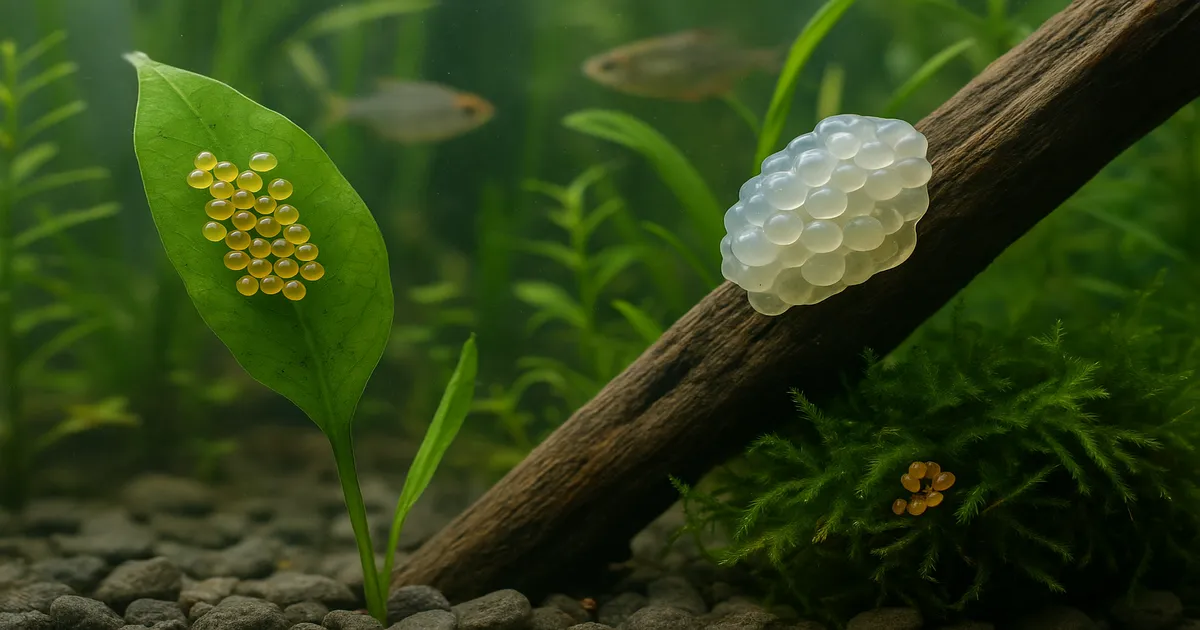
Quick Answer: Those mysterious eggs in your tank most likely came from a fish, snail, shrimp, or amphibian already living there. Narrow down the culprit by looking at where the eggs are, what they look like, and which animals you keep. This guide walks you through identification first, then care.
Spotting unfamiliar eggs in your aquarium is one of the most common surprises in the hobby — and usually a good one. If you’re asking “what are these eggs inside my tank?”, something in there is healthy enough to reproduce. The tricky part is figuring out what laid them, because eggs from different animals look and behave very differently. Location is your best first clue.
What Are These Eggs Inside My Tank? Start Here
How to Use This Guide
Start with location. Eggs above the waterline are almost certainly from a mystery or apple snail. Eggs tucked under a female’s abdomen mean shrimp. Foam at the surface with tiny white spheres? Betta bubble nest. Everything else — scattered on glass, leaves, rocks, or substrate — is likely fish or a bottom-dwelling snail.
From there, cross-reference the appearance with your tank’s inhabitants. The table below gives you a fast starting point.
At-a-Glance Egg Identification Table
| Animal | Egg Description | Typical Location |
|---|---|---|
| Egg-scattering tetras/danios | Tiny, clear/white, 0.5–1 mm | Scattered on plants, substrate, glass |
| Corydoras catfish | Round, sticky, 1–2 mm, clear to white | Glass, broad leaves, substrate |
| Cichlids (substrate spawners) | Oval, 2–4 mm, cream or amber | Flat rocks, cleaned pits, substrate |
| Betta (bubble nest) | Tiny white spheres in foam | Water surface |
| Mystery/apple snail | Pink or cream calcified mass | Above the waterline |
| Ramshorn/bladder snail | Clear jelly blob with visible embryos | Glass, plant leaves |
| Nerite snail | Hard white capsules, 1–2 mm | Cemented to hard surfaces |
| Cherry/crystal shrimp | Green, yellow, or orange cluster | Under female’s abdomen |
| Axolotl | Large jelly-coated eggs, 8–10 mm | Plants, hardscape |
Identifying Eggs by Animal Group
Fish Eggs: Scatterers, Substrate Spawners, and Bubble Nest Builders
Fish use six main spawning strategies, each producing eggs in a distinctive location and style.
Egg scatterers — tetras, danios, rasboras, barbs — broadcast tiny semi-transparent eggs (0.5–1.5 mm) randomly over plants, substrate, or through the water column. There’s no parental care; the eggs land wherever they land, and the parents will often eat them given the chance.
Substrate spawners like cichlids and corydoras lay larger, stickier eggs (1–4 mm) on flat surfaces: rocks, glass, or broad plant leaves. Cichlid eggs tend to be oval and cream to amber; corydoras eggs are rounder and usually deposited in clusters on the glass.
Bubble nest builders — bettas, gouramis, and paradise fish — construct a foam raft at the surface using saliva and air bubbles. Tiny white eggs sit inside this nest, guarded by the male.
Mouthbrooders (many African cichlids, some bettas) don’t leave visible eggs in the tank at all. You’ll notice a parent with a noticeably swollen jaw — they’re holding eggs or fry in their mouth.
Cave spawners like bristlenose plecos hide eggs deep inside caves, PVC pipes, or driftwood. You won’t see the eggs; you’ll just notice a male rarely leaving his chosen spot.
Plant and surface depositors like killifish attach individual eggs to plant leaves or spawning mops with a tiny sticky filament. Check moss and fine-leaved plants closely.
Snail Eggs: Jelly Blobs, Pink Masses, and Hard Capsules
Snail eggs are the most common “mystery egg” complaint, partly because pest snails reproduce without a mate and colonise a tank quietly.
- Ramshorn and bladder snails lay small, clear, jelly-like blobs — usually 5–15 mm across — containing 10 to 40 visible embryos. You’ll find them on glass, plant leaves, or hardscape.
- Mystery and apple snails are easy to identify: they deposit firm, calcified clutches of bright pink or cream eggs above the waterline, often on the glass lid or hood. These clutches are 1–3 cm across and feel almost chalky.
- Nerite snails leave hard, white, sesame-seed-sized capsules cemented to rocks, driftwood, and glass. They won’t hatch in freshwater — nerites need brackish conditions to complete their life cycle — so these capsules are mostly a cosmetic nuisance.
Shrimp Eggs: The Berried Female
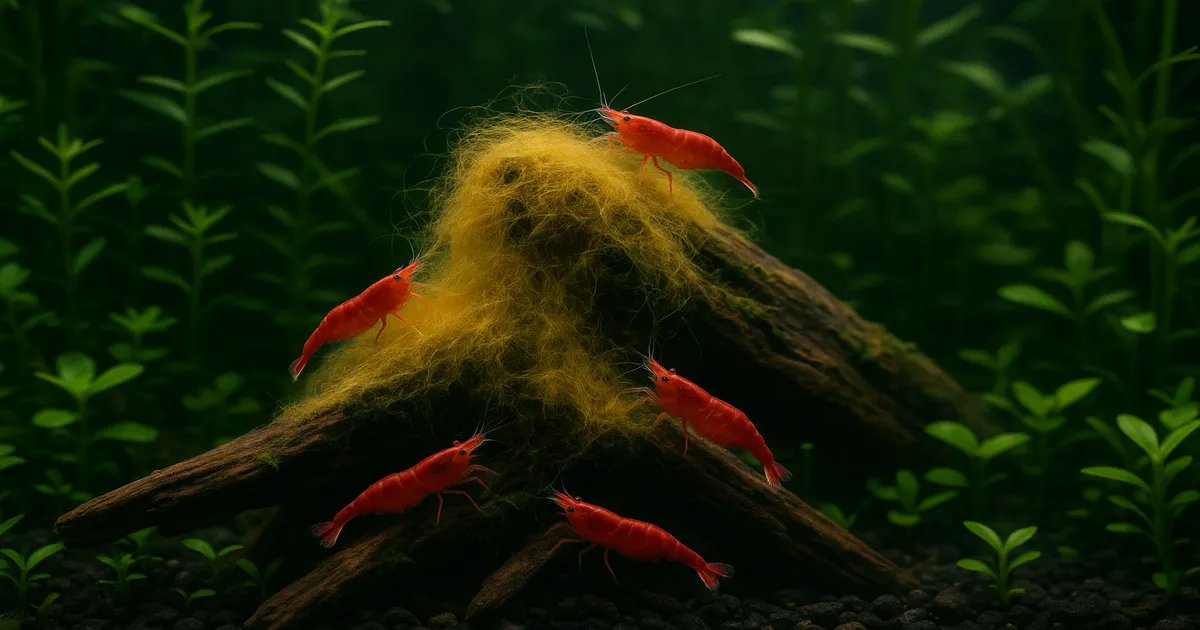
Freshwater shrimp don’t deposit eggs freely in the tank. Instead, the female carries them tucked under her abdomen, attached to her pleopods, fanning them constantly to keep them oxygenated. A female loaded with eggs is called “berried” because the cluster resembles a tiny bunch of grapes.
Egg colour varies by species and development stage. Cherry shrimp (Neocaridina davidi) eggs are often green or yellow when freshly laid, darkening to grey or brown as they mature. Crystal shrimp (Caridina cantonensis) eggs tend to be darker from the start. If you see a small shrimp with a coloured mass under her tail, she’s pregnant — not sick.
Amphibian Eggs: Axolotls and African Dwarf Frogs
Axolotls lay large, individually jelly-coated eggs measuring 8–10 mm, attached to plants or hardscape around the tank. A single clutch can contain hundreds of eggs, so a spawning event is hard to miss.
African dwarf frogs scatter tiny, single eggs at the water surface or on plant leaves. They’re easy to overlook — and most community tank fish will eat them within hours.
Water Parameters for Egg Survival
One rule applies to every species on this list: ammonia and nitrite must be 0 ppm. Eggs are far more sensitive to water quality than adult fish, and even a brief spike can wipe out an entire clutch. Test your water the moment you find eggs — a liquid test kit gives you the most reliable readings.
Egg Scatterers: Tetras, Danios, and Rasboras
- pH: 6.5–7.5; spawning is often triggered closer to 6.0–6.8
- GH: 4–12 dGH; softer water (2–6 dGH) improves fertilisation rates
- Temperature: 75–82°F (24–28°C); a 2–3°F bump often kicks off spawning
- Nitrate: Below 20 ppm; ideally under 10 ppm
Cichlids: South American vs African Rift Lake Species
South American cichlids (angelfish, discus, Apistogramma) need slightly acidic water (pH 6.0–7.0), soft conditions (GH 2–8 dGH), and temperatures of 78–86°F (26–30°C). Tannin-rich blackwater conditions — achieved with driftwood and Indian almond leaves — are especially effective for triggering spawning in Apistogramma and discus.
African Rift Lake cichlids are the opposite: alkaline water (pH 7.8–8.5), hard (GH 10–20 dGH), and high KH (8–15 dKH). Both groups share the 0 ppm ammonia/nitrite requirement and prefer nitrates below 20 ppm.
Corydoras Catfish
- pH: 6.5–7.4
- Temperature: 72–79°F (22–26°C)
- Spawning trigger: A cool water change dropping the temperature 4–6°F (2–3°C) mimics the rainy season and reliably induces spawning
Betta Fish
- pH: 6.5–7.5
- Temperature: 78–82°F (26–28°C)
- GH: 3–10 dGH
Freshwater Snails
Snails need moderately hard to hard water (GH 8–18 dGH) and a pH of 7.0–8.0. Calcium is the critical factor — low GH stunts shell development in hatchlings. Temperature tolerance is broad: 68–82°F (20–28°C) depending on species.
Cherry Shrimp and Crystal Shrimp
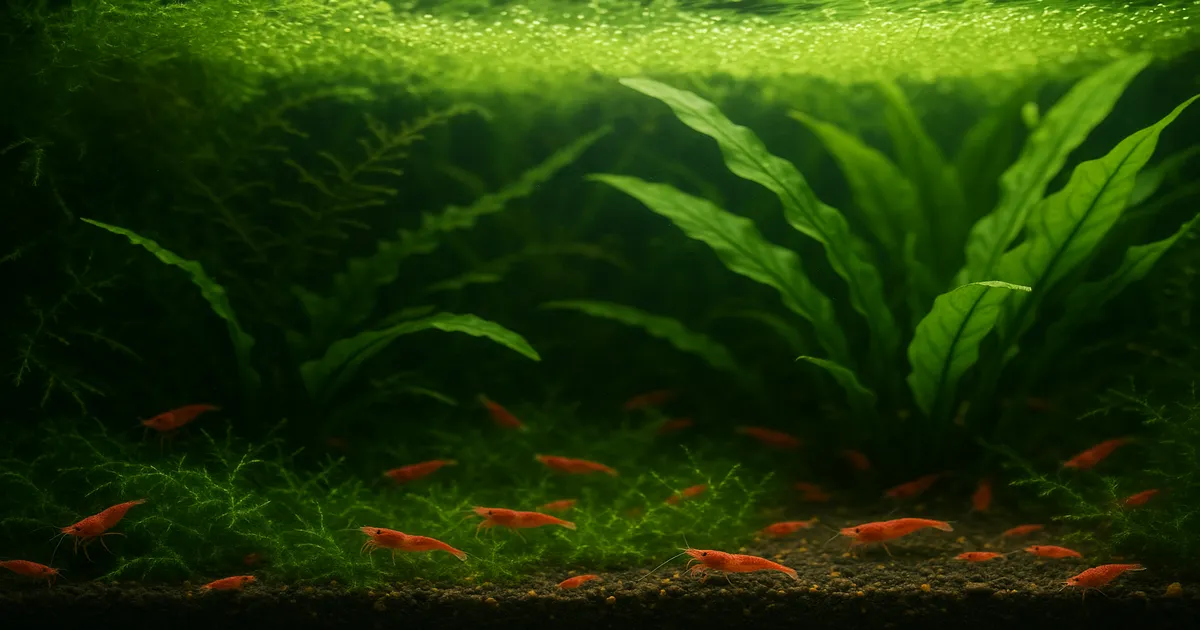
Cherry shrimp (Neocaridina) thrive at pH 7.0–7.8, GH 6–8 dGH, KH 2–4 dKH, and 72–78°F (22–26°C). TDS should sit between 150–250 ppm.
Crystal shrimp (Caridina) are more demanding: pH 6.0–6.8, GH 4–6 dGH, KH 0–2 dKH, temperature 68–74°F (20–23°C), and TDS of 100–180 ppm. A shrimp-specific buffering substrate is almost essential for Caridina. (ADA Amazonia Aqua Soil)
Axolotls
- pH: 7.0–8.0
- Temperature: 60–68°F (16–20°C) — above 72°F (22°C) becomes dangerous
- GH: 7–14 dGH
Tank Setup for Successful Hatching
Filtration: Use a Sponge Filter
A sponge filter is the single best investment for a breeding setup. It provides solid biological filtration with zero suction risk to eggs or fry, and the biofilm that develops on its surface becomes one of the first foods for newly hatched babies.
For community tanks with hang-on-back or canister filters, cover the intake with a fine pre-filter sponge the moment you spot eggs. Fry sucked into a filter intake rarely survive. Keep flow gentle — 3–5× tank volume per hour is enough.
Substrate and Hardscape
- Egg scatterers: Bare-bottom breeding tanks make egg collection easy; Java moss or spawning mops catch eggs naturally
- Corydoras: Smooth fine sand (1–2 mm) — coarse gravel damages their barbels
- African cichlids: Aragonite sand raises pH and KH passively, which suits their water chemistry
- Cichlids and corydoras: Flat rocks and slate are essential spawning surfaces
- Bristlenose plecos: Caves or PVC pipes — the male won’t spawn without one
- Axolotls: Bare bottom or large smooth river stones over 2 cm in diameter — axolotls swallow small gravel and can suffer fatal gut impaction
- Bettas: Floating plants like water lettuce or frogbit give males a sheltered surface for bubble nest construction
- South American species: Driftwood and Indian almond leaves release tannins that acidify and soften water, mimicking blackwater conditions
Lighting and Photoperiod
Aim for 8–10 hours of light per day on a timer. Consistent light/dark cycles regulate breeding behaviour more than most hobbyists realise. Shy spawners — Apistogramma, axolotls, some tetras — do better with dimmer lighting. Floating plants or a lower-wattage bulb can make a real difference. Avoid direct sunlight, which causes temperature swings and algae blooms.
Protecting Eggs in a Community Tank
Almost any adult fish will eat eggs if given the chance. Eggs are a high-protein food source, and fish are opportunists. Tetras, danios, and barbs are the worst offenders — they’ll consume eggs within minutes of spawning. Even the parents of egg-scattering species will eat their own eggs immediately after laying.
Substrate-spawning cichlids like angelfish and Apistogramma guard their eggs fiercely, which is impressive to watch. The downside is that “fiercely” can mean injuring tank mates that wander too close. During a breeding event, a pair of angelfish can terrorise an entire community tank. Consider moving either the breeding pair or the other inhabitants to a separate tank until fry are free-swimming.
For shrimp, safe tank mates include chili rasboras, ember tetras, pygmy corydoras, and otocinclus. Avoid bettas, gouramis, cichlids, loaches, and most barbs — they will predate shrimp and their eggs.
What to Do After Finding Eggs in Your Tank
Step 1: Confirm the species. Use the identification table above. If you’re still unsure, photograph the eggs and cross-reference with the animal group descriptions.
Step 2: Decide whether to raise them. Not every clutch is worth raising. Mystery snail eggs are easy to remove — scrape the clutch off before it dries. Pest snail eggs can be wiped off glass with a magnetic cleaner. For fish and shrimp eggs, decide whether you have the setup and commitment before doing anything else.
Step 3: Optimise water conditions immediately. Test your water right now. Ammonia and nitrite must be 0 ppm. Do a partial water change if either reads above zero, and confirm temperature and pH match the species’ requirements. Don’t wait — eggs can begin dying within hours in poor conditions.
Step 4: Protect eggs from predation. Cover filter intakes. Consider moving eggs or tank mates if predation is likely. Eggs on a removable surface — a flat rock, a piece of slate, a broad leaf — can be carefully transferred to a separate hatching container.
Fertilised vs Unfertilised (Fungused) Eggs
Healthy, fertilised eggs are clear and firm, often with a visible dark dot (the embryo) inside. Unfertilised or dead eggs turn white and develop a fuzzy, cotton-like coating — fungal growth that spreads fast. Remove fungused eggs as soon as you spot them.
Methylene blue is a widely used antifungal treatment for hatching setups. A dilute solution in the hatching container suppresses fungal growth without harming developing embryos.
Feeding Newly Hatched Fry and Juveniles
First Foods for Fish Fry
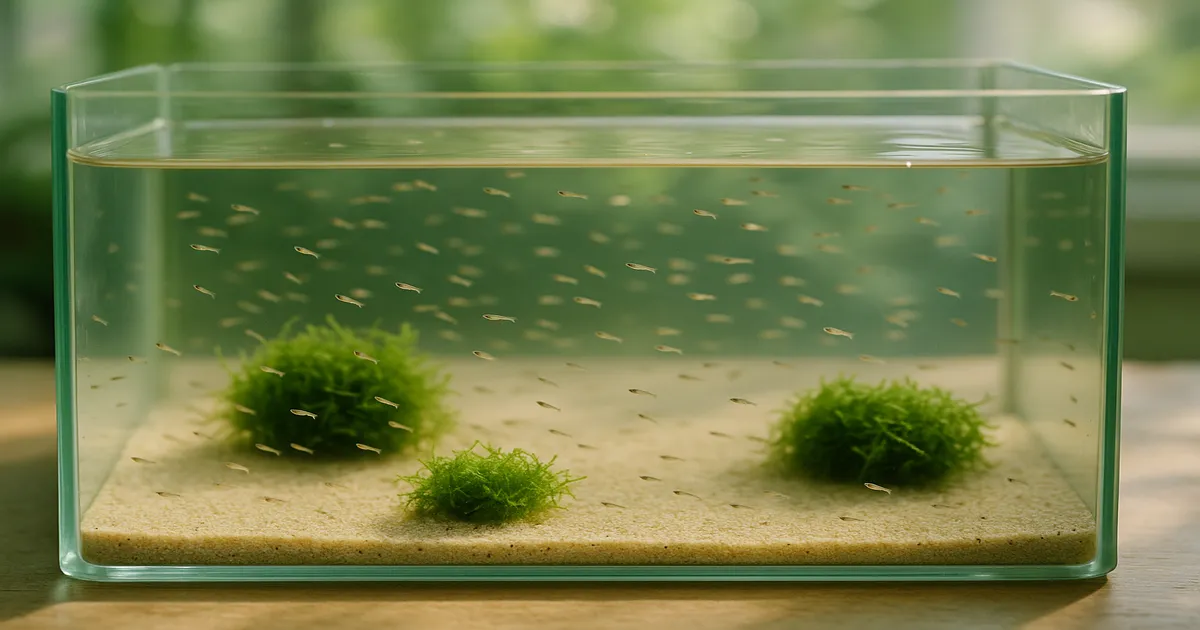
The smallest fry — from tetras, corydoras, and similar species — need microscopic first foods. Infusoria, liquid fry food, and micro worms are the go-to options for the first one to two weeks. Once fry are large enough, baby brine shrimp (BBS) and microworms become excellent staples.
Don’t overlook the sponge filter itself. The biofilm on its surface is a genuine first food that fry graze on constantly — one more reason sponge filters are the breeding tank standard.
Feeding Baby Shrimp (Shrimplets)
Shrimplets are largely self-sufficient in a well-established tank with biofilm and algae. Supplement with powdered shrimp food or crushed spirulina flakes every two to three days. Avoid overfeeding — uneaten food degrades water quality fast, and shrimplets are extremely sensitive to ammonia.
Frequently Asked Questions
Q: What are these eggs inside my tank if I only have snails? Almost certainly snail eggs. Ramshorn and bladder snails reproduce rapidly without a mate (they’re hermaphroditic), so a single snail can start a colony. Check the glass and plant leaves for clear jelly blobs with visible embryos inside.
Q: Are the eggs in my tank fertilised? Fertilised eggs are clear and firm with a small dark dot (the embryo) visible inside. Unfertilised eggs turn white and fuzzy within 24–48 hours as fungus sets in. Remove white eggs promptly to protect healthy ones nearby.
Q: My fish laid eggs — do I need to remove them? It depends on the species. Egg scatterers like tetras have no parental instinct and will eat their own eggs, so move the eggs or the parents immediately if you want survivors. Substrate-spawning cichlids and corydoras often guard their eggs successfully in a species tank, though a community tank makes survival unlikely.
Q: How long do fish eggs take to hatch? Most tropical freshwater fish eggs hatch within 24–72 hours at the correct temperature. Corydoras typically hatch in 3–5 days; cichlid eggs can take 2–4 days depending on species and water temperature. Cooler water slows development; warmer water speeds it up.
Q: Can I move eggs to a separate tank? Yes, and it’s often the best option. Eggs on a hard surface (rock, glass, slate) can be carefully transferred with the surface intact. Scattered eggs can be siphoned gently into a hatching container with a turkey baster. Set up the hatching tank with the same water parameters as the main tank to avoid shocking the embryos.