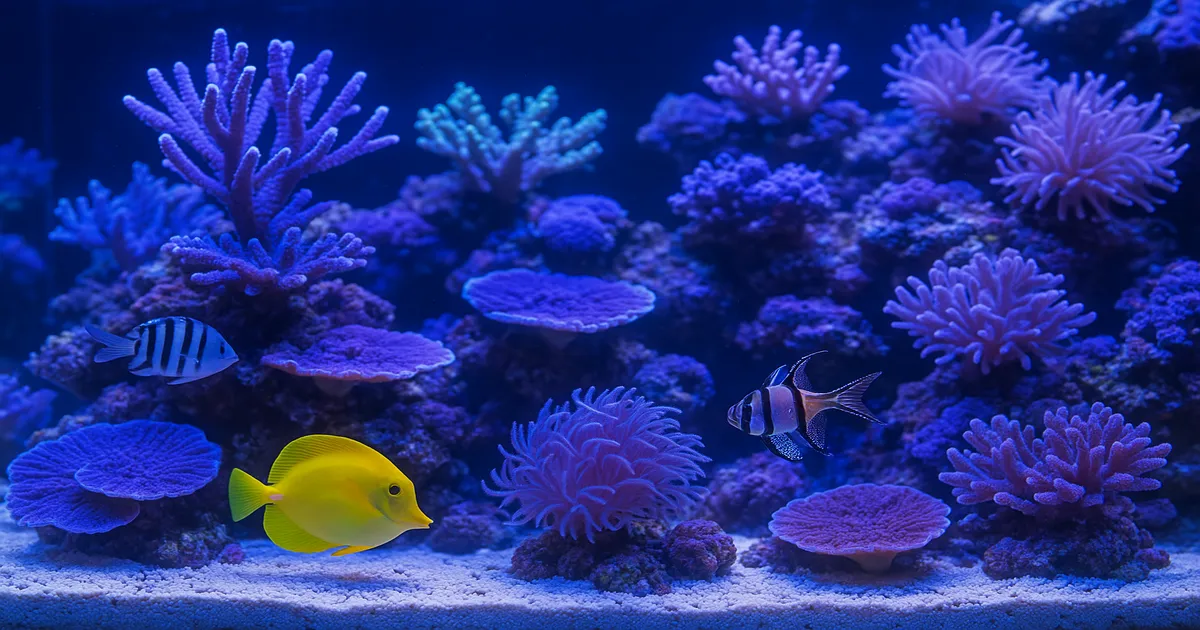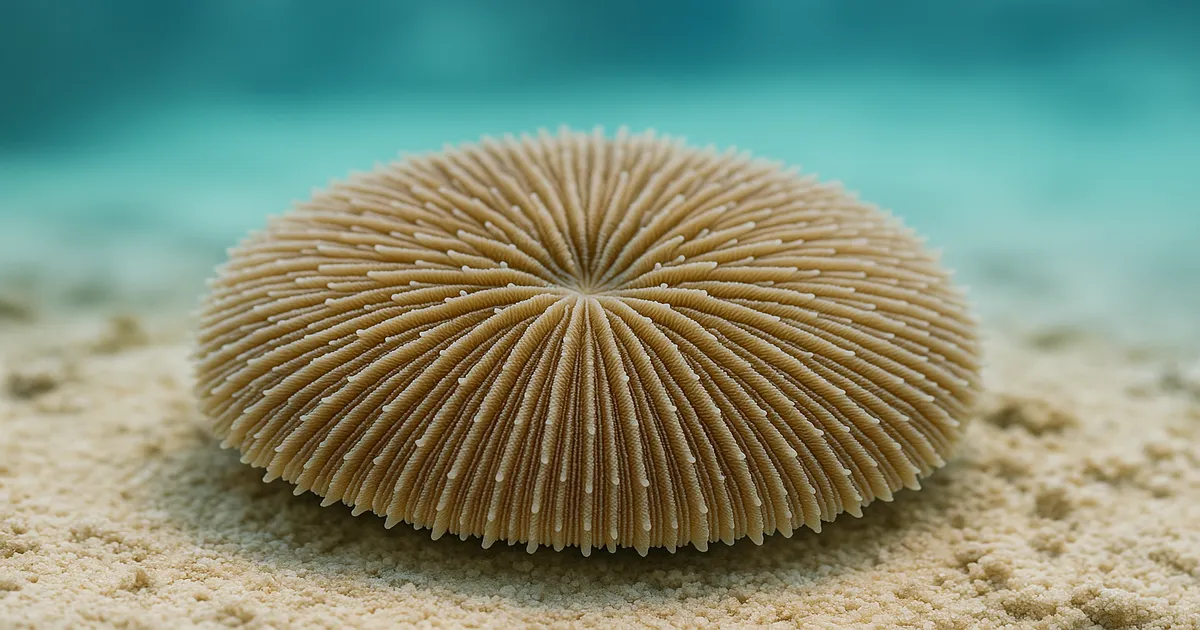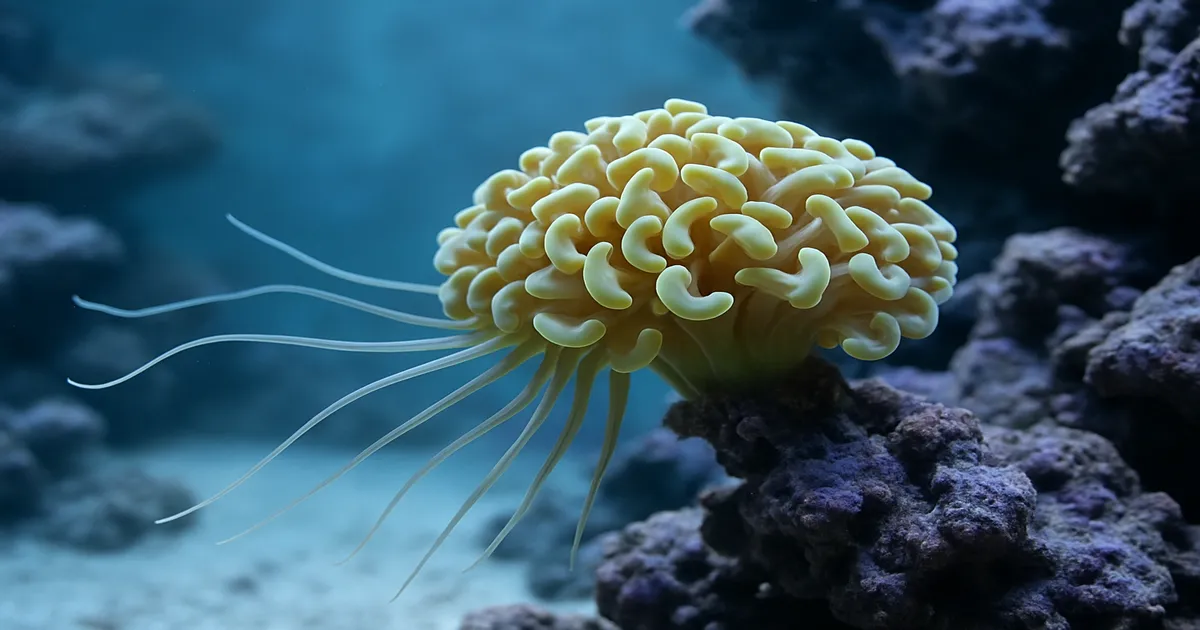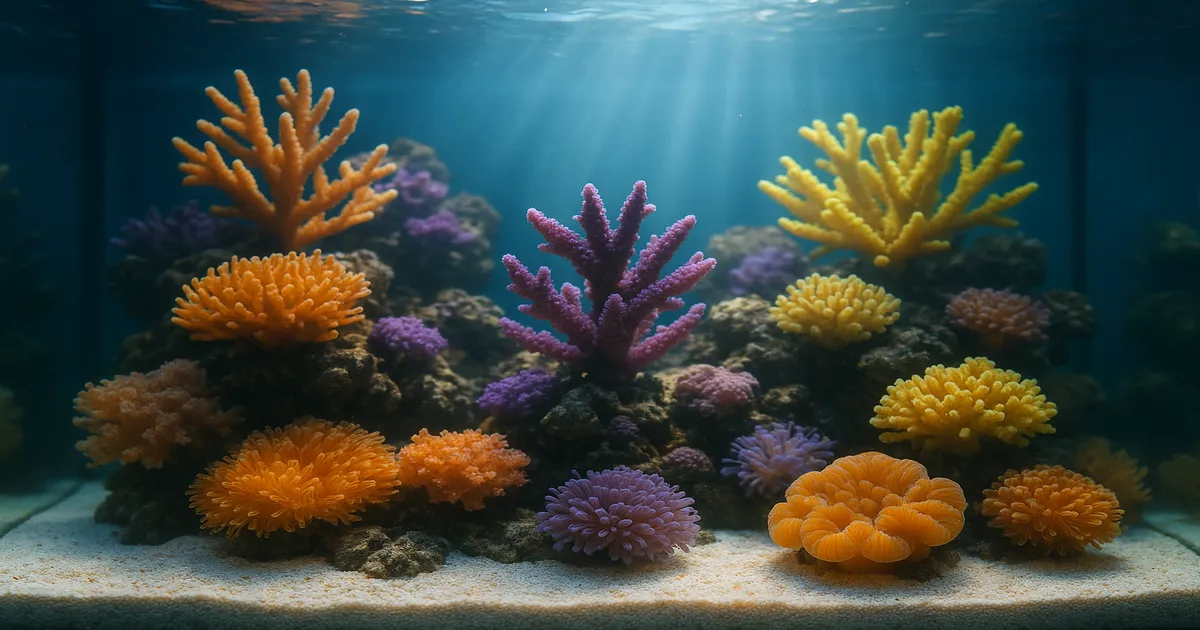
Quick Answer: Coral ID comes down to five main groups — LPS, SPS, soft corals, zoanthids/Palythoa, and mushroom corals (Corallimorpharia). Check polyp size first: large fleshy polyps point to LPS, tiny polyps on a hard skeleton suggest SPS, and no skeleton at all narrows it to soft corals, zoanthids, or mushrooms. Once you know which group you’re looking at, species-level ID follows quickly.
“What is this coral?” is one of the most common questions in the reef hobby — and for good reason. Trade names are inconsistent, taxonomic reclassifications happen regularly, and many species look deceptively similar under store lighting. This guide walks you through coral ID group by group, with water parameters, lighting, flow, and feeding guidance for each type.
How to Identify a Coral at a Glance
The Five Major Coral Groups
Most corals you’ll find at a fish store or in a fellow hobbyist’s tank fall into one of five categories:
- LPS (Large Polyp Stony Corals) — fleshy, often colorful polyps with a visible calcium carbonate skeleton underneath
- SPS (Small Polyp Stony Corals) — tiny polyps on complex, hard branching or encrusting skeletons
- Soft Corals — no rigid skeleton, leathery or rubbery texture, eight feathery tentacles per polyp
- Zoanthids & Palythoa — colonial mat-forming polyps with vivid color morphs, no skeleton
- Mushroom Corals (Corallimorpharia) — flat or dome-shaped discs, no skeleton, often mistaken for anemones
Key Visual Clues
| Visual Trait | What It Suggests |
|---|---|
| Large, fleshy polyps + hard skeleton | LPS (Euphyllia, brain corals) |
| Tiny polyps (<3 mm) + hard branching skeleton | SPS (Acropora, Montipora) |
| Leathery/rubbery texture, no skeleton | Soft coral (leather, xenia) |
| 8 feathery (pinnate) tentacles | Soft coral / octocoral |
| Flat disc shape, no skeleton | Mushroom coral (Corallimorpharia) |
| Colonial mat, polyps with wide oral disc | Zoanthid or Palythoa |
| Orange/red/yellow, no zooxanthellae | NPS coral (sun coral, Dendrophyllia) |
Coral Taxonomy: The Foundation of Coral ID
Coral Polyp Anatomy Basics
Corals belong to the phylum Cnidaria, class Anthozoa — the same broad group as anemones and jellyfish. Each polyp is a simple animal: a soft cylindrical body with a central mouth surrounded by stinging tentacles. In stony corals, the polyp secretes a calcium carbonate cup beneath itself called a corallite — the skeleton you see when a coral bleaches or dies.
Most reef-building corals host zooxanthellae, symbiotic algae living inside the polyp’s tissue. These algae photosynthesize and supply the coral with up to 90% of its energy, which is why light is so critical to coral health.
Hard Corals: LPS vs SPS
Both LPS and SPS belong to the order Scleractinia — the distinction is practical, not a formal taxonomic division. LPS corals have large, fleshy polyps that extend well beyond their skeletal walls, making them look almost like small anemones. SPS corals have polyps smaller than 3 mm; the skeleton dominates the visual impression, and the polyps are often only visible at night or under magnification.
Skeletal architecture differs too. SPS skeletons tend to be intricate — branching, plating, or encrusting with fine surface texture — while LPS skeletons are thicker-walled with larger corallite cups.
Soft Corals: The Eight-Tentacle Rule
Soft corals belong to the subclass Octocorallia. Their defining hallmark is eight pinnate (feather-like) tentacles per polyp. Count the tentacles on any polyp: if you reach eight, you’re looking at an octocoral — leather coral, gorgonian, xenia, or similar. No calcium carbonate skeleton is present, though some species contain tiny internal calcium structures called sclerites that give the tissue its firm texture.
Zoanthids, Mushrooms, and Corallimorpharia
Zoanthids (Zoanthus, Palythoa) are colonial animals that form mats of individual polyps connected at the base. They have no skeleton and belong to their own order, Zoantharia. Mushroom corals (order Corallimorpharia) are closely related to true stony corals but have lost the ability to secrete a skeleton. Their large, flat oral disc — covered in small bumps or tentacles — frequently gets them confused with small anemones. The key difference: mushrooms are sessile and attached to substrate, while anemones can move freely.
Coral ID by Group: Visual Traits, Common Species & Trade Names
LPS Coral ID: Hammer, Torch, Frogspawn, Brain Corals & More
LPS corals are the most beginner-friendly group to identify. Their large polyps are visually dramatic and distinctive.
Key visual traits: Large, fleshy polyps; visible corallite walls; polyps retract when disturbed; wide color range including greens, purples, and golds under blue light.
Commonly encountered genera:
- Euphyllia spp. — hammer coral (anchor-shaped polyp tips), torch coral (long tentacles with round tips), frogspawn (clustered round tips). These three are the most commonly confused LPS corals — polyp tip shape is the quickest way to tell them apart.
- Trachyphyllia geoffroyi — open brain coral; single or a few large polyps with folded, brain-like ridges
- Blastomussa spp. — small circular polyps, colonial; often confused with Acanthastrea (now largely reclassified into Micromussa and Homophyllia — old Acanthastrea labels are outdated)
- Cynarina lacrymalis — doughnut/button coral; single large round polyp, often translucent with the skeleton visible through the tissue
- Catalaphyllia jardinei — elegance coral; elongated tentacles with contrasting tips; notoriously sensitive to water quality
SPS Coral ID: Acropora, Montipora, Pocillopora & Bird’s Nest
SPS corals are identified primarily by skeletal structure, since the polyps themselves are tiny.
Key visual traits: Polyps <3 mm; complex hard skeleton (branching, plating, encrusting, or columnar); surface texture is a major ID clue.
Commonly encountered genera:
- Acropora spp. — the defining SPS genus; axial and radial corallites create a distinctive branching structure; hundreds of species with branching, table, staghorn, and bottlebrush forms
- Montipora spp. — encrusting or plating growth; surface covered in tiny bumps (verrucae); often confused with Porites, but Montipora has a more papery plate structure
- Pocillopora spp. — cauliflower-like branching with small warty bumps; often the first SPS a beginner tries
- Seriatopora hystrix — bird’s nest coral; fine, needle-like branching; unmistakable once you’ve seen it
- Stylophora pistillata — club-like branch tips; denser growth form than Pocillopora
Soft Coral ID: Toadstool Leathers, Colt Coral & Pulsing Xenia
Key visual traits: Leathery or rubbery texture; no rigid skeleton; eight pinnate tentacles per polyp; polyps often retract fully, leaving a smooth or bumpy surface.
Commonly encountered genera:
- Sarcophyton spp. — toadstool leather; distinctive mushroom-cap shape with polyps on the upper surface; one of the most common soft corals in the hobby
- Sinularia spp. — finger or tree leather; lobed or branching form; highly allelopathic — keep well away from stony corals
- Cladiella spp. — colt coral; soft, branching, pale beige to white; polyps give it a fuzzy appearance
- Xenia spp. — pulsing xenia; rhythmic pulsing of the polyps is unmistakable; stalked with feathery crowns
Zoanthid & Palythoa ID: Zoa Gardens, Named Morphs & Palytoxin Warning
Zoanthids are colonial mat-formers with a wide oral disc and vivid colors. The hobby has created hundreds of named color morphs — “Utter Chaos,” “Eagle Eye,” “Rasta” — but these names are marketing, not taxonomy.
Distinguishing Zoanthus from Palythoa: Palythoa polyps typically incorporate sand and sediment into their tissue (the column looks sandy or gritty), and the polyps are generally larger. Zoanthus polyps are smaller with a smoother column.
⚠️ Palytoxin Safety Warning: Palythoa species contain palytoxin, one of the most potent natural toxins known. Never boil, heat, or use a pressure washer on rock that may harbor Palythoa. Always wear nitrile gloves and eye protection when handling. Skin or eye contact with mucus can cause serious illness. If you’re unsure whether your zoanthid is Palythoa, treat it as though it is.
Mushroom Coral ID: Discosoma, Rhodactis & Ricordea
Key visual traits: Flat to dome-shaped disc; no skeleton; oral disc covered in bumps, tentacles, or bubble-like structures; solitary or loosely colonial.
- Discosoma spp. — smooth or lightly textured disc; the most common mushroom coral in the hobby; solid colors or patterns
- Rhodactis spp. — hairy or bumpy surface texture; larger and more aggressive than Discosoma; capable of consuming small fish
- Ricordea florida — Caribbean species; distinctive bubble-like tentacles covering the disc; vivid greens and oranges; commands premium prices
- Ricordea yuma — Indo-Pacific counterpart; similar bubble texture but often with more elongated tentacles; equally colorful
Ricordea are the easiest mushrooms to distinguish from other Corallimorpharia because of their bubble-tentacle texture.
Gorgonian & Sea Fan ID: Photosynthetic vs Non-Photosynthetic
Gorgonians have a branching fan or whip structure supported by a flexible internal axis made of gorgonin protein. The critical ID question isn’t species — it’s whether the gorgonian is photosynthetic or non-photosynthetic (NPS).
- Photosynthetic gorgonians (e.g., Rumphella spp., Antillogorgia spp.) are typically tan, brown, or purple and host zooxanthellae. They need moderate to high light and can survive primarily on photosynthesis with supplemental feeding.
- Non-photosynthetic gorgonians (e.g., Muricella spp., many Caribbean sea fans) are often bright red, orange, or yellow. They require target feeding multiple times per week and will slowly die without it, regardless of lighting quality.
NPS Coral ID: Sun Corals & Cave-Dwelling Species
Non-photosynthetic (azooxanthellate) corals are identified by their vivid warm colors — orange, red, yellow — and opaque tissue (no zooxanthellae means no translucency).
- Tubastrea spp. — sun corals; bright orange or black (T. micrantha); polyps open at night to feed; colonial with a hard skeleton
- Dendrophyllia spp. — similar to Tubastrea but with larger individual polyps; typically yellow to orange
These corals are not suitable for beginners. They require consistent target feeding and will slowly starve in any system that relies on light-driven nutrition.
Water Parameters for Every Coral Type
Universal Reef Parameters
| Parameter | Acceptable Range | Ideal Target |
|---|---|---|
| pH | 7.8–8.5 | 8.1–8.3 |
| Salinity | 1.023–1.026 SG | 1.025–1.026 SG |
| Temperature | 74–82°F (23–28°C) | 76–78°F (24–26°C) |
| Alkalinity (dKH) | 7–12 dKH | 8–9.5 dKH |
| Calcium | 380–450 ppm | 400–425 ppm |
| Magnesium | 1150–1350 ppm | 1250–1300 ppm |
| Ammonia | 0 ppm | 0 ppm |
| Nitrite | 0 ppm | 0 ppm |
| Nitrate | 0–20 ppm | 1–10 ppm |
| Phosphate | 0–0.1 ppm | 0.02–0.05 ppm |
A quality liquid test kit — the Salifert Reef Master Test Kit covers all the major parameters in one box — will give you far more accurate readings than strip tests. For a full elemental breakdown, periodic ICP analysis is worth the cost.
LPS Parameters: Forgiving but Not Foolproof
LPS corals tolerate nitrates up to 20–25 ppm and phosphate up to 0.1 ppm without significant stress — a useful buffer for tanks still dialing in their nutrient export. That said, alkalinity stability matters just as much for LPS as for SPS. A swing of more than 1 dKH per day can trigger bleaching or rapid tissue necrosis (RTN) even in otherwise hardy species like hammer coral.
SPS Parameters: Precision Chemistry Required
SPS corals demand stability above all else. Keep nitrate below 5 ppm, phosphate below 0.03 ppm, and alkalinity fluctuation within ±0.2 dKH per day. Many experienced SPS keepers run a calcium reactor — the Geo Reef Calcium Reactor is a popular mid-range option — or dose two-part solutions to maintain rock-solid alkalinity and calcium around the clock.
Soft Corals & Zoanthids: The Most Tolerant Group
Soft corals and zoanthids handle nitrates up to 30–40 ppm and tolerate pH on the lower end of the reef range (7.8–8.4). They don’t consume calcium and alkalinity at the rate stony corals do, so supplementation needs are minimal. This makes them ideal starter corals for tanks that haven’t fully dialed in their chemistry yet.
Alkalinity, Calcium & Magnesium: The Chemistry Triangle
Alkalinity and calcium work as a pair. Raise one without the other and they precipitate out of solution as calcium carbonate, clouding your water and crashing both parameters simultaneously. Natural seawater runs approximately 420 ppm calcium and 8.3 dKH alkalinity — keep yours close to that ratio.
Magnesium is the often-overlooked third leg of this triangle. Below 1200 ppm, magnesium can’t keep calcium and alkalinity in solution regardless of how much you dose. If your Ca and Alk keep dropping despite regular supplementation, test magnesium first.
Tank Setup: Size, Flow, Light & Filtration
Minimum Tank Size by Coral Group
| Coral Group | Minimum Tank Size | Notes |
|---|---|---|
| Zoanthids / Mushrooms | 10 gal (38 L) | Nano-reef viable |
| Soft Corals | 20 gal (75 L) | Leathers can grow large |
| LPS Corals | 30 gal (114 L) | Euphyllia need sweeper tentacle space |
| SPS Corals | 50+ gal (190+ L) | Larger volume = greater stability |
| Mixed Reef | 75–100+ gal (284–380+ L) | Recommended for long-term success |
Lighting: PAR Ranges for Each Coral Type
| Coral Type | PAR Range | Notes |
|---|---|---|
| Mushrooms / Zoanthids | 50–150 | Low to moderate; blues and whites |
| Soft Corals | 75–200 | Moderate; broad spectrum |
| LPS Corals | 100–300 | Species-dependent |
| SPS Corals | 200–500+ | Blue-heavy spectrum (420–450 nm) |
| NPS Corals | 0–50 | Shade or no light required |
Quality LED fixtures — the AI Hydra 32 HD is a reliable choice for tanks up to 36 inches wide — and T5 fluorescent systems remain the most popular options. Many serious SPS keepers run hybrid T5/LED setups for the combination of PAR penetration and spectral quality. Always acclimate new corals at lower PAR for two to four weeks before moving them to their final position.
Flow: Matching Water Movement to Coral Needs
| Coral Type | Recommended Flow |
|---|---|
| Mushrooms / Zoanthids | Low to moderate (10–20× tank volume/hr) |
| Soft Corals | Moderate, indirect (20–30×) |
| LPS Corals | Moderate, indirect (20–40×) |
| SPS Corals | High, random (40–80×) |
| NPS Corals | Moderate to high, indirect (30–50×) |
Powerheads with random flow modes — the Maxspect Gyre XF330 is well-suited to SPS-dominant systems — prevent dead spots and mimic the variable surge corals experience on natural reefs. Avoid pointing strong flow directly at LPS polyps; indirect, turbulent flow is the goal.
Coral Compatibility & Placement
Corals compete for space using chemical warfare (allelopathy) and physical contact. A few rules of thumb:
- Euphyllia (hammer, torch, frogspawn) can be kept together but will sting unrelated LPS on contact. Keep 6+ inches between them and any non-Euphyllia neighbors.
- Sinularia and other leathers release terpenes that inhibit SPS growth. Run activated carbon — Seachem Matrix Carbon works well in a media reactor — and keep leathers physically separated from stony corals.
- Rhodactis mushrooms can engulf and digest small fish and slow-moving LPS polyps. Place them low in the tank with clear space around them.
- Palythoa and aggressive zoanthids spread quickly and can overgrow neighboring corals. Frag and thin them regularly.
- SPS corals need the most space from everything — chemical stress from soft corals and LPS sweeper tentacles will cause tissue recession at the base.
Frequently Asked Questions About Coral ID
Q: What is the easiest coral to identify? Pulsing xenia (Xenia spp.) is nearly unmistakable — no other common reef coral has that rhythmic, pumping motion. Toadstool leathers (Sarcophyton) and bird’s nest coral (Seriatopora hystrix) are also very distinctive once you’ve seen them once.
Q: How do I tell a zoanthid from a mushroom coral? Look at the growth pattern. Zoanthids form tight colonial mats where individual polyps are connected at the base. Mushroom corals are solitary or loosely grouped, each disc sitting independently on the rock. Zoanthid polyps also have a clearly defined column and oral disc; mushrooms are flatter and disc-like with no distinct column.
Q: What is this coral — is it LPS or SPS? Press gently on the skeleton (when the polyp is retracted). LPS skeletons feel thick and chunky with large corallite cups you can see clearly. SPS skeletons are dense and fine-textured, with corallites often too small to see without magnification. If there’s no skeleton at all, you’re looking at a soft coral, zoanthid, or mushroom.
Q: Can I use trade names to identify a coral species? Not reliably. Trade names like “Utter Chaos” zoanthid or “Purple Monster” hammer coral are marketing labels, not scientific names. The same trade name can be applied to different species — or the same species sold under dozens of different names. Use trade names to track color morphs, but always try to identify the genus at minimum.
Q: Why does my coral look different from the one I saw at the store? Coral color is heavily influenced by lighting spectrum and intensity. A coral under blue-heavy reef lighting will fluoresce very differently than the same coral under white-dominant store lighting. Zooxanthellae density also shifts with light levels, changing the base coloration. Give a new coral four to six weeks to acclimate before judging its true color.