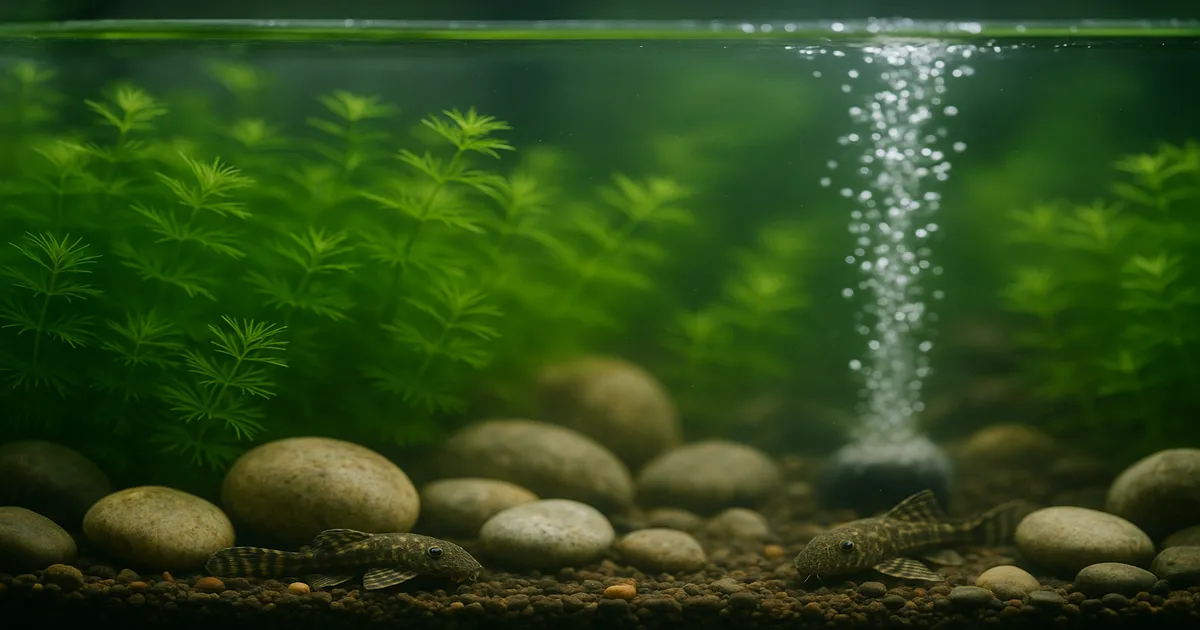
Quick Answer: If your pleco fry are bloated with air, the pump almost certainly isn’t the culprit — that’s one of the most common myths in pleco breeding. Pleco fry cannot swallow harmful amounts of air from a pump or air stone. The real pump-related danger runs the opposite direction: too much surface turbulence can stop fry from gulping the air they need to inflate their swim bladders. True bloating in pleco fry is most often caused by bacterial infection, swim bladder disorder, or overfeeding — all treatable if you catch them early.
Why Are My Pleco Fry Bloated? The Real Causes Explained
Is the Air Pump Actually to Blame?
Not in the way most people think. Pleco fry physically cannot inhale harmful amounts of air from a pump or air stone — their anatomy doesn’t work that way. The actual pump-related problem is the reverse: if your filter or air stone creates too much surface turbulence, fry can’t reach the calm water surface they need to gulp air and inflate their swim bladders. That failure to inflate causes tilting and sinking, which looks a lot like bloating. That’s probably where the confusion started.
The Most Likely Causes at a Glance
- Swim bladder disorder — failure to gulp surface air in the first few days
- Bacterial infection / septicemia — usually triggered by poor water quality
- Constipation / dietary bloating — overfeeding or the wrong food types
- Internal parasites — less common in fry, but possible if parents were infected
- Dropsy — systemic fluid buildup, often a sign of advanced illness
- Gas bubble disease — supersaturated dissolved gases, usually from careless water changes
Understanding Pleco Fry Development
The Yolk Sac Stage: Days 1–5 Post-Hatch
Pleco fry hatch with a large yolk sac attached to their bellies. This sac is their entire food supply for the first three to seven days. During this window they mostly sit still, hide, and absorb nutrients. Don’t feed them yet, and don’t panic if they barely move — that’s completely normal.
Here’s the trap: the yolk sac makes fry look swollen even when they’re perfectly healthy. Many new breeders misread a full yolk sac as bloating and start intervening unnecessarily. If your fry hatched in the last few days and look round, check the age before you reach for medication.
Why Fry Must Gulp Air at the Surface
Once the yolk sac is absorbed, fry face their first real challenge: swimming to the surface to swallow a small bubble of air. That single gulp is what initially inflates the swim bladder. Without it, a fry cannot control its buoyancy — it will sink, tilt, or tumble. Those symptoms look almost identical to bloating, which is why surface access matters so much in the first week.
If you see fry making quick dashes to the surface in those early days, that’s exactly what they’re supposed to be doing. Don’t mistake it for distress.
How Physostomy Works in Pleco Fry
Plecos are physostomous fish. Their swim bladder connects to the digestive tract via a small duct, which means they can’t generate internal gases to fill the bladder the way perch or bass can — they need that first gulp of atmospheric air. Once inflated, the bladder maintains itself, but if a fry misses that critical window, the bladder may never function properly.
Surface access in a fry tank isn’t optional. It’s a biological necessity.
The 6 Real Causes of Bloating in Pleco Fry
1. Swim Bladder Disorder: Failure to Gulp Surface Air
What you’ll see: Fry lying on their sides, tumbling, swimming in circles, or unable to stay near the bottom. The belly may look distended because the fry is tilted or because fluid accumulates secondarily.
What triggers it: Excessive surface agitation from powerheads, strong air stones, or hang-on-back filters that churn the surface — making it impossible for tiny fry to reach calm water.
How to fix it:
- Reduce surface turbulence immediately
- Temporarily lower the water level to 4–6 inches so fry have less distance to travel
- Switch to a sponge filter if you haven’t already
Prevention: Use a single, gentle sponge filter and ensure at least one calm corner of the tank has undisturbed surface water.
2. Bacterial Infection and Septicemia
This is the most common cause of true bloating in pleco fry, and poor water quality is almost always the root trigger. Opportunistic bacteria like Aeromonas and Pseudomonas move fast when ammonia or nitrite spikes.
What you’ll see: Distended abdomen, lethargy, reddening of the skin or belly, fry sitting motionless on the bottom, loss of appetite.
How to treat it:
- Do an immediate 25–30% water change with temperature-matched, dechlorinated water
- Move affected fry to a hospital tank
- Treat with a broad-spectrum antibiotic — Kanaplex or Furan-2 are both effective
- Test your water daily until parameters are stable
3. Constipation and Dietary Bloating
Overfeeding causes problems in two ways: excess food decomposes and spikes ammonia, and fry that eat too much develop constipation. This is especially common when fry are given too much high-protein food without enough fiber.
What you’ll see: Round, distended belly with reduced activity. Fry may not be producing visible waste.
How to treat it: Fast older fry (past the yolk sac stage) for 24–48 hours. Offer blanched daphnia or a tiny piece of cooked, shelled pea — both act as natural laxatives. Increase water change frequency.
4. Internal Parasites
Less common in very young fry, but possible if the parent fish were carrying Hexamita, Spironucleus, or nematodes before breeding.
What you’ll see: Bloating combined with white, stringy feces, wasting, and loss of color. Bloating plus wasting together is a strong indicator of parasites rather than simple constipation.
Treatment: Metronidazole (Metroplex) for flagellate parasites; fenbendazole or levamisole for nematodes.
5. Dropsy (Systemic Edema)
Dropsy isn’t a disease — it’s a symptom of systemic organ failure, usually caused by a bacterial infection that has progressed too far. Fluid accumulates inside the body cavity.
What you’ll see: Severe, uniform bloating and the classic “pinecone” appearance where scales stick out from the body. In tiny fry, the pineconing can be subtle, so use a flashlight and look closely.
Treatment: Prognosis is poor once pineconing appears. You can attempt Kanaplex combined with Epsom salt baths (1 tablespoon per gallon for 15–20 minutes), but prepare for losses.
6. Gas Bubble Disease
If you add cold tap water directly to a warm tank, or use water with supersaturated dissolved gases, tiny gas bubbles can form under the skin and in the fins — causing visible swelling and buoyancy problems.
What you’ll see: Visible bubbles under the skin or in fins, bloated appearance, erratic floating.
Prevention is everything here. Always dechlorinate with a quality water conditioner like Seachem Prime, temperature-match your water changes, and let tap water sit or run through a spray bar to degas before adding it. No medication is needed once the cause is removed.
Water Parameters: The Foundation of Healthy Pleco Fry
Ideal Water Parameters for Pleco Fry
| Parameter | Ideal Range | Acceptable Range |
|---|---|---|
| pH | 6.5–7.2 | 6.0–7.8 |
| Temperature | 78–82°F (25–28°C) | 74–86°F (23–30°C) |
| GH | 4–10 dGH | 2–15 dGH |
| KH | 2–6 dKH | 1–8 dKH |
| Ammonia | 0 ppm | — |
| Nitrite | 0 ppm | — |
| Nitrate | <10 ppm | <20 ppm |
| Dissolved Oxygen | >7 mg/L | >5 mg/L |
Test your water at least every other day during the first few weeks. A reliable liquid test kit is far more accurate than strips and will catch problems before your fry show symptoms.
Even 0.25 ppm of ammonia or nitrite can cause internal organ damage in pleco fry — damage that shows up as bloating, lethargy, and eventually death. Stability matters as much as hitting exact numbers. A fry tank that holds steady at pH 7.0 is far safer than one that swings between 6.5 and 7.5 throughout the day.
Species-Specific Differences
Bristlenose (Ancistrus spp.) are the most forgiving — they tolerate slightly acidic to moderately hard water (pH 6.5–7.8, GH up to 15 dGH) and a wider temperature range. They’re the best starter species for new breeders.
L-number and Hypancistrus plecos (L333, L066, etc.) want warmer, softer, more acidic conditions: 80–86°F (27–30°C), pH 6.0–6.8, GH of 2–6 dGH. They’re less forgiving of parameter swings, and fry are especially sensitive.
Common plecos (Hypostomus, Pterygoplichthys) are hardy adults, but their fry still need pristine water quality. Don’t let the parents’ toughness make you complacent with the babies.
Fry Tank Setup: Preventing Bloated Pleco Fry Before It Starts
Filtration and Surface Calm
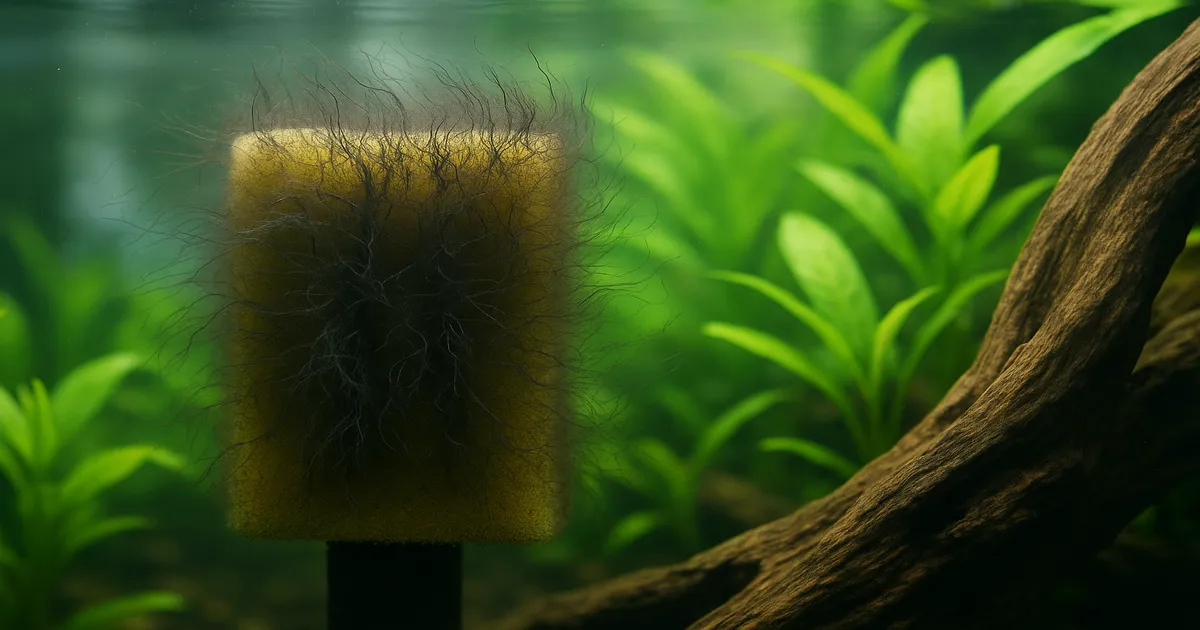
A sponge filter does three things at once: gentle biological filtration, biofilm growth on its surface (a natural first food for fry), and oxygenation without the surface turbulence that prevents air-gulping. For pleco fry, it’s the best tool for the job — not just a budget option.
Position the sponge filter in one corner. Fry will naturally find the calmer areas when they need to gulp air. If you add a supplemental air stone, place it low in the water column and dial the pump to its gentlest output. Bubbles should rise slowly, not churn the surface.
Tank Size, Substrate, and Lighting
A 10–20 gallon tank handles batches of 20–50 bristlenose fry comfortably. A bare-bottom setup is ideal — it makes it easy to spot uneaten food, monitor fry health, and siphon waste. If you prefer substrate, use fine sand with no sharp edges.
Keep lighting dim. Pleco fry are photophobic, and bright overhead lights stress them and drive them into hiding rather than feeding. An 8–10 hour photoperiod with low-intensity light is plenty.
Feeding Pleco Fry: Avoiding Overfeeding-Related Bloating
Days 1–5: Do Not Feed
Adding food to a tank full of fry still absorbing their yolk sacs does nothing for the fry and everything for your ammonia levels. Set up your fry tank 2–4 weeks before the eggs hatch so biofilm has time to establish on surfaces.
First Foods: Days 5–21
Once the yolk sac is absorbed and fry are actively moving:
- Biofilm on the sponge filter and tank walls — they’ll graze this naturally
- Spirulina powder or crushed spirulina wafers dusted onto the water or tank walls
- Blanched zucchini or cucumber — small pieces removed after 12–24 hours
- Hikari First Bites or similar micro-pellets
- Baby brine shrimp — excellent protein source from day 5–7 onward for omnivorous species
Feed 2–3 small amounts per day. If there’s still food on the bottom after a few hours, you’re overfeeding. Remove uneaten food within 12 hours — decomposing food is one of the fastest ways to spike ammonia and trigger the bacterial infections that cause bloating.
Treating Bloated Pleco Fry: Step-by-Step Action Plan
Step 1: Match Symptoms to Cause
| Symptom | Most Likely Cause |
|---|---|
| Tilting, spinning, can’t sink | Swim bladder disorder |
| Pinecone scales, severe swelling | Dropsy |
| Red belly, lethargy, reddened skin | Bacterial infection |
| White stringy feces + bloating | Internal parasites |
| Visible bubbles under skin or fins | Gas bubble disease |
| Round belly, no other symptoms | Constipation |
Step 2: Emergency Water Change
Regardless of the cause, start here. Do a 25–30% water change using temperature-matched (78–82°F), dechlorinated water. Don’t do a massive change all at once — the parameter shock can be as harmful as the problem you’re trying to fix. Test ammonia, nitrite, and nitrate immediately after.
Step 3: Adjust Flow and Surface Access
If swim bladder disorder is suspected, reduce surface agitation right away and lower the water level to 4–6 inches temporarily. A calm surface zone can make the difference between a fry that recovers and one that doesn’t.
Step 4: Treat the Specific Cause
- Bacterial infection: Kanaplex or Furan-2 in a hospital tank
- Parasites: Metroplex (metronidazole) for flagellates; fenbendazole for worms
- Constipation: 24–48 hour fast, then daphnia or pea
- Dropsy: Kanaplex + Epsom salt baths (1 tbsp/gallon, 15–20 minutes); manage expectations
- Gas bubble disease: Degas water and improve water change technique — no medication needed
When to Euthanise
Advanced dropsy with full pineconing, or severe swim bladder disorder that hasn’t responded to treatment after several days, often has no good outcome. The humane option is clove oil euthanasia: add 0.4 ml of clove oil per litre of tank water to a small container, mix well, then place the fry in it. Loss of consciousness is rapid and painless.
Frequently Asked Questions
Can an air pump cause pleco fry to bloat from swallowing air?
No — this is a myth. Pleco fry cannot ingest harmful amounts of air from a pump or air stone. The real pump-related risk is excessive surface turbulence, which prevents fry from gulping the surface air they need to inflate their swim bladders. If anything, a badly positioned pump causes the opposite of bloating: an inability to stay buoyant at all.
Why are my pleco fry floating sideways or upside down?
Sideways or upside-down floating almost always points to swim bladder disorder, usually caused by failure to gulp surface air during the first week. It can also result from a bacterial infection affecting the organs. Check your surface turbulence first, temporarily lower the water level, and test your water parameters to rule out infection.
How do I tell the difference between swim bladder disorder and dropsy?
Look at the scales. Dropsy causes scales to lift outward, giving the fish a pinecone appearance — use a flashlight if the fry are small. Swim bladder disorder shows as tilting, spinning, or inability to maintain depth, but the scales lie flat and the belly isn’t severely swollen. Dropsy is a systemic illness; swim bladder disorder is a mechanical buoyancy problem.
What should I feed bloated pleco fry to help them recover?
For constipation-related bloating, fast the fry for 24–48 hours, then offer blanched daphnia or a tiny piece of cooked, shelled pea. Both act as natural laxatives. For bacterial or parasite-related bloating, focus on medication and clean water first — feeding is secondary until the fry are visibly improving. Once recovering, return to small, frequent meals of spirulina-based foods and avoid high-protein items until the fry are stable.
How often should I do water changes in a pleco fry tank?
During the first four weeks, aim for 20–25% water changes every two to three days. Use a turkey baster or small siphon to remove waste from the bottom without disturbing fry. Always match the temperature of new water to the tank and dechlorinate thoroughly. If ammonia or nitrite registers above zero at any point, increase the frequency immediately.