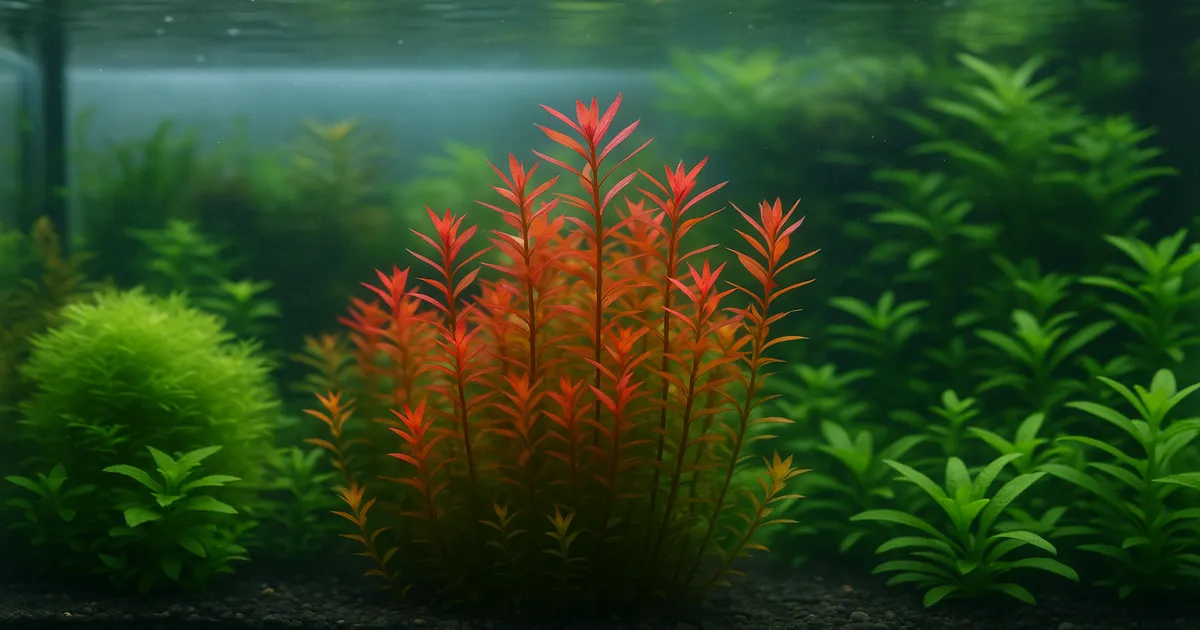
Quick Answer: At 2.5 weeks, red and orange new growth on Mini Super Red and Ludwigia Orange is a healthy sign — not a signal to trim. Hold off until 4–6 weeks post-planting, or until stems have produced at least 5–10 cm of vigorous new submersed growth. Trimming too early disrupts root development at a critical stage.
If you’re wondering whether to trim your Mini Super Red and Ludwigia Orange at 2.5 weeks, and you’re seeing vivid red and orange new growth — relax. Those colors are good news, and the scissors can wait. This guide explains exactly what that new growth means, when trimming is actually safe, and how to keep both plants thriving long-term.
Should You Trim Mini Super Red and Ludwigia Orange at 2.5 Weeks?
The Short Answer: Wait a Little Longer
At 2.5 weeks, your plants are still in the anchoring phase. Roots are just beginning to grip the substrate and build the network they need to draw nutrients. Trimming now removes the growing tips the plant is actively investing energy into — and that can set back root development at exactly the wrong moment.
The rule of thumb: wait until 4–6 weeks after planting, or until you see 5–10 cm of new submersed growth with a firm, stable stem base. That’s your green light.
Why Red and Orange New Growth Is a Positive Sign
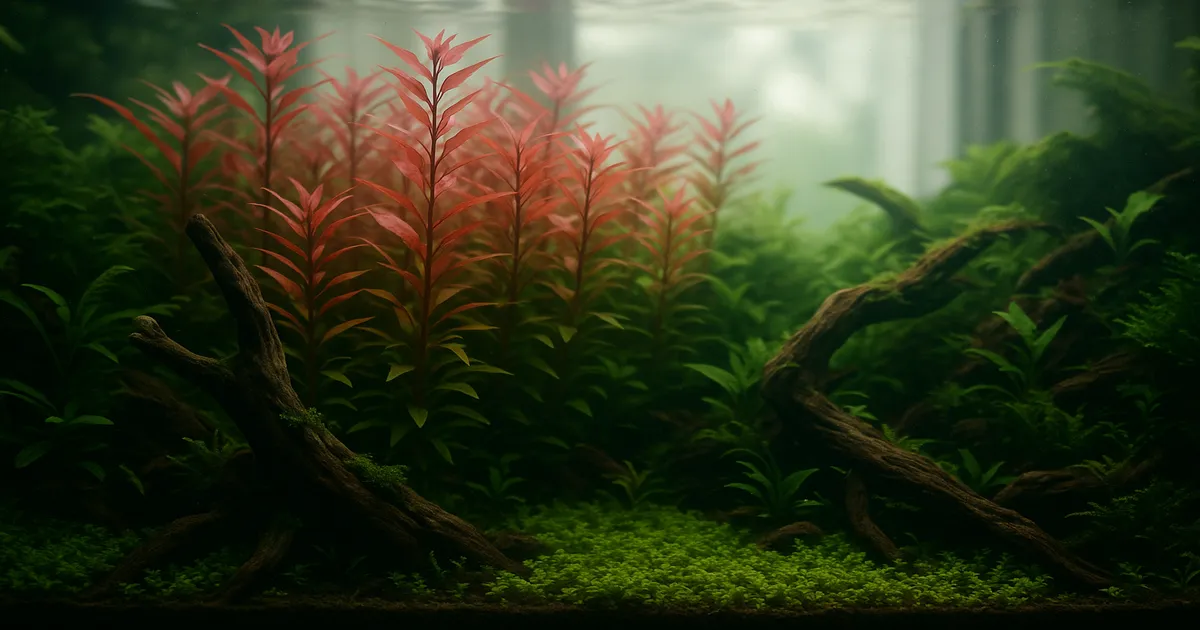
Those vivid colors aren’t stress — they’re the opposite. Ludwigia species produce red and orange pigments (anthocyanins and carotenoids) when they’re actively photosynthesizing under good light. Seeing color on new tips at 2.5 weeks means your plants have cleared transplant shock and are starting to grow. Leave them alone and let that momentum build.
Understanding Mini Super Red and Ludwigia Orange
Mini Super Red (Ludwigia arcuata Compact Form)
Mini Super Red is a compact cultivar of Ludwigia arcuata, native to shallow, slow-moving streams across the southeastern United States — Florida, Georgia, and the Carolinas. In the aquarium it stays relatively small, with needle-thin leaves 1–3 cm long and stems typically reaching 20–40 cm. It’s a staple in Dutch-style and Nature Aquarium layouts for its intense crimson coloration, and once established it grows at a moderate-to-fast pace — expect 2–4 cm per week under good conditions.
Ludwigia Orange (Ludwigia sp. ‘Orange’)
Ludwigia Orange is a cultivar of uncertain parentage, likely involving L. glandulosa or closely related species, developed through selective breeding in Southeast Asian aquaculture. It has broader, more ovate leaves (2–5 cm) and displays a warm copper-orange color on the upper leaf surface. Stems can reach 30–50 cm, making it a strong midground-to-background plant. It grows slightly slower than Mini Super Red in most setups.
Why These Plants Change Color
The red and orange pigments in Ludwigia are triggered by specific conditions: high light intensity, moderate-to-low nitrogen, low phosphorus, and available iron. Anthocyanins drive the reds; carotenoids drive the oranges. Vivid coloration on new growth is a reliable sign that your lighting and nutrient balance are working in your favor.
The Establishment Phase: What Happens in the First 4 Weeks
Transplant Shock and the Emersed-to-Submersed Transition
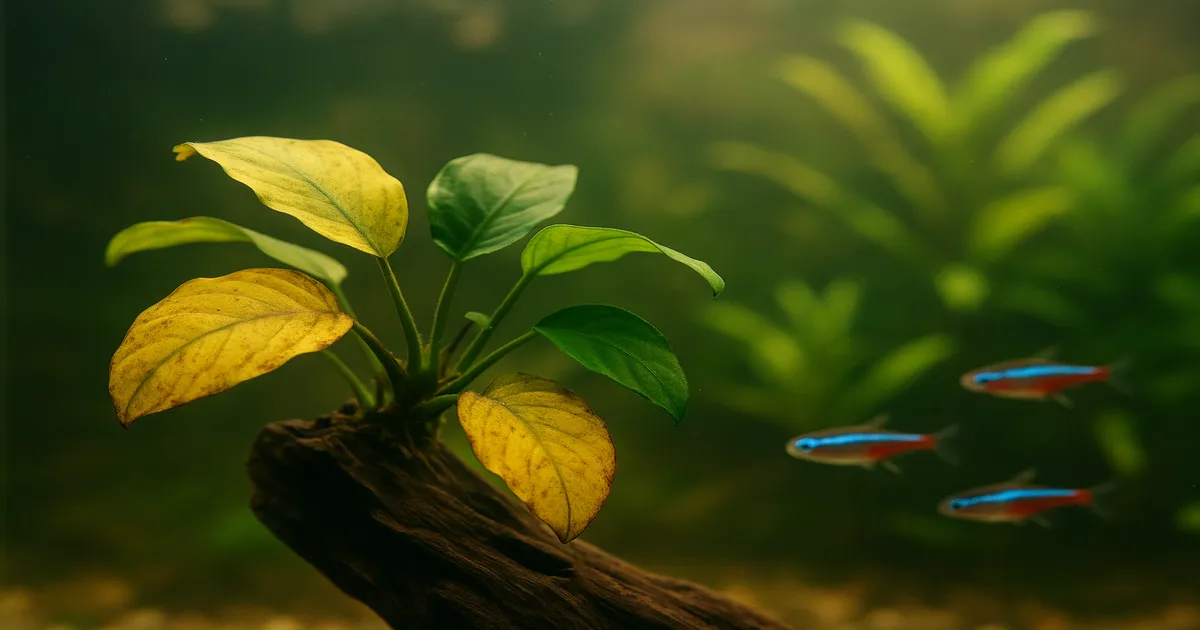
Most Ludwigia sold in stores is grown emersed — above water — on aquatic plant farms. When you plant them underwater, the old emersed leaves are no longer suited to submersed life and will yellow and drop off. This is completely normal and is called transplant melt. Don’t pull the plants. The roots and stem are still alive and working.
The three phases look roughly like this:
- Week 1 (Shock): Old emersed leaves may melt; the plant is conserving energy
- Weeks 2–3 (Anchoring): Roots begin gripping the substrate; first new submersed leaves appear, often with vivid color
- Week 4+ (Active Growth): The stem elongates noticeably and growth rate accelerates
At 2.5 weeks, you’re right in the middle of phase two. The colored new tips you’re seeing confirm the plant is transitioning successfully — but the root system is still fragile. Those growing tips are driving energy downward into root development. Cutting them now interrupts that process.
When Are Mini Super Red and Ludwigia Orange Ready to Trim?
Before you reach for the scissors, check all four of these:
- ✅ 4+ weeks since planting
- ✅ 5–10 cm of new submersed growth visible
- ✅ Stem base feels firm and doesn’t wobble when gently nudged
- ✅ No active melt on new leaves (some yellowing on old lower growth is fine)
If all four are true, you’re good to go.
How to Trim Mini Super Red and Ludwigia Orange
Step-by-Step Trimming Technique
- Use sharp, clean scissors — dull blades crush stems and invite rot
- Cut just above a leaf node, the joint where a leaf meets the stem
- Leave at least 3–4 nodes on the remaining stem in the substrate; this is where side shoots will branch from
- Remove the cut portion from the tank promptly to avoid decomposition
The remaining stem will push out two lateral shoots from the nodes just below the cut, gradually creating bushier, denser growth. Regular trimming is what transforms a sparse single stem into a lush cluster.
What to Do With the Cuttings
Don’t throw them away. Strip the bottom 2–3 cm of leaves from each cutting, then push the bare stem directly into the substrate. In an established tank with good lighting and nutrients, Ludwigia cuttings root within 1–2 weeks. Use them to fill gaps or create new groups elsewhere in the tank.
How Often to Trim After Establishment
Once established, plan on trimming every 2–4 weeks depending on your growth rate and how dense you want the plants to look. More frequent trimming encourages branching and richer coloration. Letting stems grow unchecked too long causes the lower portion to become shaded and drop leaves.
Ideal Conditions for Color and Growth
Water Parameters
Both species do best in slightly acidic water. Here are the target ranges:
| Parameter | Target Range |
|---|---|
| pH | 6.5–7.0 (tolerate up to 7.5) |
| GH | 4–8 dGH |
| KH | 3–6 dKH |
| Temperature | 75–79°F (24–26°C) |
| Nitrate | 5–15 ppm |
| Phosphate | 0.5–2.0 ppm |
| Chelated iron | 0.1–0.5 ppm |
Very hard water (GH above 15 dGH) inhibits iron uptake and directly mutes red pigmentation. Above pH 7.2, both color and growth rate begin to decline. A reliable liquid test kit is worth keeping on hand to track iron and nitrate levels accurately.
The Counterintuitive Nitrate Rule
Lower nitrate intensifies color. At 5–10 ppm, Ludwigia ramps up anthocyanin production and turns a deeper, more saturated red. Push nitrate above 50 ppm and the same plant shifts toward green. That doesn’t mean starving the plant — keep nitrate in the 5–15 ppm range for the best balance of growth and color.
Lighting
Lighting is the single biggest driver of red and orange pigmentation. Aim for 50–100+ PAR at canopy level with an 8–10 hour photoperiod. Full-spectrum fixtures with enhanced red output (650–680 nm) work particularly well — the Fluval Plant 3.0 and Chihiros WRGB II are both solid choices.
One important caveat for new plantings: don’t run full intensity right away. Ramp up gradually over the first 3–4 weeks to avoid triggering algae before the plants are established enough to compete.
Substrate and CO₂
Nutrient-rich aquasoil is the best substrate choice — ADA Amazonia and Fluval Stratum are both excellent. Aim for a minimum depth of 5–7 cm (2–3 inches). If you’re using inert gravel or sand, place root tabs every 10–15 cm near your planting sites to reduce establishment time significantly.
CO₂ injection at 20–30 ppm isn’t strictly required, but it makes a real difference — faster growth, shorter internodal spacing, and noticeably richer color. Liquid carbon products are a partial substitute if you’re not running pressurized CO₂. (Seachem Excel)
Fertilizing During and After Establishment
- Weeks 1–2: Dose at 50% of the recommended rate. Roots aren’t drawing much yet, and excess nutrients feed algae.
- Week 3+: Ramp up to full dose as new growth confirms the plant is actively feeding.
- At 2.5 weeks: You’re right at the transition point — start increasing iron dosing now.
Chelated iron is the most impactful micronutrient for Ludwigia coloration. Dose 2–3 times per week to maintain 0.1–0.5 ppm. If new leaves turn yellow between the veins, iron deficiency is the likely culprit — increase dosing frequency before adjusting anything else. For macronutrients, target N at 5–15 ppm, P at 0.5–2.0 ppm, and K at 5–20 ppm. An all-in-one liquid fertilizer like Easy Green covers most bases and simplifies the routine considerably.
Common Problems and How to Fix Them
Nutrient Deficiency Symptoms
| Symptom | Likely Deficiency | Fix |
|---|---|---|
| Yellowing between veins on new leaves | Iron | Dose chelated iron 2–3×/week |
| Pale yellow older leaves, slow growth | Nitrogen | Raise nitrate to 10–20 ppm |
| Holes or pinholes in leaves | Potassium | Dose potassium sulfate or all-in-one fertilizer |
| Purple leaf undersides, dark slow growth | Phosphorus | Raise phosphate to 1–2 ppm |
Leggy, Pale Growth
If stems are stretching upward with long gaps between leaves and pale color, they’re not getting enough light. Increase intensity or reduce the distance between the fixture and the plant canopy. This is the most common reason Ludwigia fails to color up in otherwise well-maintained tanks.
Algae During the Establishment Phase
New tanks are algae-prone because nutrients are unbalanced and plants aren’t yet consuming them efficiently. Keep light intensity moderate during weeks 1–4, maintain consistent CO₂ if injecting, and make sure phosphate doesn’t drop below 0.5 ppm. The most common culprits are hair algae (excess light, low nutrients), black beard algae (CO₂ fluctuation), and green spot algae (low phosphate).
Frequently Asked Questions
Is red and orange new growth on Ludwigia a sign of stress or health?
It’s a sign of health. Red and orange pigments are produced when Ludwigia is actively photosynthesizing under good light with moderate nutrient levels. Vivid color on new growth at 2.5 weeks means your plants have moved past transplant shock and are beginning to establish.
How long should I wait before trimming newly planted Mini Super Red and Ludwigia Orange?
Wait at least 4–6 weeks from planting, or until stems show 5–10 cm of new submersed growth with a firm, stable base. Trimming earlier risks stressing roots that are still anchoring — a setback that can take weeks to recover from.
Why are my Ludwigia leaves turning green instead of red or orange?
The three most common causes are high nitrate (above 30–50 ppm), insufficient light, or low iron. Try reducing nitrate to the 5–10 ppm range, increasing light intensity, and dosing chelated iron 2–3 times per week. Usually one of these three adjustments solves it.
Can I replant the cuttings after trimming?
Yes — this is the standard propagation method. Cut just above a leaf node, strip the bottom 2–3 cm of leaves from the cutting, and push it into the substrate. In an established tank with good light and nutrients, cuttings typically root within 1–2 weeks.
Do Mini Super Red and Ludwigia Orange need CO₂?
They don’t strictly require it, but injected CO₂ at 20–30 ppm makes a significant difference in growth rate, stem compactness, and color intensity. Without CO₂, both species remain viable with strong lighting and consistent fertilization — just expect slower growth and somewhat less vivid coloration.