Quick Answer: Optimal CO2 for a high-tech planted tank is 25–30 ppm during the photoperiod. The fastest way to check is a drop checker showing green, a KH/pH cross-reference, or watching your fish and plants for behavioral cues. If something feels off with your plant growth or fish health, CO2 is usually the first place to look.
If you’re battling algae, struggling with stunted plants, or just wondering whether your injection system is actually doing its job, asking “do I have optimal CO2 levels?” is exactly the right instinct. The good news: there are reliable, low-cost ways to find out. Once you understand the CO2–pH–KH relationship, dialing things in becomes much more straightforward.
Do I Have Optimal CO2 Levels? A Quick Check
The Target Range at a Glance
For a high-tech planted tank, the sweet spot is 25–30 ppm of dissolved CO2 during the light period. Medium-tech setups can thrive at 15–25 ppm, while low-tech tanks rely on ambient CO2 of just 3–8 ppm. Above 35–40 ppm, you’re entering risky territory for fish and shrimp.
Three Fast Ways to Check Right Now
- Drop checker color — green means you’re on target (~25–30 ppm), yellow is too high, blue is too low
- KH/pH formula — use
CO2 (ppm) = 3 × KH × 10^(7.0 − pH)as a quick estimate (with caveats — more below) - Behavior check — pearling plants and active fish are good signs; gasping fish or algae-covered leaves are not
Why CO2 Levels Matter in a Planted Aquarium
Plants are roughly 45% carbon by dry weight. In a planted aquarium, dissolved CO2 is the primary carbon source — it fuels the Calvin cycle and drives photosynthesis. Without enough of it, even a beautifully lit, well-fertilized tank will underperform.
Think of CO2, light, and nutrients as a three-legged stool. Increase light intensity without raising CO2, and you’re handing your plants an accelerator they can’t use. That excess energy gets hijacked by algae instead. CO2 is almost always the limiting factor, even when light and nutrients seem adequate.
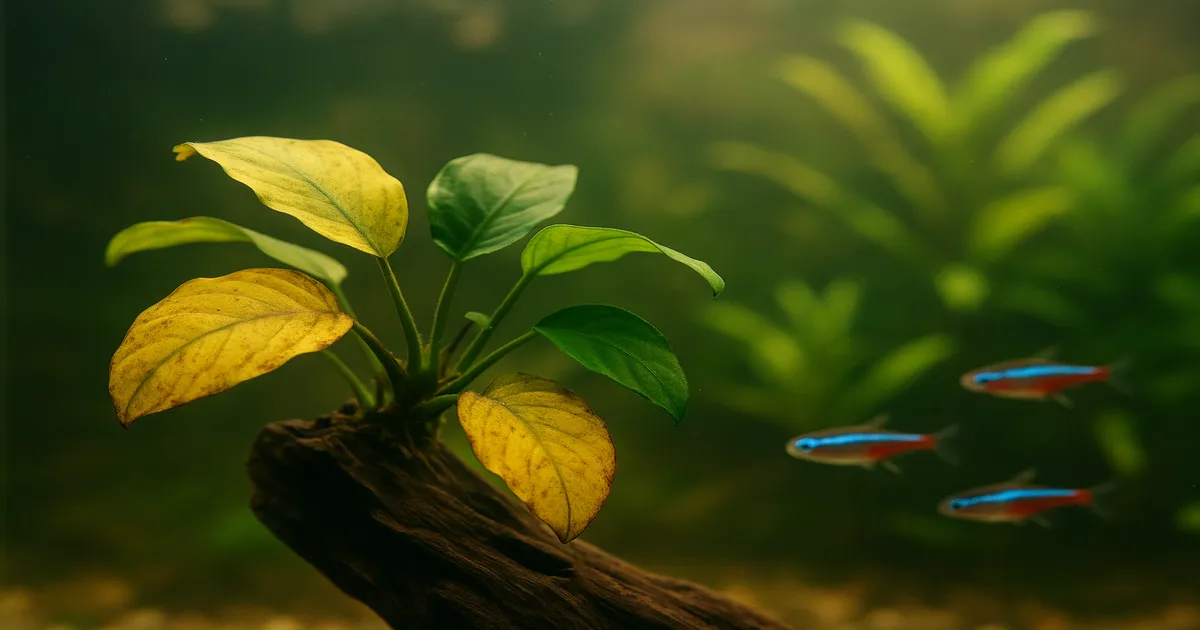
Slow growth, yellowing leaves, and persistent algae outbreaks are the classic symptoms. Many aquarists chase fertilizer deficiencies for months when the real fix is simply more CO2. Natural habitats like the Amazon basin and Indonesian blackwater streams regularly hit 20–50 ppm CO2 — which is exactly why the plants we keep respond so dramatically when we provide elevated levels.
Understanding the CO2–pH–KH Relationship
How Dissolved CO2 Affects pH
When CO2 dissolves in water, it forms carbonic acid, which dissociates into bicarbonate and carbonate ions. More dissolved CO2 means more carbonic acid, which means lower pH. This is why your pH drops when CO2 injection is running and rises when it’s off — it’s direct chemistry, not a malfunction.
The CO2 Estimation Formula (and Its Limits)
The standard formula is:
CO2 (ppm) = 3 × KH (dKH) × 10^(7.0 − pH)Worked example: KH of 4 dKH and pH of 6.8 gives 3 × 4 × 10^0.2 = 3 × 4 × 1.585 ≈ 19 ppm. A pH of 6.6 with the same KH bumps that to about 30 ppm — right in the target zone.
The formula only works when CO2 is the sole acid affecting pH. In blackwater tanks with tannins and humic acids, tanks using phosphate buffers, or setups with CO2 reactors, other acids shift pH independently of CO2. In those cases the formula will overestimate your actual CO2, sometimes significantly. Use a drop checker or calibrated probe instead.
Ideal KH Range for Accurate CO2 Measurement
A KH of 3–5 dKH is the sweet spot — low enough for CO2 injection to produce a meaningful pH drop, high enough to keep the system stable and the formula reasonably accurate. Below 2 dKH, pH becomes erratic and unpredictable. Above 10 dKH, you’ll burn through CO2 trying to move the needle. During injection, aim for a pH of 6.5–7.2, with a daily swing of 0.3–0.5 units considered normal.
How to Accurately Measure CO2 Levels in Your Tank
Drop Checkers: Colors, Placement, and Lag Time
A drop checker filled with 4 dKH reference solution and bromothymol blue is the most practical CO2 indicator for most hobbyists. A reliable option is the Green Leaf Aquariums 4 dKH Reference Solution, which ensures consistent readings.
- 🟡 Yellow → CO2 too high (>30 ppm) — act quickly
- 🟢 Green → CO2 optimal (~25–30 ppm) — you’re dialed in
- 🔵 Blue → CO2 too low (<15 ppm) — plants are starving
Position the drop checker in the lower third of the tank, away from the diffuser and direct filter flow. And remember — drop checkers have a 1–2 hour lag time. The color you see now reflects CO2 levels from an hour ago, so don’t chase it with rapid adjustments.
Using the KH/pH Chart
A KH/pH chart lets you cross-reference your two test results against a CO2 ppm table. It’s the same math as the formula above, just visualized. Use it as a secondary check alongside your drop checker, not as your only data point.
Calibrated CO2 Probes and Electronic Controllers
For precision setups or large planted displays, a calibrated CO2 probe paired with an electronic controller gives you real-time readings and can automate your solenoid valve to maintain a tight CO2 range. The Milwaukee MC122 CO2 Regulator with Controller is a popular choice for this. It’s overkill for most home tanks, but invaluable if you’re running a demanding aquascape or keeping sensitive livestock.
Reading Plant and Fish Behavior
Pearling — tiny oxygen bubbles streaming off plant leaves — is one of the most satisfying signs that photosynthesis is firing and CO2 is adequate. Conversely, slow growth, pale or yellowing leaves, and algae taking hold all suggest CO2 is limiting. Fish actively swimming mid-water and shrimp grazing normally indicate CO2 and oxygen are balanced. Gasping at the surface or clustering near the filter outlet means something is wrong.
Optimal CO2 Levels by Tank Type
| Tank Type | Target CO2 |
|---|---|
| Low-tech / no injection | 3–8 ppm (ambient) |
| Low-tech with liquid carbon | 5–10 ppm |
| Medium-tech planted tank | 15–25 ppm |
| High-tech planted tank | 25–30 ppm |
| Danger zone (most fish) | >35–40 ppm |
| Lethal threshold | >50 ppm sustained |
Temperature and CO2 Solubility
Warmer water holds less dissolved gas — the same reason a cold soda stays fizzy longer than a warm one. At 86°F (30°C), CO2 solubility drops roughly 20–25% compared to 72°F (22°C). If you’re keeping discus or other warm-water species with your heater above 82°F (28°C), you’ll need to inject more CO2 to maintain target ppm — and the margin for error narrows, so monitor fish closely.
Nutrients: The Other Side of the Equation
CO2 doesn’t work in isolation. Target 5–30 ppm nitrate, 0.5–2 ppm phosphate, and 5–20 ppm potassium to give plants the macronutrients they need to capitalize on elevated CO2. A well-planted, well-CO2’d tank will pull nitrate down aggressively — if your readings are consistently near zero, you may actually need to dose more nitrogen, not less.
Keeping CO2 and Dissolved Oxygen in Balance
During the light period, plants consume CO2 and produce oxygen. At night, that flips — plants respire, consuming O2 and releasing CO2. Dissolved oxygen should stay above 6 mg/L at all times. Running CO2 overnight is one of the most common causes of morning fish deaths in planted tanks. A solenoid timer that shuts off CO2 before lights-out, combined with slightly increased surface movement overnight, keeps both gases in safe ranges.
Setting Up Your Tank for Stable, Optimal CO2 Levels
Choosing the Right CO2 Delivery System
Pressurized CO2 — a cylinder with a dual-stage regulator and solenoid valve — is the gold standard. The Aquatek CO2 Regulator Mini is a solid entry-level option that gives you precise, consistent control that DIY yeast setups simply can’t match. DIY yeast is fine for a budget beginner setup, but CO2 output fluctuates with temperature and fermentation stage, making stable levels hard to maintain. Liquid carbon products like Seachem Flourish Excel are a useful supplement in low-tech tanks but won’t replace injection in a high-demand setup.
Diffusers, Reactors, and Inline Equipment
- Inline diffusers (installed in the canister filter outlet line): most efficient, keep equipment out of the tank, excellent dissolution
- CO2 reactors: submerged chambers that dissolve CO2 before returning water — near 100% efficiency
- In-tank ceramic or glass diffusers: effective near good flow; the Fluval CO2 Diffuser produces fine microbubbles and is easy to position
- Avoid large-bubble airstones — poor dissolution, most CO2 escapes before dissolving
Filtration and Surface Agitation
Canister filters are the preferred choice for CO2-injected tanks. They allow inline equipment, minimize surface disturbance, and provide strong biological filtration. Hang-on-back filters create surface turbulence that off-gasses CO2 rapidly — if you’re running one, don’t be surprised if your drop checker stays stubbornly blue. Position your canister outlet below the waterline or use a spray bar directed horizontally to minimize gas loss.
CO2 Injection Timing
Start CO2 1–2 hours before lights turn on so the water is pre-saturated when photosynthesis begins. Turn CO2 off 1 hour before lights go off — plants will use whatever is dissolved before the photoperiod ends, and you avoid CO2 building up overnight. A simple plug-in timer on your solenoid handles this automatically.
Substrate and Lighting
Nutrient-rich substrates like ADA Aqua Soil Amazonia give roots the foundation to exploit elevated CO2 and slightly lower pH, which works with your CO2 chemistry. On the lighting side, always match intensity to your CO2 injection level. High-output lights (80–150+ PAR) without adequate CO2 is the single most common cause of algae outbreaks in planted tanks.
CO2 Safety: Fish, Shrimp, and Invertebrate Compatibility
Most tropical community fish handle 20–30 ppm CO2 without issue when oxygen levels are adequate. CO2 affects fish by acidifying the blood, impairing gill function, and reducing the blood’s ability to carry oxygen. It’s the CO2-to-O2 ratio that determines whether fish are comfortable or stressed — not the CO2 number alone.
Warning Signs of CO2 Overdose
- Surface gasping, especially in the morning before CO2 shuts off
- Lethargy, loss of equilibrium, or fish lying on the substrate
- Rapid gill movement (hyperventilation)
- Fish clustering near the filter outlet
If you see any of these, increase surface agitation immediately, confirm your CO2 is shutting off at night, and dial back your bubble count.
Shrimp and Invertebrates
Dwarf shrimp (Neocaridina, Caridina) are considerably more sensitive to CO2 than fish. Keep CO2 at 15–20 ppm maximum in shrimp-focused planted tanks. The classic warning sign is “crazy shrimp” behavior — erratic, frantic swimming that looks like the shrimp are trying to escape the water. This is a CO2 emergency. Boost surface agitation, reduce injection, and act fast. Shrimp can go from stressed to dead within minutes of a CO2 spike.
Species That Need Special Consideration
| Species | Notes |
|---|---|
| Discus | Warm water reduces CO2 solubility — monitor carefully above 82°F (28°C) |
| Hillstream loaches | Need highly oxygenated water; high CO2 and low O2 is dangerous |
| Axolotls | Cold-water, O2-sensitive — CO2 injection not appropriate |
| Goldfish / Koi | High O2 demand, cold water — CO2 injection not appropriate |
| Shrimp (all species) | Cap CO2 at 15–20 ppm; watch for erratic behavior |
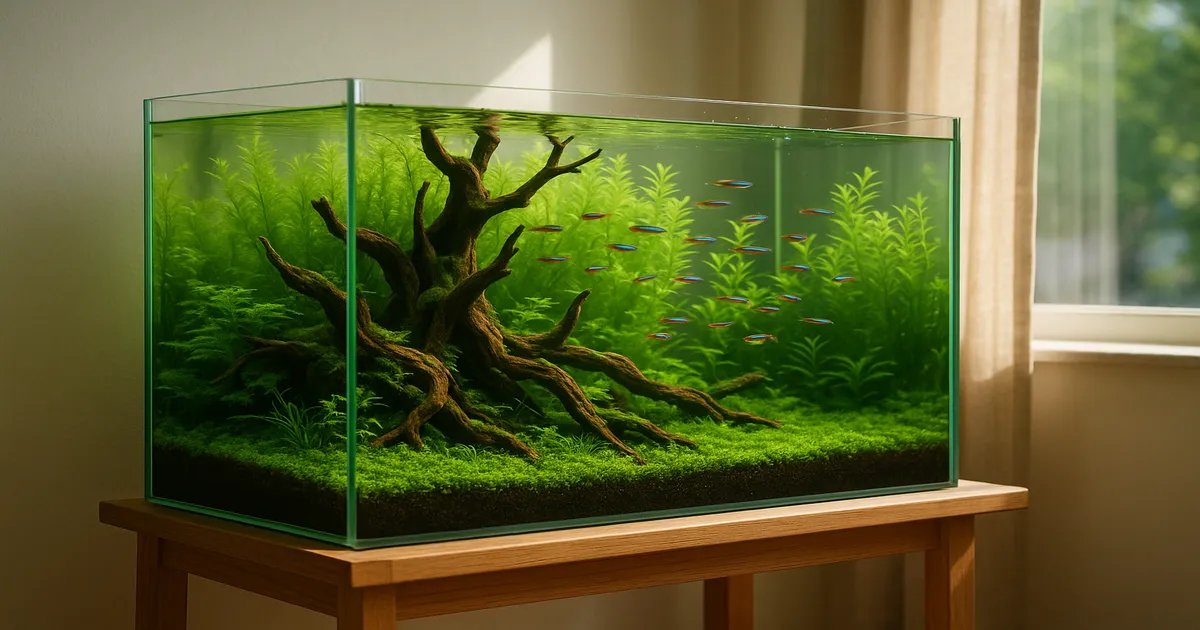
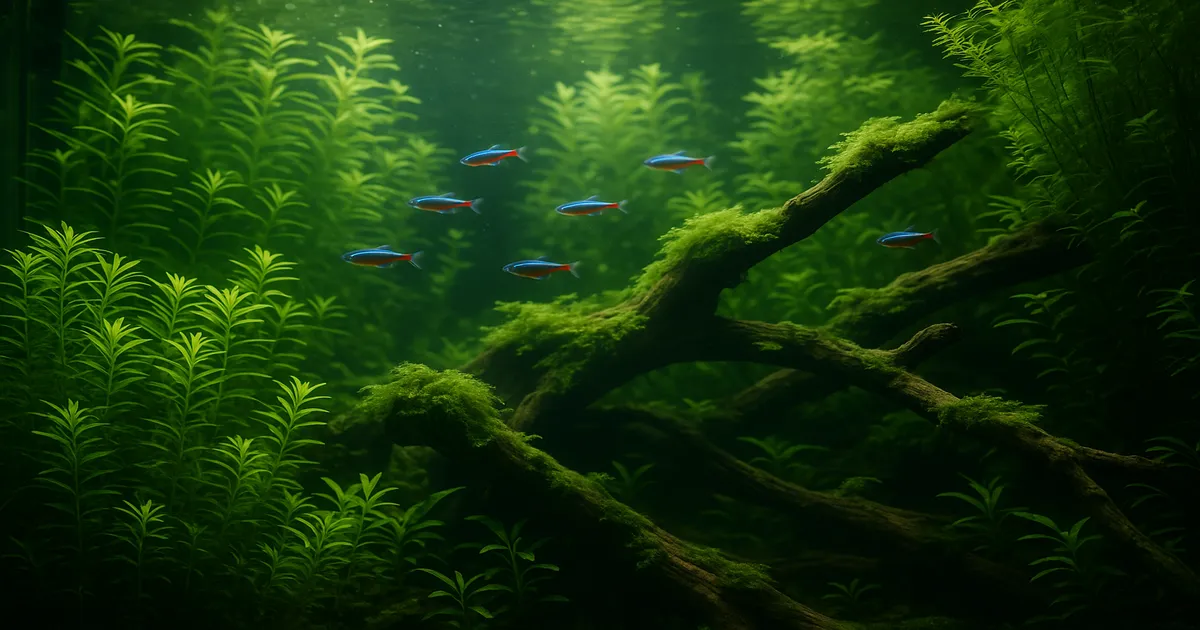
The best tankmates for high-tech planted tanks are small schooling fish with low bioloads: tetras (cardinal, ember, rummy nose), rasboras, Corydoras, Otocinclus, and dwarf cichlids like Apistogramma. These species naturally come from soft, slightly acidic water — exactly what CO2 injection creates.
Troubleshooting: Is Your CO2 Too High or Too Low?
Signs CO2 Is Too Low
- Slow or stunted plant growth despite good lighting and fertilization
- Yellowing or pale leaves with no obvious nutrient deficiency pattern
- Algae outbreaks — especially green spot algae on glass and hair algae on plants
- No pearling even under bright light
- Drop checker stubbornly blue
Signs CO2 Is Too High
- Fish gasping at the surface, especially in the morning
- Shrimp swimming erratically or frantically
- pH crashing below 6.5 during the photoperiod
- Drop checker turning yellow
Common System Problems and Fixes
- Leaking fittings — soap test all connections; even a slow leak wastes CO2 and destabilizes levels
- Clogged diffuser — soak in a dilute bleach solution, rinse thoroughly, and reinstall; replace if efficiency doesn’t recover
- Solenoid not firing — check the timer schedule and test the solenoid manually; solenoids can fail silently
- KH too low — below 2 dKH, pH swings become extreme; add a small amount of baking soda or crushed coral to raise KH before resuming injection
Dialing In CO2: Step by Step
- Check your drop checker color and note the time of day
- Cross-reference with a KH/pH test and the formula (if your tank water qualifies)
- Adjust bubble count by no more than 25% per day — CO2 changes lag behind bubble count changes
- Wait 2 hours after any adjustment before re-evaluating the drop checker
- Observe fish for 30 minutes after each increase — no surface gasping, no clustering near the filter
- Once you hit green on the drop checker with happy fish and pearling plants, lock in that bubble count and leave it
Frequently Asked Questions About Optimal CO2 Levels
What is the ideal CO2 level for a planted aquarium?
The ideal CO2 level for a high-tech planted aquarium is 25–30 ppm during the photoperiod. Medium-tech tanks thrive at 15–25 ppm, while low-tech setups rely on ambient CO2 of 3–8 ppm. Exceeding 35–40 ppm puts fish at risk, and levels above 50 ppm sustained can be lethal.
How do I know if my aquarium CO2 is too high?
The clearest signs are fish gasping at the water surface — particularly in the morning before CO2 shuts off — along with lethargy, rapid gill movement, and fish congregating near the filter outlet. Shrimp swimming erratically is another red flag. A yellow drop checker confirms CO2 is above 30 ppm.
Can CO2 injection kill fish or shrimp?
Yes. CO2 overdose impairs gill function and reduces the blood’s ability to carry oxygen, which can kill fish and shrimp quickly. Shrimp are especially vulnerable and can die within minutes of a severe spike. Keeping CO2 below 30 ppm for fish and 20 ppm for shrimp, combined with a solenoid timer that shuts off injection before lights-out, prevents the most dangerous scenarios.
What does a green drop checker mean?
A green drop checker means your dissolved CO2 is in the optimal range of approximately 25–30 ppm — assuming you’re using a proper 4 dKH reference solution with bromothymol blue indicator. Yellow means CO2 is too high; blue means it’s too low. Remember that drop checkers lag 1–2 hours behind actual tank conditions, so always pair the color reading with fish and plant behavior before making adjustments.
Do I need CO2 injection for a low-tech planted tank?
No. Low-tech planted tanks rely on ambient dissolved CO2 (3–8 ppm) and are designed around slower-growing, less demanding plants — think Java fern, Anubias, mosses, and Cryptocoryne species. CO2 injection becomes worthwhile when you’re keeping fast-growing stem plants or carpeting species under high-output lighting. Trying to run high light without CO2 injection almost always results in algae problems.