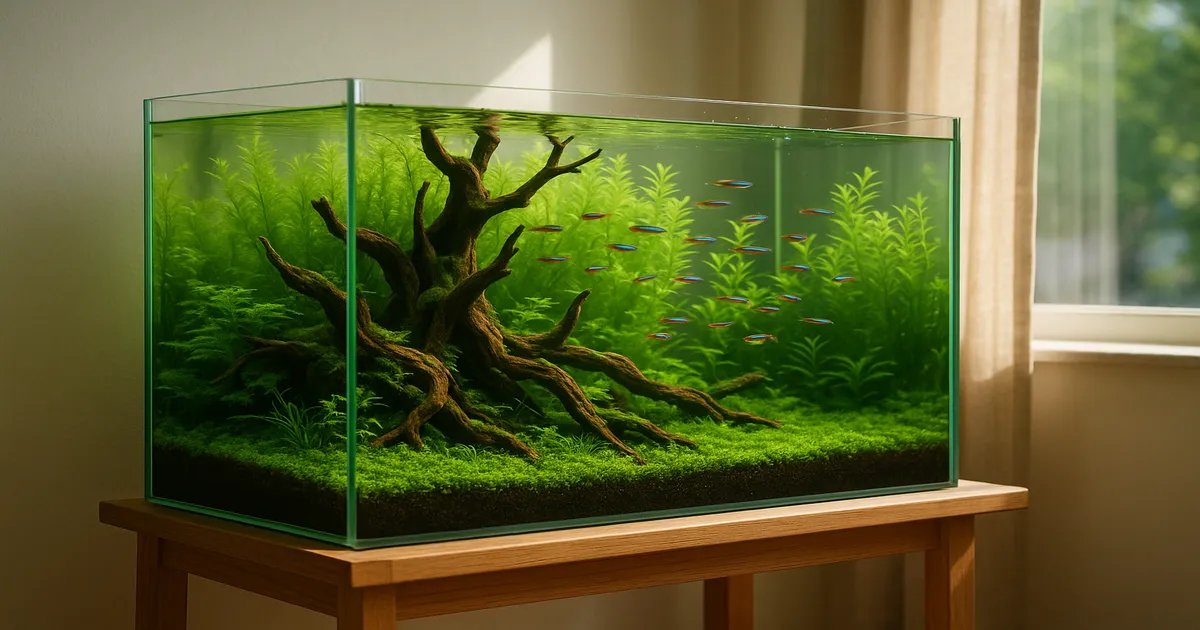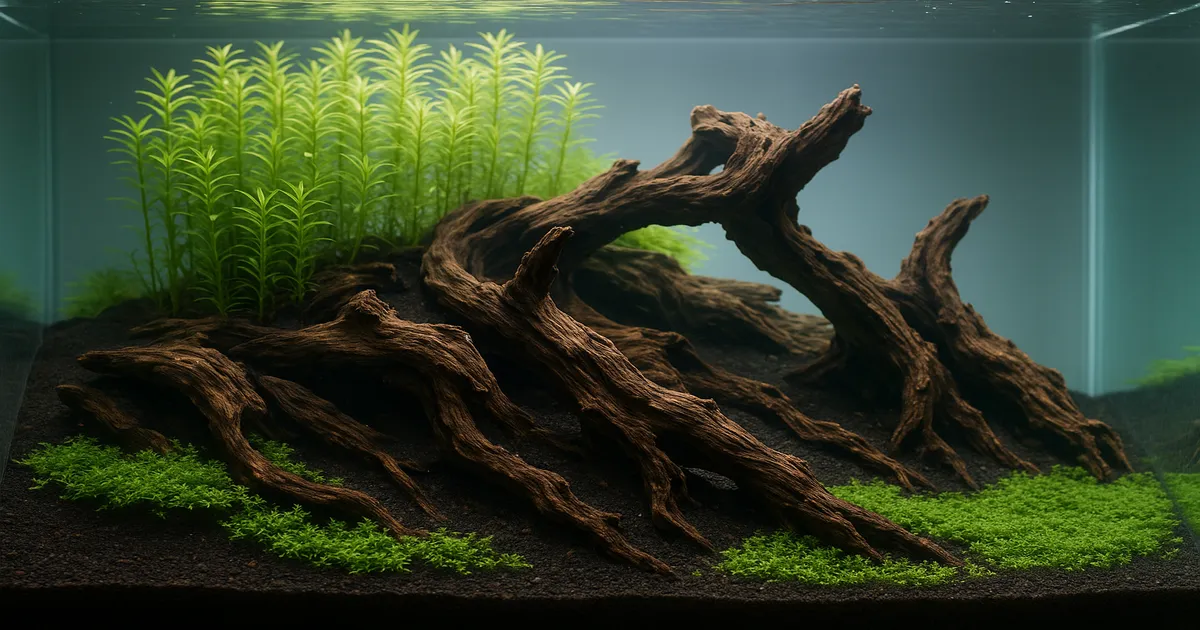
Quick Answer: Fine-grain substrates like aquasoil and sand have a natural angle of repose of roughly 30–35°, meaning any slope steeper than that will slowly collapse without internal support. The main solutions are egg crate terracing, foam risers, rock or driftwood retaining walls, plastic mesh walls, commercial substrate dividers, the hardscape-first method, and layered base materials. Pick one (or combine a few) and your slopes will stay exactly where you put them.
If you’ve ever stared at a stunning aquascape photo and asked yourself how do you hold up the substrate like that? — you’re in good company. It’s one of the most searched questions on planted tank forums, and the answer isn’t magic. That dramatic slope rising toward the back glass stays put because the aquascaper understood a bit of physics and built the right internal support before adding a single plant.
Why Aquarium Substrate Collapses
The Angle of Repose: The Physics Behind Substrate Slumping
Every granular material — sand, gravel, aquasoil — has a natural angle of repose: the steepest angle it can hold before gravity wins and the pile slides. For most fine aquarium substrates, that’s around 30–35°. Go steeper and you’re fighting physics every day.
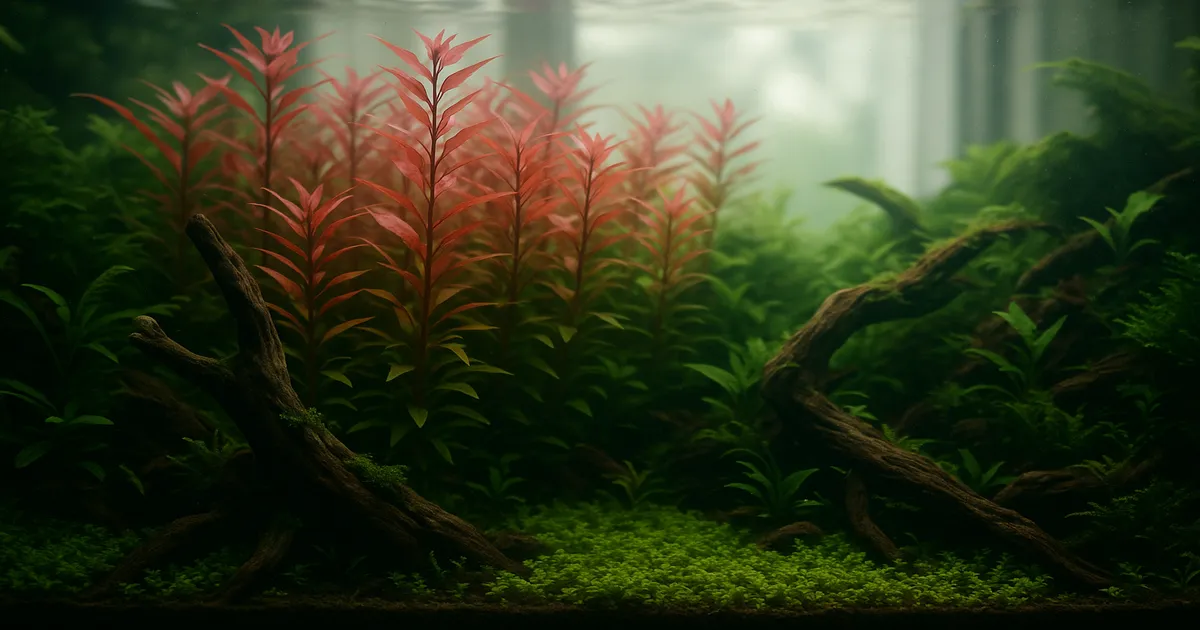
Takashi Amano and ADA popularized dramatic substrate slopes in the 1990s through the Nature Aquarium style, where substrate often rises at 45–60° toward the back glass. That look is entirely achievable — but only with the right internal structure holding everything in place.
Which Substrates Are Most Prone to Sliding?
| Substrate | Grain Size | Approx. Angle of Repose |
|---|---|---|
| Pool filter sand | 0.5–1 mm | ~28–32° |
| ADA Amazonia aquasoil | 2–3 mm | ~30–35° |
| Fluval Stratum | 2–4 mm | ~32–36° |
| Mixed gravel | 3–6 mm | ~35–40° |
| Crushed lava rock | 3–8 mm | ~38–45° |
Finer, lighter substrates slide more easily. Coarser, heavier materials hold a steeper angle on their own — which is why lava rock makes such a useful base layer.
How Gravity, Flow, and Fish Work Against You
Even a well-built slope will flatten over time without support. Filter flow gradually pushes fine particles forward. Fish disturb the surface. Gravity keeps working around the clock. Without something physically holding the substrate back, you’ll wake up one morning to a completely flat tank bottom.
How Do You Hold Up the Substrate? 7 Proven Techniques
1. Egg Crate (Plastic Light Diffuser Grid) Terracing
Egg crate is the plastic grid sold as fluorescent light diffuser panels at hardware stores. A full sheet costs $5–10 and cuts easily with scissors or a utility knife.
How to do it:
- Cut panels to your desired terrace heights.
- Stack or angle them inside the dry tank to create stepped levels.
- Secure with zip ties or aquarium-safe silicone if needed.
- Fill each terrace with substrate, working from back to front.
Pros: Extremely stable, cheap, and completely hidden once planted — ideal for multi-level Dutch-style scapes. Cons: You need to plan the layout before filling. Restructuring later is difficult.
2. Foam and Closed-Cell Sponge Risers
Closed-cell foam blocks can be carved into slope shapes and placed under your substrate like an invisible hillside. This is one of the easiest methods for beginners.
Important: Use closed-cell foam only. Open-cell foam traps detritus, breaks down over time, and will cause your slope to sink while creating water quality problems.
Pros: Lightweight, easy to shape, and significantly reduces the amount of substrate you need to buy. Cons: Less rigid than egg crate; heavy hardscape placed on top can compress it over time.
3. Rocks and Driftwood as Natural Retaining Walls
This is the most visually beautiful method — and the most challenging. Seiryu stone, dragon stone (ohko), lava rock, and hardwoods like manzanita or spiderwood all work well as physical barriers that hold substrate behind them while serving as the focal point of the scape.
Place rocks with their bases buried slightly into the substrate and angled back into the slope so they act like a retaining wall rather than just sitting on the surface. Substrate can still migrate through gaps between stones, so combining this method with a coarse base layer or mesh backing helps considerably.
Pros: Completely natural look; no hidden materials. Cons: Requires experience and a good eye. Heavy rocks need a foam mat under the tank to protect the glass.
4. Plastic Mesh and Needlepoint Canvas Walls
Plastic needlepoint canvas (available at craft stores for a few dollars) can be folded, rolled, or shaped into curved retaining walls and filled with substrate or gravel. It’s more flexible than egg crate, making it useful for organic, curved layouts.
Pros: Inexpensive and great for curved substrate divisions. Cons: Less rigid; may shift in tanks with strong flow or active fish.
5. Commercial Substrate Dividers
Several companies make purpose-built plastic dividers for exactly this use. UNS (Ultum Nature Systems) and Landen both offer substrate separators that slot together cleanly and give a professional finish.
Pros: Designed specifically for aquarium use; clean, consistent look. Cons: More expensive than DIY options and less customizable for unusual tank shapes.
6. Hardscape-First, Substrate-Last Method
Instead of building a substrate structure and placing hardscape on top, you do the reverse: arrange all your rocks and driftwood first, then pour substrate around and behind them, letting the hardscape itself act as the retaining structure.
This produces the most natural-looking results because the substrate settles organically around the stone rather than being poured into a rigid frame. It requires more hardscape material and careful planning, but the results are consistently impressive.
7. Layered Base Materials: Lava Rock, Pumice, and LECA
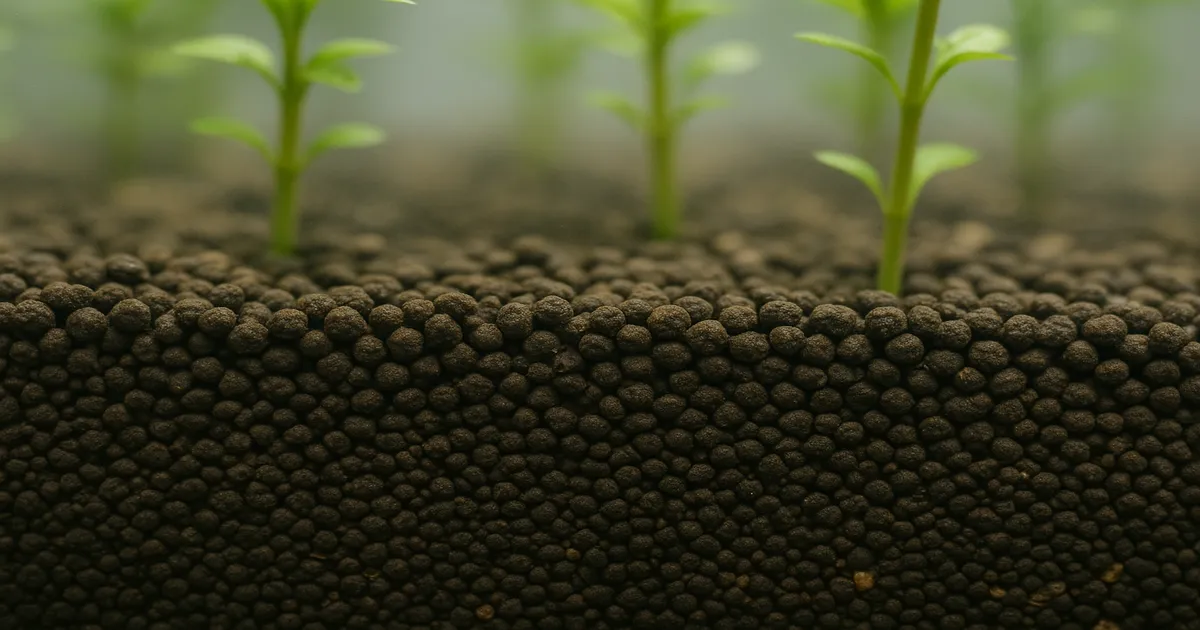
Aquasoil is expensive. In a 75-gallon tank, filling the back third to 6 inches deep with premium aquasoil alone could cost $150 or more. The solution is a cheap, coarse base layer — lava rock rubble, pumice, or LECA (hydroton clay balls) — topped with just 1–2 inches of display substrate.
Pros: Dramatically cuts cost and weight; excellent drainage for plant roots; holds a steeper angle than fine substrate alone. Cons: The base layer must be inert or compatible with your water chemistry goals. Avoid crushed coral if you’re targeting soft, acidic water — it will steadily push pH and KH upward.
Choosing the Right Technique
| Technique | Best For | Skill Level | Cost |
|---|---|---|---|
| Egg crate | Multi-level terraces | Beginner | $ |
| Foam risers | Gentle slopes | Beginner | $ |
| Rock/driftwood walls | Natural scapes | Intermediate–Advanced | $$ |
| Plastic mesh | Curved layouts | Beginner | $ |
| Commercial dividers | Clean, professional finish | Beginner | $$ |
| Hardscape-first | Natural aquascapes | Advanced | $$$ |
| Layered base | Large tanks, cost savings | Intermediate | $ |
Substrate, Water Chemistry, and Tank Setup
Best Tank Sizes for Sloped Aquascapes
A 20-gallon long is the practical minimum for a meaningful slope effect. The 40-gallon breeder and 75-gallon are the sweet spots — enough footprint to create genuine depth perspective without becoming unmanageable. Shallow, wide tanks like the ADA 60-P are particularly popular for Iwagumi and Nature Aquarium styles because their low profile makes a rising substrate slope look even more dramatic. Tank footprint matters more than volume: a tall 30-gallon gives you less to work with than a shallow 20-gallon long.
Choosing Your Display Substrate
- ADA Amazonia : The gold standard for planted scapes. Buffers pH to 6.5–6.8 and releases nutrients. Breaks down over 1–2 years.
- Fluval Stratum : Lighter than Amazonia; good for shrimp tanks. Also lowers pH.
- UNS Controsoil: Similar to Amazonia; popular with competitive aquascapers.
- Pool filter sand / black diamond blasting sand: Inert, cheap, and clean-looking. No effect on chemistry, no nutrients.
- Crushed lava rock: Holds steeper angles; inert; excellent as a base layer.
Water Parameters for Planted Aquascapes
For Nature Aquarium and planted tank styles, target:
- pH: 6.5–7.2
- GH: 3–8 dGH
- KH: 1–4 dKH
- Temperature: 75–78°F (24–26°C)
- Ammonia / Nitrite: 0 ppm at all times
- Nitrate: 5–30 ppm (plants consume it as a nutrient)
Fresh aquasoil lowers pH and releases ammonia for the first 4–6 weeks, so a fishless cycle before adding livestock is essential. Over 12–18 months its buffering capacity fades and pH may creep upward. At that point, many aquascapers cap the old soil with fresh aquasoil or switch to remineralised RO water to maintain target parameters.
CO₂, Filtration, and Lighting
CO₂ injection is strongly recommended for planted scapes with raised substrate. The high-light, fast-growing plants typically used in these tanks need it to thrive. Start with 1 bubble per second per 10 gallons from a pressurised system (Aquatek Mini CO2 Regulator) and adjust based on your drop checker — lime green means you’re in the ideal range.
Canister filters keep all equipment outside the tank, preserving the visual space and avoiding flow that disturbs hardscape. The Fluval 307/407 and Oase Biomaster series are popular choices for planted tanks in the 40–100 gallon range. Aim your spray bar or lily pipe outlet along the water surface or toward the back wall — never directly at the substrate slope. Strong flow hitting an exposed slope will erode it within days. Target 5–10× tank volume per hour total flow.
For lighting, elevated substrate zones sit closer to the light and naturally receive higher PAR. Place high-light species like hairgrass (Eleocharis sp.) or glossostigma in raised areas, and shade-tolerant plants like java fern or anubias in the lower foreground. Aim for 50–100+ PAR at the substrate surface in CO₂-injected tanks, or 30–50 PAR for low-tech setups.
Compatible Livestock
Fish That Won’t Destroy Your Scape
The ideal inhabitants for a sloped substrate scape are small, peaceful, and non-digging:
- Ember tetras, neon tetras, cardinal tetras — schooling fish that add movement without disturbing anything
- Chili rasboras, harlequin rasboras — excellent for nano and mid-size scapes
- Otocinclus catfish — gentle algae eaters that stick to glass and plant surfaces
- Corydoras (small species like C. habrosus or C. pygmaeus) — keep groups of 6+ in larger tanks; they sift substrate gently but can disturb fine slopes if overcrowded
Animals to Avoid
Some fish will undo weeks of work in an afternoon:
- Goldfish — will excavate your entire scape within hours
- Large cichlids (oscars, jack dempseys, flowerhorns) — aggressive diggers
- Clown loaches and yoyo loaches — enthusiastic substrate sifters
- Large plecos — bulldoze through hardscape; sucker mouths disturb substrate
- Crayfish — will methodically dismantle everything they can reach
Invertebrates That Help
Amano shrimp are the workhorse of planted tank cleanup crews — large enough to tackle tougher algae, gentle enough not to disturb your layout. Neocaridina shrimp (cherry shrimp, blue dream) are excellent grazers and add colour. Nerite snails handle green spot algae on glass and hardscape without reproducing in freshwater. Malaysian trumpet snails burrow through substrate and help prevent compaction and anaerobic pockets, though they multiply quickly — keep the population small.
Long-Term Maintenance
Preventing Anaerobic Pockets
In substrate deeper than 3–4 inches, oxygen can’t reach the bottom layers. Anaerobic bacteria then produce hydrogen sulfide — that rotten egg smell that signals serious trouble. Keep your display substrate layer under 3 inches, use a coarse drainage base layer, and maintain a small MTS population to aerate from below.
Controlling Algae
Algae is the nemesis of every aquascape. The main culprits:
- Black beard algae (BBA): Dark tufts on hardscape and plant edges; caused by CO₂ fluctuations. Spot-treat with 3% hydrogen peroxide via syringe (1–2 ml per affected area, flow off for 5 minutes).
- Green spot algae (GSA): Hard green dots on glass; usually signals low phosphate or excessive light duration.
- Hair algae: Long green strands; caused by excess nutrients and light imbalance.
- Cyanobacteria: Slimy blue-green coating; caused by low flow, high organics, or nitrogen imbalance. Improve flow and reduce feeding before reaching for chemical treatments.
Feeding and Substrate Care
Overfeeding is the fastest way to destroy a planted scape. Decomposing food fuels algae blooms and creates anaerobic pockets in substrate crevices. Feed only what your fish consume in 2–3 minutes, once or twice daily. Keep a turkey baster handy to remove uneaten food from elevated areas before it settles.
Fine substrates compact over time, reducing water and oxygen flow to plant roots. A coarse base layer prevents the worst of this by maintaining drainage below the root zone. Gentle disturbance with a chopstick during water changes also helps. Add root tabs every 3–4 months to ensure plant nutrition doesn’t suffer as the substrate compacts.
Frequently Asked Questions
How do you hold up the substrate like that in a planted tank?
Build an internal support structure before adding substrate. Egg crate terracing, foam risers, and rock retaining walls are the most reliable options. Combine one of these with a coarse base layer of lava rock or pumice, and your slope will hold its shape long-term.
How do you keep aquarium substrate from sliding to the front of the tank?
The most reliable fix is an internal support structure — egg crate, foam risers, or a rock retaining wall — built before you add substrate. Also aim your filter outlet along the water surface rather than at the slope; flow directed at exposed substrate will erode it steadily over time.
What is the cheapest way to build a raised substrate in an aquarium?
Use a coarse, inexpensive base layer — lava rock rubble, pumice, or LECA clay balls — to build up the height of your slope, then cap it with just 1–2 inches of display substrate. Combine this with DIY egg crate panels ($5–10 at a hardware store) for terracing, and you can achieve a dramatic slope for a fraction of the cost of filling the tank with premium aquasoil.
Will fish destroy a sloped substrate aquascape?
Small, peaceful species like ember tetras, chili rasboras, and otocinclus won’t cause any problems. The real threats are diggers: goldfish, large cichlids, clown loaches, large plecos, and crayfish. Avoid these entirely if you want your scape to stay intact.
How long does a sloped aquascape substrate hold its shape?
With proper internal support, a slope can hold its shape for the entire life of the aquascape — often 2–4 years or more. Without support, even a well-packed slope will flatten within weeks. The key is building the structure before you add substrate, not trying to fix a collapsing slope after the fact.