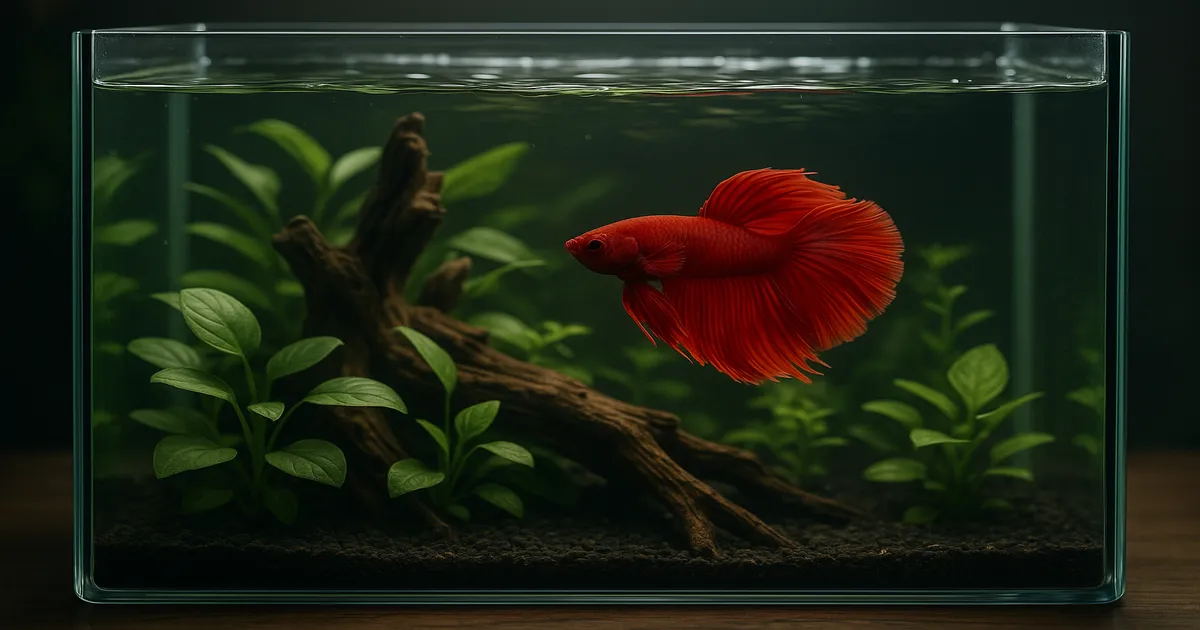
Quick Answer: A betta fish automatic feeder is genuinely useful for consistent daily scheduling and vacations longer than a week. Healthy adult bettas can safely fast 7–10 days, though, so short trips may not need one at all. When you do use a feeder, calibration and food choice matter more than the device itself — an overfilled drum dispensing the wrong food can cause ammonia spikes within 48 hours.
Deciding whether to buy a betta fish automatic feeder is less about convenience and more about understanding your fish’s biology. Bettas are small, carnivorous, and prone to digestive problems when overfed — especially in tanks under 5 gallons, where water quality can crash fast. Get the setup right and an auto-feeder is a genuinely helpful tool. Get it wrong and you’ll come home to a sick fish and a cloudy tank.
Do Betta Fish Need an Automatic Feeder?
When a Betta Fish Automatic Feeder Makes Sense
An automatic feeder earns its place in two situations: vacations lasting more than a week, and households where feeding happens at irregular times. Consistent schedules reduce stress and support stable digestion, so even at home a feeder can improve routine. If you travel frequently or live alone, a reliable feeder also removes the need to find a fish-sitter — which matters, because well-meaning friends almost always overfeed.
When You Can Skip It Entirely
A healthy adult betta can fast for 7–10 days without significant health consequences. If you’re leaving for a long weekend or even a five-day trip, the safest option is a water change before you go and letting your fish fast. No feeder, no risk of overfeeding, no jammed mechanism dumping a week’s worth of pellets at once.
How Betta Biology Shapes Your Feeder Setup
Bettas Are Carnivorous Insectivores — Protein Content Matters
Wild bettas eat mosquito larvae, small aquatic insects, and zooplankton. Their digestive system is built for high-protein animal matter, not plant-based fillers. In captivity, pellets with 40–55% protein and whole fish meal, shrimp, or krill as the first ingredient replicate this diet most closely. Pellets listing corn, wheat, or soy near the top of the ingredient label are nutritionally poor and more likely to cause bloat and constipation over time.
The Labyrinth Organ and Surface Access
Bettas are obligate air-breathers. Their labyrinth organ lets them gulp atmospheric oxygen directly from the surface, so your tank lid and feeder placement must never block that access. Mount the feeder to the side of the tank opening rather than directly over the center of the water. Also avoid tight-fitting lids that trap stale, humid air — fresh air exchange at the surface is non-negotiable.
Betta Stomach Size: Your Portion-Control Reference
A betta’s stomach is roughly the size of its eye. That’s your visual reference every time you calibrate a feeder. Three to six small pellets per feeding is the practical target, and two feedings per day is the maximum most bettas need. Overfeeding dry pellets is one of the most common causes of swim bladder disorder and bloat — when in doubt, feed less.
Choosing the Right Automatic Feeder for a Betta Tank
Key Features to Look For
Not all feeders are created equal. For a betta setup, prioritize:
- Adjustable portion size — you need fine control, not a dial that jumps from “a little” to “a lot”
- Programmable scheduling — at least two independent feeding times per day
- Secure tank mounting — clamp or clip mounts are more stable than feeders that balance on the rim
- Battery backup — a power outage shouldn’t mean your fish goes unfed, or gets a massive dump of food when power returns
- Humidity-resistant drum — tropical tanks are humid; moisture infiltration causes food to clump and jam
Drum vs. Conveyor Belt Feeders
Drum-style feeders — where food sits in a rotating barrel with an adjustable opening — handle small betta pellets far better than conveyor belt designs. The drum keeps food dry, dispenses in small controlled amounts, and is less likely to jam with pellets sized 1–2 mm. Conveyor feeders tend to work better for larger pellets or flakes, neither of which is ideal for bettas anyway.
Reliable options include the Eheim Everyday Fish Feeder and the Zacro Automatic Fish Feeder — both offer solid drum mechanisms and good humidity resistance.
Feeder Compatibility with Small and Nano Tanks
In tanks under 5 gallons, the margin for error is tiny. A single extra drum rotation can mean twice the intended food hitting water with almost no buffering capacity. Choose a feeder with the most granular portion adjustment available and always err toward less food, not more.
Best Food for a Betta Fish Automatic Feeder
Why Pellets Are the Only Practical Choice
Small, hard pellets in the 1–2 mm range are the only food type that flows reliably through a drum feeder. They resist humidity, dispense consistently, and can be formulated specifically for bettas’ high-protein needs. Look for a protein content of 40–55% with a whole animal protein — whole fish meal, salmon meal, shrimp, or krill — listed first. Fat content around 5–8% is appropriate. Avoid pellets with artificial dyes; they add nothing and can stress fish over time. If you see corn, wheat, or soy in the first three ingredients, choose a different brand.
Good options that meet these standards include Fluval Bug Bites Betta Formula and New Life Spectrum Betta Formula .
Foods That Cannot Go in an Automatic Feeder
- Frozen foods (bloodworms, brine shrimp, daphnia) — cannot go in a drum feeder
- Live foods (mosquito larvae, blackworms, microworms) — same reason
- Freeze-dried foods — absorb humidity rapidly, clump, and jam mechanisms
- Flake food — breaks into dust, clumps, and dispenses inconsistently
Supplemental Foods to Offer Manually
When you’re home, supplement the pellet staple with frozen daphnia two or three times a week. Daphnia acts as a natural laxative and helps prevent the constipation that dry pellets alone can cause. Frozen bloodworms and brine shrimp are excellent protein-rich treats — just thaw them in a small cup of tank water before feeding.
Programming Your Betta Feeder: Schedule and Portions
Recommended Feeding Schedule
Two feedings per day — morning and evening — is the standard. Each feeding should deliver 3–6 small pellets. More frequent feedings increase the risk of uneaten food fouling the water, especially when you’re away and can’t spot-check.
One fasting day per week is widely recommended for bettas. It gives the digestive system a reset and reduces the risk of constipation and bloat. If your feeder lets you program specific days as off days, use that feature. If not, simply skip one feeding on your chosen fasting day.
How to Calibrate Portion Size Before You Leave
Never set a feeder and walk out the door. Run this calibration first:
- Hold a white plate under the feeder outlet.
- Trigger the feeder manually for 3–5 cycles.
- Count the pellets dispensed per cycle.
- Adjust the drum opening until each cycle consistently delivers 3–6 pellets.
- Run the test again after adjusting to confirm.
Do this at least two days before any trip so you have time to fine-tune.
Tank Setup Requirements That Affect Feeder Safety
Minimum Tank Size and Water Stability
The minimum recommended tank size for a single male betta is 5 gallons, with 10 gallons preferred. Larger water volume dilutes waste, buffers temperature swings, and gives beneficial bacteria more surface area to colonize. In a 2.5-gallon tank, a single extra portion of uneaten food can spike ammonia within hours. If you’re relying on an auto-feeder during an absence, a tank under 5 gallons introduces real risk — upgrade before you leave a feeder running unsupervised.
Filtration: A Cycled Tank Is Non-Negotiable
An auto-feeder is only as safe as the biological filtration beneath it. A fully cycled tank with established nitrifying bacteria can process the ammonia produced by uneaten food. An uncycled tank cannot — and the result is a rapid, toxic spike. Use a sponge filter or a baffled hang-on-back filter to keep flow gentle enough for bettas. Before trusting a feeder unsupervised, confirm your cycle is complete with a liquid test kit like the API Freshwater Master Test Kit .
Water Parameters to Maintain
- Temperature: 76–82°F (24–28°C)
- pH: 6.5–7.5
- Ammonia: 0 ppm
- Nitrite: 0 ppm
- Nitrate: under 20 ppm
Even 0.25 ppm ammonia causes gill and fin tissue damage. These are the floor, not targets to aim for.
Overfeeding Risks and How to Prevent Them
The Ammonia Spike Chain Reaction
Here’s how it unfolds: the feeder dispenses too much food → some goes uneaten → uneaten food decomposes → ammonia rises → beneficial bacteria can’t keep pace → the fish experience gill damage, stress, and immune suppression → secondary infections take hold. In a small tank, this chain can play out in 48–72 hours. Calibration matters more than the brand of feeder you buy.
Swim Bladder Disorder, Bloat, and Fin Rot
Bettas fed too many dry pellets too frequently are prone to constipation, which is a direct cause of swim bladder disorder. You’ll notice the fish struggling to maintain a normal position — floating near the surface, sinking to the bottom, or listing sideways. A weekly fast and occasional frozen daphnia feedings help prevent this.
Fin rot follows a similar path. The opportunistic bacteria responsible — primarily Aeromonas and Pseudomonas — thrive in degraded water. By the time fins look ragged and receding, water quality has been poor for a while. The fix starts with water quality, not medication.
Signs Your Feeder Is Dispensing Too Much
- Uneaten pellets sitting on the substrate
- Cloudy or milky water
- Fish appearing bloated or floating awkwardly
- A film or sheen on the water surface
- Strong odor when you open the lid
If you see any of these, do an immediate water change and recalibrate the feeder down.
Using a Betta Fish Automatic Feeder During Vacations
Pre-Vacation Checklist
Run through this before any trip where the feeder will run unsupervised:
- 25–30% water change completed
- Ammonia and nitrite confirmed at 0 ppm
- Feeder calibrated and tested over a white plate
- Heater checked and set to 78–80°F (25–27°C)
- Filter running and flow confirmed
- Battery backup installed in feeder
- Tank lid secure but not airtight (surface air access maintained)
Alternatives for Short Trips
For trips under a week, the cleanest option is a pre-departure water change and a fast. Vacation feeding blocks — slow-dissolving compressed food cubes — are a low-tech alternative for 3–5 day trips, but they can cloud water and raise ammonia in small tanks. If you use one, choose the smallest size available and only in tanks of 10 gallons or more.
Remote Monitoring
WiFi-enabled feeders paired with a small aquarium camera let you check feeding in real time from your phone. If something goes wrong — a jammed drum, an unexpected food dump — you’ll know before it becomes a crisis. A trusted contact with written fish-care instructions is still worth having as a backup.
Frequently Asked Questions
How often should a betta fish automatic feeder dispense food?
Set it to dispense twice daily — once in the morning and once in the evening. Each feeding should deliver 3–6 small pellets (1–2 mm). More frequent feedings increase the risk of uneaten food accumulating and spiking ammonia.
Can I leave my betta alone for a week with an automatic feeder?
Yes, with proper preparation. Do a 25–30% water change before you leave, confirm ammonia and nitrite are at 0 ppm, calibrate the feeder carefully, and install a battery backup. A healthy adult betta can also fast safely for up to 10 days, so a feeder is optional for trips under a week.
What food works best in a betta fish automatic feeder?
Small, hard betta pellets (1–2 mm) with whole fish meal, shrimp, or krill as the first ingredient are the only reliable option. Freeze-dried foods clump with humidity and jam mechanisms. Frozen and live foods cannot be used in a feeder at all.
Will an automatic feeder cause ammonia spikes?
A poorly calibrated feeder absolutely can. Uneaten food decomposes quickly and produces ammonia — especially dangerous in tanks under 5 gallons. The solution is conservative calibration, a fully cycled tank, and erring toward slightly underfeeding when the tank is unsupervised.
How do I calibrate an automatic feeder for a betta tank?
Hold a white plate under the feeder outlet and trigger it manually for 3–5 cycles. Count the pellets each cycle delivers, then adjust the drum opening until you consistently get 3–6 pellets per cycle. Repeat the test after adjusting, and complete this process at least two days before any trip.