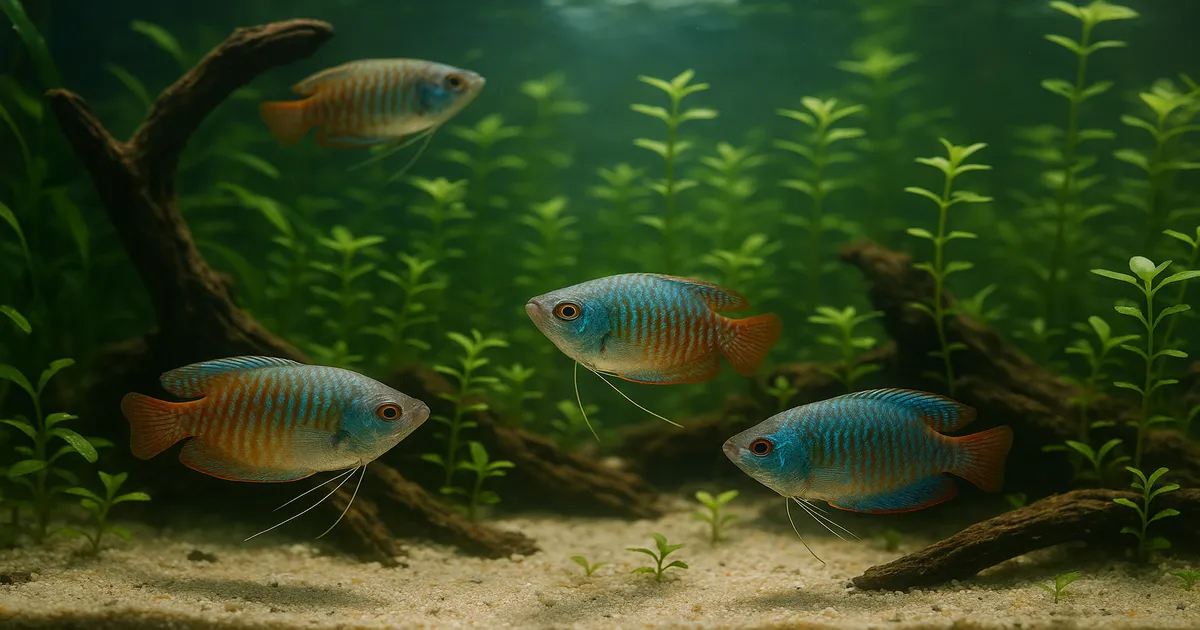
Quick Answer: Dwarf gouramis (Trichogaster lalius) are peaceful, vividly coloured fish that thrive in warm, heavily planted tanks of 20 gallons or more. Keep water temperatures at 77–82°F, pH at 6.5–7.0, and ammonia and nitrite at 0 ppm. Learning how to care for dwarf gourami properly means understanding one critical risk: Dwarf Gourami Iridovirus (DGIV), a fatal, incurable disease carried by a significant portion of commercially sold fish. Sourcing carefully and quarantining every new arrival aren’t optional steps — they’re the foundation of keeping this species successfully.
Dwarf Gourami Care at a Glance
Key Stats: Size, Lifespan, and Temperament
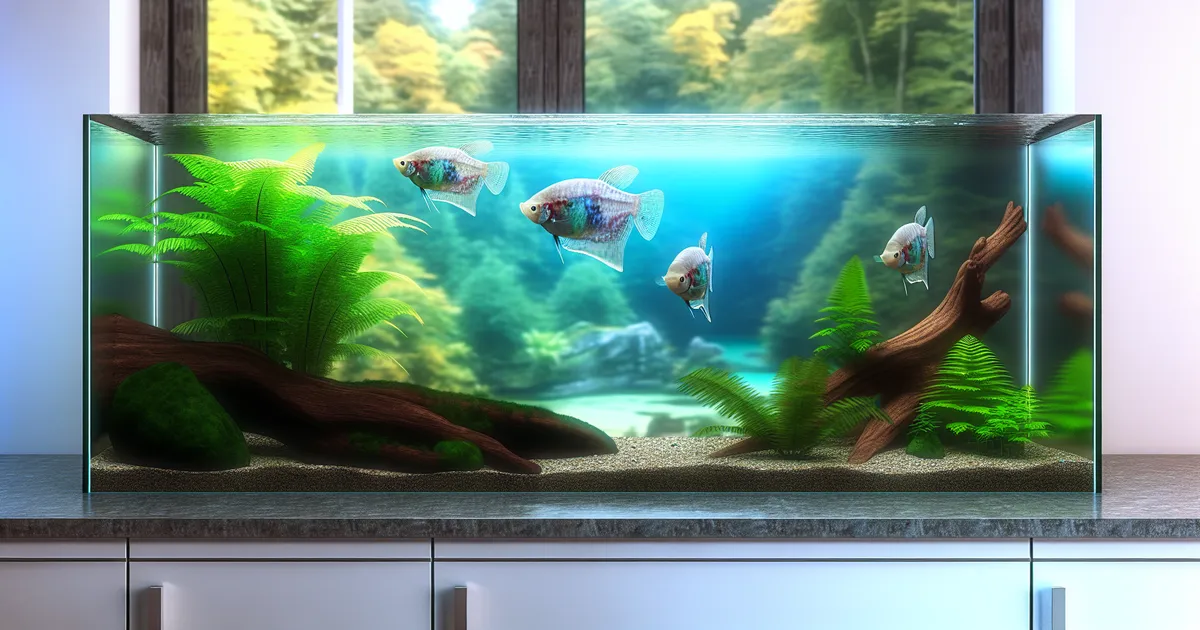
Dwarf gouramis are small labyrinth fish that max out at 2–3.5 inches and live 3–5 years under good conditions. Males are the showstoppers — vivid red-orange stripes over iridescent blue — while females are a modest silver-grey. That colour difference makes sexing them straightforward.
| Parameter | Value |
|---|---|
| Scientific Name | Trichogaster lalius |
| Adult Size | 2–3.5 inches (5–9 cm) |
| Lifespan | 3–5 years |
| Minimum Tank Size | 10 gallons (20+ recommended) |
| Temperature | 77–82°F (25–28°C) |
| pH | 6.5–7.0 (ideal); 6.0–7.5 (acceptable) |
| GH | 4–10 dGH |
| KH | 3–8 dKH |
| Temperament | Peaceful; males territorial |
Temperament is generally calm, but don’t underestimate male rivalry. Two males in a small tank will clash — sometimes relentlessly. In a community setting with only one male, they’re easygoing and personable.
Are Dwarf Gouramis Right for You?
If you already understand the nitrogen cycle and can commit to consistent water changes and a proper quarantine process, dwarf gouramis are a rewarding choice. Brand-new fishkeepers should consider starting with something hardier. Honey Gouramis (T. chuna) are closely related, more forgiving, and don’t carry the same disease burden.
The elephant in the room is DGIV. Studies suggest up to 22% of commercially imported dwarf gouramis carry this virus, often without showing symptoms until stressed. Buying from reputable sources and quarantining every new fish isn’t optional — it’s the whole ballgame.
Popular colour variants include the Flame, Powder Blue, Neon Blue, Sunset, and Banded dwarf gourami. They’re all the same species; the differences are purely cosmetic results of selective breeding.
Natural Habitat and What It Tells You About Their Care
Where Do Dwarf Gouramis Come From?
Dwarf gouramis are native to the slow-moving, densely vegetated waters of India, Bangladesh, and Pakistan — specifically the Ganges, Brahmaputra, and Beas river basins. Think rice paddies, shallow floodplains, and silty ditches choked with aquatic plants. The water is warm, soft, slightly acidic, and often tinted with tannins.
Their environment shifts dramatically with the monsoon season, bringing fluctuations in temperature, pH, and water volume. This is part of why they tolerate a fairly wide range of conditions — but their ideal is narrow and consistent.
The Labyrinth Organ
Like bettas, dwarf gouramis have a labyrinth organ that lets them breathe atmospheric air directly from the surface. This evolved as an adaptation to oxygen-poor, stagnant water.
Two practical implications follow. First, they need unobstructed access to the surface at all times. Second, the air just above the water must stay warm — cold drafts can damage the labyrinth organ when fish gulp air. A tight-fitting lid solves both problems.
Related Species Worth Knowing
Two species are sometimes confused with dwarf gouramis. The Honey Gourami (T. chuna) is smaller, hardier, and a better choice for beginners. The Banded Gourami (T. fasciata) is larger and more robust. Older literature uses the genus name Colisa — the reclassification to Trichogaster happened in 2005 and is now widely accepted.
Ideal Water Parameters for Dwarf Gourami
Temperature
Keep water at 77–82°F (25–28°C). They can tolerate a short dip to 72°F (22°C), but sustained cold is one of the primary triggers for DGIV expression in carrier fish. Don’t let the temperature fall below 70°F (21°C) under any circumstances. A reliable heater paired with a thermometer you actually check is non-negotiable.
pH and Hardness
Aim for pH 6.5–7.0, with 6.0–7.5 as the acceptable range. Anything above 7.8 long-term causes chronic stress. For hardness, target GH of 4–10 dGH and KH of 3–8 dKH. Don’t let KH drop below 2 dKH — that’s when pH crashes become a real risk.
Ammonia, Nitrite, and Nitrate
Ammonia and nitrite must be 0 ppm, always. Dwarf gouramis are moderately sensitive to water quality, and even brief spikes can compromise their immune system — making them far more vulnerable to DGIV and bacterial infections. Keep nitrate below 20 ppm ideally; up to 40 ppm is acceptable short-term.
Test your water regularly, especially in newer tanks. A liquid test kit gives far more reliable readings than strip tests.
Water Changes
Do 25–30% water changes weekly. Consistency matters more than volume — a reliable weekly change keeps nitrates stable and prevents the gradual decline that stresses fish without obvious warning signs. Always dechlorinate before adding new water. (Seachem Prime)
Setting Up the Perfect Dwarf Gourami Tank
Tank Size and Shape
Ten gallons is the functional minimum for a single fish, but 20 gallons is the practical recommendation for any community setup or a male-female pair. Bigger tanks buffer against water quality swings and give territorial males room to establish space without constant conflict.
Choose a tank with a wide, long footprint rather than a tall, narrow one. Dwarf gouramis are horizontal swimmers that live in the mid-to-upper water column — vertical space is largely wasted on them.
Substrate and Décor
Go with dark, fine-grained sand or fine gravel. Dark substrate mimics the silty riverbeds of their natural habitat, reduces stress, and makes their colours pop noticeably. Avoid anything sharp-edged — their delicate ventral fins can be damaged by coarse or jagged material. A thin layer of Indian almond leaves adds a naturalistic touch and gently acidifies the water.
Add driftwood for tannins, plus a few caves or overhanging structures for shelter. Leave some open water in the mid-column for swimming.
Plants: Why Floating Coverage Matters
Heavy planting isn’t just aesthetic — it’s functional. Dense vegetation reduces male aggression by breaking lines of sight, gives shy fish places to retreat, and closely replicates their natural environment.
Floating plants are especially important:
- Water lettuce (Pistia stratiotes)
- Salvinia (Salvinia spp.)
- Amazon frogbit (Limnobium laevigatum)
These diffuse harsh light, provide surface cover, and serve as anchors for bubble nests during breeding behaviour.
Good stem plants: Hygrophila, Rotala, Bacopa, Ludwigia — all fast-growing and forgiving.
Rosette plants: Cryptocoryne species and Amazon swords fill out the mid-ground and tolerate lower light well.
Filtration: Keep the Flow Gentle
This is critical and often overlooked. Dwarf gouramis come from near-still water, and strong currents stress them chronically. A sponge filter is the gold standard — gentle flow, excellent biological filtration, and no risk of trapping those delicate feelers in an intake.
If you prefer a hang-on-back filter, baffle the output with a sponge or small bottle to reduce flow. Canister filters work well with a spray bar pointed at the glass rather than across the surface.
Lighting and Lid
Keep lighting low to moderate — 8–10 hours daily on a timer. Bright light washes out colour and makes fish skittish. Floating plants handle much of this naturally by diffusing light before it reaches the fish.
A tight-fitting lid is essential. Dwarf gouramis jump when startled, and a missing lid often means a missing fish. Leave a small gap for air circulation, but keep that air warm — cold drafts above the surface are genuinely harmful to labyrinth fish.
Dwarf Gourami Tank Mates
Best Tank Mates
The best companions are small, peaceful, and occupy different parts of the water column. Bottom dwellers and mid-water schooling fish work especially well.
Excellent choices:
- Tetras: Neon, cardinal, ember, rummy-nose
- Rasboras: Harlequin, chili
- Corydoras catfish: Peppered cory, sterbai cory (share similar water parameters)
- Otocinclus — peaceful algae eaters that stay out of the way
- Kuhli loaches — bottom-dwelling, non-aggressive
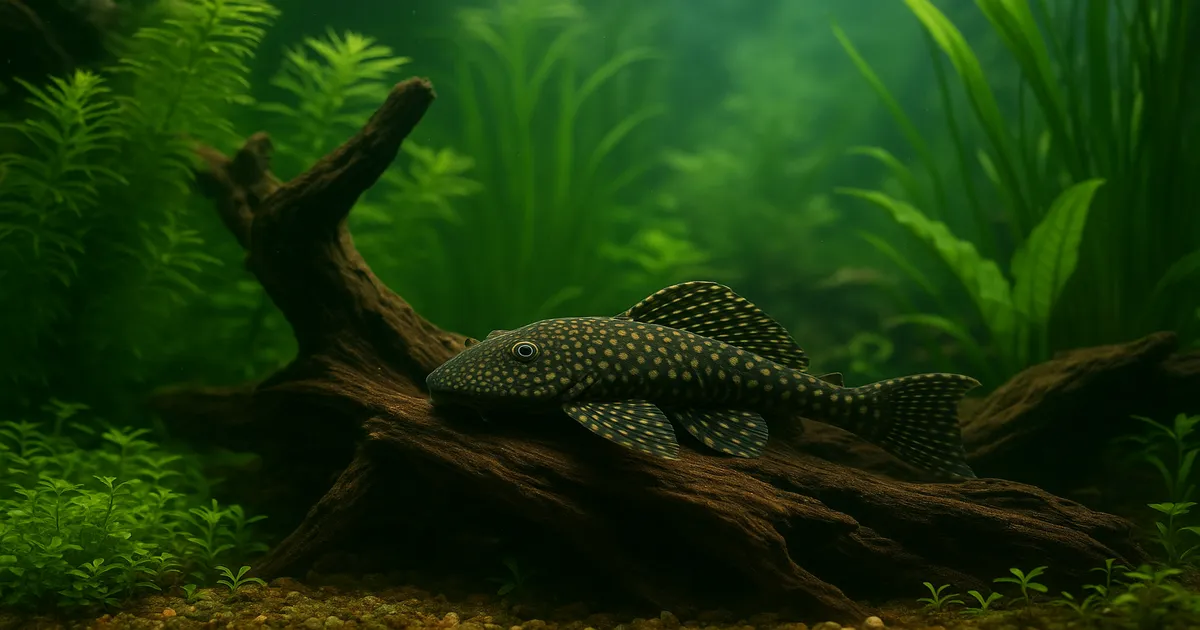
- Bristlenose plecos — stick to the glass and substrate
- Amano shrimp — generally safe; cherry shrimp adults are usually fine, but juveniles risk predation
- Nerite and mystery snails — typically ignored entirely
Fish to Avoid
- Bettas — both are labyrinth fish with territorial instincts; conflict between males is almost guaranteed
- Tiger barbs and serpae tetras — notorious fin nippers that will shred those long feelers
- Three-spot gouramis (T. trichopterus) — larger, often aggressive, and will bully dwarf gouramis
- Large cichlids — incompatible temperament; will intimidate or attack
- Goldfish — wrong temperature range entirely
Keeping Multiple Dwarf Gouramis
One male per tank is the simplest and most peaceful arrangement. If you want multiple males, you need at minimum a 40-gallon tank with dense planting and genuine visual barriers — not just open water with a few plants scattered around. Female groups are compatible and considerably less dramatic. Male-female pairs can work, but the male will chase the female, especially during breeding attempts — make sure she has plenty of hiding spots.
Feeding Dwarf Gourami
What They Eat
Dwarf gouramis are omnivores, eating algae, plant matter, small insects, insect larvae, and zooplankton in the wild. In the aquarium, they feed primarily at the surface and mid-column. Variety is the most important principle — a single-food diet leads to nutritional deficiencies and makes fish significantly more disease-prone.
Daily staples:
- High-quality micro pellets with both plant and protein content
- Spirulina or colour-enhancing flake formulas help maintain vibrant colouration
- Tropical flakes can supplement but shouldn’t be the sole diet
Protein supplements (2–4× per week):
- Frozen bloodworms, brine shrimp, daphnia, or mysis shrimp — all readily accepted and nutritionally varied
Plant-based additions:
- Blanched zucchini, spinach, or shelled peas
- Spirulina wafers
Feeding Schedule
Feed adults once or twice daily — only what they’ll finish in 2–3 minutes. Overfeeding is one of the fastest ways to crash water quality. Fast them one day per week to promote digestive health and prevent obesity. Use a feeding ring to keep food concentrated at the surface and reduce waste, and remove anything uneaten after five minutes.
Common Dwarf Gourami Diseases
Dwarf Gourami Iridovirus (DGIV)
DGIV is caused by a Megalocytivirus — a DNA virus with no known cure and a near-100% fatality rate once symptoms appear. Up to 22% of commercially imported dwarf gouramis may carry it, often without showing signs until stressed.
Symptoms to watch for:
- Fading colour and loss of vibrancy
- Lethargy and reduced appetite
- Abdominal bloating (similar in appearance to dropsy)
- Skin lesions, ulcers, or darkened patches
- Wasting despite eating
- Erratic swimming
There is no treatment. If a fish shows these symptoms, humane euthanasia is the kindest option. Sterilise any equipment from that tank before using it elsewhere.
Prevention is everything:
- Buy from reputable local breeders or disease-tested suppliers — avoid chain pet stores where possible
- Quarantine every new fish for 4–6 weeks minimum before adding them to your display tank
- Maintain stable water quality and temperature — stress is believed to trigger viral expression in carriers
- Never share nets, siphons, or equipment between tanks without sterilising them first
Other Common Health Issues
Ich (Ichthyophthirius multifiliis) presents as tiny white spots resembling grains of salt, usually with scratching against surfaces and clamped fins. Raise temperature gradually to 82–86°F (28–30°C) and treat with an ich-specific medication.
Fin rot is bacterial and almost always caused by poor water quality. Fix the water first; use antibacterial medication only if it doesn’t resolve on its own.
Velvet (Oodinium) appears as a gold or rust-coloured dust on the body. Treat with a copper-based medication and dim the tank lights, as the parasite is photosynthetic.
Internal parasites cause weight loss despite normal eating. Treat with medicated food containing fenbendazole or praziquantel.
The root cause of nearly every health problem in dwarf gouramis is stress — from poor water quality, wrong temperature, aggressive tank mates, or some combination of all three. Fix the environment first.
Quarantine: Your Most Important Tool
A quarantine tank doesn’t need to be elaborate — a bare 10-gallon with a sponge filter and a heater is enough. Run every new fish through 4–6 weeks of quarantine before they go anywhere near your display tank. DGIV carriers often show no signs at all until stressed, so don’t cut the period short just because the fish looks healthy. This single habit will save you more heartache than any medication ever could.
Frequently Asked Questions: How to Care for Dwarf Gourami
How long do dwarf gouramis live?
Typically 3–5 years, with some individuals reaching 6 years under excellent conditions. Lifespan is heavily influenced by water quality, diet variety, and whether the fish is carrying DGIV. Fish sourced from reputable breeders who test for disease tend to live significantly longer than those from mass commercial operations.
Can dwarf gouramis live with bettas?
Generally not recommended. Both are labyrinth fish with territorial instincts, and male bettas tend to see male dwarf gouramis as rivals. Even if overt fighting doesn’t occur, chronic stress from cohabitation suppresses immune function in both fish. There are safer options for both species.
Why is my dwarf gourami losing colour and becoming lethargic?
Colour loss and lethargy are the classic early warning signs of DGIV, though they can also indicate poor water quality, temperature stress, or bacterial infection. Test your water immediately — ammonia, nitrite, nitrate, and temperature. If parameters are fine and symptoms progress to bloating, lesions, or wasting, DGIV is a strong possibility. Unfortunately, there is no cure, and affected fish rarely recover.
What is the minimum tank size for a dwarf gourami?
The functional minimum is 10 gallons for a single fish, but 20 gallons is the practical recommendation for any community setup or a male-female pair. Larger tanks provide more stable water parameters, reduce territorial stress, and give you more margin for error — all of which matter for a species sensitive to water quality.
Do dwarf gouramis need a heater?
Yes. They require stable temperatures of 77–82°F (25–28°C), which is above room temperature in most homes. A quality adjustable heater is essential, not optional. Cold water is one of the primary stress triggers that can cause DGIV to express in carrier fish, so temperature stability is directly tied to disease prevention.