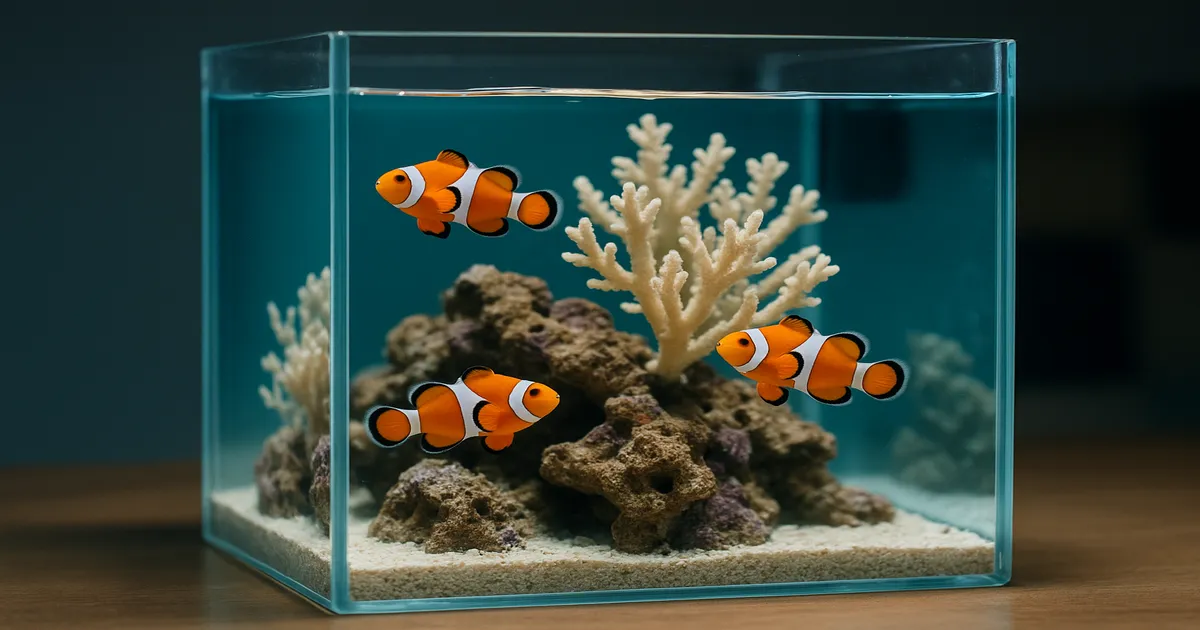
Quick Answer: A fish-shop nano marine kit can work for clownfish, but only if the tank is at least 20 gallons, fully cycled before fish are added, and supplemented with a few key upgrades. Many budget kits are simply too small and too bare to keep saltwater fish alive long-term. Buy smart, upgrade strategically, and you’ll have a genuinely rewarding low-cost marine aquarium.
So you spotted a compact marine starter kit at your local fish shop — a tidy all-in-one tank, a pair of orange-and-white clownfish, some live rock, and a price tag that doesn’t make you wince. It’s an appealing picture. But is it actually a good setup for a low-cost marine aquarium with only clownfish? That question is worth answering carefully before you reach for your wallet.
Is a Fish-Shop Nano Kit a Good Setup for a Low-Cost Marine Aquarium with Clownfish?
What These Kits Typically Include
Most fish-shop marine starter kits are all-in-one (AIO) nano tanks ranging from 10 to 30 gallons. They usually come with a built-in rear filtration chamber, a basic return pump, and sometimes a small powerhead. Rock — live or dry — may be included, along with a pair of Amphiprion ocellaris and a basic LED strip light.
The packaging looks complete. In reality, several critical pieces are often missing or undersized.
The Honest Verdict
A 20-gallon or larger AIO nano tank can absolutely support a pair of clownfish and a modest cleanup crew. The caveats are real, though: the tank must be properly cycled (4–8 weeks before fish go in), a protein skimmer should be added, and you need a refractometer — not the cheap swing-arm hydrometer many kits include. If the kit is under 15 gallons, walk away.
Clownfish: What You’re Actually Buying
Ocellaris vs. Percula
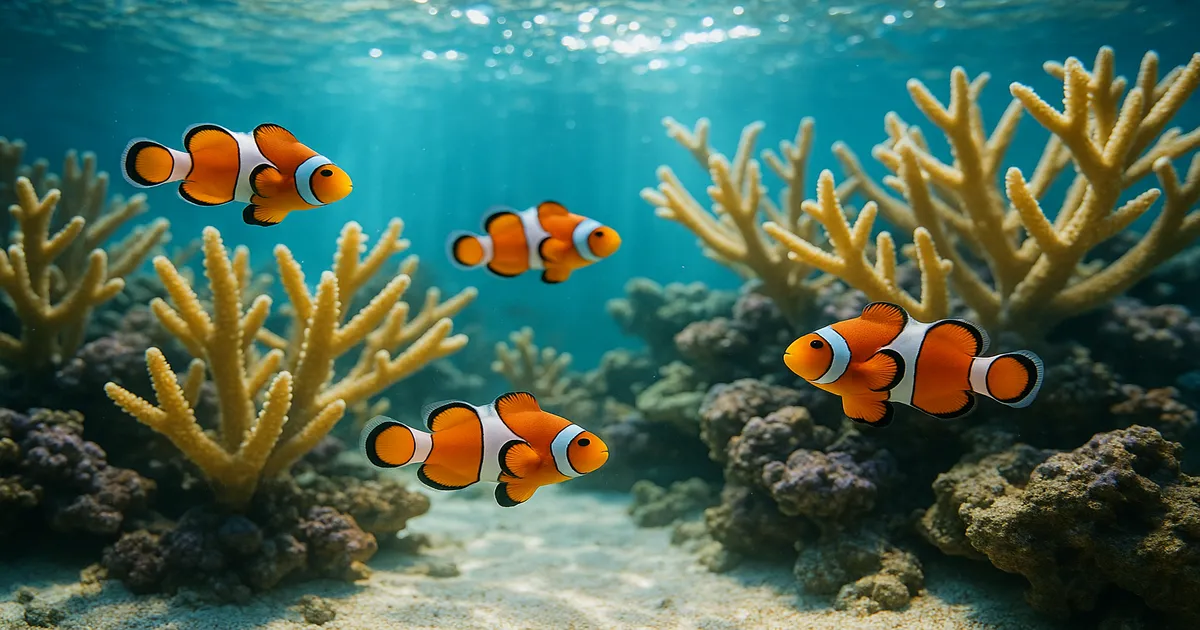
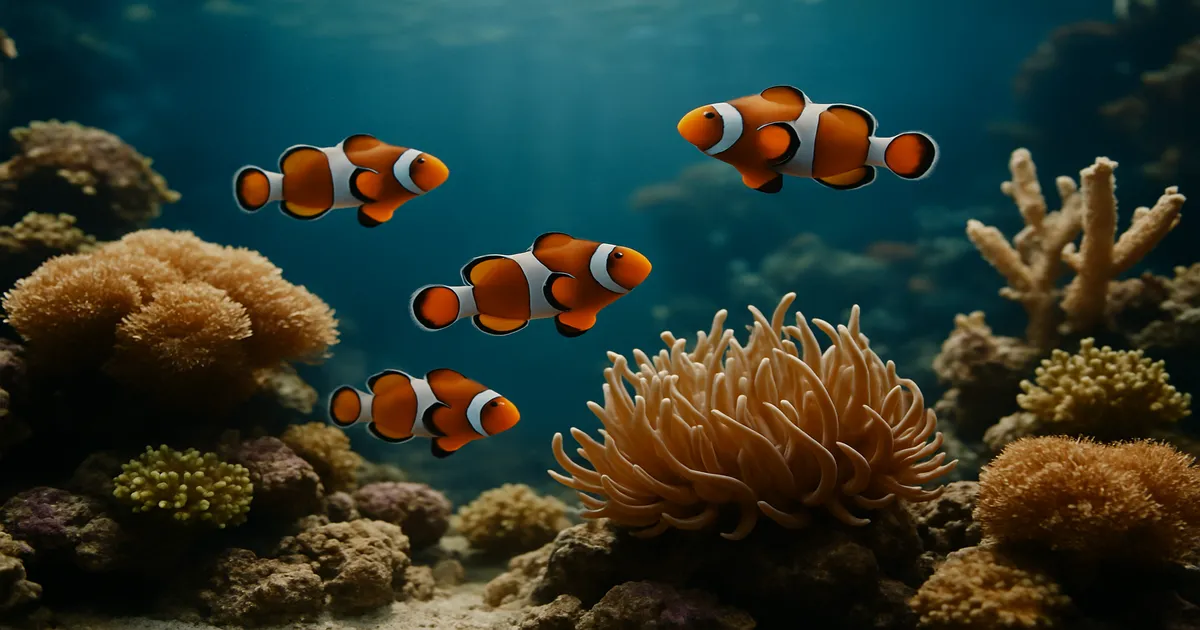
The two fish you’re most likely to see are Amphiprion ocellaris (False Percula) and A. percula (True Percula). Both sport the classic orange body with white bars edged in black. The True Percula has thicker black borders and 10 dorsal spines versus 11 in the Ocellaris — a detail that matters more to collectors than beginners. Care requirements are identical for both.
A third option worth knowing: A. clarkii (Clark’s Clownfish) is hardier than either and sometimes available. If your shop stocks it, it’s a solid choice.
Captive-Bred vs. Wild-Caught
Always choose captive-bred fish. They’re raised on prepared foods, acclimated to aquarium chemistry, and far more disease-resistant than wild-caught individuals. Look for fish from reputable breeders such as ORA (Oceanic Reefs Aquaculture). Wild-caught clownfish often arrive stressed, carrying parasites, and reluctant to eat pellets — three problems you don’t want in a beginner tank.
Designer Morphs
Snowflake, Picasso, Platinum, and Black Ice are all selectively bred A. ocellaris variants. They look striking and cost more, but their care is identical to a standard Ocellaris. Just confirm they’re captive-bred.
One biology note: clownfish are protandrous hermaphrodites — all are born male. In a pair, the dominant fish becomes female, and that change is irreversible. Two juveniles introduced together will pair naturally over time.
Tank Size and Setup
Minimum Tank Size for Clownfish
- 10 gallons: absolute minimum for a single clownfish — not recommended
- 20 gallons: recommended minimum for a bonded pair
- 20–30 gallons: the sweet spot for a stable, low-maintenance system with a cleanup crew
Why Many Starter Kits Fall Short
A large number of fish-shop marine kits are 5–10 gallons. That’s too small. Small water volumes swing in chemistry rapidly — a single missed water change or overfeeding session can push ammonia or salinity to dangerous levels within hours. Clownfish are forgiving by marine standards, but they’re not indestructible. Under 15 gallons, the risk isn’t worth it.
Substrate
Aragonite sand at 1–2 inches deep is the best choice for most beginners — it buffers pH naturally and looks the part. A bare-bottom tank is also valid and easier to clean, though you lose the buffering benefit. Avoid freshwater gravel entirely. Crushed coral works but traps detritus and demands more diligent maintenance.
Cycling: The Step You Cannot Skip
The nitrogen cycle converts toxic ammonia → nitrite → nitrate via beneficial bacteria. Fishless cycling with ammonia and live rock takes 4–8 weeks. Using seeded filter media from an established tank can compress this to 1–2 weeks.
Adding clownfish to an uncycled tank is the single most common cause of early marine fish death. No exceptions.
Equipment: What a Good Low-Cost Marine Aquarium Setup Needs
Biological Filtration
Live rock is the backbone of marine biological filtration. Aim for 1–1.5 lbs per gallon (roughly 0.1–0.15 kg per litre). It’s colonised by nitrifying bacteria and provides natural structure. Dry rock seeded with a bacterial starter works too, though it takes longer to mature.
Mechanical and Chemical Filtration
Clean your mechanical filter — sponge, filter sock, or media basket — every week. A dirty mechanical filter becomes a nitrate factory fast. For chemical filtration, run activated carbon and swap it monthly. It removes dissolved organics, keeps water clear, and eliminates the yellow tint that creeps into small marine tanks.
Protein Skimmer
Yes, even on a small tank. A skimmer pulls organic waste out of the water column before it breaks down into ammonia — it buys you a wider margin for error. Budget options start around $60–$100. (Reef Octopus Regal 100INT) Many AIO tanks have a rear chamber that fits a small hang-on skimmer neatly.
Water Flow
Target 10–20× tank volume per hour in total turnover. For a 20-gallon tank, that’s 200–400 GPH of combined pump output. Clownfish aren’t strong swimmers, so aim for indirect, diffused flow rather than a direct blast from a powerhead. A wavemaker on a gentle pulse mode works well. (Jebao SLW-10)
Lighting
For a fish-only clownfish tank, basic LED lighting in the 6,500–10,000 K range is perfectly sufficient — most AIO kits cover this fine. The caveat: if you ever want to add a Bubble-Tip Anemone, you’ll need a reef-grade LED such as an AI Prime HD or Kessil A80, adding $150–$300+ to your budget. For a genuinely low-cost build, skip the anemone for now.
Water Parameters
Salinity and Specific Gravity
- Specific gravity: 1.023–1.026 (target: 1.025)
- Salinity: 33–36 ppt (target: 35 ppt)
Use a refractometer, not a swing-arm hydrometer. (Milwaukee MA887) Swing-arm hydrometers can read 0.002–0.004 SG low — enough to stress fish chronically without you realising it.
Temperature, pH, and Alkalinity
- Temperature: 76–82°F (24–28°C), stable. Swings greater than 2°F (1°C) per day cause stress.
- pH: 8.1–8.4. Check morning and evening — CO₂ buildup overnight can drop pH by 0.2–0.3 units in a small tank.
- Alkalinity: 8–12 dKH. This buffers pH swings, which is especially important in nano systems.
Ammonia, Nitrite, Nitrate, and Phosphate
- Ammonia: 0 ppm at all times
- Nitrite: 0 ppm at all times
- Nitrate: below 30–40 ppm for fish-only; below 10 ppm is better
- Phosphate: below 0.1 ppm
A reliable liquid test kit covers all of these. Test at least weekly — stability matters more than chasing perfect numbers. A clownfish can live happily at pH 8.2 or 8.3; what it can’t handle is 8.4 in the morning and 7.9 by evening.
Tank Mates and Compatibility
Keeping Clownfish as a Pair
Keep clownfish as a bonded pair or a single individual. Three or more in a small tank leads to the dominant pair harassing subordinates to death. Two juveniles introduced simultaneously will pair naturally, with the larger eventually becoming female.
Best Invertebrate Tank Mates
Invertebrates are ideal companions for a small clownfish system:
- Cleaner Shrimp (Lysmata amboinensis) — active, visible, reef-safe
- Peppermint Shrimp (Lysmata wurdemanni) — bonus: they eat pest Aiptasia anemones
- Hermit Crabs (blue-leg, scarlet reef) — essential cleanup crew
- Nassarius, Cerith, and Trochus Snails — keep substrate and glass clean
- Emerald Crabs (Mithraculus sculptus) — excellent for controlling bubble algae
Suitable Small Fish for a 20–30 Gallon System
If you want a second species, keep it peaceful and small:
- Royal Gramma (Gramma loreto) — hardy, colourful, stays under 3 inches
- Tailspot Blenny (Ecsenius stigmatura) — grazes algae, non-aggressive
- Firefish Goby (Nemateleotris magnifica) — peaceful, but a tight lid is essential; they jump
- Watchman Goby (Cryptocentrus cinctus) — bottom-dwelling, will pair with a pistol shrimp
Species to Avoid
- Other damselfish — notorious fin-nippers and territory bullies
- Dottybacks (Pseudochromis spp.) — surprisingly aggressive for their size
- Large angelfish, triggers, or puffers — wrong tank, wrong budget
- Mandarin dragonets — require enormous copepod populations, unsuitable for nano tanks
- Most eels — predatory and expert escape artists
Do Clownfish Need an Anemone?
No. Clownfish thrive without one and will adopt a coral, powerhead, or favourite corner as their surrogate home. A Bubble-Tip Anemone (Entacmaea quadricolor) is possible but raises cost and complexity significantly — expensive lighting, pristine water, and the risk of the anemone wandering and stinging other inhabitants. Leave it for later.
Feeding Clownfish
Clownfish are opportunistic omnivores. In the wild they eat zooplankton, small crustaceans, algae, and fish eggs. In captivity they’ll accept almost anything, which is a big part of why they’re so beginner-friendly.
| Food Type | Examples | Notes |
|---|---|---|
| Frozen | Mysis shrimp, brine shrimp, cyclops | Best nutritional value; thaw before feeding |
| Pellets | New Life Spectrum Marine, Hikari Marine S | Excellent staple; use 1–2 mm size |
| Flakes | Ocean Nutrition Formula One | Convenient; lower nutritional density |
| Supplements | Selcon, Vitachem | Soak frozen foods 2–3× per week |
Feed adults twice daily — only what they consume in 2–3 minutes. Remove uneaten food after five minutes with a turkey baster. Overfeeding is the number one self-inflicted water quality problem in nano marine tanks. When in doubt, feed less.
Common Diseases
Marine Ich (Cryptocaryon irritans)
Small white spots (1–2 mm, like grains of salt) on the body and fins, often accompanied by flashing and rapid breathing. Treatment requires a separate hospital tank: copper-based medication (Seachem Cupramine) or the tank transfer method (moving fish between clean tanks every 72 hours). Your display tank must remain fishless for 76 days minimum to break the parasite’s life cycle.
Marine Velvet (Amyloodinium ocellatum)
Fine gold or rust-coloured dust on the skin — finer than ich and far more lethal. It progresses fast; by the time fish look obviously sick, the infection is already advanced. Copper treatment or chloroquine phosphate in a hospital tank is the standard response.
Brooklynella
Brooklynella hostilis disproportionately affects clownfish. Symptoms include excess mucus, skin sloughing, and rapid breathing. It can kill within 24–48 hours if untreated. Formalin-based treatment is standard but requires care. Captive-bred fish from reputable sources are far less susceptible.
The Quarantine Tank
A bare-bottom 10-gallon hospital tank with a heater, sponge filter, and basic light is the most important piece of equipment you can own. Never add fish directly from the store bag to your display tank. Quarantine every new fish for 4–6 weeks. This single habit will save your tank more than any other.
Frequently Asked Questions
What is the minimum tank size for clownfish?
Ten gallons is the absolute minimum for a single clownfish, but 20 gallons is strongly recommended for a pair. Small tanks experience rapid parameter swings that are hard to manage, especially for beginners. A 20–30 gallon system gives you enough water volume to keep chemistry stable without constant intervention.
Can clownfish live without an anemone?
Yes, completely. Clownfish don’t require an anemone and will live full, healthy lives without one. They’ll typically adopt a coral, powerhead, or a favourite spot as their surrogate home. Anemones add significant cost and complexity and are not recommended for beginner or low-budget setups.
How long does it take to cycle a marine tank before adding clownfish?
A fishless cycle using ammonia and live rock takes 4–8 weeks. Seeded filter media or live rock from an established tank can shorten this to 1–2 weeks. The cycle is complete when ammonia and nitrite both read 0 ppm after a full ammonia dose — confirm with a reliable liquid test kit before adding any fish.
How many clownfish can I keep in a 20-gallon tank?
Two — a bonded pair. Three or more in a 20-gallon will result in the dominant pair harassing and eventually killing the subordinate fish. Introduce two juveniles simultaneously and they’ll pair naturally, with the larger eventually becoming female.
What is the easiest marine fish to keep for beginners?
Ocellaris Clownfish (Amphiprion ocellaris) are widely considered the most beginner-friendly marine fish. They’re hardy, accept virtually all prepared foods, and tolerate a wider range of water parameters than most marine species. Other solid beginner options include the Royal Gramma and the Tailspot Blenny.