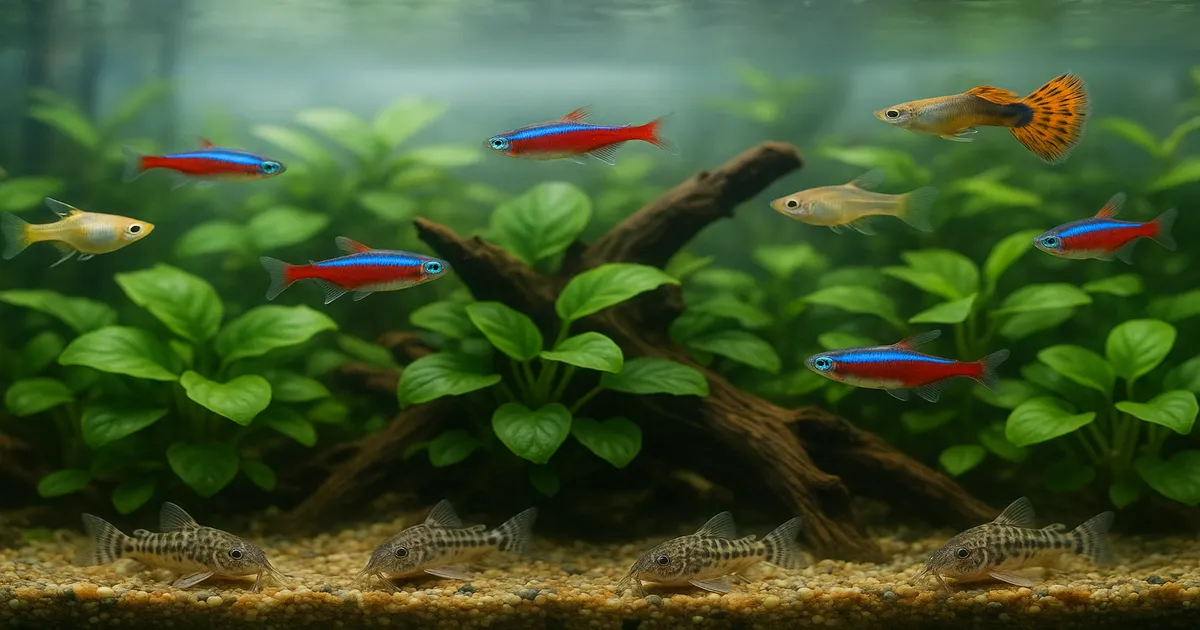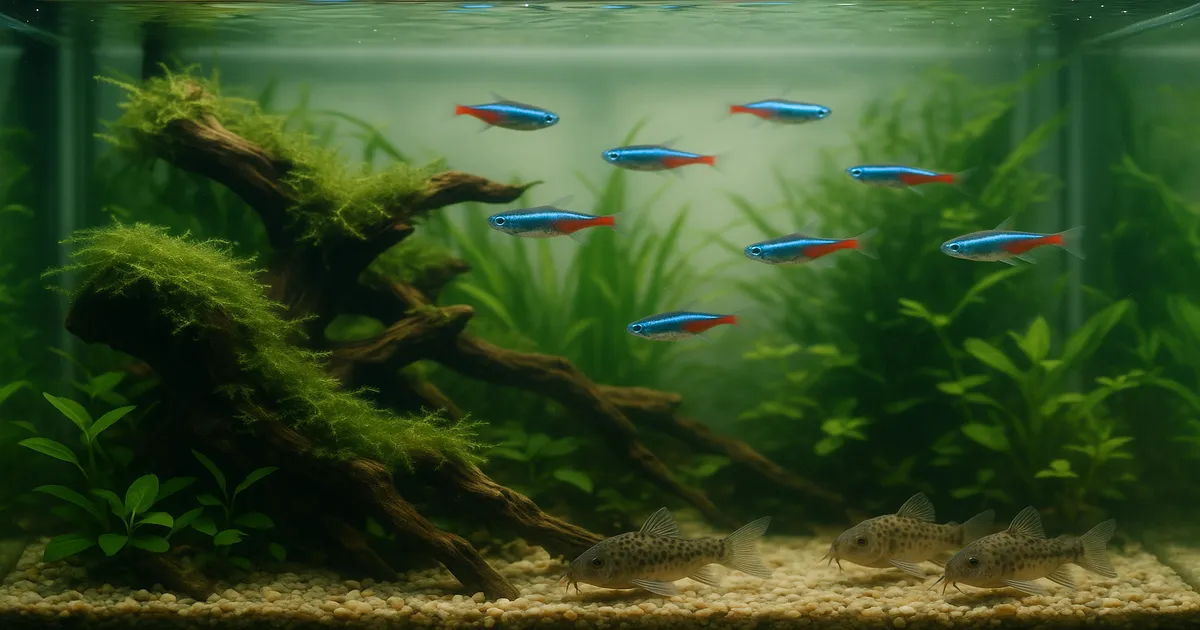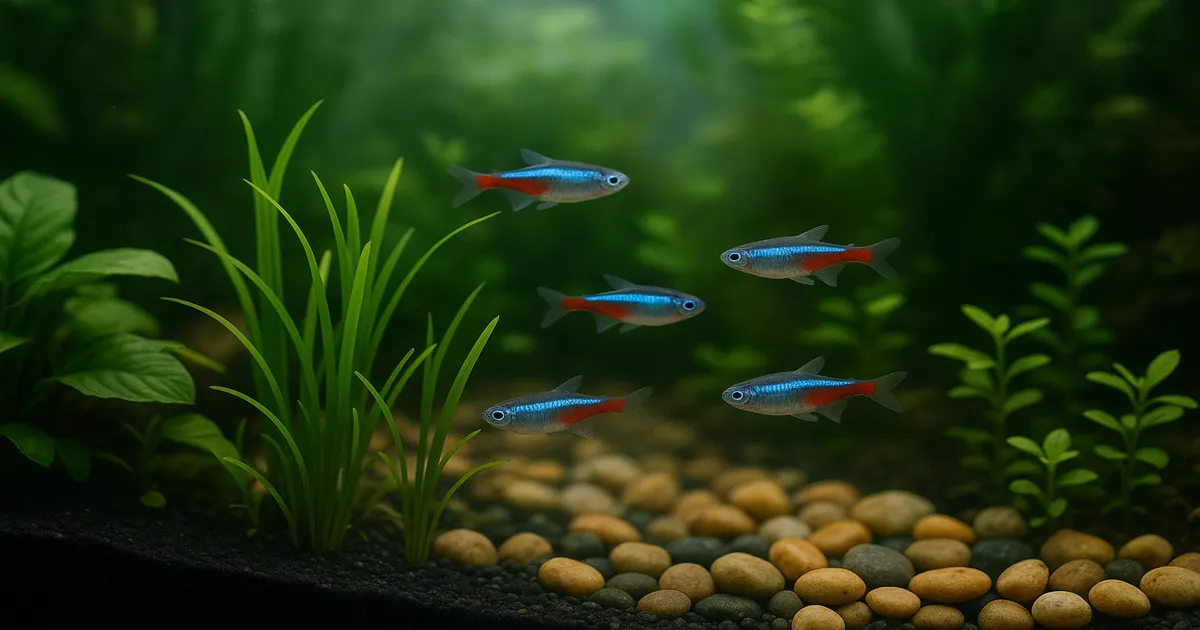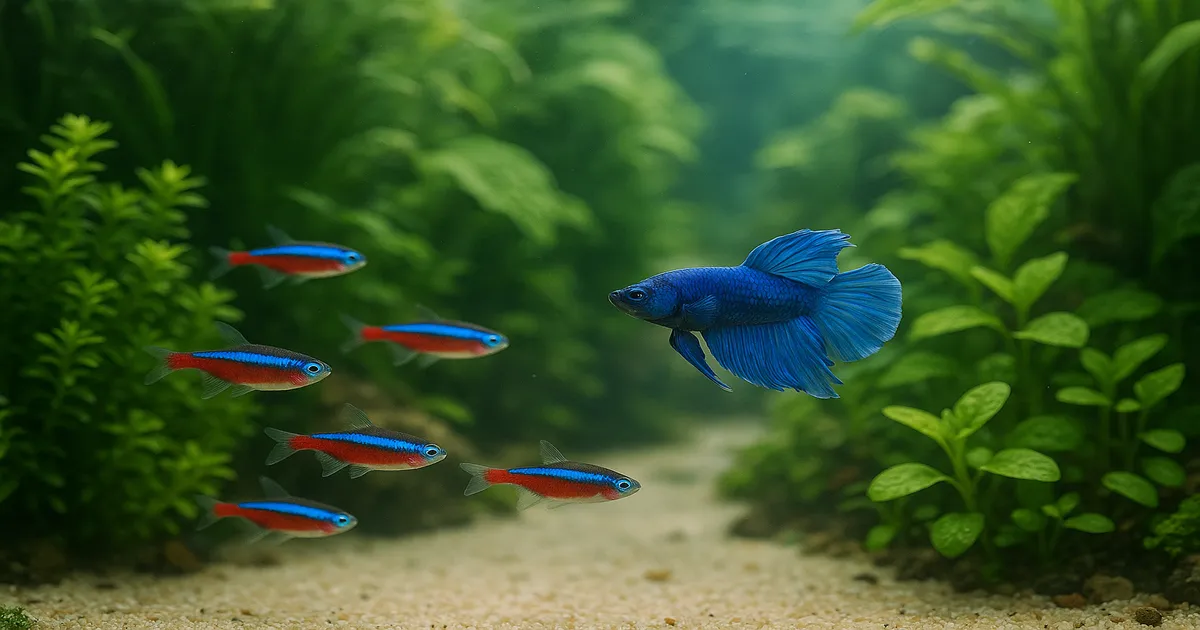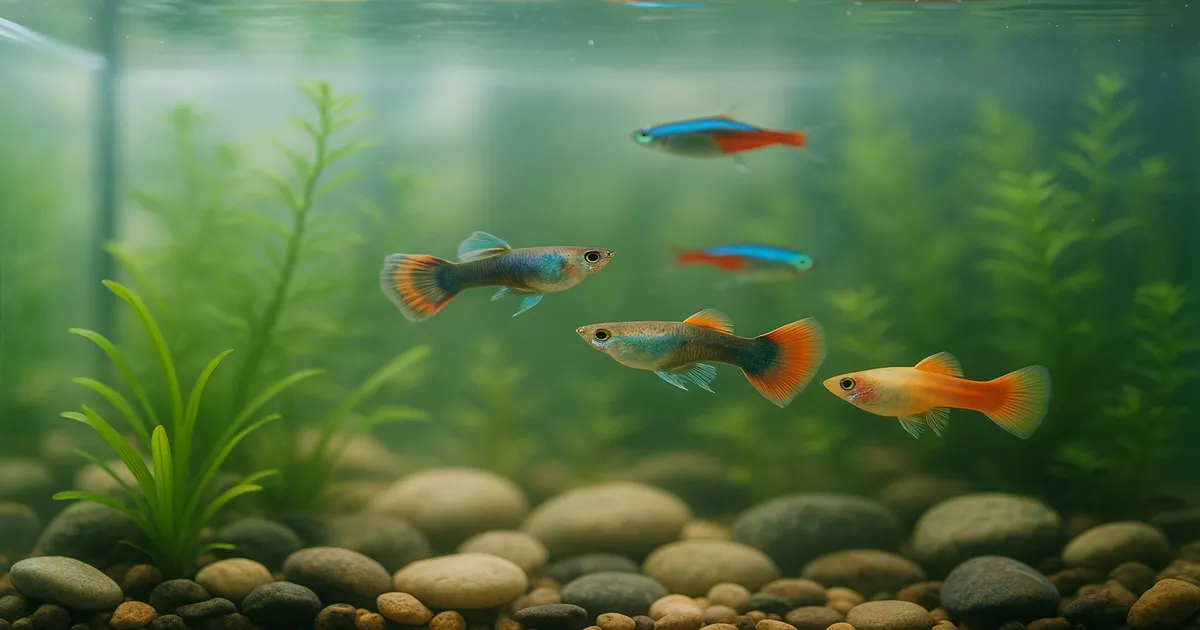
Quick Answer: The guppy is the single best fish for beginners — hardy, colorful, inexpensive, and forgiving of the inevitable rookie mistakes. The zebra danio is a close runner-up, arguably the most disease-resistant freshwater fish you can buy. Both accept dry food, tolerate typical tap water, and cost under $5.
Choosing the best fish for beginners comes down to more than picking something pretty at the pet store. The species you start with will shape your entire experience — a forgiving fish buys you time to learn; a sensitive one punishes every misstep. This guide covers 8 species that genuinely earn the “beginner-friendly” label, with honest pros and cons for each, a full comparison table, and clear recommendations by use case.
Best Fish for Beginners: Top Picks at a Glance
Our Top Pick: Guppy
The guppy (Poecilia reticulata) wins on almost every metric that matters to a new fishkeeper. It tolerates a wide range of water conditions, comes in dozens of stunning color strains, costs $2–$5, and is available at virtually every fish store on the planet. If you cycle your tank and keep the water clean, guppies are remarkably difficult to kill.
Runner-Up: Zebra Danio
The zebra danio (Danio rerio) has a reputation among experienced hobbyists as the fish that survives everything. It handles temperature swings, minor ammonia spikes, and suboptimal water chemistry better than almost any other commonly available species. If your local store is out of guppies, grab danios without hesitation.
The full list below covers 8 species matched to different tank sizes, temperatures, and stocking goals. Every pick is peaceful, costs $2–$15, and will eat standard flake or pellet food without complaint.
What Makes a Fish Truly Beginner-Friendly?
A beginner-friendly fish handles the minor fluctuations that are inevitable when you’re still learning — a small temperature swing, tap water that’s a little hard, a pH that drifts slightly. Every species on this list was evaluated against six criteria: hardiness, availability, peaceful temperament, price ($2–$15), well-documented care requirements, and willingness to eat commercial dry foods.
Aggression creates a cascade of problems — stress, disease, injury, and entirely avoidable fish deaths. All eight species here are peaceful enough to live alongside other community fish, with one important exception: male bettas must be kept solo.
A fish that’s hard to find or requires live food is not a beginner fish, full stop. Every species here is stocked at most local fish stores, available online, and will readily accept a quality flake or micro-pellet as their staple diet.
The Non-Negotiable: A Fully Cycled Tank
No matter which fish you choose, none of them will thrive — or even survive — in an uncycled tank. The nitrogen cycle is the biological process by which beneficial bacteria convert toxic ammonia (fish waste) into nitrite, then into the far less harmful nitrate. Before adding any fish, you need 0 ppm ammonia, 0 ppm nitrite, and nitrate below 20–40 ppm. Getting the pH exactly right matters far less than having a cycled, stable tank.
Confirm your parameters with a liquid test kit before adding any fish.
Beginner Fish Comparison Table
| Species | Min. Tank | Temp (°F/°C) | pH | Adult Size | Lifespan | Social Needs | Heater Needed? | Difficulty |
|---|---|---|---|---|---|---|---|---|
| Guppy | 10 gal | 72–82°F / 22–28°C | 7.0–8.0 | 1.5–2.5 in | 2–3 yr | Group of 6+ | Yes | Easy |
| Zebra Danio | 10 gal | 65–77°F / 18–25°C | 6.5–7.5 | 1.5–2.5 in | 3–5 yr | School of 6+ | Optional | Easy |
| Betta | 5 gal | 76–82°F / 24–28°C | 6.5–7.5 | 2.5–3 in | 3–5 yr | Solo (males) | Yes | Easy |
| Platy | 10 gal | 70–80°F / 21–27°C | 7.0–8.2 | 1.5–2.5 in | 3–5 yr | Group of 4–6 | Yes | Easy |
| Corydoras | 20 gal | 72–79°F / 22–26°C | 6.0–7.5 | 1–3 in | 5–10+ yr | Group of 6+ | Yes | Easy–Moderate |
| Neon Tetra | 10 gal | 72–78°F / 22–26°C | 6.0–7.0 | 1–1.5 in | 5–10 yr | School of 6–10+ | Yes | Easy–Moderate |
| White Cloud Minnow | 10 gal | 60–72°F / 16–22°C | 6.0–8.0 | 1–1.5 in | 3–5 yr | School of 6+ | No | Easy |
| Endler’s Livebearer | 10 gal | 72–82°F / 22–28°C | 7.0–8.5 | 1–1.5 in | 2–3 yr | Group of 6+ | Yes | Easy |
Guppy (Poecilia reticulata)
Native to Trinidad and Venezuela, guppies evolved in warm, hard, slightly alkaline water — conditions that match municipal tap water in most of the world. That’s a big part of why they’re so forgiving. Males come in dozens of selectively bred strains (Cobra, Tuxedo, Moscow Blue) with flowing finnage in nearly every color imaginable. Females are larger and plainer. They’re livebearers, meaning fry arrive fully formed and swimming rather than hatching from eggs.
Key specs:
- Minimum tank: 10 gallons
- Temperature: 72–82°F (22–28°C)
- pH: 7.0–8.0 | GH: 8–20 dGH
- Size: 1.5–2.5 inches | Lifespan: 2–3 years
- Keep in groups of 6+; maintain 2–3 females per male to reduce harassment
Pros
- Extraordinarily hardy — tolerates typical tap water with dechlorination alone
- Wide variety of color strains at $2–$5 each
- Active and entertaining; males display constantly
- Breed readily, so a healthy colony sustains itself
Cons
- Breed very prolifically — have a plan for surplus fry before you start
- Males persistently chase females; the 2:1 female-to-male ratio is not optional
- Fancy show strains with exaggerated fins can be more delicate than standard guppies
The guppy is the definitive beginner fish — forgiving, beautiful, and endlessly rewarding.
Zebra Danio (Danio rerio)
Zebra danios come from fast-moving streams in India and Bangladesh, but they’re equally at home in stagnant seasonal pools — that adaptability is baked into their genetics. Hobbyists have called them “bulletproof” for decades, and the reputation is earned. They zip around the upper and middle water column constantly, making even a simple tank feel alive. GloFish and Longfin variants are widely available if you want a twist on the classic look.
Key specs:
- Minimum tank: 10 gallons (longer tanks preferred — they’re fast swimmers)
- Temperature: 65–77°F (18–25°C)
- pH: 6.5–7.5
- Size: 1.5–2.5 inches | Lifespan: 3–5 years
- School of 6+
Pros
- Arguably the most disease-resistant freshwater fish available to hobbyists
- Tolerates a remarkably wide temperature range — viable without a heater in many temperate homes
- Inexpensive and universally available
- Constant movement makes them entertaining to watch
Cons
- Preferred temperature of 65–77°F conflicts with tropical species that need 78°F+ (26°C+)
- High energy may stress slower, shyer tankmates such as bettas
- Egg-scatterers that will eat their own fry unless separated
If you want a near-indestructible schooling fish that brings constant movement to the tank, the zebra danio is your answer.
Betta Fish (Betta splendens)
Bettas evolved in the shallow rice paddies and slow streams of Thailand and Cambodia, where oxygen levels can drop very low. Their labyrinth organ lets them gulp air directly from the surface — a genuine survival adaptation that also makes them tolerant of lower water quality than most fish. No other beginner species matches the betta’s combination of visual drama and genuine personality; many owners report their fish learning to recognize them and responding at feeding time. Halfmoon, Crowntail, and Plakat fin types are the most commonly available.
Key specs:
- Minimum tank: 5 gallons (10 gallons preferred for stability)
- Temperature: 76–82°F (24–28°C)
- pH: 6.5–7.5
- Size: 2.5–3 inches | Lifespan: 3–5 years
- Keep males solo; females can sometimes be kept in groups (“sororities”) with caution
Pros
- Ideal for smaller spaces — a well-planted 5–10 gallon is a complete setup
- Visually spectacular; no two fish look exactly alike
- Interactive and responsive — genuinely engaging to keep
- Labyrinth organ provides a buffer against low oxygen levels
Cons
- Males cannot be housed together under any circumstances
- Needs stable warm temperatures; cold drafts from air conditioning can cause illness
- Requires very low-flow filtration — strong currents stress and exhaust them
- Plastic plants can shred delicate finnage; use silk or live plants instead
For a solo showpiece fish with genuine personality, no beginner species rivals the betta.
Platy (Xiphophorus maculatus / X. variatus)
Platys come from slow-moving, heavily vegetated streams in Mexico and Guatemala, and selective breeding has produced an enormous range of color morphs — Sunset, Mickey Mouse, Wagtail, Salt-and-Pepper, and many more. They’re closely related to swordtails and mollies, sharing the livebearer reproductive strategy and a preference for harder, more alkaline water. Of all the livebearers on this list, platys are arguably the most forgiving when parameters drift.
Key specs:
- Minimum tank: 10 gallons
- Temperature: 70–80°F (21–27°C)
- pH: 7.0–8.2 | GH: 10–25 dGH
- Size: 1.5–2.5 inches | Lifespan: 3–5 years
- Groups of 4–6; keep more females than males
Pros
- Extremely tolerant of water parameter fluctuations — ideal for beginners still dialing in their tank
- Thrives in hard tap water without any modification
- Peaceful with virtually all community fish
- Colorful and active without being boisterous
Cons
- Breed prolifically — have a plan for surplus fry before you start
- Males can persistently chase females; always keep more females than males
- Not suitable for soft, acidic setups — pH below 7.0 causes chronic stress
The platy is the most forgiving beginner livebearer available — ideal for anyone who wants colour and activity without demanding water chemistry.
Corydoras Catfish (Corydoras spp.)
Corydoras are South American bottom-dwellers that shoal in large groups in the wild, and they bring that same social energy to the home aquarium. Their armoured bodies — bony plates called scutes — make them physically robust in a way that soft-bodied fish simply aren’t. The three most beginner-friendly species are the Peppered Cory (C. paleatus, 72–79°F / 22–26°C), Bronze Cory (C. aeneus, 72–79°F / 22–26°C), and Sterbai Cory (C. sterbai, 75–82°F / 24–28°C — notably warmer, making it the best choice for betta community tanks). Buy a group of six and you’ll have them for a decade.
Key specs:
- Minimum tank: 20 gallons (floor space matters more than volume)
- Temperature: 72–79°F (22–26°C) for most species; 75–82°F (24–28°C) for C. sterbai
- pH: 6.0–7.5
- Size: 1–3 inches depending on species | Lifespan: 5–10+ years
- Groups of 6+; sand substrate is strongly preferred — coarse gravel damages their barbels
Pros
- Exceptionally long-lived — a genuine long-term investment
- Help clean up uneaten food from the substrate
- Entertaining social behaviour; they interact with each other constantly
- Peaceful with every community fish species
Cons
- Require sand substrate — coarse gravel will damage their sensitive barbels over time
- Need groups of 6+, which adds up at $4–$8 per fish
- 20-gallon minimum rules them out for very small setups
Corydoras are the perfect tank-cleaning companions and a long-term investment — buy a group of six and enjoy them for a decade.
Neon Tetra (Paracheirodon innesi)
Few fish are more recognizable than the neon tetra, with its electric blue stripe and vivid red tail. They originate from soft, acidic Amazonian blackwater streams — conditions quite different from typical tap water — and that’s the honest reason they sit slightly lower on the beginner scale than guppies or danios. They’re not difficult fish, but they require a fully cycled, established tank and won’t tolerate ammonia spikes. Get the tank right first, and neons can live 5–10 years. The Cardinal Tetra (Paracheirodon axelrodi) is a hardier, more color-saturated alternative worth considering; it prefers pH 5.5–7.0 and temperatures of 73–81°F (23–27°C).
Key specs:
- Minimum tank: 10 gallons
- Temperature: 72–78°F (22–26°C)
- pH: 6.0–7.0
- Size: 1–1.5 inches | Lifespan: 5–10 years
- School of 6–10+
Pros
- Iconic and visually stunning — a school of 10+ under good lighting is genuinely breathtaking
- Peaceful and compatible with most community fish
- Long-lived in a well-maintained tank
- Inexpensive and universally available
Cons
- Sensitive to ammonia spikes and new-tank syndrome — not suitable for uncycled tanks
- Prefer soft, slightly acidic water (pH 6.0–7.0); very hard tap water may require RO blending
- Small size makes them vulnerable to larger or fin-nipping tankmates
Neon tetras reward patient beginners who cycle their tank first — add them to an established aquarium and they’ll be a centrepiece for years.
White Cloud Mountain Minnow (Tanichthys albonubes)
The white cloud mountain minnow has one feature no other fish on this list can match: it doesn’t need a heater. Native to cool mountain streams in Guangdong Province, China, it thrives at 60–72°F (16–22°C) — room temperature in most temperate homes. That alone makes it transformative for beginners who want to keep fish without the cost and complexity of a heater. It’s also near-threatened in the wild, so captive-bred specimens are the norm. Small, active, and hardy, these little fish punch well above their weight.
Key specs:
- Minimum tank: 10 gallons
- Temperature: 60–72°F (16–22°C)
- pH: 6.0–8.0
- Size: 1–1.5 inches | Lifespan: 3–5 years
- School of 6+
Pros
- No heater required in most temperate homes — real cost and complexity savings
- Extremely hardy and tolerant of a wide pH range
- Peaceful and compatible with other cool-water species
- Inexpensive and readily available
Cons
- Cannot be mixed with tropical species requiring 78°F+ (26°C+) — temperature incompatibility is a hard limit
- Cooler temperature requirement significantly limits compatible tankmates
- Less visually dramatic than guppies or bettas at first glance
The white cloud mountain minnow is the perfect beginner fish for anyone who wants to skip the heater without sacrificing a lively, attractive schooling species.
Endler’s Livebearer (Poecilia wingei)
Endler’s livebearers are close relatives of the guppy, native to the warm, hard coastal lagoons of Venezuela. They share the guppy’s toughness and livebearer convenience but stay smaller — males top out at around 1 inch — making them a better fit for nano tanks. Males display vivid, almost neon patterning; females are plain olive-silver. Like guppies, they breed readily, so the same fry-management planning applies. Pure Endler’s strains (Class N) are worth seeking out over guppy hybrids if you want to keep the line true.
Key specs:
- Minimum tank: 10 gallons (5.5 gallons workable for a small group)
- Temperature: 72–82°F (22–28°C)
- pH: 7.0–8.5 | GH: 10–30 dGH
- Size: Males ~1 inch; females ~1.5–1.8 inches | Lifespan: 2–3 years
- Groups of 6+; keep more females than males
Pros
- Smaller than guppies — viable in nano tanks as small as 5.5 gallons
- Extremely hardy; tolerates hard, alkaline tap water with ease
- Males display intense, jewel-like coloration
- Breed readily, producing small, manageable fry
Cons
- Breed prolifically — same fry-management challenge as guppies
- Pure strains can be harder to source than standard guppies
- Males may hybridize with female guppies if kept together, muddying both lines
Endler’s livebearers are the ideal choice for nano tank owners who want the guppy experience in a smaller package.
Our Verdict: Best Beginner Fish by Use Case
Best Overall Beginner Fish: Guppy
Hardy, colorful, cheap, and available everywhere. The guppy forgives mistakes that would kill more sensitive fish, and the sheer variety of strains means you’ll never run out of options. Start here.
Best for a Solo Setup: Betta Fish
One spectacular fish in a well-planted 10-gallon is one of the most rewarding setups in the hobby. No other beginner species delivers the same combination of visual impact and genuine personality in a small footprint.
Best Schooling Fish: Zebra Danio
Active, nearly indestructible, and entertaining to watch. A school of six danios transforms a plain tank into something dynamic. Their tolerance for cooler temperatures also makes them viable without a heater in many homes.
Best Bottom-Dweller: Corydoras Catfish
Every community tank benefits from a crew of corydoras working the substrate. They’re peaceful, long-lived, and occupy a niche no other beginner fish fills. Plan for the 20-gallon minimum and sand substrate from day one.
Best for Hard Tap Water: Platy
If your tap water is hard and alkaline — as it is in much of the US, UK, and Australia — platys are perfectly adapted to it. No RO unit, no pH adjusting, no stress.
Best Heater-Free Setup: White Cloud Mountain Minnow
The only fish on this list that genuinely thrives without a heater. If you’re in a temperate climate and want to keep things simple, white clouds are the answer.
Best for Nano Tanks: Endler’s Livebearer
All the hardiness and color of a guppy in a fish that works in tanks as small as 5.5 gallons. Endler’s are the best fish for beginners working with limited space.
Best Iconic Centrepiece Tetra (Established Tanks Only): Neon Tetra
Neons are worth the extra patience. Cycle your tank fully, confirm 0 ppm ammonia and nitrite, then add a school of ten. The result is one of the most beautiful sights in freshwater fishkeeping.
Before stocking anything, confirm your nitrogen cycle is complete using a reliable liquid test kit. Use the comparison table above to match your chosen species to your tank size, tap water chemistry, and temperature range — the right match makes everything easier.
Frequently Asked Questions
What is the easiest fish to keep for a complete beginner?
Guppies and zebra danios are the two easiest options. Both tolerate a wide range of water conditions, accept standard flake or pellet food, and recover well from the minor mistakes every new fishkeeper makes. If you can only pick one, go with the guppy — the color variety alone makes it more rewarding for most beginners.
How many fish can I put in a 10-gallon tank?
The classic starting point is 1 inch of adult fish per gallon — roughly 6 guppies or a school of 6–8 neon tetras in a 10-gallon. That said, this rule is a guideline, not a law. Filtration capacity, waste load, and swimming space all matter. One firm caveat: corydoras need floor space and a 20-gallon minimum, so don’t try to squeeze them into a 10-gallon regardless of the inch-per-gallon math.
Do beginner fish need a heater?
Most do. Bettas need 76–82°F (24–28°C), guppies need 72–82°F (22–28°C), and neon tetras need 72–78°F (22–26°C) — none of those ranges are reliably achievable year-round without a heater in most homes. The notable exception is the white cloud mountain minnow, which thrives at 60–72°F (16–22°C) and genuinely doesn’t need a heater in most temperate climates. For any tropical setup, a reliable submersible heater is a worthwhile investment.
Can I mix different beginner fish in one community tank?
Yes, with planning. Guppies, corydoras, and neon tetras make an excellent combination — they occupy different water levels, share compatible parameters, and are all peaceful. What doesn’t work: male bettas with other bettas or fin-nipping species like tiger barbs; white cloud minnows with tropical fish requiring 78°F+ water; and zebra danios with very slow or shy fish that find their energy stressful.
How long does it take to cycle a new fish tank?
A fishless cycle typically takes 4–8 weeks. You dose ammonia to feed beneficial bacteria (Nitrosomonas and Nitrospira) until they establish a colony large enough to process a full fish load. Using a bottled bacterial starter can cut that timeline to 2–4 weeks. (Seachem Stability 500ml) The cycle is complete when you add ammonia to 2–4 ppm and it drops to 0 ppm within 24 hours, with no detectable nitrite. Adding fish to an uncycled tank — “new tank syndrome” — is the single most common cause of beginner fish deaths, so don’t rush this step.