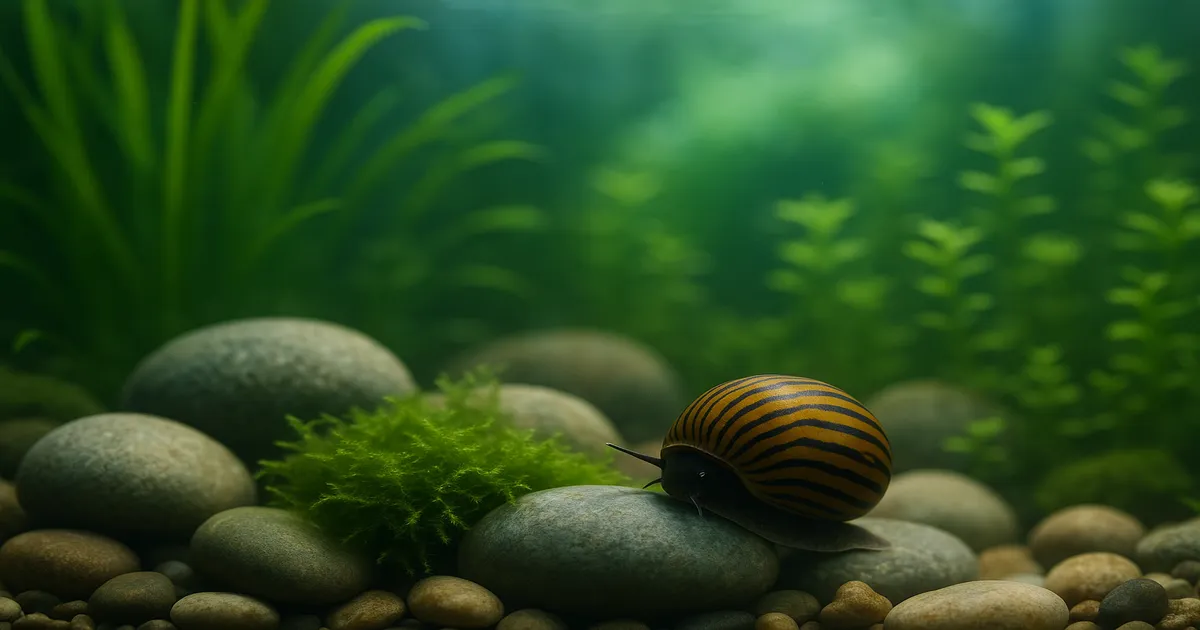
Quick Answer: Nerite snails are peaceful, hardy algae eaters that thrive in hard, alkaline freshwater with a pH of 7.5–8.2, GH of 8–15 dGH, and a temperature of 75–79°F (24–26°C). They need a cycled tank of at least 5 gallons, are extremely sensitive to copper, and cannot reproduce in freshwater — making them one of the easiest and most rewarding invertebrates for beginner and community tanks alike.
Knowing how to care for nerite snails properly makes the difference between a thriving algae-eater and one that slowly deteriorates in the wrong water chemistry. The good news: once you nail the water parameters and escape-proof your tank, nerites are genuinely low-maintenance pets.
Nerite Snail Species Overview
Popular Nerite Snail Varieties
The Neritidae family contains dozens of species, but a handful dominate the aquarium hobby — each with its own striking shell pattern.
| Common Name | Scientific Name | Shell Pattern |
|---|---|---|
| Zebra Nerite | Neritina natalensis | Black and gold stripes |
| Tiger Nerite | Vittina semiconica | Orange and black stripes |
| Olive Nerite | Neritina reclivata | Olive, dark mottled |
| Horned Nerite | Clithon corona | Variable with spiky horns |
| Red Racer Nerite | Vittina waigiensis | Red and black racing stripes |
| Black Racer Nerite | Vittina corona | Near-black shell |
Note: Tiger Nerite (Vittina semiconica) and Black Racer Nerite are sometimes listed under the same scientific name in the hobby. Taxonomy in this family is still being revised; expect minor discrepancies between suppliers.
All of these species share the same core care requirements, so you can mix and match them in a single tank without adjusting your setup.
Natural Habitat and Behavior
Nerites are found across East Africa, Southeast Asia, the Caribbean, and the Indo-Pacific — clinging to rocks, driftwood, and hard substrates in rivers, estuaries, tidal zones, and mangrove swamps. They’re natural grazers of periphyton: the thin layer of algae, diatoms, and biofilm that coats every hard surface in their environment.
In the aquarium, they behave the same way. Nerites are largely nocturnal, spending their days resting and their nights slowly working across the glass and hardscape. Their operculum — a hard “trap door” — seals the shell when they retract, protecting them from predators and brief air exposure.
Size and Lifespan
Most species reach 0.5–1.5 inches (1.3–3.8 cm), with Horned Nerites on the smaller end and Zebra Nerites on the larger. Expect a lifespan of 1–3 years in captivity; under consistently optimal conditions, some individuals reach 5 years.
Ideal Water Parameters for Nerite Snails
pH, Hardness, and Temperature
| Parameter | Ideal Range |
|---|---|
| pH | 7.5–8.2 |
| GH (General Hardness) | 8–15 dGH |
| KH (Carbonate Hardness) | 8–12 dKH |
| Temperature | 75–79°F (24–26°C) |
| Ammonia | 0 ppm |
| Nitrite | 0 ppm |
| Nitrate | Under 20 ppm |
Test your water at least weekly, especially in newer tanks. A reliable liquid test kit takes the guesswork out of parameter monitoring — the API Freshwater Master Test Kit covers all the parameters above and is accurate enough for invertebrate keeping.
Why Hard, Alkaline Water Matters
Nerite shells are made of calcium carbonate, and acidic or soft water literally dissolves them. If your pH drops below 7.0 or your GH is very low, you’ll start seeing white pitting, chalky patches, and structural erosion on the shell. This isn’t cosmetic — it’s a sign of chronic stress that shortens their lifespan.
KH is arguably the most critical parameter to stabilize. It acts as a buffer, preventing pH swings between water changes. If your tap water is soft, adding crushed coral to your filter or placing a small piece of cuttlebone in the tank will raise both KH and GH naturally. CaribSea Crushed Coral is a popular and affordable option that works well in a mesh media bag inside your filter.
Copper and Chemical Sensitivity
Nerites are extremely sensitive to copper — even trace amounts above 0.1 ppm can be lethal. Avoid any medications, fertilizers, or equipment that contains copper. Always check labels, especially with liquid plant fertilizers and ich treatments.
Always dechlorinate tap water before water changes. Seachem Prime neutralizes chlorine, chloramine, and heavy metals in seconds and is safe for invertebrates at the standard dose.
Water Change Schedule
Perform 25–30% water changes every week. This keeps nitrates below 20 ppm and maintains stable chemistry without large parameter swings. When adding new water, match the temperature closely — sudden shifts stress snails just as much as fish.
How to Care for Nerite Snails: Tank Setup
Minimum Tank Size
A 5-gallon tank works for 1–2 nerites, but a 10-gallon or larger is better for a small group of 3–6. Bigger tanks hold more stable water parameters and provide more grazing surface — both things nerites genuinely benefit from.
Substrate and Hardscape
Nerites spend most of their time on vertical hard surfaces, not the substrate. Fine to medium gravel or sand works fine; just avoid sharp or coarse substrates that could damage the foot if a snail falls. What matters far more is your hardscape. Smooth river rocks, slate, and driftwood give nerites the grazing territory they need and mimic their natural rocky habitat.
Live plants are fully compatible. Nerites graze algae from plant leaves without damaging healthy tissue — unlike pest snail species.
Filtration and Flow
Any standard filter works. Sponge filters are especially well-suited because they provide gentle flow, solid biological filtration, and an extra grazing surface nerites love. The Hikari Bacto-Surge Sponge Filter is a reliable choice for tanks up to 20 gallons. Whatever filter you use, cover the intake with a sponge pre-filter or fine mesh — smaller species like Horned Nerites can get sucked in, and it’s fatal.
The tank must be fully cycled before you add snails. Ammonia and nitrite spikes are just as dangerous to nerites as to fish.
Lighting
Moderate lighting for 8–10 hours per day hits the sweet spot — enough to encourage healthy algae growth without triggering a nuisance bloom. Nerites are somewhat photophobic and tend to be most active during dim periods, so don’t be surprised if they seem sluggish under bright midday light.
Escape-Proofing Your Tank
This is non-negotiable. Nerites are notorious escape artists — they will climb straight up the glass and out of an open tank, especially at night. A tight-fitting lid or hood is essential. Even small gaps around filter tubes and heater cords are enough for them to squeeze through, so seal everything you can.
Nerite Snail Tank Mates and Compatibility
Best Community Tank Mates
Nerites are completely peaceful and non-territorial. They fit well in most community setups. Great tank mates include:
- Small tetras: Neon, Cardinal, Ember, Rummy Nose
- Rasboras: Harlequin, Chili, Lambchop
- Corydoras and Otocinclus catfish — fellow algae grazers that won’t bother snails
- Livebearers: Guppies, Endlers, Platies, Mollies
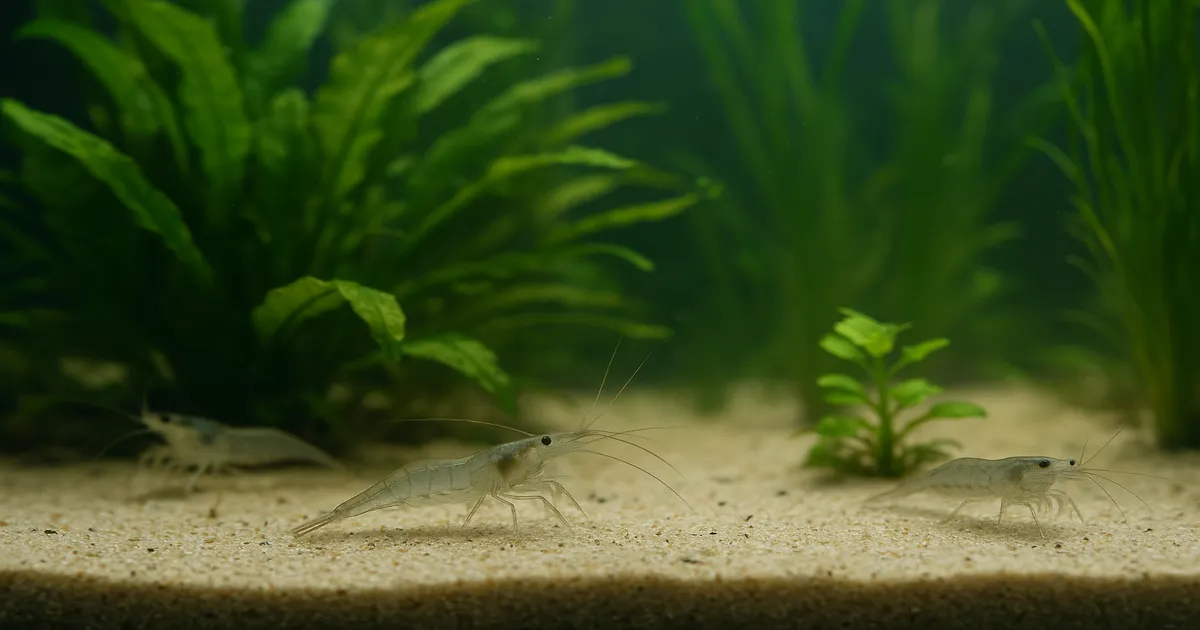
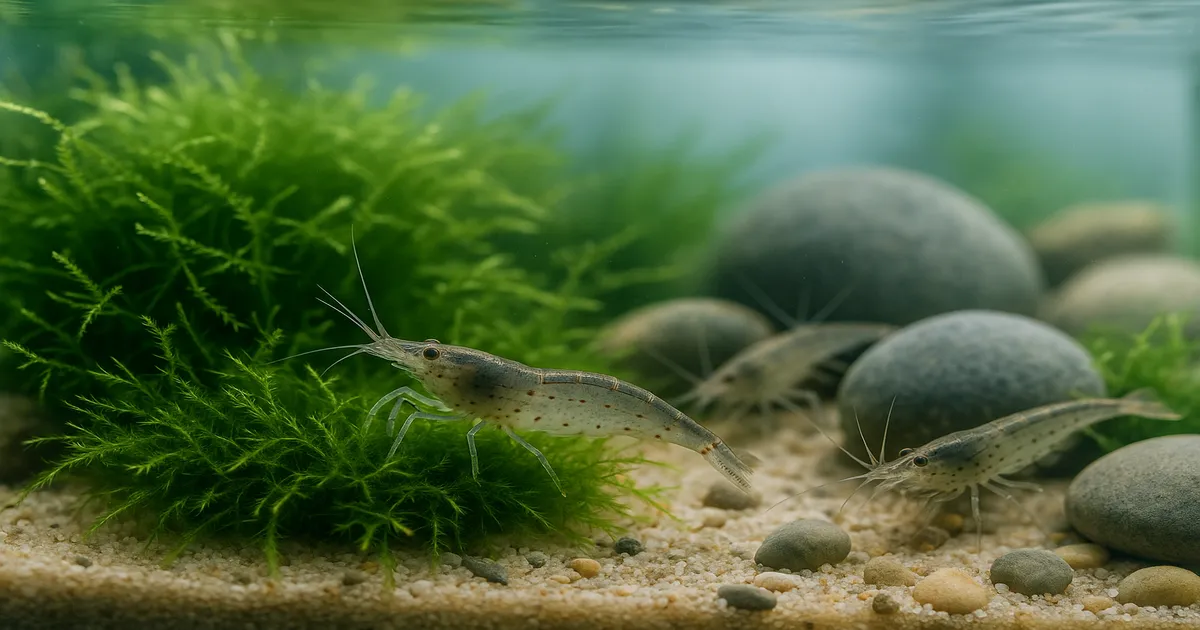
- Dwarf shrimp: Neocaridina (Cherry, Blue Dream) and Caridina (Crystal Red, Amano) shrimp are ideal companions
- Other snails: Mystery snails and Ramshorn snails coexist peacefully
- Kuhli loaches — peaceful and completely snail-safe
For stocking density, the common guideline is roughly 1 nerite per 5 gallons, but the real limiting factor is available algae. Overstock and they’ll starve.
Species to Avoid
Some fish actively prey on snails or will harass nerites to the point of injury:
- Pea puffers, figure-eight puffers, green spotted puffers — dedicated snail hunters
- Assassin snails — will hunt and eat nerites
- Clown loaches and Yoyo loaches — known snail predators
- Most cichlids — many are aggressive enough to attack or crush snail shells
- Goldfish — will harass snails and prefer cooler temperatures than nerites need
- Crayfish — will catch and consume snails given the opportunity
Feeding Nerite Snails
What Nerite Snails Eat
The most important food source for nerites is the algae and biofilm growing naturally in your tank. They’re exceptional at clearing green spot algae, brown diatoms, green dust algae, and biofilm from glass, rocks, and driftwood. They’re far less effective against black beard algae and staghorn algae, so don’t count on them to solve those problems.
A well-established tank with moderate lighting will often produce enough algae to keep 2–3 nerites well-fed without any supplemental feeding at all.
Supplemental Foods for Low-Algae Tanks
If your tank is very clean or heavily planted, you’ll need to supplement. Good options include:
- Blanched vegetables: Zucchini, cucumber, spinach — blanch briefly (30–60 seconds) to soften, then anchor with a clip or small weight
- Algae wafers: Hikari Algae Wafers sink to the bottom and are readily accepted
- Repashy gel foods: “Soilent Green” or “Bottom Scratcher” are highly nutritious and easy to prepare
- Dried nori: Clip a small strip to the glass; nerites find it quickly
- Spirulina wafers: Concentrated plant nutrition in a convenient format
When algae is sparse, offer supplemental food 2–3 times per week and remove anything uneaten within 24 hours — decomposing food spikes ammonia fast in small tanks.
Watch for starvation signs: prolonged lethargy, snails congregating at the waterline, a visibly thin foot, or shell deterioration. These are your cues to increase feeding immediately.
Calcium Supplementation for Shell Health
Calcium is absorbed both from the water column and through food. In soft water, place a small piece of cuttlebone directly in the tank — it dissolves slowly and raises both GH and KH. Crushed coral in a mesh bag in the filter does the same job more gradually. Calcium-rich foods like spinach and kale also contribute.
Common Nerite Snail Health Problems
Shell Erosion and Pitting
White or chalky patches and pitting are almost always caused by acidic or soft water. Raise pH to 7.5–8.2, increase KH with crushed coral or a small amount of baking soda, and add cuttlebone for ongoing calcium support. Existing erosion won’t fully reverse, but correcting the water halts further damage and allows the snail to lay down new healthy shell material at the growing edge.
Shell Cracking
Cracks are usually caused by physical trauma — a fall from height, a rough tank mate, or advanced erosion that weakened the shell. Minor cracks can heal if water quality is corrected promptly. Severe damage is often fatal. Smooth hardscape and appropriate tank mates are your best prevention.
Lethargy and Inactivity
Nerites naturally rest for 12–24 hours at a stretch — this is completely normal. If a snail has been motionless for more than 48 hours, check your water parameters first. Low temperature, ammonia, nitrite, or copper contamination are the most common culprits. A snail that doesn’t respond to gentle touch or has a foul smell has likely died.
Floating or Upside-Down Snails
A floating nerite has usually trapped air in its shell — this is often harmless and temporary. Gently place the snail on a hard surface and observe. If it rights itself and begins moving within a few minutes, it’s fine. If it remains fully retracted, unresponsive, and smells bad, it has likely died. Always quarantine wild-caught specimens for 2–4 weeks before adding them to your display tank to screen for parasites.
Frequently Asked Questions About How to Care for Nerite Snails
Can nerite snails reproduce in a freshwater aquarium?
No. Nerite snails require brackish or marine water to complete their larval development, so their eggs will never hatch in a freshwater tank. You may see small white eggs deposited on hard surfaces — these are harmless but stubborn to remove. It’s one of the main reasons nerites are so popular; there’s no risk of a population explosion.
How many nerite snails should I keep per gallon?
The standard guideline is 1 nerite per 5 gallons, but available algae matters more than tank volume. In a heavily planted, well-lit 20-gallon tank you might comfortably keep 4–6 snails; in a very clean, low-algae setup, even 2 might need supplemental feeding. Watch your snails’ behavior and body condition and adjust accordingly.
Why is my nerite snail not moving?
Don’t panic — nerites rest for extended periods and this is completely normal. If the snail has been still for more than 48 hours, check your water parameters (especially ammonia, nitrite, pH, and temperature) and look for signs of copper contamination. To test if the snail is alive, gently touch the foot or operculum; a living snail will react. A dead snail will smell distinctly foul.
What is causing my nerite snail’s shell to turn white or erode?
White patches, pitting, and erosion are caused by acidic or soft water dissolving the calcium carbonate shell. Test your pH (target 7.5–8.2), KH (8–12 dKH), and GH (8–15 dGH). Add crushed coral or cuttlebone to raise hardness and buffer pH, then do a water change to stabilize conditions. The existing damage won’t disappear, but healthy new growth will appear at the shell’s edge once parameters are corrected.
Are nerite snails safe to keep with shrimp?
Yes, absolutely. Nerites are entirely peaceful and pose zero threat to shrimp of any size — including tiny shrimplets. Neocaridina shrimp (like Cherry Shrimp) and Caridina shrimp (like Crystal Reds and Amano Shrimp) all make excellent tank mates. Both groups share similar water parameter preferences, making them a natural pairing in planted community tanks.